
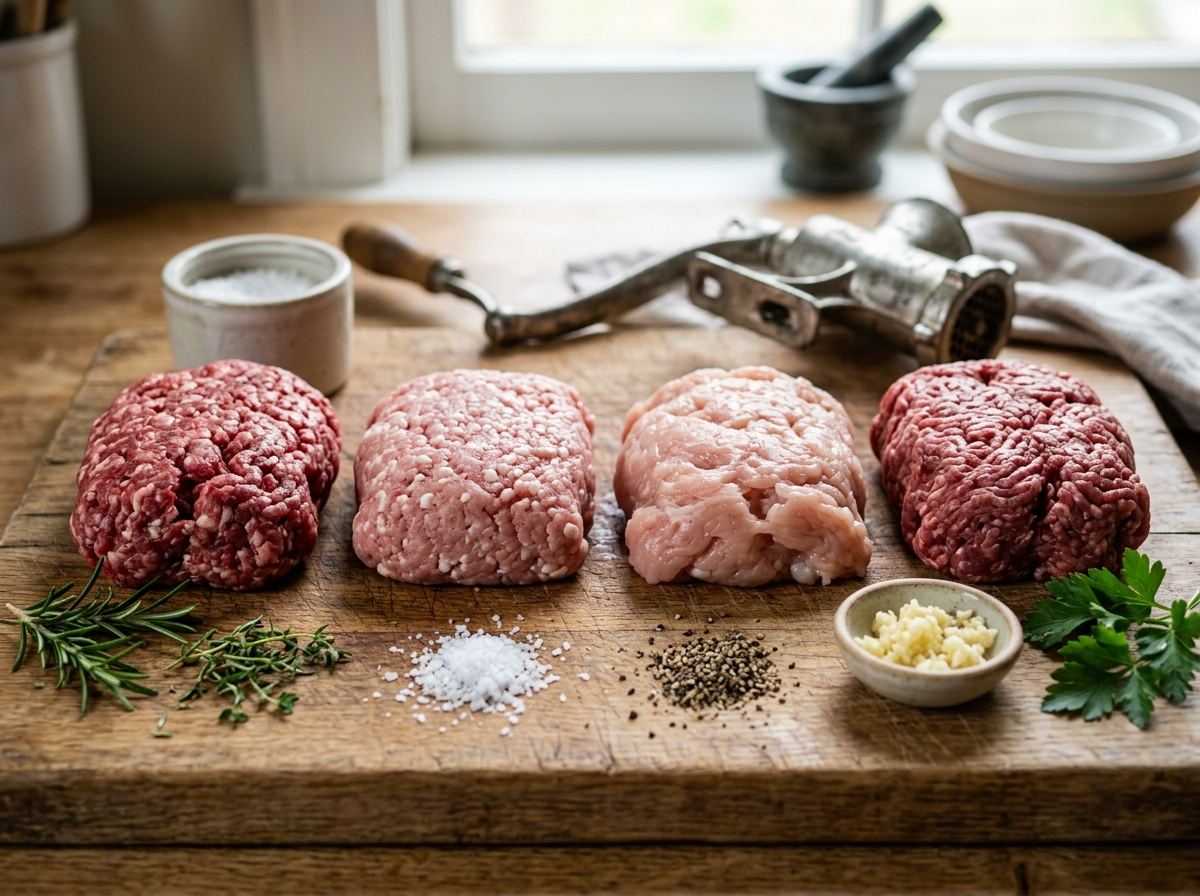
Most people reach for ground beef without thinking twice. It’s automatic — burgers mean beef, right? But here’s something worth knowing: almost any ground meat can make a solid burger if you understand how it behaves on heat and what it needs to shine.
Whether you’re bored of the same old patty, working around dietary restrictions, or just curious about what else is out there, there’s a whole world of ground meat options waiting to hit your grill or flat top. Some cook faster. Some need a little extra fat. Some bring flavors you’d never expect from a burger.
Let’s walk through every type of ground meat that can actually make a burger worth eating — and what you need to know to get each one right.
Ground Beef: The Gold Standard (and Why It Works So Well)
There’s a reason beef dominates the burger world. Ground beef has the perfect balance of flavor, fat, and texture that most people associate with a “real” burger. It’s forgiving to cook, holds together well, and delivers that deep, savory, almost caramelized taste you get from a properly seared patty.
But not all ground beef is created equal. The cut matters, and so does the fat ratio.
Chuck is the most popular choice for burgers, and for good reason. It’s got roughly 80% lean to 20% fat, which keeps patties juicy and flavorful without turning greasy. If you’ve ever had a burger at a really good restaurant and wondered why it tasted so much better than yours at home, the answer was probably chuck with the right fat content.
Brisket ground into burger meat gives you a richer, almost smoky depth of flavor. A lot of serious burger spots blend brisket with chuck to get the best of both worlds — the beefy punch of chuck with the deeper, more complex notes from brisket.
Short rib is another blend favorite. It adds a buttery richness that makes a patty feel almost luxurious.
If you want to go deeper into selecting the right beef for your patties, there’s a detailed breakdown on choosing the best meat for burgers that covers cuts, grades, and sourcing.
One thing people don’t talk about enough: the fat ratio in your ground beef affects everything — how juicy it stays, how well it holds together, and even how it browns. Going too lean (like 93/7) is one of the biggest reasons homemade burgers end up dry and disappointing. There’s actually a science to why burgers dry out that’s worth understanding before you start experimenting with leaner meats.
Quick fact: Grinding your own beef at home gives you control over the cut, the coarseness, and the freshness. If you’ve never tried it, grinding your own hamburgers is easier than you’d think and makes a noticeable difference.
Ground Pork: The Underrated Burger Meat
Ground pork doesn’t get the credit it deserves in the burger world. It’s slightly sweeter than beef, a little milder in flavor, and incredibly juicy because of its natural fat content. Think about it — sausage patties are basically pork burgers, and nobody complains about those being boring.
A straight pork burger works best when you season it assertively. Pork loves garlic, sage, fennel, smoked paprika, and a touch of brown sugar. Without bold seasoning, a plain pork patty can taste a bit flat on its own. But with the right spices? It’s a completely different experience.
Pork also blends beautifully with beef. A 50/50 blend of ground beef and ground pork is actually a classic move in a lot of old-school burger recipes. The pork adds moisture and a subtle sweetness, while the beef brings the structure and depth. If you’ve never tried this blend, it’s a great first step away from pure beef burgers.
Pro tip: Ground pork cooks faster than beef and can go from juicy to dry in a hurry. Keep a close eye on your internal temperatures. Pork burgers should hit 160°F internally, and pulling them right at that mark — not beyond — is the key to keeping them moist. A reliable thermometer for burgers makes a big difference here.
One more thing about pork burgers: they take toppings differently than beef. Instead of the classic lettuce-tomato-pickle combo, try apple slaw, pickled onions, or a sharp mustard. Pork pairs with sweet and acidic flavors in a way that beef doesn’t always match.
Ground Turkey: Popular, But Needs Help
Let’s be honest — ground turkey became popular because people wanted a “healthier” burger option, not because it tastes better than beef. And that’s okay. Turkey can make a genuinely good burger, but you need to know what you’re dealing with.
The biggest challenge with turkey is moisture. Ground turkey breast is extremely lean, often sitting around 93% to 99% lean. That’s great for calorie counting but terrible for burger texture. A dry, crumbly turkey burger is one of the most disappointing things you can bite into.
Here’s how you fix it: use ground dark meat turkey, or at least a blend that includes thigh meat. The extra fat makes a huge difference. If you can only find lean ground turkey, you’ll need to add moisture back in — a tablespoon of olive oil mixed into the meat, some grated onion (which releases liquid as it cooks), or even a splash of Worcestershire sauce.
Seasoning is non-negotiable with turkey. On its own, ground turkey has a very mild, almost blank-canvas flavor. That can be a strength if you think about it. You can take a turkey burger in almost any direction — Mediterranean with feta and sun-dried tomatoes, Asian-inspired with ginger, soy sauce, and scallions, or Southwestern with cumin, chili powder, and pepper jack cheese.
Warning: Don’t press down on turkey burgers while they cook. You’ll squeeze out whatever moisture you’ve managed to keep. This actually applies to all burgers, but it’s especially damaging with turkey because there’s so little fat to spare.
Turkey burgers must reach 165°F internally to be safe. There’s no medium-rare option here. A good burger doneness chart can help you understand the temperature targets for different meats so you’re not guessing.
Ground Chicken: Light, Lean, and Tricky
Ground chicken is even leaner than turkey in most cases, which makes it even more challenging to turn into a juicy burger. But it’s not impossible — you just have to approach it differently.
The key with chicken burgers is accepting that they won’t mimic a beef burger’s texture and leaning into what makes them unique instead. Ground chicken has a very neutral, clean flavor that absorbs seasoning and aromatics like a sponge.
Some of the best chicken burgers I’ve had used bold, punchy flavors: buffalo sauce mixed into the meat with blue cheese crumbles on top, or Thai-inspired with lemongrass, cilantro, and a sweet chili glaze. If you’re into heat, a chicken burger inspired by Nashville hot chicken is outstanding — you get that cayenne kick with a lighter, easier-to-eat patty.
Like turkey, ground chicken needs binding help. An egg and a few tablespoons of breadcrumbs mixed into the meat will keep your patties from falling apart on the grill. Some people feel weird about adding binders to a burger, but with ground chicken, it’s practically necessary.
Cook chicken burgers to 165°F. Same rule as turkey — no shortcuts on poultry.
Did you know? Ground chicken thigh meat has almost double the fat of ground chicken breast. If your grocery store offers ground thigh specifically, grab it for burgers. The difference is night and day.
Ground Lamb: Bold Flavor for Adventurous Eaters
If you want a burger that doesn’t taste anything like a traditional American patty, ground lamb is your move. Lamb has a distinctive, almost gamey flavor that people either love or don’t — there’s rarely a middle ground.
Lamb burgers are common across Mediterranean, Middle Eastern, and North African cuisines. They pair naturally with cumin, coriander, mint, sumac, and za’atar. A lamb burger on a warm pita with tzatziki, pickled red onions, and a few slices of cucumber is one of those meals that makes you wonder why you don’t eat lamb more often.
Fat content in ground lamb varies depending on the source, but it’s generally fattier than beef chuck, sitting around 75/25 to 80/20. That means lamb burgers stay juicy without much effort, but they can also shrink significantly on the grill. Make your patties slightly larger than you want the final burger to be, because they’ll lose volume.
One thing worth noting: lamb fat has a higher melting point than beef fat. This means lamb burgers can develop a slightly waxy or coating mouthfeel if they cool down too much. Eat them hot, right off the grill or flat top.
Pro tip: If you find straight lamb too intense, try a 50/50 blend of lamb and beef. You’ll get the interesting flavor notes from the lamb without it overwhelming everything else. This blend is also a great gateway for people who are “lamb curious” but not fully committed.
Ground lamb also works exceptionally well as a smash burger. The thin patty crisps up on the edges and tones down some of that gamey intensity, while concentrating the caramelized, savory flavors.
Ground Bison: The Lean Beef Alternative
Bison is probably the closest thing to a beef burger without actually being beef. The flavor profile is similar — deep, meaty, slightly sweeter than beef — but bison is significantly leaner. Most ground bison runs around 90/10, which makes it a favorite among people who want a “cleaner” red meat option.
That leanness is both a selling point and a challenge. Bison burgers cook faster than beef burgers because there’s less fat insulating the meat. They also go from perfectly done to overcooked in a very narrow window. You need to pay attention.
The best approach with bison is to cook it at a slightly lower temperature than you’d use for beef and pull it off the heat a few degrees before your target. Residual heat will finish the job. Most bison ranchers and burger enthusiasts recommend medium or medium-rare for bison burgers, which means an internal temp around 135°F to 145°F. A burger internal temperature guide can help you nail those numbers consistently.
Don’t overwork bison meat when forming patties. It’s leaner and more delicate than beef, so excessive handling will make your burgers tough. Shape them gently, season the outside generously, and let the meat do its thing.
Bison is more expensive than beef — usually two to three times the price per pound — but if you’ve never tried it, it’s worth the splurge at least once. The flavor is subtle but noticeably different from conventional beef in a way that’s hard to describe until you taste it side by side.
Ground Venison: The Wild Card
Venison burgers are popular in hunting communities and among people who prefer wild game, but they’re accessible even if you don’t hunt. Many specialty butchers and online meat suppliers carry ground venison year-round.
The flavor is lean, earthy, and slightly sweet, with an intensity that reflects the animal’s natural diet. Depending on the deer’s diet and age, venison can range from very mild to distinctly gamey.
Here’s the biggest practical issue with venison: it’s incredibly lean. We’re talking 95/5 or leaner in many cases. That means a pure venison burger patty will be dry, dense, and crumbly unless you add fat. Mixing in ground pork, beef fat, or even diced bacon is standard practice. A 70/30 venison-to-pork-fat blend is a common ratio that keeps burgers juicy while letting the venison flavor come through.
Venison also benefits from strong seasonings. Rosemary, juniper berries, garlic, and a touch of Worcestershire sauce all work well. Some people add a splash of red wine to the meat mixture before forming patties — it sounds fancy, but it genuinely helps with both flavor and moisture.
Warning: Because venison is so lean, overcooking is the fastest way to ruin it. Treat it more like bison than beef — cook to medium at most, and use a thermometer instead of guessing.
Ground Pork and Beef Blends: The Best of Both Worlds
We’ve touched on this already, but custom blends deserve their own moment. Mixing two or more ground meats is one of the easiest ways to build a burger with more depth, better texture, and a flavor profile you can’t get from any single meat.
Some blends that work really well together:
Beef and pork (70/30 or 60/40) — The pork adds juiciness and a hint of sweetness to the beef’s savory backbone. This is a classic diner-style blend that’s been around for decades.
Beef and lamb (50/50) — Gives you an interesting, slightly exotic flavor without going full lamb. Great for Mediterranean-inspired burgers.
Beef, pork, and veal (equal parts) — This is the traditional meatloaf blend you see at butcher shops, and it makes a surprisingly excellent burger. The veal adds a delicate, tender quality that rounds everything out.
Venison and pork (70/30) — The pork fat compensates for venison’s leanness while adding complementary flavor.
When blending meats, the key is mixing them thoroughly but gently. You want the fats and flavors distributed evenly, but you don’t want to compress the meat into a dense puck. Mix with your hands just until combined, then stop.
If you’re going the custom blend route, proper seasoning techniques become even more important because you’re balancing flavors from multiple sources.
Plant-Based Ground “Meat”: A Different Category Entirely
This isn’t technically ground meat, but it’s impossible to talk about burger options in 2025 without mentioning plant-based alternatives. Products from brands like Beyond Meat and Impossible Foods have gotten remarkably close to replicating the texture and flavor of ground beef.
Plant-based burgers cook differently than real meat. They don’t render fat the same way, they can go from soft to rubbery quickly, and temperature control matters just as much — maybe even more so — than with traditional meat patties.
If you’re considering plant-based patties, know that they work best cooked to medium (around 165°F internal) on a flat top or griddle rather than an open grill. The flat surface gives you better browning and keeps the patty intact.
They’re not for everyone, and that’s fine. But if someone at your cookout needs a meatless option, these products have reached a point where they’re genuinely enjoyable — not just tolerable.
How to Pick the Right Ground Meat for Your Burger
With all these options, how do you actually decide? It comes down to a few things.
Think about your audience. Cooking for a backyard party with kids and adults? Stick with beef, maybe a beef-pork blend. Hosting adventurous food friends? Lamb or bison will impress without being too weird.
Consider your cooking method. Fattier meats like beef chuck and ground pork are more forgiving on a grill where flare-ups happen. Lean meats like turkey, chicken, and bison do better on a flat top where you can control the heat precisely. If you’re debating your setup, there’s a solid comparison of charcoal vs. gas for burgers that might help.
Match your toppings to your meat. Beef handles classic toppings beautifully. Lamb wants Mediterranean flavors. Turkey and chicken are blank canvases for bold, international seasonings. Bison needs simple toppings that don’t mask its natural flavor.
Know your temperatures. Every meat has a different safe internal temperature, and some (like beef and bison) taste best well below the “well done” mark. Having a complete temperature guide saved on your phone isn’t overkill — it’s smart cooking.
And honestly? Don’t be afraid to experiment. Some of the best burgers I’ve ever eaten came from someone who said, “I just tried something different.” Make a small batch, see how it tastes, and adjust from there. You might discover your new favorite.
FAQ
Can you mix different ground meats together for burgers?
Absolutely. Mixing ground meats is one of the oldest tricks in burger making. Blending beef with pork, lamb, or even venison lets you combine flavors and balance fat content. The key is mixing gently until just combined — overworking any ground meat makes burgers tough and dense. Start with a 70/30 or 50/50 ratio and adjust based on your taste.
What’s the best ground meat for burgers if you don’t eat beef?
Ground bison is the closest substitute in terms of flavor and texture. It’s leaner than beef, so you need to be careful with cooking temps, but the taste is remarkably similar. Ground lamb is another strong option if you enjoy bolder, more distinctive flavors. For a poultry-based alternative, ground turkey thigh meat gives you the best combination of flavor and moisture.
Do all ground meats need to reach the same internal temperature for burgers?
No, and this is really important. Ground poultry (turkey and chicken) must reach 165°F to be safe. Ground pork should hit 160°F. Ground beef, bison, lamb, and venison are safe at 160°F according to USDA guidelines, though many people prefer these red meats cooked to lower temperatures like 145°F for medium. If you’re going below USDA recommendations, using fresh, high-quality, ideally home-ground meat reduces risk significantly.
Why do turkey and chicken burgers fall apart on the grill?
Lean poultry meat lacks the fat that acts as a natural binder in fattier meats like beef and pork. Without that fat holding things together, the patty structure weakens during cooking. Adding an egg and a couple tablespoons of breadcrumbs to the meat mixture before forming patties solves this problem. Chilling formed patties in the refrigerator for 30 minutes before cooking also helps them hold their shape.
Is bison healthier than beef for burgers?
Bison is lower in total fat, calories, and cholesterol than most ground beef. A 4-ounce serving of ground bison typically has about 2-3 grams of fat compared to 17+ grams in 80/20 ground beef. It’s also higher in iron and B12 per serving. That said, “healthier” depends on your whole diet, not just one ingredient. Both are good sources of protein and nutrients.
Your Next Burger Doesn’t Have to Be Boring
Beef will always be the king of burgers — and there’s nothing wrong with sticking to what works. But knowing that you’ve got options like lamb, bison, pork, turkey, venison, and creative blends opens up a lot of possibilities for your grill game.
The real secret isn’t which meat you choose. It’s understanding what that meat needs — the right fat ratio, the right seasoning, the right cooking temperature, and the right toppings to complement it. Nail those basics, and you can make a great burger out of almost anything.
So next time you’re staring at the meat case trying to decide what to cook this weekend, grab something different. Maybe a pound of ground lamb. Maybe some bison. Maybe mix your beef with a little pork and see what happens. The worst case? You learn something. The best case? You find a new favorite that makes every future cookout a little more interesting.
If you want some creative ideas for making your burgers more exciting, there’s no shortage of ways to shake things up once you’re ready.