
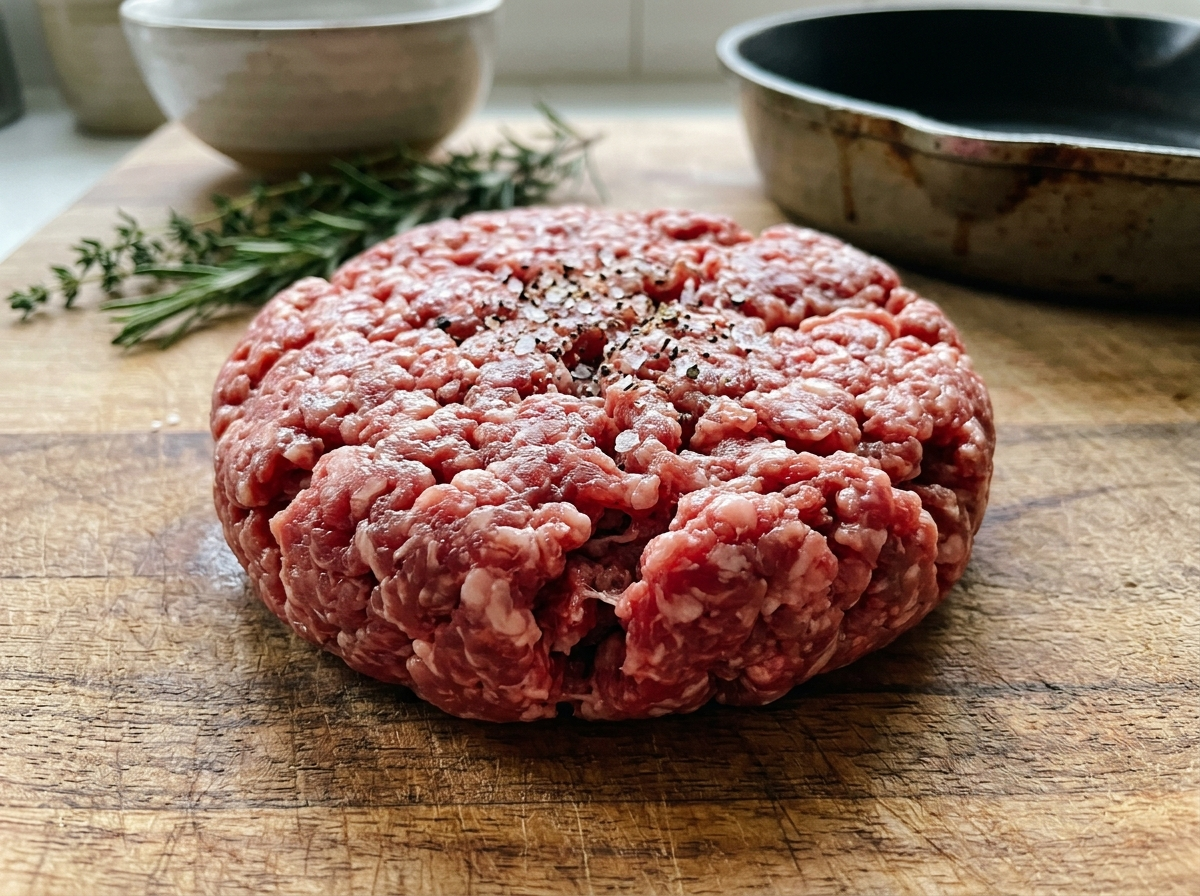
Here’s something most backyard cooks get wrong — they obsess over toppings, buns, and fancy sauces but grab whatever ground beef is cheapest at the store. Then they wonder why their burgers taste flat or dry out on the grill.
The meat is the burger. Everything else is decoration.
Choosing the best meat for burgers isn’t complicated, but it does require knowing a few things about cuts, fat content, and how different blends behave under heat. Whether you’re firing up a charcoal grill this weekend or pressing smash burgers on a flat top, the meat you start with determines about 80% of your final result.
So let’s talk about what actually works, what’s overhyped, and how to pick the right meat for the kind of burger you want to make.
Why the Cut of Meat Matters More Than You Think
Most people see “ground beef” on a label and assume it’s all the same. It’s not. Ground beef is a generic term — it can come from any part of the cow, or a mix of trimmings from multiple parts. That’s why two packages sitting side by side in the same store can taste completely different.
Each cut of beef has its own balance of muscle, fat, and connective tissue. That balance directly affects three things you care about: flavor, juiciness, and texture. A cut with too little fat will dry out fast. A cut with too much connective tissue might feel chewy. A cut with the right marbling? That’s where the magic lives.
Think of it this way — you wouldn’t use the same cut of steak for a slow braise and a quick sear, right? Same logic applies here. The cut you grind (or buy pre-ground) should match your cooking method and the style of burger you’re after.
And here’s something most articles won’t tell you: freshness matters just as much as the cut. Pre-ground beef sitting in a tube for weeks won’t perform like freshly ground chuck, no matter what the label says. If you’ve got a butcher counter nearby, use it. If you want to go a step further, you can grind your own hamburger meat at home — it’s easier than you’d expect.
The Best Cuts of Beef for Burgers
Let’s break down the cuts that actually deliver. Not every cut works equally well, and some shine in specific situations.
Ground Chuck — The Gold Standard
If there’s one answer to “what’s the best meat for burgers,” ground chuck is it for most people. It comes from the shoulder area of the cow, which gets a good amount of exercise — enough to develop flavor, but not so much that the meat becomes tough.
Chuck typically runs around 80/20 lean-to-fat ratio, which is right in the sweet spot. You get beefy flavor, enough fat to keep things juicy, and a texture that holds together on the grill without falling apart.
It’s also affordable. You’re not paying premium prices, and you’re getting a result that competes with — or beats — fancier options. Most burger joints, from local spots to well-known chains, build their patties on a chuck base.
Pro Tip: When you’re buying ground chuck, look for meat that’s bright red with visible specks of white fat throughout. If it looks uniformly pink or grayish, it’s been sitting too long.
Ground Brisket — The Flavor Bomb
Brisket isn’t just for smoking anymore. Ground brisket has become a go-to for burger enthusiasts who want deeper, more complex beef flavor. The meat comes from the lower chest of the cow, and it’s loaded with connective tissue that breaks down beautifully during cooking.
The catch? Brisket on its own can be a bit loose in texture. That’s why most experienced cooks blend it with chuck — usually a 50/50 or 60/40 chuck-to-brisket ratio. You get the structural integrity of chuck with that rich, almost smoky depth that brisket brings.
If you’ve ever eaten a burger at a high-end burger bar and thought “why does this taste so different from what I make at home?” — there’s a solid chance brisket was in the blend.
Ground Short Rib — The Luxury Pick
Short rib is where you enter premium territory. The meat is intensely marbled, incredibly tender, and carries a buttery richness that’s hard to replicate with other cuts.
It’s also expensive. And because of its high fat content, using 100% short rib can make your patty greasy and hard to handle. The sweet spot is blending it — about 20-30% short rib mixed with chuck gives you that luxurious mouthfeel without the structural problems.
Some of the best burger restaurants in cities like New York and Los Angeles use a chuck-brisket-short rib blend. It’s become something of a holy grail combination in the burger world.
Ground Sirloin — The Lean Option
Sirloin comes from the rear back portion of the cow, and it runs leaner — typically 90/10 or 85/15. If you’re watching fat intake or prefer a firmer, meatier burger, sirloin works.
But there’s a trade-off. Less fat means less moisture and less flavor. Sirloin burgers can dry out quickly, especially on a grill where fat drips away. You need to be precise with your cooking temperature and timing. A meat thermometer is pretty much mandatory here — if you don’t have a good one, check out some reliable thermometer options for burgers.
Sirloin works best when you blend it with a fattier cut, or when you’re making thinner patties that cook fast.
Ground Round — The Middle Ground
Round comes from the rear leg and rump. It’s leaner than chuck (around 85/15) but has decent flavor. It’s a solid middle-of-the-road choice for people who want something between chuck’s richness and sirloin’s leanness.
Honestly, ground round doesn’t get much attention in the burger world, and that’s partly because it doesn’t excel at anything in particular. It’s fine. Not exciting, but fine. If it’s what your store carries and you can’t find chuck, you can make it work — just don’t overcook it.
The Fat Ratio Question: What Actually Works
You’ve probably seen those numbers on ground beef packages — 80/20, 85/15, 90/10. That first number is lean meat percentage, the second is fat. And this ratio changes everything about your burger experience.
80/20 is the ratio most pitmasters, chefs, and burger lovers recommend. It gives you enough fat to keep the patty moist and flavorful through cooking, while still holding its shape. When that fat renders during cooking, it bastes the meat from the inside. That’s what creates that juicy bite.
85/15 works for people who want a slightly leaner burger but aren’t willing to sacrifice all the juice. It’s a reasonable compromise, especially for thicker patties where more meat mass helps retain moisture.
90/10 and above gets tricky. You’re basically cooking a patty with minimal internal lubrication. These burgers need careful temperature management, and even then, they’ll never be as juicy as an 80/20 patty. Some people add things like Worcestershire sauce, butter, or egg yolk to compensate — but at that point, you’re fighting against the meat instead of letting it do its thing.
If you want to really understand how fat ratios affect your burger, there’s a detailed breakdown on choosing the best fat ratio for burgers that goes deeper into the science.
Quick Fact: A quarter-pound 80/20 burger patty loses roughly 25% of its weight during cooking, mostly from rendered fat and evaporated moisture. A 90/10 patty loses less weight but also loses more relative moisture from the meat itself — which is why it feels drier.
Custom Blends: Building Your Own Burger Meat
This is where things get fun. Once you understand what each cut brings to the table, you can start building custom blends tailored to exactly the kind of burger you want.
The Classic Blend
70% chuck, 30% brisket. This is the workhorse blend. Reliable, flavorful, forgiving. It works on grills, flat tops, and even in the oven. If you only try one custom blend, make it this one.
The Restaurant Blend
50% chuck, 30% brisket, 20% short rib. This is the blend that wins competitions and packs restaurant dining rooms. It’s rich, complex, and produces a burger that makes people stop mid-bite and say “what did you do differently?”
The Smash Burger Blend
100% chuck at 80/20. Smash burgers need meat that can handle being pressed thin and cooked hard on a screaming hot surface. Chuck does this perfectly. The fat renders quickly, the edges crisp up, and you get that lacy, crunchy texture that defines a great smash burger. If you haven’t tried making them yourself, the technique for smash burgers at home is straightforward and worth learning.
The Bold Blend
60% chuck, 20% brisket, 20% bone marrow or beef tallow mixed in. This is for the adventurous cook. Bone marrow adds an incredibly silky, unctuous quality to burgers. It’s not for everyday cooking, but for a special weekend cookout? It’s a showstopper.
If you’re curious about using rendered fat to elevate your burgers, there’s a great piece on using wagyu tallow for burgers that explains the technique well.
Beyond Beef: Other Meats That Make Great Burgers
Beef dominates the burger conversation, but it’s not the only game in town. Several other proteins make genuinely good burgers — not as substitutes, but as their own thing.
Ground Turkey and Chicken
Both are leaner than beef, which means you’ll need to adjust your expectations. A turkey burger won’t taste like a beef burger, and trying to make it one is a recipe for disappointment. But seasoned well and cooked to the right temperature (165°F for poultry, no exceptions), these can be legitimately good.
The key with poultry burgers is adding moisture. Grated onion mixed into the meat, a splash of olive oil, or even a bit of mayo in the blend can keep things from turning into dry hockey pucks. And don’t skip the seasoning — it makes or breaks a leaner burger.
Ground Lamb
Lamb burgers have a distinct, slightly gamey flavor that pairs beautifully with Mediterranean-style toppings — feta, tzatziki, roasted red peppers, fresh mint. The fat content in ground lamb is usually comparable to 80/20 beef, so juiciness isn’t a problem.
Not everyone loves lamb’s flavor profile, so know your audience before serving these at a cookout. But for the people who do enjoy it, a well-made lamb burger is an experience.
Ground Pork
Pork on its own makes a softer, milder burger. It’s good, but it lacks the punch of beef. Where pork really shines is in blends — a 70% beef, 30% pork mix creates a burger with incredible juiciness and a slightly sweeter undertone. It’s the same principle behind why many meatloaf and meatball recipes call for a beef-pork blend.
Bison
Bison is leaner than beef but has a surprisingly rich, slightly sweet flavor. It’s become increasingly available at grocery stores and online retailers. The leanness means you need to cook it more carefully — bison burgers go from perfect to overcooked in a narrow window. Aim for medium or medium-rare, and don’t press the patty while it’s cooking.
Plant-Based Options
Look, we’re talking about meat here, but it’s worth acknowledging that plant-based patties from brands like Impossible and Beyond have gotten remarkably good. They won’t fool a dedicated beef lover, but they’ve carved out their own space. If you go this route, temperature control is still crucial — the guide on meatless burger temperatures covers what you need to know.
For a broader look at all the proteins that work in burger form, there’s a full rundown on what types of ground meat can make burgers.
How to Buy the Best Burger Meat
Knowing which cuts are good doesn’t help much if you don’t know what to look for at the store or butcher. Here are the things that actually matter when you’re standing in front of the meat case.
Color tells a story. Fresh ground beef should be bright cherry-red on the outside. The interior might be darker — even a bit purplish — and that’s fine. That’s just meat that hasn’t been exposed to oxygen yet. What you don’t want is brown or grayish meat throughout. That’s a sign of age.
Check the grind date, not just the sell-by date. Some stores grind fresh daily. Others receive pre-ground beef from distribution centers. Ask the butcher when it was ground. Ideally, you want meat ground within 24 hours of when you plan to cook it.
Buy from the butcher counter when possible. The stuff in tubes and chubs (those plastic-wrapped logs) is fine in a pinch, but it’s been processed and packed days or weeks before it reaches you. Counter-ground meat from visible cuts will almost always taste better.
Don’t be afraid to ask for custom grinds. Most butcher counters will grind specific cuts for you if you ask. You can hand them a chuck roast and a piece of brisket and say “grind these together, please.” They’ll do it, often at no extra charge beyond the meat price.
Grass-fed vs. grain-finished is a real consideration. Grass-fed beef tends to be leaner with a more mineral, “earthy” flavor. Grain-finished beef is what most people are used to — richer, fattier, milder. Neither is objectively better for burgers; it comes down to personal taste. Just know that grass-fed ground beef cooks faster because of its lower fat content.
Matching Your Meat to Your Cooking Method
The best meat for burgers also depends on how you’re cooking them. A patty that’s perfect on a flat top might not work as well over open flames.
Grilling (Charcoal or Gas)
Fat drips through the grates when you grill, so you want a patty with plenty of fat to spare. 80/20 ground chuck is your safest bet here. The fat renders, flames lick the surface, and you get that smoky char that defines a grilled burger. Go with a patty that’s at least three-quarters of an inch thick so it doesn’t dry out before the center reaches your desired doneness.
Speaking of grills — the charcoal vs. gas debate for burgers is worth thinking about too, since each produces different results.
Flat Top or Cast Iron
This is where fattier blends and smash burgers thrive. The flat surface traps rendered fat, so the patty essentially fries in its own juice. You can use chuck, blends, or even slightly fattier ratios like 75/25 here without worrying about flare-ups. The Maillard reaction (that gorgeous brown crust) happens faster and more evenly on a flat surface than on grill grates.
Want to know which surface actually makes better burgers? There’s a solid comparison of flat top vs. grill for burgers that breaks it down.
Oven or Broiler
If you’re cooking indoors without a flat top, the broiler is your friend. Use a broiler pan so fat can drip away, and go with 80/20 or 85/15 ground chuck. Keep the patties uniform in thickness so they cook evenly. This method won’t give you a sear as intense as a flat top, but it’s consistent and hands-off.
The Mistakes That Ruin Good Burger Meat
You can buy the best ground beef on the planet and still end up with a mediocre burger. Here’s what goes wrong most often.
Overworking the meat. This is the number one mistake. When you knead, press, and shape ground beef like bread dough, you compress the muscle fibers and squeeze out fat. The result is a dense, tough patty. Handle your meat as little as possible. Gently form it into a ball, press it into a patty, and stop touching it.
Cooking cold patties. Meat straight from the fridge cooks unevenly — the outside overdoes while the center stays raw. Pull your patties out 15-20 minutes before cooking. Let them come closer to room temperature. They’ll cook more evenly and finish faster.
Pressing down while cooking. That sizzle you hear when you smash a patty with a spatula on the grill? That’s juice and fat leaving the burger forever. Unless you’re intentionally making a smash burger (where the press happens once, right at the start), keep the spatula away from the top of the patty.
Skipping the rest. Just like a steak, burgers benefit from a short rest — about 3 minutes — after cooking. The juices redistribute through the meat instead of flooding your plate (or your bun) the moment you bite in.
If your burgers consistently turn out dry, there’s a deeper look at why burgers dry out and how to fix it that covers the most common causes.
What About Wagyu and Premium Beef?
Wagyu ground beef has exploded in popularity, and yes, it makes a fantastic burger — but with some caveats.
Authentic Japanese A5 Wagyu is so intensely marbled that a full-sized burger patty from it would be overwhelmingly rich. Most people who grind A5 Wagyu for burgers blend it with regular beef, or make smaller patties.
American Wagyu (a cross between Japanese Wagyu cattle and American breeds like Angus) is more practical for burgers. It’s richer and more marbled than conventional beef, but not to the extreme of purebred Japanese Wagyu. It makes a noticeably better burger than standard grocery store beef, though you’ll pay two to three times the price.
Is it worth it? For a special occasion — absolutely. For Tuesday night dinner? Regular chuck will do the job just fine and save you real money.
Did You Know? The USDA grades beef as Select, Choice, and Prime based on marbling. Only about 2-3% of American beef earns the Prime grade. Ground Prime beef, when you can find it, splits the difference between standard ground beef and Wagyu in both quality and price.
FAQ
What is the single best cut of meat for burgers?
Ground chuck with an 80/20 lean-to-fat ratio is the most reliable choice for most cooking methods and burger styles. It delivers strong beef flavor, stays juicy during cooking, holds its shape well, and is widely available at a reasonable price. For an elevated burger, blend chuck with brisket and short rib.
Does grinding your own meat make a noticeable difference?
Yes — and the difference is bigger than most people expect. Freshly ground meat has better texture, cleaner flavor, and you control exactly what goes into it. Store-bought ground beef sits around for days, which affects both taste and texture. You don’t need expensive equipment either; a basic meat grinder attachment for a stand mixer works well.
How much ground beef do I need per burger?
For a standard grilled burger, plan on 6 to 8 ounces per patty (roughly a quarter to a third of a pound before cooking). For smash burgers, you’ll use less — around 2 to 3 ounces per ball — since they’re pressed thin and typically served as doubles. Always account for about 25% weight loss during cooking.
Can I mix different meats for a burger blend?
Absolutely. Mixing meats is one of the best ways to customize flavor and texture. Beef-and-pork blends (70/30) add juiciness and subtle sweetness. Beef-and-lamb blends create something unique and bold. Even within beef, mixing cuts — like chuck and brisket — produces results better than any single cut alone. Just make sure your overall blend stays close to 80/20 fat ratio for best results.
Is grass-fed beef better for burgers than grain-finished?
“Better” is subjective. Grass-fed beef has a leaner profile and a more pronounced, mineral-forward flavor that some people love and others find too strong. Grain-finished beef is milder, fattier, and produces a burger closer to what most people expect. If you’re using grass-fed, consider adding a fat source (like beef tallow or a fattier cut blended in) to prevent dry patties.
Your Next Burger Starts at the Meat Counter
The difference between a forgettable burger and one your friends keep talking about almost always comes down to what happened before the grill got hot. The cut, the fat ratio, the freshness — these decisions matter more than any seasoning or topping ever will.
Start with 80/20 ground chuck if you want something reliable and delicious. When you’re ready to level up, experiment with brisket and short rib blends. And if you really want to taste the difference, grind your own meat at least once — you’ll understand immediately why it’s worth the extra effort.
Pick up some good meat this weekend. Keep your hands off the patty once it’s on the heat. And if you want to make sure you nail the internal temperature, the burger doneness chart will keep you dialed in every time.
Your best burger is one grocery run away.