
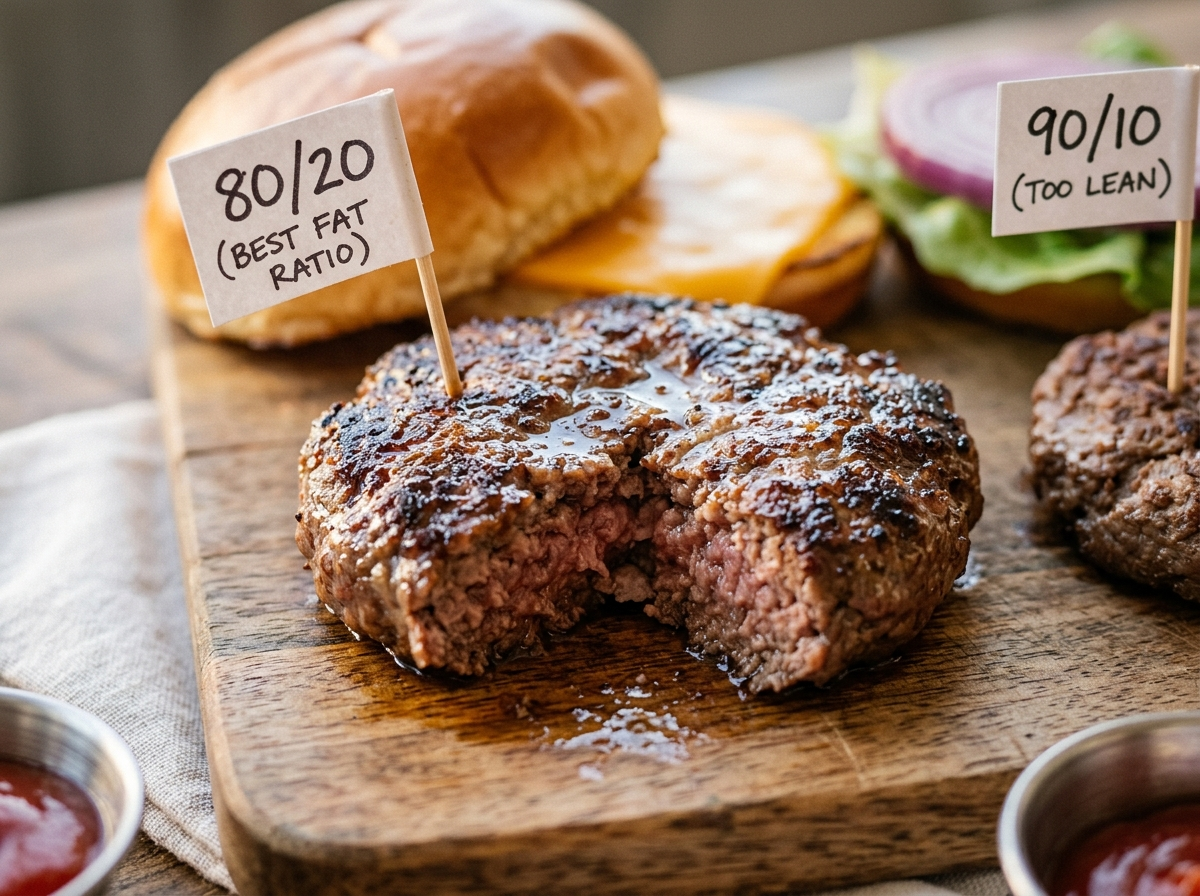
You’ve probably been there—standing over a grill, watching a burger shrink into a sad, gray hockey puck. You followed the recipe, used “premium” extra-lean beef, and yet it tastes like a dry sponge. It’s frustrating because a great burger should be a messy, juicy experience that needs two napkins. The secret isn’t some expensive seasoning or a fancy grill; it’s all about the math of the meat. Specifically, you need to get the fat ratio right before the patty even touches the heat.
Understanding the Lean-to-Fat Numbers
When you walk into the grocery store, you see those little stickers on the ground beef: 80/20, 90/10, or maybe 73/27. Those numbers tell you the percentage of lean meat versus the percentage of fat. If you grab a pack of 90/10, you’re getting 90% muscle and only 10% fat. While that sounds “healthier” or “cleaner,” it’s actually the primary reason your burgers are turning out dry.
Think of fat as the insurance policy for your meat. As the burger cooks, the muscle fibers tighten and squeeze out moisture. If there’s no fat to melt and coat those fibers, all that moisture just evaporates. You’re left with a protein structure that’s tight, tough, and flavorless. Fat is where the flavor lives, and it provides that silky mouthfeel we all crave. Picking the best meat for burgers starts with looking at those two numbers on the label.
The Gold Standard: Why 80/20 is the Magic Number
If you ask any professional chef or seasoned pitmaster, they’ll likely tell you that 80/20 is the sweet spot. There’s a scientific reason for this. At 20% fat, you have enough “lubricant” to keep the patty moist even if you accidentally overcook it by a minute or two. This ratio usually comes from the “chuck” cut of the cow, which is the shoulder area.
Ground chuck naturally sits right around that 20% mark. It has a robust, beefy flavor and a texture that holds together well on a grill. When that fat hits the hot grates, it renders (melts), creating a self-basting effect. This is exactly how to keep burgers juicy without having to add fillers or weird ingredients. The fat creates little pockets of flavor that explode when you take a bite.
When 70/30 Makes Sense (The High-Fat Alternative)
You might see 70/30 or 73/27 and think it looks too greasy. In a thick, slow-cooked pub burger, you might be right. However, if you are a fan of diner-style burgers, this higher fat content is your best friend. This is especially true when you are making smash burgers at home.
When you smash a ball of meat onto a ripping-hot griddle, you want that extra fat. It helps create those crispy, lacey edges that people go crazy for. Because the burger is so thin, it cooks in about 90 seconds. You need that 30% fat to provide an instant burst of moisture and flavor before the meat has a chance to dry out. Just be prepared for a bit of a mess—high-fat burgers produce a lot of steam and grease, which is why professional kitchens have such heavy-duty exhaust fans.
The Problem With Lean Beef (90/10 and Above)
We’ve all tried to be “good” and buy the 90/10 or 93/7 ground sirloin. While this meat is great for a beef stew or a bolognese sauce where it simmers in liquid, it’s a disaster for burgers. Without enough fat, the proteins bond together too tightly. You end up with a burger that has the texture of a cork.
If you absolutely must use lean beef for health reasons, you have to change your cooking technique. You can’t cook a 90/10 burger to well-done; it will be inedible. You’d need to pull it off the heat much earlier. If you’re curious about how those timings work, check out this burger internal temperature guide to see how different meats react to heat. But honestly, if you want a real burger experience, skip the extra-lean stuff.
How Cooking Methods Change Your Fat Choice
Your equipment matters just as much as your butcher’s choice. If you’re cooking over an open flame on a charcoal grill, some of that fat is going to drip away. This causes flare-ups, which give the meat a smoky, charred flavor. In this scenario, 80/20 is perfect because it accounts for the “fat loss” into the coals.
If you’re cooking in a cast-iron skillet, the burger sits in its own rendered fat. This is essentially frying the burger in its own juices. In a pan, 80/20 can sometimes feel a bit “boil-in-grease” if you aren’t careful. Some people prefer an 85/15 ratio for pan-searing to keep the kitchen from getting too smoky. However, for most of us, sticking to the 80/20 rule keeps things simple and consistent.
Custom Blends and Grinding Your Own
Once you get comfortable with these ratios, you might realize that the “pre-packaged” grocery store meat isn’t always the best quality. Sometimes the fat in those packs is just “trim”—the scraps left over from other cuts. This fat doesn’t always melt as cleanly.
This is why many burger enthusiasts learn how to grind your own hamburgers at home. By mixing different cuts, you can control the fat ratio perfectly. A popular “holy trinity” blend is 50% Chuck (for the base), 25% Brisket (for the fat and richness), and 25% Short Rib (for the deep beefy flavor). This usually naturally lands you right at that perfect 80/20 or 75/25 mark, but the quality of the flavor is on a completely different level than the plastic-wrapped tubes at the store.
The Role of Temperature in Fat Retention
You can buy the perfect 80/20 blend and still ruin it if your meat is too warm before it hits the pan. If the fat in the meat starts to melt at room temperature, it “smears.” Instead of having distinct bits of fat tucked between bits of meat, you get a greasy paste.
Always keep your meat in the fridge until the very moment you are ready to form patties. Then, put the patties back in the fridge for 15 minutes before cooking. This ensures the fat stays solid until it hits the heat. When that cold fat suddenly hits a hot surface, it creates steam, which helps puff up the burger and keep it airy rather than dense.
FAQ Section
What is the healthiest fat ratio for a burger?
While 90/10 is lower in calories and saturated fat, it often results in a poor eating experience. Most people find that 85/15 is a good compromise if you’re trying to watch your fat intake but still want a burger that tastes like a burger. Just make sure not to overcook it.
Can I mix different ratios together?
Absolutely. If you have a pack of 90/10 and a pack of 70/30 in your freezer, mixing them 1:1 will give you an 80/20 blend. Just make sure to mix them gently with your hands; over-working the meat can make the texture tough.
Why does my 80/20 burger shrink so much?
Fat and moisture evaporate and render out during the cooking process. Since 80/20 has more “extras” that aren’t solid muscle, the patty will naturally shrink more than a lean one. To fix this, make your raw patties about an inch wider than the bun.
Final Thoughts
At the end of the day, a burger is supposed to be an indulgence. Choosing the right fat ratio is the difference between a meal you remember and one you just chew through. If you’re ever in doubt, just remember the “Power of 20.” Ground chuck at an 80/20 ratio is the backbone of the American burger for a reason—it just works. It gives you the juice, the flavor, and the perfect crust every single time.
Next time you’re at the meat counter, don’t be afraid of those white flecks of fat in the meat. That’s not just “grease”; that’s the secret to the best burger you’ve ever made in your backyard. Grab the 80/20, keep the meat cold, and let the fat do the hard work for you.