
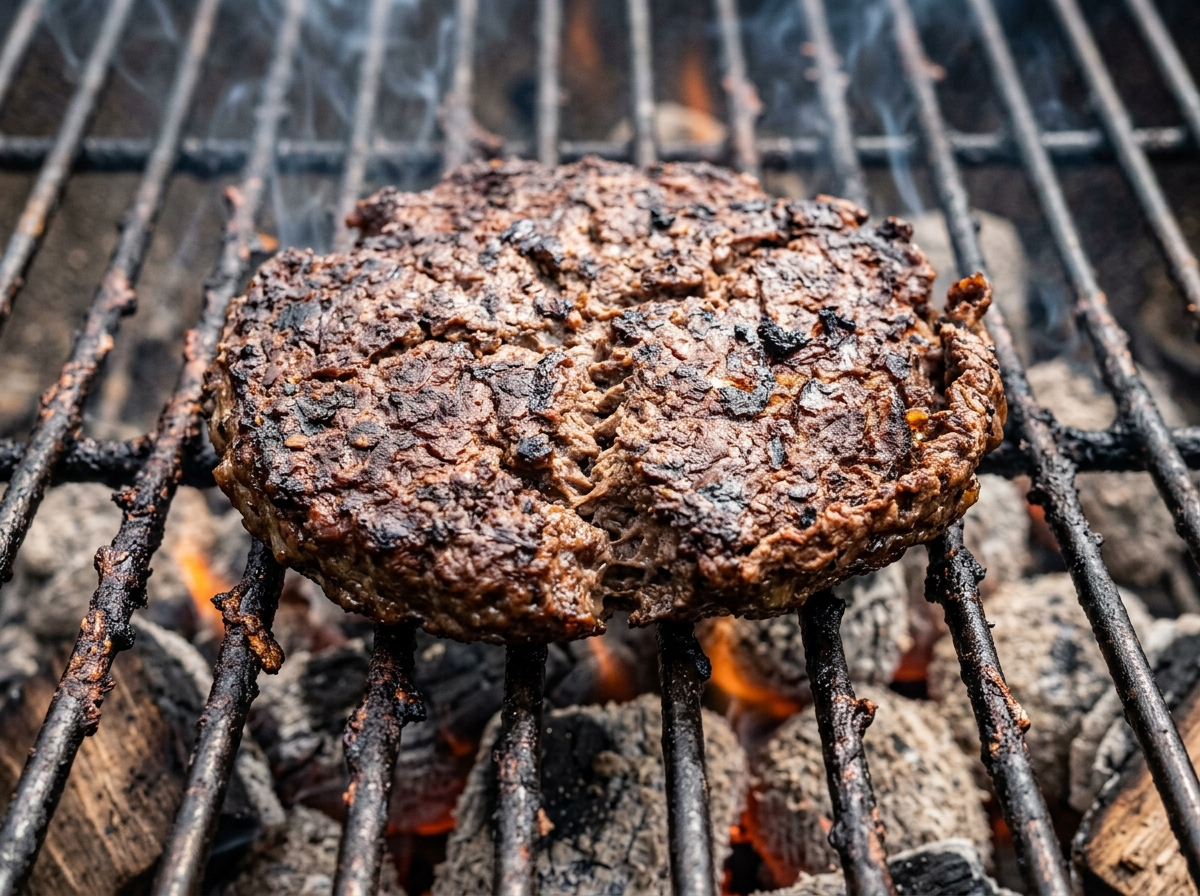
A burger can go from juicy to dry in less time than it takes to toast the buns. That’s why burgers dry out so often at home. It usually isn’t bad luck, and it usually isn’t the seasoning either. Heat, fat, timing, and handling are the real story. If your burgers look great outside but eat like cardboard inside, a few small fixes can change everything.
Why burgers dry out in the first place
A burger dries out when it loses too much water and fat while cooking.
That’s the short answer. The longer answer is a little more interesting.
Ground beef is made of muscle, fat, and water. As the patty heats up, the meat proteins tighten. Think of it like a sponge getting squeezed in your hand. The tighter that protein network gets, the more liquid it pushes out.
At the same time, the fat starts to melt. Some of that fat stays in the burger and makes each bite feel rich. Some of it runs out into the pan, onto the flat-top, or straight through the grill grates.
If too much water leaves and too much fat renders out, the burger stops feeling juicy. It starts feeling tight, crumbly, chewy, or dry.
That’s why two burgers can start with the same meat and end up very different. One stays loose and moist. The other turns firm and sad. The difference usually comes from how you built it and how long it stayed over heat.
A dry burger doesn’t always mean only one thing went wrong, either. Sometimes it’s lean beef. Sometimes it’s overcooking. Sometimes it’s a mix of three or four little mistakes that stack up.
Quick fact: For food safety, the USDA recommends cooking ground beef to 160°F in the center. That makes temperature control a big deal with burgers, because you want safety without pushing way past that point.
The biggest reasons burgers dry out
Using beef that’s too lean
Lean beef sounds like the safe choice if you want a lighter burger. The problem is that lean meat gives you less room for error.
A 90/10 or 93/7 blend can make a decent burger, but it dries out much faster than an 80/20 blend. Fat isn’t just there for flavor. It also helps protect the texture as the burger cooks.
That’s why so many cooks stick with 80/20 ground beef for classic burgers. It has enough fat to stay juicy without turning greasy if you cook it right.
If you want a deeper look at cuts and blends, this guide to the best meat for burgers is worth reading. Fat level matters just as much, so their breakdown of the best fat ratio for burgers helps too.
A common home-cook problem goes like this: you buy very lean beef, cook it until you feel “extra safe,” then wonder why the burger tastes dry. That combo almost always leads to a firmer patty.
Overworking the meat
A lot of people treat burger meat like bread dough. They mix hard, press hard, and shape very tight patties.
That sounds harmless, but it changes the final texture in a big way.
The more you work ground beef, the more the proteins stick together. Instead of a tender burger, you get something dense and springy. It starts to feel more like sausage than a loose burger patty.
Then, once it cooks, that tight structure holds less tenderness. Even if it isn’t bone dry, it can eat dry because the texture is too packed.
The fix is simple. Handle the meat just enough to form a patty that holds together. Don’t knead it. Don’t mash it into a solid brick.
Cold meat helps here too. Warm ground beef turns sticky faster, and sticky meat is easy to overwork.
Making patties too thick or too uneven
Thickness changes cook time more than most people expect.
A very thick burger stays on the heat longer, so the outside keeps cooking while the center catches up. That often leaves you with a dry outer ring and a better center. One bite feels overdone. The next bite feels fine.
Uneven patties cause the same trouble. Thin edges finish first. Thick middles take longer. So the burger cooks unevenly from the start.
A small dimple pressed into the center can help. Burgers tend to puff in the middle as they cook. A thumbprint keeps them flatter, which helps them cook more evenly.
If patty size gives you trouble, this article on how thick burgers should be makes it much easier to choose the right shape for your grill or pan.
For most backyard burgers, you want a patty thick enough to stay juicy but not so thick that the outside dries before the middle is ready.
Cooking past the right temperature
This is the biggest reason burgers dry out.
People often guess doneness by color, timing, or how firm the burger feels. Those clues can help, but they’re not reliable enough on their own.
A burger can look brown before it reaches a safe temperature. It can also stay a little pink after it’s fully cooked. Meat color depends on more than doneness alone. Myoglobin, pH, packaging, and cooking method all play a part.
Did you know? A burger can turn brown before it’s actually done, and some burgers stay pink even after they’ve reached a safe temperature. That’s why color alone fools so many people.
The best fix is an instant-read thermometer. It takes the guessing out.
If you want the simple version, cook ground beef to 160°F. If you want more detail on doneness and carryover cooking, this burger internal temperature guide lays it out clearly. And if you need a tool that makes this easy, here are some of the best thermometers for burgers.
One more thing matters here: overshooting the target. A burger cooked to 160°F is very different from one pushed to 175°F or 180°F. Those extra degrees don’t sound huge, but they can pull out a lot of moisture.
Using the wrong heat for the burger style
People blame high heat all the time. High heat isn’t the real villain.
Too much time on the heat is usually the bigger problem.
A smash burger wants intense heat and a very fast cook. A thick pub-style burger does better with strong heat at first, then enough control to finish without burning the outside.
If you cook a thick burger over blazing heat the whole time, the crust may look perfect while the inside keeps losing moisture. If you cook a thin burger over weak heat, it sits there too long and dries out anyway.
So the goal isn’t “low and slow” or “super hot” every time. The goal is the right heat for the size and style of burger you made.
Pressing the burger while it cooks
You’ve probably seen people smash a burger with a spatula after it’s already been cooking for a minute or two.
That sound you hear when the juices hit the hot surface? That’s moisture and fat leaving the patty.
Pressing a regular burger during cooking makes it drier. You’re literally squeezing out liquid that could’ve stayed inside.
There’s one exception. A true smash burger gets smashed at the very start, right when the ball of meat hits the hot griddle. That creates crust fast. After that, you leave it alone.
For a standard burger, don’t press it. Let the surface do its job.
Salting too early
Salt is great for flavor, but timing matters.
If you mix salt deep into the meat and let it sit too long before cooking, the texture starts to change. The meat gets tackier and tighter. That can make the burger feel denser and less juicy.
That’s why many cooks season the outside of the patty just before it goes on the grill or pan.
You still get good flavor. You still get a nice crust. But you avoid that firmer, sausage-like texture that shows up when the salt gets worked through the meat too early.
Skipping the rest
A burger doesn’t need a long rest like a roast, but it still helps to give it a few minutes.
Right off the heat, the inside is still very hot and active. Bite or cut into it instantly, and more liquid runs out.
Let it sit for about 3 to 5 minutes. That short pause can keep more moisture in the burger instead of on the plate.
A lot of dry burgers aren’t just overcooked. They’re also rushed.
Why burgers dry out on the grill more than you expect
Grill burgers are great, but grilling adds a few problems that pans and flat-tops don’t create as often.
The first issue is fat loss. On a grill, rendered fat drips through the grates. That’s part of the flavor story, sure. It’s also part of the moisture story. Lose too much fat, and the burger feels less rich.
The second issue is uneven heat. Most home grills have hot spots. One side runs much hotter than the other. The front and back may cook differently too. If you don’t notice that, one burger may turn out perfect while another dries out.
Then you get flare-ups. Fat hits the flame, fire jumps up, and now the outside starts charring before the inside is where you want it.
Outdoor cooking adds one more wrinkle: weather. Wind, cold air, and a not-quite-preheated grill can stretch the cook time. A longer cook often means a drier burger.
A skillet or flat-top gives you a little more control because the heat is even and the burger has full contact with the surface. You can still make a juicy burger on a grill, though. You just need to manage it better.
Pro tip: Set up a two-zone grill. Keep one side hotter for searing and one side a bit cooler for finishing. That gives you a safe place to move burgers if flare-ups start.
Another grill mistake shows up with thin store-bought patties. They cook very fast, but people often leave them on too long because the grill feels less direct than a pan. By the time the cook “looks right,” the burger is already dry.
So if your burgers dry out mostly on the grill, the issue usually isn’t grilling itself. It’s heat control, flare-ups, and extra cook time.
How to keep burgers juicy every time
Fixing dry burgers doesn’t require a fancy recipe. You just need a better system.
Start with the right beef
For most classic burgers, 80/20 is the safest bet for flavor and juiciness.
If you want something a bit leaner, 85/15 can still work well. Once you move much leaner than that, you need very careful timing or the burger dries out fast.
Fresh ground chuck is a strong choice for home cooks because it has solid flavor and enough fat to stay tender.
Form loose patties
Use a light hand.
Portion the meat, bring it together, and stop. Don’t knead it smooth. Don’t compact it like a baseball.
A looser patty stays more tender after cooking. A tightly packed one feels firmer and can seem dry even if you didn’t totally overcook it.
Aim for an even shape and press a small dimple in the center. That helps the burger stay flatter as it cooks.
Season the outside, not the bowl
Sprinkle salt and pepper on the outside just before the burger goes on the heat.
That gives you good surface flavor without changing the meat texture too early.
If you like garlic powder, onion powder, or a burger blend, keep it light. Too many dry seasonings mixed into the meat can muddy the texture and distract from the beef.
Use enough heat, but don’t drag out the cook
A juicy burger needs a hot cooking surface.
If the pan or grill isn’t hot enough, the burger sits there and loses moisture before it gets a good crust. If the heat is wild and uncontrolled, the outside dries while the middle catches up.
You want strong heat and a sensible cook time.
For thicker burgers, that may mean searing first, then finishing with a little less direct heat. For thin burgers, it may mean a short, fast cook and getting them off right on time.
Check the temperature
This one saves more burgers than any secret ingredient ever will.
Use an instant-read thermometer and check the center. For thin patties, inserting the thermometer sideways often works best. For thicker patties, check from the top or side and aim for the middle.
If you want a full walkthrough of small technique fixes, this guide on how to keep burgers juicy pairs well with the steps here.
Let the burger rest, then build it smart
Give the burger a short rest before serving.
Also, don’t ignore the bun and toppings. A dry bun can make a decent burger feel dry. A little sauce, melted cheese, grilled onions, or even a juicy tomato slice can improve the whole bite.
That doesn’t mean toppings should hide a bad burger. It just means the full build matters.
A simple routine works best:
- Use 80/20 or 85/15 beef
- Form loose, even patties
- Salt the outside right before cooking
- Cook over a hot surface
- Pull the burger at the right temperature
- Rest it for a few minutes before serving
That’s it. No fancy hacks needed.
Can you fix a dry burger after it’s cooked?
You can improve a dry burger, but you usually can’t fully reverse it.
Once the meat has lost too much moisture and fat, that part is done. More heat won’t help. More time won’t help. Reheating almost always makes it worse.
Warning: Don’t keep cooking a dry burger “just to finish it off.” If it already feels firm, extra heat will only push out more moisture.
What you can do is make the burger feel better to eat.
Add melted cheese. Spoon on burger sauce, mayo, or mustard. Top it with sautéed onions or mushrooms. A little butter or beef tallow on top while it rests can help the mouthfeel too.
If the burger is really dry, turn it into something else. Chop it up for tacos, mix it into chili, fold it into mac and cheese, or use it in a rice bowl. At that point, you’re better off repurposing than pretending it’s still a perfect burger.
Why restaurant burgers stay juicier
Ever notice how a diner burger or a smash burger from a good burger shop often tastes juicier than the one you make at home, even if it isn’t thicker?
That usually comes down to process.
Restaurants often use beef with enough fat. They cook on very hot flat-tops with even heat. They shape patties the same way every time. They don’t guess much. They know their cook time, their surface temp, and their final target.
A lot of them also use thinner patties, which sounds backward at first. But a thinner patty can cook fast, get a great crust, and spend less total time losing moisture.
They also build burgers to eat well right away. Toasted buns, cheese, sauce, pickles, onions, and lettuce all affect the final bite.
So if you’re chasing that restaurant-style juiciness, don’t just look for a secret ingredient. Look at the whole chain:
- enough fat
- loose patty texture
- high, even heat
- short cook time
- accurate temperature
- quick serving
That’s the real difference most of the time.
- FAQ Section
FAQ
Why do burgers dry out even if I don’t cook them for very long?
Short cook time doesn’t always mean safe or juicy. A thin burger over very high heat can dry out fast. A thick burger made from lean beef can also feel dry even after only a few minutes. The main causes are still the same: low fat, tight packing, uneven thickness, and cooking past the right internal temperature.
Is 80/20 the best beef for juicy burgers?
For most home cooks, yes. 80/20 ground beef gives you the best balance of fat, flavor, and forgiveness. You can make good burgers with 85/15, and even 90/10 if you’re careful, but leaner blends dry out faster and leave less room for mistakes.
Why do burgers dry out more on the grill than in a pan?
Grills let fat drip away, create flare-ups, and often cook less evenly than a pan or flat-top. Those things can stretch cook time or overcook the outside before the center is ready. A pan gives you steadier heat, so it’s easier to keep burgers juicy.
Should I add egg or breadcrumbs to keep burgers moist?
Not for a classic burger. Egg and breadcrumbs can change the texture and make the patty feel more like meatloaf. If your burgers are dry, the better fix is to use beef with more fat, handle it less, and cook it to the right temperature.
Should you press burgers while cooking?
No, not regular burgers. Pressing a burger after it starts cooking squeezes out juices and rendered fat. The only real exception is a smash burger, where you press it right at the start to create crust. After that, leave it alone.
- Conclusion
Dry burgers usually come from a few simple problems, not one big mystery. Lean meat, overworked patties, uneven thickness, too much time on the heat, and no thermometer will do it every time. Your next move is easy: use beef with enough fat, shape the patties gently, and stop cooking by guesswork. Once you do that, the first bite will tell you you’re on the right track.