
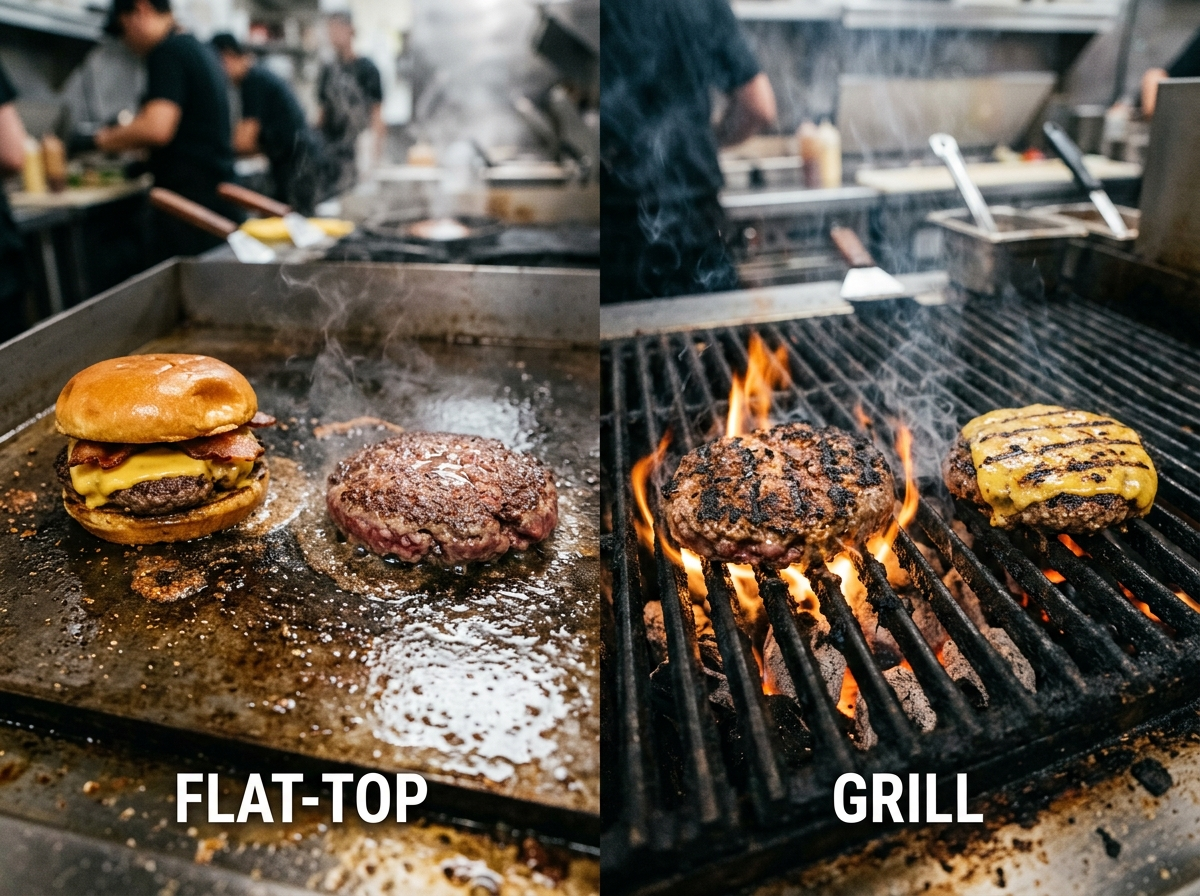
Two burgers can start with the same beef, same seasoning, and same cook time, yet taste totally different just because of the cooking surface. That’s why the flat top vs grill for burgers debate never really goes away. You’re not just choosing between two tools. You’re choosing between crust or smoke, diner-style control or backyard fire flavor. The good news? Once you know what each one does best, the choice gets a lot easier.
Flat Top vs Grill for Burgers: The Quick Answer
A flat top gives you more surface contact, which means a deeper crust, more even browning, and easy cooking for smash burgers, onions, bacon, and buns all at once.
A grill gives you open-flame flavor, smoky aroma, and that classic cookout taste a flat metal surface can’t fully copy.
So which one is better?
The honest answer is simple: the best choice depends on the burger you want to eat.
If you love thin patties with crispy edges and melty cheese, a flat top usually wins. If you want that backyard burger taste with a little char and smoke, a grill feels more satisfying.
Here’s the short version:
- Pick a flat top for smash burgers, diner-style cheeseburgers, and easy consistency.
- Pick a grill for smoky flavor, thicker patties, and classic outdoor burgers.
- Both can make juicy burgers if your beef blend, heat, and timing are right.
- Your technique matters more than the tool once you get into the basics.
That last part gets missed a lot.
A flat top won’t magically fix dry burgers. A grill won’t ruin every patty. If your meat is too lean, your heat is off, or you cook past the right temp, both methods will let you down.
Quick Fact: The USDA recommends cooking ground beef to 160°F. That matters on both a flat top and a grill.
What Really Changes Between a Flat Top and a Grill?
The difference isn’t just “one is metal and one has grates.” The burger cooks in a different way on each surface, and that changes the crust, flavor, texture, and even how forgiving the cook feels.
Heat contact changes the crust
A flat top cooks with full contact heat. The whole bottom of the burger sits on hot steel or cast iron. That creates strong browning across the entire surface.
That browning is the Maillard reaction. It’s the reason burgers taste savory, rich, and a little nutty instead of plain boiled meat. More contact usually means more crust.
A grill works differently. The burger touches only the grates. You get dark grill marks where the metal touches, while the rest of the surface cooks through radiant heat and hot air.
That’s not bad. It’s just a different result.
If you want that diner-style crust that almost shatters when you bite the edge of a smash burger, a flat top has a big advantage. A grill can make a tasty burger, but it won’t give you the same all-over crust unless you add a griddle plate or cast-iron pan on top of the grill.
Did you know? A great smash burger isn’t about pressing hard forever. It’s about pressing once, early, so the meat makes full contact with the hot surface.
Fat behaves differently on each surface
This is where a lot of the burger feel comes from.
On a grill, rendered fat drips through the grates. As it hits the flames, burners, or hot charcoal, it can create smoke and flare-ups. That smoke adds flavor. It’s part of why grilled burgers smell like summer.
On a flat top, the fat stays on the cooking surface. The burger sits in some of that rendered beef fat as it cooks. You get a richer, almost fried-beef flavor. That’s why flat-top burgers often taste a little beefier and more “diner-like.”
Neither style is wrong. They just lean in different directions.
A grill gives you more smoke and fire notes.
A flat top gives you more beef-fat richness and crust.
Why do restaurant burgers often taste better on a flat top?
Because restaurants chase consistency.
A flat top makes it easier to repeat the same burger again and again. The surface stays even. There are fewer hot gaps than open grates. You can toast buns, steam cheese, cook onions, and keep multiple patties moving without much guesswork.
That’s one reason diners, smash burger shops, and short-order kitchens rely on griddles and flat tops.
You also get more browning, and browning means flavor.
That restaurant taste isn’t only about the surface, though. Good places also use the right beef, handle it gently, salt at the right time, and stop cooking before the burger dries out. If you want a better starting point, the right fat ratio for burgers makes a bigger difference than most people think.
Does a flat top make burgers juicier?
Sometimes it feels that way, yes. But not because it “seals in juices.” That idea gets repeated a lot, and it isn’t really how meat works.
A flat top often gives you a juicier bite because:
- less fat drips away
- the patty cooks more evenly
- thin burgers finish fast
- flare-ups don’t torch the outside before the center is ready
A grill can still make a very juicy burger. You just need better heat control and the right patty thickness. If your burgers often turn out dry, this guide on why burgers dry out can help you spot the real issue fast.
Can a grill still make a better-tasting burger?
Absolutely, if the flavor you want is smoke, char, and that classic cookout smell.
Some people don’t care about perfect edge-to-edge crust. They want a burger that tastes like it came off charcoal at a family cookout. A flat top can’t fully replace that.
That’s why the “better” option depends so much on what you value more:
- crust and consistency
- or smoke and grill flavor
If you love burgers and want them extra moist no matter which surface you use, take a look at these tips on how to keep burgers juicy.
Flat Top vs Grill for Burgers by Burger Style
This is where the decision gets much easier. Instead of asking which tool is “best,” ask which burger you’re making.
Smash burgers: flat top wins by a mile
A true smash burger needs hard contact with hot metal.
You place a loosely packed ball of beef on the surface, smash it once, and let it brown hard. That creates the crispy, lacy edges and deep crust that people want from a proper smash burger.
Open grill grates can’t do that on their own.
Yes, you can use a cast-iron griddle over a grill. You can also use a griddle insert on a gas grill or a charcoal grill. But now you’re basically turning the grill into a flat top for that cook.
So for smash burgers, the answer is simple: use a flat top, griddle, or cast-iron surface.
If that’s your favorite style, this guide on smash burgers at home pairs perfectly with a flat-top setup.
Classic backyard burgers: grill feels more natural
Think thicker patties. Soft buns. Maybe lettuce, tomato, pickles, and a little smoke in every bite.
That’s grill territory.
A gas grill gives you control and speed. A charcoal grill adds stronger smoke and a deeper outdoor flavor. Thick burgers also benefit from grill zones, where you sear over higher heat and finish over a cooler side.
That setup helps you avoid a burnt outside with an underdone center.
If you’re cooking outdoors and want more control, knowing the best grill temperature for burgers helps a lot more than people expect.
Thick pub burgers: both can work well
This is where things get interesting.
A thick burger on a flat top develops a more even crust and usually cooks more predictably. Cheese melts easily. You can baste with onions or butter if you want extra richness.
A thick burger on a grill picks up more smoke and a stronger char note. That can be fantastic, especially with aged cheddar, bacon, or barbecue sauce.
So what should you choose?
If you want control, use a flat top.
If you want fire flavor, use a grill.
The beef blend matters a lot here too. Rich burgers need enough fat to stay tender, especially if you like thicker patties.
Turkey, chicken, and plant-based burgers: flat top is more forgiving
These patties often stick less on a solid surface than on open grates, and they’re easier to flip without breaking apart.
Flat tops also help with plant-based burgers that release moisture or have softer structure. You get better browning and less risk of losing part of the patty through the grates.
That doesn’t mean grills can’t handle them. It just means a flat top asks less from you.
Frozen burgers: grill is fine, flat top is cleaner
Lots of people ask this because weeknight burgers are often about speed, not burger theory.
Frozen patties work on both surfaces. A grill handles them well because there’s space, airflow, and enough heat to cook them through. A flat top handles them neatly and gives better browning once the surface moisture cooks off.
For frozen burgers, I’d lean this way:
- Grill if you want quick outdoor burgers for a group
- Flat top if you want better crust and easier topping control
How to Cook Great Burgers on a Flat Top
A flat top makes burger cooking feel easy, but a few details still matter.
Start with the right heat
You want the surface hot enough to brown the meat fast, but not so hot that the crust burns before the inside catches up.
For most burgers, a flat top surface around 375°F to 450°F works well.
Thin smash burgers like the higher end of that range. Thicker patties do better a little lower so they don’t overbrown too fast.
If you’re cooking 80/20 beef, you usually don’t need much oil. The patty will make its own fat almost right away.
Season late, not too early
Salt draws moisture to the surface. That’s great right before cooking because it helps seasoning stick and improves the bite.
Salting too early can change the texture and make the patty feel tighter.
Shape the burgers gently, keep them cold, and season just before they hit the hot surface.
A simple flat-top method that works
- Preheat the flat top until it’s evenly hot.
- Place the patties down and leave them alone for crust to form.
- If you’re making smash burgers, smash only once in the first 30 seconds.
- Flip when the edges look browned and the patty releases easily.
- Add cheese near the end and let it melt fully.
- Check the center with an instant-read thermometer and pull ground beef at 160°F.
That last step matters more than guessing by color.
A lot of burgers look done outside and still need a little more in the middle. Using one of the best thermometers for burgers takes the stress out of it.
Use the space around the burger
This is one of the biggest flat-top advantages.
You can toast buns beside the patties. You can caramelize onions in the burger fat. You can melt cheese under a dome. You can even cook bacon at the same time without walking back and forth.
That makes flat tops really nice for families and parties.
Pro Tip: Drop a small pile of sliced onions near the burger, let them soften in the rendered fat, then slide them under the cheese right after the flip. That one move alone makes a homemade burger taste more like a diner burger.
Warning: don’t keep pressing the burger
Smashing at the start is great for smash burgers.
Pressing after the patty has already started cooking is just juice theft.
Once the crust forms, leave it alone.
How to Cook Great Burgers on a Grill
A grill gives you more flavor range, but it also asks for a little more attention.
Build two heat zones if you can
This is one of the easiest ways to cook better grilled burgers.
Set up one side hotter for searing and one side cooler for finishing. On a gas grill, leave one burner lower. On a charcoal grill, bank more coals to one side.
That gives you options.
If the outside browns too fast, move the burger. If flare-ups start, move the burger. If a thick patty needs a minute or two more, move the burger.
Simple fix. Big result.
Preheat and clean the grates well
Hot, clean grates release food better.
A dirty grill grabs the meat and tears the crust. Then people think their burger is fragile, when the real problem is the grate.
Let the grill get fully hot. Brush it clean. Oil the grates lightly if needed.
Then place the patties down and give them time to release on their own.
A simple grill method that works
- Preheat the grill to medium-high heat.
- Set up a hotter side and a cooler side if possible.
- Put the patties over direct heat and close the lid.
- Flip once the burger releases easily from the grates.
- Move thicker patties to the cooler zone if the outside is getting too dark.
- Add cheese during the last minute and close the lid again.
- Pull the burgers once the center reaches 160°F.
That basic system works for gas grills, charcoal kettles, and even pellet grills with direct-heat zones.
Don’t chase grill marks too hard
A lot of people treat grill marks like the goal.
They look nice, sure. But flavor comes from full, steady browning and properly cooked beef, not just dark lines.
That’s why some grilled burgers taste good but not great. The meat gets marks, yet the rest of the surface stays pale.
If you want more all-over browning and still want grill flavor, put a cast-iron griddle or plancha over part of the grill. You’ll get the best parts of both methods.
Watch flare-ups
Flare-ups are the grill’s biggest trap for burgers.
They can add a little char in a good way. They can also burn the outside fast and leave bitter flavor behind.
If flames jump up, move the burger to the cooler side for a moment. Don’t stand there and hope it “adds flavor.”
It usually adds burnt fat.
So, Which One Should You Choose?
You don’t need a dramatic answer here. You just need the right one for your kitchen, your budget, and your burger style.
Choose a flat top if you want easy wins
A flat top makes sense if you:
- love smash burgers
- want strong crust and even browning
- cook for a family or group often
- like making onions, buns, bacon, and burgers together
- want fewer flare-ups and less guesswork
It’s also great for beginners. The surface is easier to read, easier to manage, and easier to repeat.
That’s why so many home cooks fall in love with flat tops after a few burger nights.
Choose a grill if you care most about cookout flavor
A grill makes sense if you:
- want smoke and char
- prefer thicker burgers
- already grill often for steaks, chicken, or veggies
- like cooking outdoors
- enjoy that classic backyard burger taste
The grill also feels more flexible if you want one cooker for a lot of outdoor meals, not just burgers.
The best answer for many home cooks is both
This might sound like a cop-out, but it’s true.
A grill plus a griddle plate gives you a ton of freedom. You can cook smash burgers one day, thicker grilled patties the next, and still use the same outdoor setup.
A lot of people who think they need to “pick a side” really just need a better surface for a specific burger style.
If you already own a grill, you may not need a separate flat top right away. A cast-iron griddle over your grill can tell you very quickly whether you prefer crust or smoke.
Common Mistakes That Ruin Burgers on Both Surfaces
This is the part many articles skip, and it’s often the real reason people feel disappointed with burgers.
Using beef that’s too lean
Lean ground beef sounds like a smart choice until it eats like dry meatloaf.
For burgers, especially flat-top burgers, 80/20 is a sweet spot for many cooks. It gives you better flavor, better browning, and a softer bite.
Leaner beef can work, but you need tighter heat control and a careful stop point.
Overworking the meat
The more you mix, squeeze, and pack the beef, the firmer the burger gets.
Loose handling makes a better burger. Shape the patty just enough to hold together.
If you grind your own beef at home, this gets even easier because you control texture from the start. But even store-bought ground chuck can turn out great if you don’t compress it like a hockey puck.
Pressing the burger at the wrong time
Let’s settle this one clearly.
Smashing at the start for a smash burger? Good.
Pressing after the burger is already cooking? Bad.
That sends moisture onto the flat top or into the flames instead of keeping it in your bite.
Guessing doneness by color alone
Color can fool you.
A burger may look done outside and still be under target inside. Or it may look pinkish and still be safe if it hit the right temp.
A thermometer fixes that fast.
Ignoring the bun
You can make a great patty and still end up with a forgettable burger if the bun is cold, soggy, or flimsy.
Toast it.
That small step changes everything. A toasted bun holds sauces better, adds texture, and keeps the burger from feeling wet.
Pro Tip: Toast the cut side with a little butter or mayo. You’ll get better color and a stronger barrier against burger juices.
4. FAQ Section
Frequently Asked Questions
Is a flat top or grill better for burgers?
A flat top is better for smash burgers, even crust, and diner-style cheeseburgers. A grill is better for smoky flavor and classic backyard burgers. Neither is always better. The right choice depends on the style of burger you want.
Why do burgers taste different on a flat top and a grill?
They cook with different kinds of heat. A flat top gives full surface contact, which creates more crust and lets the burger cook in some of its own fat. A grill lets fat drip onto flames or hot burners, which adds smoke and char flavor.
Can you make smash burgers on a grill?
Not well on open grates alone. Smash burgers need full contact with a hot metal surface. If you want smash burgers on a grill, use a cast-iron griddle, plancha, or flat-top insert.
Which one makes juicier burgers?
Either one can make juicy burgers if the beef has enough fat and you don’t overcook it. A flat top often seems juicier because less fat drips away and the patty cooks more evenly. Still, good meat and proper temp matter more than the surface by itself.
What temperature should burgers reach on a flat top or grill?
For ground beef, the USDA recommends 160°F in the center. Use an instant-read thermometer for the most reliable result, especially with thick patties.
5. Conclusion
If you want the cleanest answer to flat top vs grill for burgers, here it is: flat tops win for crust and control, grills win for smoke and cookout flavor.
That means your next step is easy. Think about the burger you actually crave most. Thin and crispy with onions and cheese? Go flat top. Thick, smoky, and backyard-style? Fire up the grill.
Then do the best test of all. Cook the same beef on both surfaces and trust your own taste buds. That’s the kind of burger research nobody complains about.