
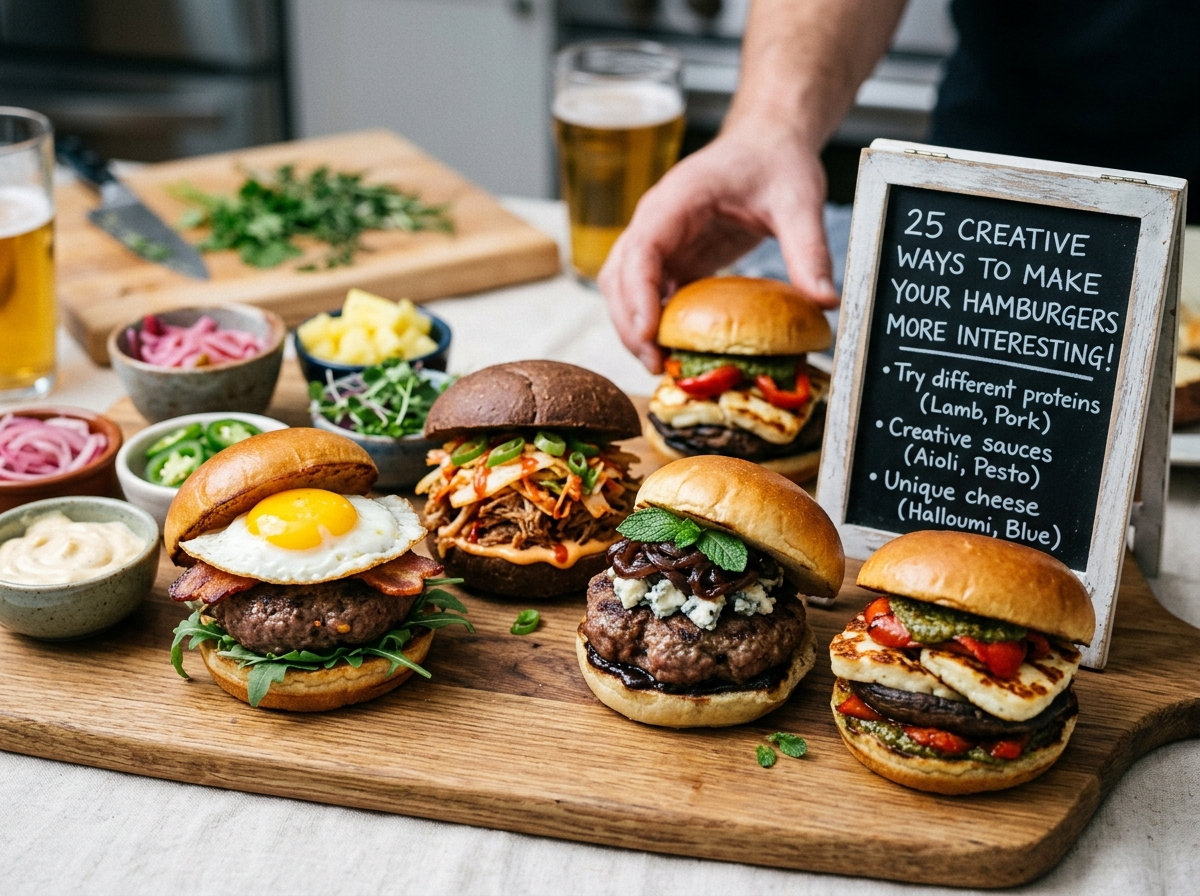
Americans eat roughly 50 billion burgers every year. That’s about three burgers per person, per week. And yet, most of those burgers taste exactly the same — ground beef, American cheese, ketchup, maybe some pickles, slapped between a plain bun. There’s nothing wrong with that. It’s a classic for a reason. But after the hundredth time? It gets a little tired.
Here’s the thing. A hamburger is basically a blank canvas. The patty, the bun, and everything in between — every single layer is an opportunity to do something different. You don’t need professional kitchen equipment or rare ingredients. You just need a willingness to step outside the usual routine and try something unexpected.
These 25 ideas range from dead-simple swaps you can make tonight to more adventurous builds for when you really want to impress. Some play with the meat itself. Others rethink the toppings, the bun, or the cooking method entirely. Pick one or two that catch your eye, or go wild and combine several. That’s the beauty of a burger — there are no real rules.
Rethink the Meat Itself
Most people reach for the same pack of ground beef every time they make burgers. That’s a perfectly fine starting point, but the meat is the foundation of everything. Changing what’s in the patty — or how you form it — can completely shift the experience.
Blend Your Own Custom Grind
Pre-ground beef from the grocery store works, but grinding your own meat at home opens up a different world. You can combine cuts like chuck with short rib, brisket, or even sirloin to create a blend that has the exact fat content and flavor profile you want. A mix of 70% chuck and 30% short rib, for example, gives you a patty that’s beefy, rich, and holds together beautifully on the grill. If you’ve never tried it, our guide on how to grind your own hamburgers walks you through the whole process.
Go Beyond Beef
Who says a burger has to be beef? Ground lamb mixed with cumin and fresh mint makes an incredible Mediterranean-style burger. Ground pork seasoned with ginger and soy leans Japanese. Turkey and chicken patties work too, though they need a little extra fat — mixing in some finely diced bacon or a splash of olive oil keeps them from drying out. You might be surprised how many types of ground meat can make great burgers once you start experimenting.
Stuff the Patty
Instead of putting everything on top, put it inside. A Juicy Lucy — the famous Minneapolis creation — buries cheese right in the center of the patty so it melts into a molten pocket as the burger cooks. But don’t stop at cheese. Stuff your patties with jalapeños and cream cheese, sun-dried tomatoes and feta, or even a spoonful of caramelized onions. The trick is to make two thin patties, place your filling in the center of one, and seal the second patty over the top, pressing the edges firmly so nothing leaks out during cooking.
Try the Smash Burger Method
If you’ve been forming thick, round patties your whole life, smash burgers will feel like a revelation. You take a loosely packed ball of ground beef, place it on a screaming-hot flat surface, and press it flat with a heavy spatula. The result is a thin patty with crispy, caramelized edges and an almost lacy texture. The Maillard reaction goes into overdrive because so much surface area hits the hot metal at once. It’s fast, it’s simple, and it creates a completely different burger experience. We’ve got a full breakdown of how to make smash burgers at home if you want to get the technique right.
Play With Toppings That Actually Change the Flavor
Lettuce, tomato, onion, pickle. That’s the standard lineup, and it works. But toppings are where you can really express some creativity without changing your patty recipe or cooking method at all.
Caramelize Your Onions (Really Caramelize Them)
There’s a massive difference between grilled onion rings tossed on a burger and true caramelized onions — the kind that cook low and slow for 30 to 45 minutes until they turn dark, jammy, and sweet. They melt into the cheese and create an almost French onion soup vibe on the burger. Thinly slice two or three large yellow onions, cook them in butter on medium-low heat, stir occasionally, and be patient. You can’t rush this. The payoff, though, is worth every minute.
Add a Fried Egg
A runny fried egg on top of a burger changes everything. When you bite through the yolk, it acts like a second sauce — rich, creamy, and slightly savory — that coats the meat and the bun. It’s common in Australian and South American burger culture, and once you try it, you’ll wonder why you didn’t do it sooner. Fry the egg so the whites are fully set but the yolk is still liquid. Season it with a little salt and black pepper, and place it right on top of the cheese.
Use Unexpected Fruit
This sounds strange until you try it. A thin slice of grilled pineapple brings acidity and sweetness that cuts through a rich, fatty patty. Thinly sliced green apple with sharp cheddar creates a surprisingly balanced bite. Even a quick blueberry compote or fig jam — paired with blue cheese and arugula — can take a burger from backyard basic to something you’d happily pay $18 for at a restaurant. The key is pairing sweet or tart fruit with salty, sharp, or smoky elements so nothing feels out of balance.
Go the Pickle-Everything Route
Beyond your standard dill pickle slices, think about pickled red onions, pickled jalapeños, pickled slaw, or even quick-pickled cucumbers made with rice vinegar and sugar. Pickled toppings add that essential tang and crunch that balances out the richness of the meat. You can make a quick pickle in about 20 minutes — just heat equal parts vinegar and water with a tablespoon of sugar and salt, pour it over thinly sliced vegetables, and let them sit while your grill heats up.
Swap Ketchup for Something Better
Ketchup is fine. But have you tried a chipotle mayo? Or a garlic aioli? What about a Korean gochujang glaze, or a simple herb chimichurri? Changing the sauce is the easiest and fastest way to make a familiar burger taste completely new. A homemade burger sauce — mayo, ketchup, relish, a splash of hot sauce, and a pinch of garlic powder — takes 30 seconds to mix and immediately elevates things. You can also try whole grain mustard, ranch with a squeeze of sriracha, or even a good quality barbecue sauce that you wouldn’t normally reach for.
Upgrade the Bun Situation
The bun matters more than most people think. It’s literally 50% of every bite. A bland, dry, or structurally weak bun can drag down even the best patty and toppings. Here’s where small changes make a big difference.
Toast Your Buns (Always)
This is the simplest upgrade on the entire list, and it costs you nothing. Butter the cut side of your buns and toast them on a hot skillet or directly on the grill for about 60 seconds. You’ll get a golden, slightly crunchy surface that adds texture and — more importantly — creates a barrier that prevents the juices from soaking through and making everything soggy. If you’re cooking on a flat top versus a grill, both work great for toasting buns. Just don’t skip this step.
Try a Different Bread Entirely
Brioche buns have become popular for good reason — they’re rich, slightly sweet, and soft without falling apart. But you’ve got other options too. Pretzel buns add a chewy, salty exterior that pairs perfectly with mustard-heavy burgers. Ciabatta rolls give you a crustier bite. English muffins work surprisingly well for smash burgers because they’re sturdy and have all those nooks and crannies that catch melted cheese. If you’re feeling adventurous, try grilled naan bread or even a thick slice of Texas toast.
Ditch the Bun Altogether
Sometimes the best move is no bun at all. Wrap your burger in a large butter lettuce leaf for a low-carb option that still gives you something to hold onto. Or place the patty between two crispy hash brown patties — yes, it’s indulgent, but it’s also unforgettable. Some people even use grilled portobello mushroom caps as the “bun,” which adds an earthy flavor that pairs especially well with Swiss cheese and sautéed onions.
Get Creative With Cheese
Cheese is the single most impactful topping on a burger. The type you choose, how you melt it, and when you add it — all of it matters.
Move Past American and Cheddar
American cheese melts like a dream, and sharp cheddar has that familiar bite. They’re both great. But the cheese world is enormous, and your burger deserves to explore it. Try pepper jack for heat, gruyère for a nutty, almost smoky depth, brie for creamy decadence, or smoked gouda for something that tastes like it came off a wood-fired grill even if it didn’t. Blue cheese crumbles — especially Roquefort or Gorgonzola — paired with a well-done patty and some caramelized onions will create a steakhouse experience right at home.
Make a Cheese Skirt
This one comes from the smash burger world. When you place a slice of cheese on the patty while it’s on the griddle, let the cheese intentionally overflow past the edge of the meat and onto the hot cooking surface. That overflowing cheese crisps up into a lacy, crunchy, golden cheese “skirt” around the patty. It’s part topping, part texture, part visual showstopper. You need a hot flat top or cast iron pan — a grill grate won’t give you the same result.
Try a Beer Cheese Sauce
Instead of a solid cheese slice, pour warm beer cheese sauce over the top. Melt together cream cheese, sharp cheddar, a splash of beer (a lager or pilsner works best), and a pinch of garlic powder. Whisk until smooth. It coats the patty like a blanket and drips down into every layer. This turns your burger into something that belongs at a pub, and the effort is minimal.
Change How You Cook the Burger
The cooking method affects texture, crust, juiciness, and overall flavor just as much as the ingredients do. If you’ve only ever grilled your patties, you’ve been missing some great options.
Cook on Cast Iron
A heavy cast iron skillet, preheated until it’s almost smoking, gives you a sear that’s hard to replicate on a grill grate. Because the entire surface of the patty is in contact with the metal, you get a uniform, deep-brown crust with more Maillard reaction than an open flame typically produces. Cast iron is how most diners and burger joints cook their patties, and there’s a reason for that. Plus, you can cook indoors year-round.
Try a Reverse Approach for Thick Patties
If you prefer thick, pub-style burgers — the kind that are an inch or more — cooking them entirely over high heat usually means a charred outside and a raw center. Instead, start them on the cooler side of your grill (indirect heat) or in a low oven at around 250°F until the internal temperature hits about 10–15 degrees below your target. Then finish them over high heat for 60–90 seconds per side to build that crust. It’s the same technique steakhouses use for thick cuts of beef, and it works brilliantly for burgers. If you’re not sure what temperature you’re aiming for, our burger internal temperature guide breaks it down by doneness level.
Use Wagyu Tallow for Cooking
Here’s a trick that sounds fancy but is actually pretty straightforward. Instead of cooking your burgers in regular vegetable oil or butter, use wagyu beef tallow. It adds a rich, beefy flavor that amplifies everything about the patty. The tallow bastes the meat as it cooks, keeping things juicy and adding depth. We’ve written about how to use wagyu tallow for burgers and it’s honestly one of the easiest ways to make a noticeable difference.
Build Around a Theme
One of the most fun ways to make burgers more interesting is to give them a theme. Instead of randomly throwing toppings together, pick a cuisine or flavor profile and build every layer around it.
The Mexican Street Burger
Season the patty with cumin, chili powder, and a pinch of smoked paprika. Top it with pepper jack cheese, quick-pickled jalapeños, a smear of guacamole, and a drizzle of crema or sour cream. Serve it on a lightly charred bun that you’ve brushed with lime butter. Every bite should remind you of street tacos — smoky, bright, a little spicy, a little cool.
The French Bistro Burger
Use a blend of beef with a small amount of ground pork for extra richness. Top the patty with brie or camembert, Dijon mustard, arugula, and caramelized shallots instead of onions. Serve on a toasted brioche bun. A little cornichon on the side wouldn’t hurt. It’s sophisticated without being fussy.
The Southern Comfort Burger
Think pimiento cheese spread, thick-cut bacon, and a fried green tomato slice. You could also add a drizzle of comeback sauce — that classic Mississippi condiment made with mayo, chili sauce, and a bunch of spices. If you’re into Southern comfort foods for watch parties, this burger fits right into that world.
The Nashville Hot Burger
Take everything people love about Nashville hot chicken and apply it to a burger. Season the patty aggressively. After cooking, brush it with a paste made from cayenne pepper, brown sugar, paprika, and melted butter. Top with creamy coleslaw and bread-and-butter pickles. Serve on white bread if you want to stay authentic, or on a soft potato bun if you want something sturdier. If you’ve ever made Nashville hot chicken, you already know the flavor profile — it translates to burgers beautifully.
The Breakfast Burger
This works for any meal, not just morning. Cook a patty, top it with a slice of American cheese, two strips of crispy bacon, a fried egg (runny yolk, please), and a thin layer of maple syrup or maple aioli. Some people add a hash brown patty inside for extra crunch. It’s rich, it’s over the top, and it makes people very happy.
Small Touches That Make a Surprisingly Big Difference
Not every upgrade needs to be dramatic. Sometimes it’s the small, almost invisible details that separate a good burger from one that makes people stop mid-bite and say “what did you do differently?”
Season Generously (and at the Right Time)
A lot of home cooks under-season their burgers. Others mix salt into the ground meat before forming patties, which actually tightens the protein strands and creates a denser, tougher texture — more like a meatball than a burger. Instead, season the outside of the formed patty liberally with salt and pepper right before it hits the heat. The salt creates a flavorful crust without affecting the interior texture. If you want to go deeper on this, our guide on how to season burgers properly covers the technique and common mistakes.
Pro Tip: A little garlic powder and onion powder mixed into your salt-and-pepper seasoning adds a background flavor that makes people think you did something complicated. You didn’t. It took five seconds.
Add Texture Contrast
The best burgers have something crunchy in every bite to contrast with the soft meat, melted cheese, and pillowy bun. This can come from crispy fried onion strings, a handful of crushed kettle chips, a few crunchy homemade potato chips, or even raw shredded cabbage dressed with a little lime juice. That textural contrast keeps your palate engaged — you don’t get bored halfway through the burger.
Think About Temperature Contrast Too
A warm patty with cold toppings creates an interesting sensory experience. Cool, crisp lettuce against hot melted cheese. A chilled slice of tomato against a seared, juicy patty. Or flip the script — serve a hot patty with warm, sautéed mushrooms and onions, and contrast it with a cold, creamy horseradish sauce. These temperature differences wake up your taste buds and make each bite feel more dynamic.
Let the Patty Rest (Briefly)
Just like a steak, a burger benefits from a short rest after cooking — about two to three minutes. This lets the juices redistribute so they don’t all pour out the second you bite in. Place the cooked patty on the bottom bun during this rest so the bun absorbs some of those juices. That way nothing is wasted, and your first bite is juicy instead of dry. Understanding how to keep burgers juicy is really about a collection of small habits like this one.
Think Beyond the Burger Itself
What you serve alongside your burger — and how you present the whole experience — can transform a regular Tuesday dinner into something that feels like an event.
Build a Burger Bar
Instead of assembling everyone’s burgers yourself, set out a spread of toppings and let people build their own. Lay out different cheeses, sauces, pickled vegetables, fresh vegetables, a few specialty toppings (like a fried egg or avocado), and multiple bun options. It’s interactive, it’s fun for groups, and it takes pressure off the cook. This works especially well for football parties and casual get-togethers where you want people to be part of the experience.
Pair With Better Sides
A great burger deserves better than bagged chips (though there’s no shame in those). Try serving alongside golden crisp homemade french fries — the difference between homemade and frozen is staggering. Or go with game day chili cheese fries if you want the whole meal to feel indulgent. Even a simple side salad with a tangy vinaigrette provides a fresh counterpoint to a rich burger.
Don’t Forget the Patty Thickness
This is something people rarely think about, but how thick your burger patty is directly affects the meat-to-topping ratio, the cooking time, the crust-to-interior balance, and the overall eating experience. A quarter-inch smash patty eats completely differently from a three-quarter-inch pub patty. Neither is better — they’re just different experiences. Match the thickness to the style of burger you’re building.
A Few More Ideas to Keep Things Fresh
Butter-Baste the Patty
During the last minute of cooking, add a tablespoon of butter to your skillet or flat top. As it melts and foams, tilt the pan slightly and use a spoon to continuously pour that hot, bubbling butter over the top of the patty. This restaurant technique adds richness and helps melt the cheese evenly. Throw in a crushed garlic clove and a sprig of fresh thyme to the butter, and now you’re basically creating a compound butter baste in real time.
Use Umami Bombs
Umami is that deep, savory flavor that makes you crave another bite. You can boost it in your burger by adding a splash of Worcestershire sauce or soy sauce to the ground meat before forming patties (just a teaspoon or two — not enough to make it wet). You can also spread a thin layer of miso paste on the inside of the bun, or top the burger with sautéed mushrooms and a slice of aged parmesan. These ingredients are all packed with glutamates, which are the compounds responsible for that satisfying savory punch.
Go Slider-Style for Variety
Instead of making one large burger, divide the same amount of meat into three or four small slider patties. This lets you try multiple flavor combinations in a single meal. Make one with blue cheese and bacon, another with pepper jack and jalapeño, and a third with Swiss and sautéed mushrooms. It’s the same effort, the same total amount of food, but you get to experience three different burgers instead of one. Sliders are also great for parties because guests can sample a few without committing to a single massive burger.
FAQ
What’s the best cheese for burgers if I want something beyond American?
It depends on the flavor profile you’re going for. Gruyère adds a nutty, slightly smoky quality that pairs well with mushrooms and caramelized onions. Pepper jack brings heat. Brie melts into a creamy, rich layer that works beautifully with fruit toppings or arugula. Smoked gouda is great with bacon. If you want something bold, crumbled blue cheese stands up to strongly seasoned patties. The key is making sure whatever cheese you pick melts well — hard, dry cheeses don’t work as nicely on a hot burger.
How do I keep my burger from falling apart when I stuff it or add a lot of toppings?
For stuffed burgers, make sure you seal the edges of the two patties together firmly and press out any air pockets — trapped steam is what causes blowouts. For heavily topped burgers, structural stability comes from the bun. Always toast it to create a firmer surface. You can also skewer the finished burger with a long toothpick or bamboo stick to hold everything in place. And don’t be afraid to eat it with a knife and fork if it’s tall — there’s no burger police watching.
Can I make creative burgers with plant-based patties too?
Absolutely. Almost every idea in this list works with plant-based patties. The toppings, sauces, bun swaps, and theme builds don’t change at all. Just keep in mind that meatless burgers respond differently to temperature, so your cooking time and heat levels might need adjusting. Plant-based patties also tend to be leaner, so butter-basting or using a flavorful cooking fat can help make up for the lower fat content.
What’s the single easiest way to make my burgers more interesting tonight?
Change the sauce. Seriously, that’s it. If you normally use ketchup, mix together mayo, sriracha, and a squeeze of lime instead. Or blend some chipotle peppers in adobo with mayo for a smoky, spicy spread. It takes less than a minute, requires no special ingredients you need to buy, and completely shifts the flavor profile of the entire burger. Pair that with toasted buns, and you’ve already got a noticeably better burger with almost zero extra effort.
Your Burger, Your Rules
The best part about burgers is that they’re endlessly adaptable. You don’t need to follow anyone’s recipe exactly or buy specialty ingredients from a gourmet shop. Start with one idea from this list — maybe it’s toasting your buns, maybe it’s trying a new cheese, maybe it’s building a full-on Nashville hot burger from scratch. See what happens. See what your family or friends think.
The goal isn’t perfection. It’s just making dinner a little more fun, a little more surprising, and a lot more delicious than the same old routine. Your grill, your skillet, your rules. Now go make something that makes you stop and say, “Yeah, that’s a great burger.”