
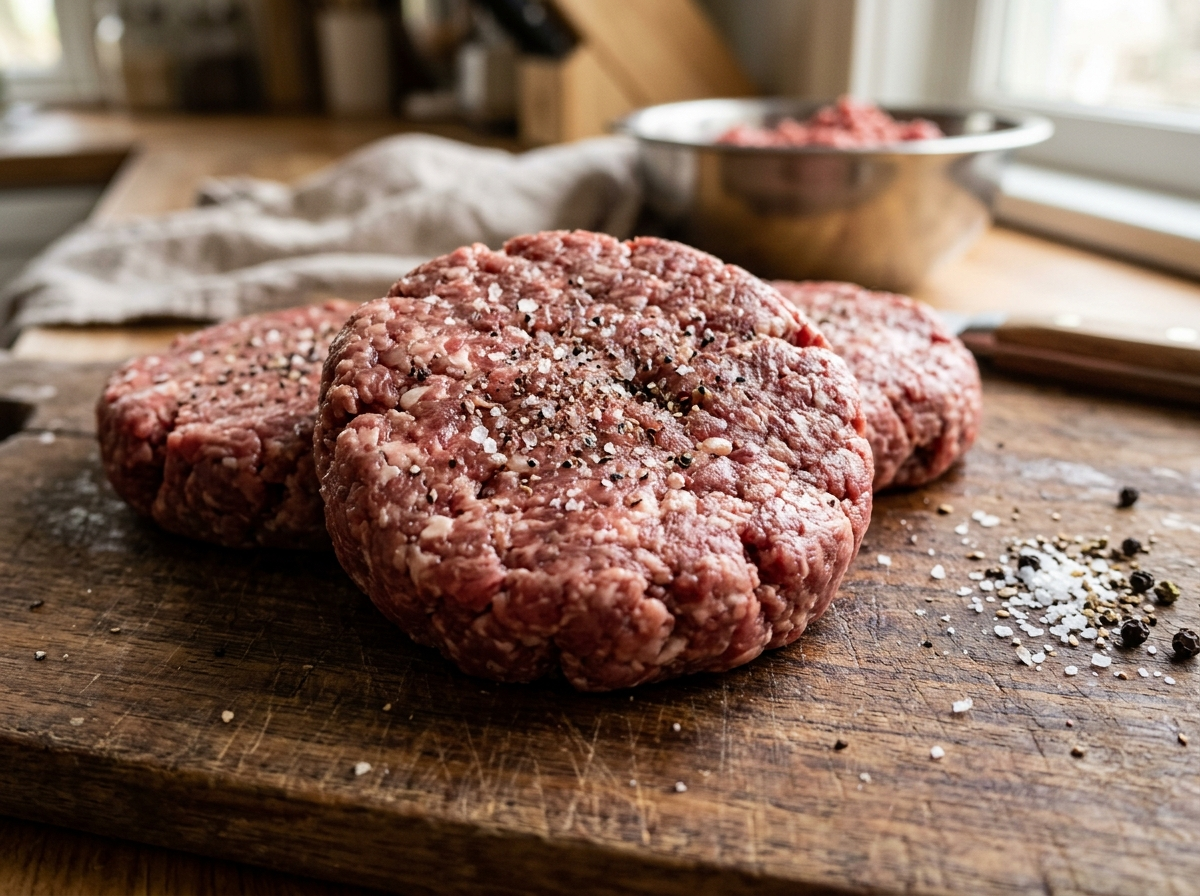
A burger can go wrong before it even hits the heat. If you’re trying to figure out how thick burgers should be, the sweet spot for most regular patties is 1/2 to 3/4 inch before cooking. Too thin, and the burger dries out fast. Too thick, and you get a dark outside with a center that still feels undercooked. Get the thickness right, and the whole burger gets easier to nail.
How Thick Burgers Should Be: The Quick Answer
For most home cooks, burgers should be 1/2 to 3/4 inch thick before they cook. That usually means 4 to 6 ounces of ground beef for a standard bun.
Here’s the easy version:
- Smash burgers: about 1/4 inch or less after smashing
- Classic burgers: 1/2 to 3/4 inch
- Pub-style burgers: 3/4 to 1 inch
- Anything over 1 inch: possible, but harder to cook evenly
If you only want one number to remember, make your burger about 3/4 inch thick. That’s the safe middle ground for juiciness, browning, and easy cooking.
Quick Fact: Most homemade burgers turn out best when they’re not giant. A medium-thick patty usually beats a super-thick one on flavor, texture, and even bun balance.
A lot of people think thicker always means better. It doesn’t. A burger isn’t a steak. Ground beef cooks differently, shrinks differently, and can go from juicy to dry pretty fast if the middle takes too long to catch up.
So what should you actually do on a normal burger night? Start with 5 or 6 ounces of beef, shape it a little wider than your bun, press it to about 3/4 inch thick, and make a small dip in the center. That one setup works for most grills, skillets, and flat tops.
Why Thickness Matters More Than Most Cooks Think
Thickness controls how the center cooks
Heat has to travel from the outside of the patty to the middle. The thicker your burger is, the longer that takes.
That sounds obvious, but it explains a lot of burger problems. Ever pulled a patty off the grill because the outside looked done, then cut into it and found the middle lagging behind? That usually starts with a patty that’s too thick for the heat level you used.
A thinner burger cooks through fast. A thick burger needs more time and more control. If you rush it, the outside gets too dark before the center gets where it needs to be.
Thickness changes the bite
Burger thickness also changes how the burger feels in your mouth.
A thin patty gives you more browned crust, more cheese in each bite, and a lighter, easier-to-eat burger. That’s why smash burgers feel so satisfying even though they’re not thick at all.
A thicker patty gives you a meatier center. That can be great if that’s the style you want. Still, once a burger gets too thick, the bite can feel heavy. You end up chewing through a big chunk of meat while lettuce, onion, pickles, and sauce slide out the other side.
So ask yourself one simple question: do you want a burger with lots of crust, or a burger with more soft center? Your answer tells you a lot about the right thickness.
Weight and thickness aren’t the same thing
This part gets missed all the time.
Two burgers can both weigh 6 ounces and still cook very differently. One might be wide and flatter. The other might be short and thick. Same amount of meat. Totally different result.
Weight tells you how much beef you’re using. Thickness tells you how the burger will behave on the heat.
That’s why “make it a quarter-pound burger” isn’t enough advice by itself. If you pack that meat into a thick little puck, it won’t cook like a wide, evenly shaped patty.
Your bun needs to keep up
A burger doesn’t live alone on the plate. It has to fit the bun.
A thick patty on a thin grocery-store bun often feels clumsy. The bun gets crushed, the toppings slide, and every bite turns into mostly meat. On the other hand, a thinner or medium-thick patty gives you better balance.
That’s one reason classic diner burgers and fast-food doubles work so well. They aren’t trying to be tall. They’re trying to be easy to eat.
If you’re using a standard potato bun or sesame bun, 4 to 6 ounces at 1/2 to 3/4 inch thick usually feels right. If you’re using a sturdy brioche bun or a larger bakery roll, you can go thicker.
How Thick Burgers Should Be for Each Style
Smash burgers: thin on purpose
A smash burger starts as a ball of beef, not a pre-shaped thick patty.
You put that ball on a hot flat surface and smash it hard right away. The goal is a thin patty with lots of contact against the metal. That’s what creates the crust.
Most smash burgers end up around 1/4 inch thick or even thinner. They usually use 2 to 4 ounces of beef per patty. Want that crispy-edge style? It works because the burger is thin, not in spite of it.
If that’s your favorite kind of burger, this guide to smash burgers at home will help you get the process right.
A flat cooking surface usually works better than open grates for this style. If you’re deciding where to cook them, this comparison of flat top vs grill for burgers makes the trade-offs clear.
Classic backyard burgers: the sweet spot for most people
This is the burger most readers probably want.
You’re grilling outside, maybe adding American cheese, lettuce, tomato, onion, ketchup, mustard, or pickles. You want a burger that feels juicy but still cooks without drama.
For that kind of burger, go with:
- 4 to 6 ounces of beef
- 1/2 to 3/4 inch thickness
- A patty shaped slightly wider than the bun
That size gives you enough meat for a satisfying bite, but not so much that the burger becomes a thick meatball in bread.
It’s also forgiving. If your grill runs a little hot or a little cool, you still have room to recover.
Pub-style burgers: thicker, but not too thick
A pub-style burger can be great at home, but it asks more from you.
These patties usually land around 6 to 8 ounces and 3/4 to 1 inch thick. They’re meant to feel substantial. They work best with a sturdy bun, stronger toppings, and a little more patience at the grill or skillet.
Here’s the catch. Thick burgers are easy to overbrown outside and undercook inside. So if you go this route, don’t blast them over screaming heat and hope for the best.
Use medium to medium-high heat. Give the center time. If the surface darkens too quickly, move the patty to a cooler part of the grill or lower the skillet heat a bit.
Once you go past 1 inch thick, you’re in tricky territory. You can still make it work, but it’s no longer the easiest path to a great burger.
Want a bigger burger? Double patties often work better
This is the move many home cooks skip.
If you want a big burger, you don’t always need one giant thick patty. Two thinner patties often taste better and cook better.
Why? You get more browned surface area, faster cooking, and better balance with the bun. Cheese melts beautifully between the patties too, which never hurts.
A double burger made with two 3-ounce patties often beats a single 6-ounce thick patty for both flavor and texture. It’s easier to eat, and it usually feels juicier because you aren’t fighting to cook a deep center.
Pro Tip: If your burgers keep turning out burnt outside and raw inside, stop making them taller. Make them a bit thinner, or split the meat into two patties.
How to Shape the Right Thickness Every Time
Good thickness starts before the burger sees any heat.
The type of beef matters too. A thick burger made from lean meat dries out faster than most people expect. If you’re still picking your blend, take a look at the best meat for burgers and the best fat ratio for burgers. Those choices affect texture almost as much as thickness does.
A simple 5-step method
- Portion the meat into 4 to 6 ounce balls for standard burgers.
- Handle it gently and form each one just enough to hold together.
- Press it to 1/2 to 3/4 inch thick for most burgers.
- Make a shallow thumbprint in the center.
- Chill the patties for 10 to 15 minutes if they feel soft or loose.
That’s it. Nothing fancy.
The part about making the patty slightly wider than the bun matters more than people expect. Burgers shrink as they cook. If your raw patty is exactly bun-sized, it often ends up smaller than the bun on the plate.
The thumbprint trick matters too. Burgers tend to puff up in the middle as the proteins tighten. A small dip in the center helps the patty stay flatter and more even.
Did you know? The little dimple in the center isn’t a chef gimmick. It helps stop the burger from turning into a dome.
Don’t pack the meat too tightly
A burger should be shaped, not squeezed into submission.
If you press hard, knead it, or compact it like meatloaf, the texture gets dense. Then even the right thickness won’t save it. You’ll bite in and wonder why it feels chewy.
Cold meat helps a lot here. It’s easier to shape and less likely to fall apart. You can use lightly damp hands if the beef sticks, but don’t overwork it.
A gentle patty with the right thickness almost always cooks better than a tightly packed one.
Cooking Thick and Thin Burgers the Right Way
Match the heat to the patty
Thin burgers and thick burgers need different treatment.
Thin patties like smash burgers love strong heat because they cook in a flash. You want quick browning and not much lingering.
Thicker burgers need a little more control. If you blast a 1-inch burger over very high heat, the outside can race ahead of the center. That’s where people get fooled.
As a rough guide:
- A very thin smash burger may need 1 to 2 minutes per side
- A classic 1/2-inch to 3/4-inch burger may need around 3 to 4 minutes per side
- A thick 3/4-inch to 1-inch burger may need 4 to 6 minutes per side, sometimes with a little extra time over gentler heat
Those times change with your grill, your pan, the weather, and how cold the meat was when it started. Use them as a rough map, not a promise.
Use temperature, not color
Color lies. A burger can look brown outside and still miss the right temp in the center.
That’s why an instant-read thermometer helps so much, especially with thicker patties. If you want the full breakdown, this ultimate burger temperature guide makes doneness much easier to judge.
Warning: Ground beef can brown before the center reaches a safe temperature. Don’t judge thick burgers by color alone.
The USDA recommends cooking ground beef to 160°F for food safety. That matters because bacteria can be mixed throughout ground meat. A steak is different. With a burger, the risk isn’t just on the surface.
For ground turkey or chicken burgers, go to 165°F.
Some restaurants serve burgers below 160°F, and some home cooks do too. Just know that it comes with more risk. If you’re feeding kids, older adults, pregnant people, or anyone with a weaker immune system, it’s smart to stay on the safe side.
Juiciness isn’t only about thickness
People often blame thin patties for dryness. Truth is, thick burgers dry out plenty too if they stay on the heat too long.
Juiciness comes from a few things working together:
- Enough fat in the meat
- The right thickness for your cooking method
- Not overworking the patty
- Pulling it at the right temperature
Thickness helps, but it isn’t magic.
A 3/4-inch burger made from good beef and cooked properly can stay juicy and tender. A 1-inch burger cooked too aggressively can end up dry, dense, and disappointing.
If dryness keeps showing up at your place, these tips on how to keep burgers juicy can help you fix the bigger picture.
Common Thickness Mistakes That Ruin Burgers
Going too thick for the bun.
A burger should feel balanced. If the patty overwhelms the bun, the whole thing becomes awkward to eat. Thick burgers need stronger buns. Regular buns usually work better with medium-thick patties.
Making the raw patty exactly the size of the bun.
It sounds right, but it backfires. Burgers shrink. Make the raw patty a little wider, and the cooked burger will fit better.
Skipping the center dimple.
No dimple means the middle often puffs up. Then the edges get thinner, the center gets taller, and the patty cooks unevenly.
Cooking thick burgers too hot.
A thick burger needs time. If the outside gets dark too fast, reduce the heat or move it to a cooler spot. Don’t keep fighting the same bad setup.
Thinking thicker always means juicier.
That’s a common misconception. A giant thick patty can be juicy, sure. It can also be dry, dense, and hard to cook. A medium-thick burger often gives you a better result with less effort.
Forgetting that style matters.
A smash burger should be thin. A pub burger can be thicker. A standard cheeseburger usually lands in the middle. The “best” thickness depends on what you want the burger to be.
4. FAQ Section
FAQs About Burger Thickness
How thick should burgers be for grilling?
For most grills, burgers should be 1/2 to 3/4 inch thick before cooking. That range gives you a good balance of browning outside and even cooking inside.
If you go closer to 1 inch, use a little less direct heat or set up a cooler zone on the grill so the center has time to cook without burning the surface.
Is 1 inch too thick for a burger?
Not always, but it’s close to the upper limit for easy home cooking.
A 1-inch burger can work for pub-style patties, especially if you use a sturdy bun and cook with more control. If you’re a beginner or you want a simple weeknight burger, 3/4 inch is easier and more reliable.
What size burger patty fits a standard bun?
A standard bun usually works best with a patty made from 4 to 6 ounces of ground beef, shaped a little wider than the bun before cooking.
That amount usually lands around 1/2 to 3/4 inch thick, depending on how wide you shape it. After shrinkage, it fits the bun much better.
Should burgers be thick or thin for juicy results?
Neither extreme wins every time.
Thin burgers give you more crust and cook fast. Medium-thick burgers give you a bit more juicy center. For most people, the best middle ground is 1/2 to 3/4 inch.
If you want a bigger burger without the problems that come with extra thickness, go with two thinner patties instead of one oversized one.
Why do burgers puff up in the middle?
Burgers puff because the proteins tighten as they cook, which pushes the center upward.
A small thumbprint in the middle of the raw patty helps keep it flatter. That simple step makes the burger cook more evenly and sit better on the bun.
5. Conclusion
Next time you make burgers, keep it simple. Start with 5 or 6 ounces of beef, shape the patty to about 3/4 inch thick, make a shallow dimple in the center, and cook by temperature instead of guesswork.
That one change solves a lot at once. Your burgers cook more evenly, fit the bun better, and stay easier to eat. If you love crisp edges, go thinner. If you want a pub-style burger, go a little thicker and slow the cooking down. The best burger thickness isn’t the biggest one on the plate. It’s the one that makes every bite work.