
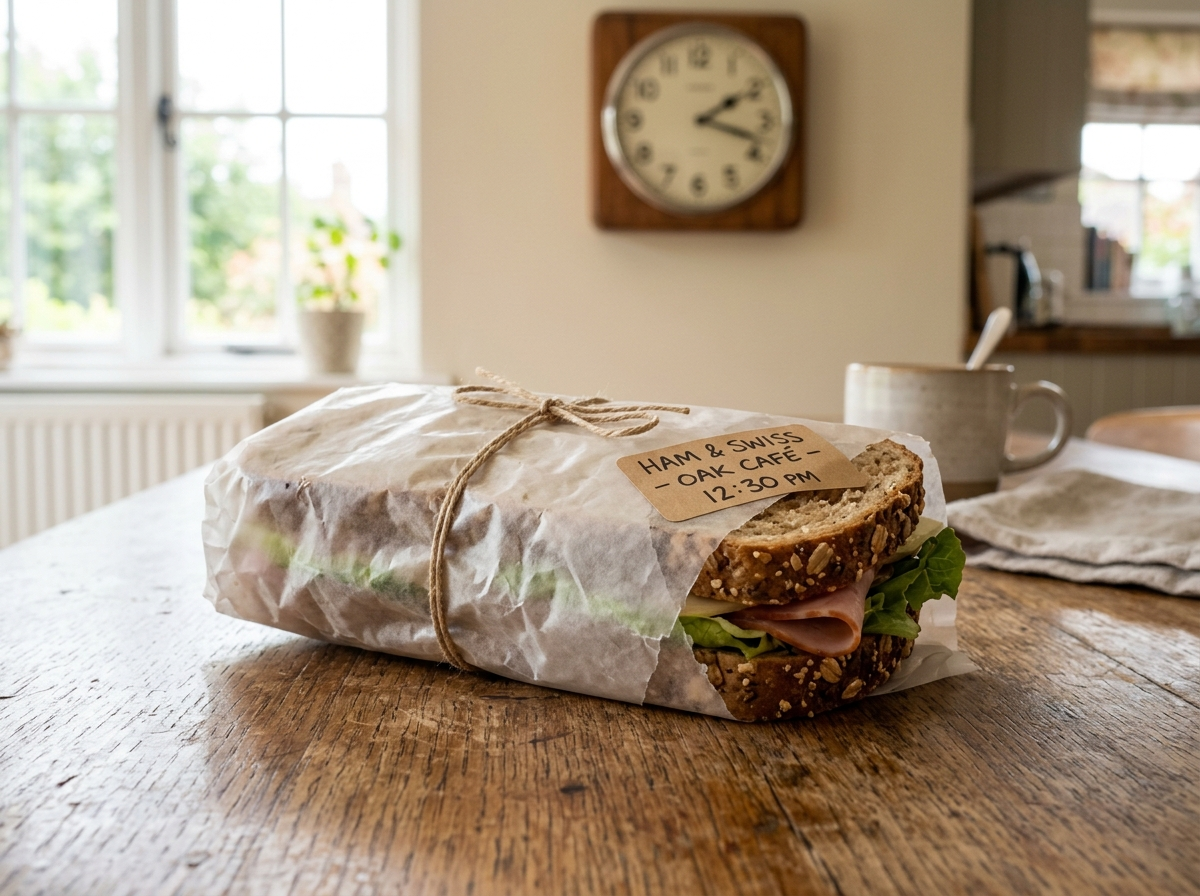
You made a sandwich this morning, left it on the counter, and now you’re staring at it wondering if it’s still safe to eat. The short answer: if it has meat, dairy, or mayo and it’s been out for more than two hours, you should toss it.
That might feel wasteful, but foodborne illness is no joke. The rules around sandwich food safety time are actually pretty straightforward once you understand why they exist. Let’s break down exactly how long a sandwich can sit out, what changes the timeline, and how to keep your lunch safe no matter where you are.
⚠️ Food Safety Disclaimer: This article provides general food safety information based on USDA and FDA guidelines. It is not a substitute for professional medical or food safety advice. If you suspect you’ve eaten spoiled food and feel unwell, contact a healthcare provider.
The 2-Hour Rule for Sandwich Food Safety
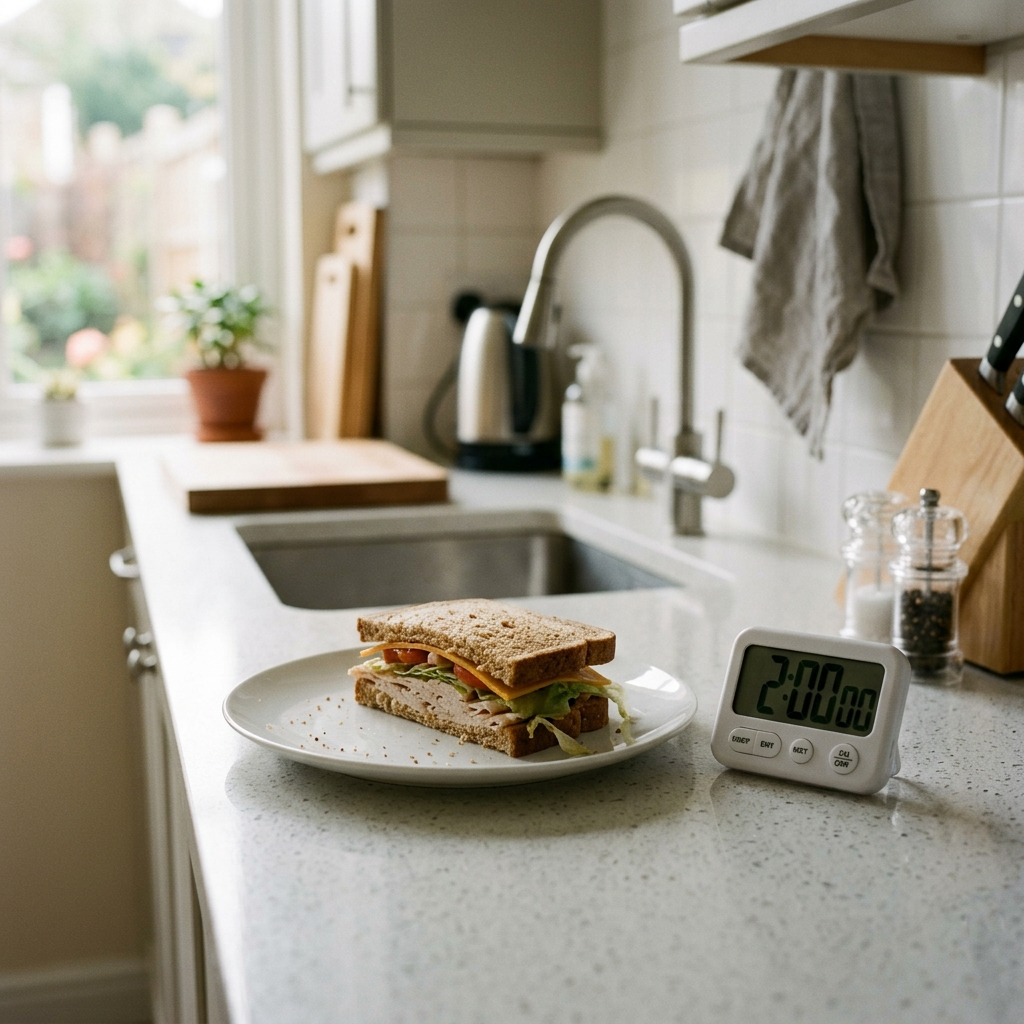
The USDA has a clear guideline that most people have heard of but few actually follow: don’t leave perishable food at room temperature for more than two hours. If the temperature around the food is above 90°F — think a summer picnic or a hot car — that window shrinks to just one hour.
This is the baseline rule for any sandwich containing meat, poultry, fish, eggs, dairy, or cut vegetables. So your turkey club, your chicken salad on wheat, your ham and Swiss — they all fall under this two-hour limit.
What the USDA Actually Says
The USDA Food Safety and Inspection Service calls the range between 40°F and 140°F the “danger zone.” Inside this temperature range, bacteria like Staphylococcus aureus, Salmonella, and E. coli can double in number every 20 minutes. That’s not a slow creep — it’s an explosion.
A sandwich sitting on your kitchen counter at 72°F is squarely in the danger zone. After two hours, the bacterial load can reach levels that your stomach simply can’t handle, even if the sandwich looks and smells completely normal.
The Temperature Danger Zone Explained
Think of the danger zone like a warm swimming pool for bacteria. Below 40°F (your fridge), bacteria slow down dramatically. Above 140°F (a hot pan), they start dying off. But between those two numbers, conditions are perfect for rapid growth.
Here’s what actually happens when you leave a turkey sandwich out. The deli meat was cold when you pulled it from the fridge. Within about 30 minutes on the counter, the surface temperature of that meat starts climbing into the danger zone. By the two-hour mark, the interior of the sandwich has likely warmed enough for bacteria to be multiplying fast.
Your nose won’t warn you. Your eyes won’t warn you. The bacteria that cause food poisoning don’t produce the smells or slime you associate with “spoiled” food. That’s the part most people get wrong — they think a sandwich is safe as long as it doesn’t look or smell funky. That assumption is how people end up sick.
How Long Can a Sandwich Sit Out? It Depends on What’s Inside
Not all sandwiches carry the same risk. A peanut butter and jelly sandwich is a very different story from a tuna salad sub. The key factor is whether the ingredients are perishable — meaning they support rapid bacterial growth at room temperature.
Meat and Dairy Sandwiches (Turkey, Ham, Chicken Salad)
Any sandwich with deli meat, cooked chicken, roast beef, or cheese falls firmly under the two-hour rule. Deli meats are especially tricky because they’re pre-cooked and sliced, which means they’ve been handled more and have more surface area exposed to potential contamination.
If you’re packing a deli sandwich for a party, plan to keep it on ice or in a cooler. The two-hour clock starts the moment the sandwich leaves refrigeration, not the moment you set it on the buffet table.
Sandwiches With Mayo, Eggs, or Tuna
Mayo gets a bad reputation, and honestly, it’s partly deserved. Commercial mayonnaise is actually acidic enough to slow bacterial growth on its own — the real problem is what you mix it with. Tuna salad, egg salad, and chicken salad combine mayo with protein-rich ingredients that bacteria love. The mixture creates an ideal environment for rapid spoilage.
A sandwich left out room temperature with any of these fillings should follow the strict two-hour rule (or one hour above 90°F). Don’t push it.
“Safer” Sandwiches (PB&J, Veggie, Honey)
Here’s where the rules relax a bit. A peanut butter and jelly sandwich, a honey and banana sandwich, or a simple veggie wrap with hummus can safely sit out much longer — typically up to 6–8 hours without significant risk. The reason is that these ingredients are low in moisture and high in sugar or salt, which naturally inhibit bacterial growth.
That said, “safer” doesn’t mean “invincible.” If your PB&J is sitting in direct sunlight on a 95°F day, the bread will go stale and the peanut butter can turn rancid. It probably won’t make you sick, but it won’t taste great either.
| Sandwich Type | Key Ingredients | Safe Time at Room Temp | Safe Time Above 90°F |
|---|---|---|---|
| Turkey & Cheese | Deli meat, dairy | 2 hours | 1 hour |
| Chicken Salad | Cooked chicken, mayo | 2 hours | 1 hour |
| Tuna Melt | Tuna, mayo, cheese | 2 hours | 1 hour |
| Ham & Swiss | Deli meat, dairy | 2 hours | 1 hour |
| Egg Salad | Eggs, mayo | 2 hours | 1 hour |
| PB&J | Peanut butter, jelly | 6–8 hours | 4–6 hours |
| Veggie & Hummus | Vegetables, hummus | 4–6 hours | 2–3 hours |
| Honey & Banana | Honey, fruit | 6–8 hours | 4–6 hours |
Real-World Scenarios: Where Did You Leave It?
The two-hour rule is the official guideline, but real life is messier than a lab setting. Where you left the sandwich and what the temperature actually was around it matters a lot.
On the Kitchen Counter
A typical kitchen sits around 68–74°F. This is squarely in the danger zone. If you made a turkey sandwich at 8 AM and forgot about it until noon, that’s four hours — well past the safe window. Toss it.
If it’s a PB&J, you’re probably fine. The sugar in the jelly and the low moisture in the peanut butter keep things relatively stable for a school-day-length stretch.
In a Hot Car
This is the scenario that makes food safety experts cringe. A car interior on a warm day can hit 120°F or higher within 30 minutes, even with the windows cracked. At those temperatures, your sandwich food safety time drops to one hour or less.
I’ve seen people argue that a sandwich left in a car for a couple of hours is “probably fine” because it “doesn’t smell bad.” Here’s the thing — your nose is not a reliable food safety tool. The pathogens that cause food poisoning are odorless and invisible. If your meat sandwich spent two hours in a hot car, the safest move is to throw it away, no matter how much you paid for those artisanal cold cuts.
At a Picnic or Party
Outdoor events are the biggest sandwich safety challenge. The sun is beating down, the cooler lid keeps getting opened, and nobody’s tracking the clock. If you’re building a deli sandwich spread for a crowd, keep the serving platter on a bed of ice and swap out fresh trays every hour or so.
For a casual backyard cookout where you’re also serving things like fried pork tenderloin sandwiches or spicy chicken sandwiches, remember that hot sandwiches are safe as long as they stay above 140°F. Once they cool down into the danger zone, the same two-hour clock starts ticking.
Signs Your Sandwich Has Gone Bad
Even within the safe time window, things can go wrong — especially if the sandwich was made with ingredients that were already close to their expiration date. Here’s what to look for before you take a bite.
Visible mold. This one’s obvious. Any fuzzy green, white, or black spots on the bread or fillings mean the whole sandwich goes in the trash. Don’t try to cut around the mold on soft bread — the roots spread deeper than you can see.
Sour or off smell. Fresh deli meat should smell mild and slightly salty. If your sandwich filling smells sour, ammonia-like, or just “wrong,” trust your gut (literally). This is one of the few times your nose actually is a useful tool.
Slimy texture. If the surface of the meat or cheese feels slick or slimy, that’s a sign of bacterial colonies forming on the surface. This is especially common with deli meats that have been stored too long before the sandwich was even made.
Discoloration. Turkey or chicken that’s turned grey or greenish is past its prime. Ham that’s developed an iridescent sheen can sometimes be a natural result of light hitting the fat, but if it’s combined with any other warning sign, don’t risk it.
Warm to the touch. If a cold sandwich feels room temperature or warm and you know it’s been sitting out for a while, that’s your cue. The texture might seem fine, but the temperature tells the real story.
How to Keep Sandwiches Safe Longer
You don’t have to eat your sandwich the second you make it. A little planning goes a long way toward keeping your lunch safe and delicious.
Use an insulated lunch bag with an ice pack. This is the single most effective thing you can do. A frozen gel pack in an insulated bag can keep a sandwich below 40°F for 3–4 hours, which buys you plenty of time for a workday or school day. If you don’t have an ice pack, freeze a juice box or water bottle the night before and tuck it next to your sandwich.
Pack wet and dry ingredients separately. If you’re making a sandwich that tends to get soggy — and nobody likes a soggy sandwich — pack the tomatoes, pickles, and condiments in a small container and add them right before you eat. This also helps with food safety because wet ingredients raise the moisture level inside the sandwich, which speeds up bacterial growth.
Choose shelf-stable fillings for long days. If you know your sandwich will be sitting out for hours without refrigeration, go with peanut butter, Nutella, honey, or dried fruit. These ingredients don’t need to be kept cold and will stay safe and tasty all day.
Keep hot sandwiches hot. If you’re bringing a hot sandwich like a Reuben or a cheesesteak to a gathering, wrap it tightly in foil and place it in an insulated container. The goal is to keep the internal temperature above 140°F until it’s time to eat.
When in doubt, throw it out. This sounds like a cop-out, but it’s genuinely the best advice. The cost of a wasted sandwich is a few dollars. The cost of a foodborne illness is days of misery and potentially a trip to the emergency room. The math is simple.
Frequently Asked Questions
Can I eat a sandwich that was left out overnight?
No. If the sandwich contains any perishable ingredients — meat, cheese, eggs, mayo, cut vegetables — it should not be eaten after sitting out overnight. That’s 8+ hours in the danger zone, and bacterial levels will be dangerously high even if the sandwich looks and smells normal. The only exception would be a sandwich made entirely of shelf-stable ingredients like peanut butter and jelly, and even then, the bread quality will have degraded significantly.
Does toasting a sandwich kill the bacteria?
Toasting a sandwich kills some surface bacteria, but it does not neutralize the toxins that certain bacteria (like Staphylococcus aureus) produce while the food sits in the danger zone. These toxins are heat-stable, meaning they survive cooking temperatures. So reheating a sandwich that’s been sitting out too long will not make it safe to eat. The damage is already done at the chemical level.
How long can a sandwich sit out at a party?
Follow the two-hour rule for any sandwich with perishable fillings. If the party is outdoors and the temperature is above 90°F, reduce that to one hour. The best approach is to set out small batches of sandwiches on ice and replace them with fresh ones from the cooler every hour. This keeps the food safe and ensures your guests are eating sandwiches that actually taste good rather than warm, wilted ones that have been sitting in the sun.
The two-hour rule isn’t just a suggestion from a government website — it’s based on how fast bacteria actually multiply in the foods we eat every day. A sandwich left out room temperature with deli meat and mayo is a ticking clock, and no amount of sniffing or visual inspection will tell you when it’s crossed the line.
Your best move is simple: keep cold sandwiches cold, keep hot sandwiches hot, and don’t let anything with perishable ingredients sit out for more than two hours. Pack an ice pack, plan your party spread smartly, and when you’re genuinely unsure, just make a fresh one. Your stomach will thank you.
If you want to dig deeper into how to store your sandwich ingredients properly, check out our guide on how to store deli meat so everything stays fresh before you even start building your sandwich.