
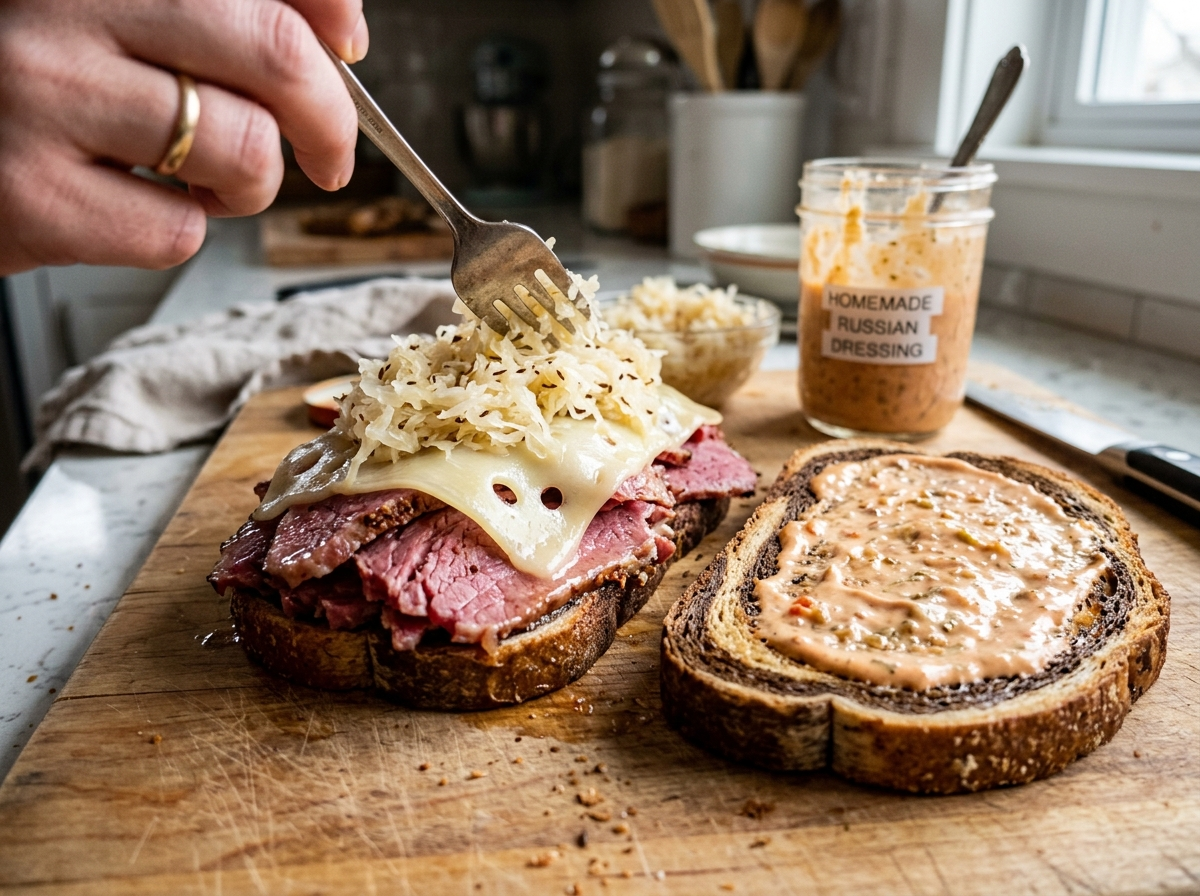
Most homemade Reubens fall apart before the first bite. The bread gets soggy, the cheese won’t melt, and the whole thing slides out the back like a wet deck of cards. The good news? Fixing all of that takes about 20 minutes and one trick most recipes skip entirely.
A classic Reuben sandwich is a grilled stack of corned beef, Swiss cheese, sauerkraut, and Russian dressing on rye bread. That’s it. Five ingredients. But getting each one right — and getting them to work together — is where most people go wrong.
Here’s exactly how to build one that holds up, crisps up, and tastes like it came from a corner deli.
What Makes a Reuben a Reuben?
Before you fire up the skillet, you need to know what belongs in this sandwich and what doesn’t. The Reuben has a specific identity, and swapping out its core ingredients turns it into something else entirely. (If you’re curious about where this sandwich actually came from, the Reuben’s origin story is a fun read — Omaha and New York both claim it.)
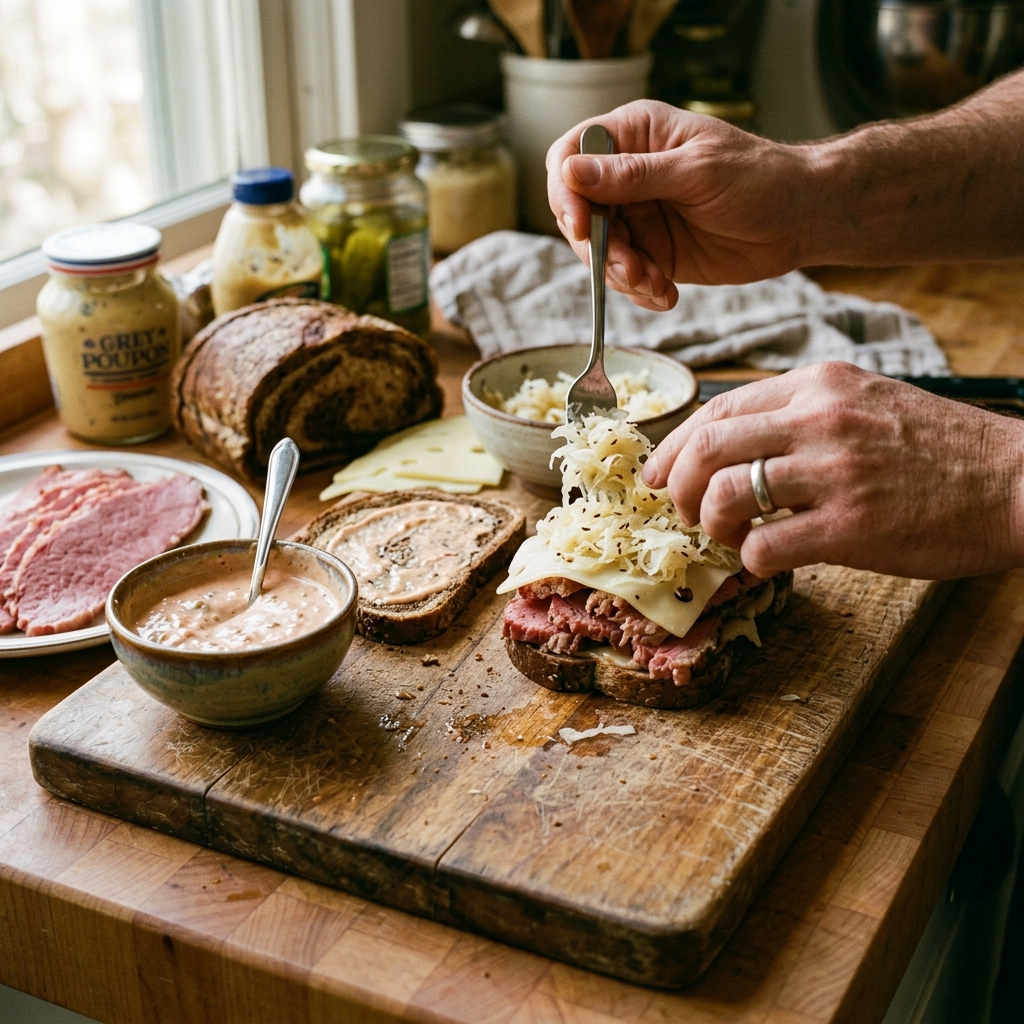
Corned Beef, Not Pastrami
A classic Reuben uses corned beef. Thinly sliced, salty, tender corned beef. Pastrami is delicious, but the moment you swap it in, you’ve made a different sandwich called a Rachel. The two meats are cured differently — corned beef is brined, while pastrami is brined, coated in spices, and smoked. If you want the full breakdown, this corned beef vs pastrami comparison covers the details.
Buy your corned beef from the deli counter, not the pre-packaged shelf. Freshly sliced meat has better texture and moisture. Ask for it sliced thin but not shaved — you want a little body to it so it doesn’t disintegrate when you grill.
Swiss Cheese
Swiss is the standard. It melts smoothly without turning greasy, and its mild nuttiness balances the salt of the corned beef. Gruyère works as an upgrade if you want something richer, but standard deli Swiss is what you’ll find in a traditional Reuben.
Use two slices. One on the bottom bread, one on the top. This creates a cheese “glue” that holds the sandwich together when you flip it.
Sauerkraut
This is the ingredient that ruins most homemade Reubens. More on that in a minute, but here’s the short version: you must drain and squeeze your sauerkraut before it goes anywhere near the bread. Wet sauerkraut steams the rye from the inside out, and no amount of butter on the outside will save it.
Russian Dressing
Russian dressing is tangy, slightly sweet, and a little spicy. It’s not the same as Thousand Island, though the two get confused all the time. Russian dressing has a horseradish kick and a thinner consistency. Thousand Island is creamier and sweeter, with pickle relish. Either works in a pinch, but Russian is the classic choice. I’ll give you a quick homemade version below.
Rye Bread
You want a sturdy, dense rye — ideally marble rye or a seeded rye with caraway. Soft sandwich rye from the bread aisle will collapse under the weight and moisture of the filling. If your local bakery makes a Jewish-style rye or a deli rye, grab that. The bread needs to stand up to butter, heat, and a very wet filling without falling apart.
Step-by-Step: How to Make a Reuben Sandwich at Home
This classic Reuben recipe takes about 20 minutes from start to finish. You’ll need a skillet or griddle, a spatula, and something heavy to press the sandwich down (a cast-iron pan or a foil-wrapped brick both work great).
What You’ll Need
- 2 slices of sturdy rye bread
- 4–6 oz thinly sliced corned beef
- 2 slices Swiss cheese
- ½ cup sauerkraut, drained and squeezed dry
- 2–3 tablespoons Russian dressing
- 2 tablespoons softened butter
Step 1: Prep the Sauerkraut
Dump your sauerkraut into a fine-mesh strainer and press it hard with the back of a spoon. Then grab a handful and squeeze it over the sink like you’re wringing out a wet towel. You want it as dry as you can get it.
This step feels excessive the first time you do it. You’ll think, “Surely it’s dry enough.” It’s not. Squeeze it again. The difference between a crispy Reuben and a soggy mess lives right here in this step.
Step 2: Butter the Bread
Spread softened butter on one side of each slice of rye. The buttered sides will face the skillet, so make sure you get even coverage all the way to the edges. This is what gives you that golden, crispy exterior.
Step 3: Build the Sandwich
Lay one slice of bread butter-side down on your cutting board. Layer in this order:
- One slice of Swiss cheese
- Half the Russian dressing
- All the corned beef, fanned out in an even layer
- The squeezed-dry sauerkraut, spread evenly
- The remaining Russian dressing
- The second slice of Swiss cheese
- The second slice of bread, butter-side up
The cheese-on-both-sides trick matters. When the cheese melts, it bonds to the bread and the filling, keeping everything from sliding out when you flip. If you’ve ever tried to build a perfect deli sandwich, you know that structural layering is half the battle.
Step 4: Grill Low and Slow
Heat your skillet or griddle over medium-low heat. Place the sandwich in the pan and press down gently with your spatula or a heavy pan.
Cook for about 4–5 minutes on the first side. You’re looking for deep golden-brown bread and the first signs of cheese melting at the edges. Resist the urge to crank the heat. High heat burns the rye before the cheese melts and the corned beef warms through.
Flip carefully with a wide spatula. Press again. Cook another 3–4 minutes until the second side is golden and the cheese is fully melted.
Step 5: Rest and Slice
Pull the sandwich off the heat and let it sit for about 60 seconds. This gives the cheese a moment to set so it doesn’t ooze out the sides when you cut. Slice it in half on a diagonal — because somehow a sandwich cut on a diagonal just tastes better — and serve immediately.
The Soggy Sauerkraut Problem (And How to Fix It)
I want to spend a little more time on this because it’s the single biggest reason homemade Reubens disappoint.
Sauerkraut straight from the jar or bag is swimming in brine. If you pile that onto your bread and throw it in a hot pan, the brine heats up, turns to steam, and soaks into the rye from the inside. The outside might look golden, but the inside will be mushy and wet.
Here’s what actually works: after you strain and squeeze the kraut, spread it out on a paper towel and pat it dry. If you have an extra two minutes, toss it in a dry skillet over medium heat for 60–90 seconds to drive off even more moisture. You’ll see steam rising off it — that’s the moisture you don’t want in your bread.
This is the same principle behind preventing any soggy sandwich — moisture management is everything when you’re working with wet fillings and bread.
Quick Homemade Russian Dressing
Store-bought Russian dressing is fine, but making your own takes about three minutes and tastes noticeably better.
Mix together:
- ½ cup mayonnaise
- 2 tablespoons ketchup
- 1 tablespoon prepared horseradish
- 1 teaspoon Worcestershire sauce
- ½ teaspoon hot sauce (like Tabasco)
- A pinch of paprika
Stir it up, taste it, and adjust the horseradish to your liking. If you want it spicier, add more horseradish. If you want it creamier, add a little more mayo. This keeps in the fridge for about a week.
Pro Tips for a Better Homemade Reuben
Warm the corned beef first. Cold deli meat straight from the fridge takes longer to heat through in the sandwich, which means your bread might overcook before the center is warm. Lay the slices on a plate and microwave them for 15–20 seconds, or warm them briefly in the skillet before building the sandwich.
Don’t overload the filling. It’s tempting to pile on the corned beef, but a sandwich that’s too thick won’t heat evenly. Four to six ounces is the sweet spot. You want to taste every component in each bite, not just a wall of meat.
Use a press if you have one. A panini press or a grilled-cheese-style press gives you even heat on both sides and compresses the sandwich just enough to fuse the layers together. If you don’t have one, a heavy skillet on top of the sandwich does the same job.
Serve it with something crunchy. A Reuben is a rich, soft, savory sandwich. It needs contrast. A dill pickle spear is the classic pairing. Homemade potato chips or a simple side salad also work well.
Food safety note: The USDA recommends heating deli meats to an internal temperature of 165°F for people who are pregnant, over 65, or immunocompromised, because of the risk of listeria. If you’re cooking for someone in those groups, make sure the center of the sandwich is steaming hot, not just warm. You can check the USDA’s deli meat safety guidelines for the full details.
Frequently Asked Questions
Can I use pastrami instead of corned beef in a Reuben?
You can, but technically that makes it a Rachel sandwich, not a Reuben. Pastrami is smoked and spiced differently, so the flavor will be bolder and more peppery. It’s a great sandwich — just a different one. If you’re making it for a crowd and want to offer both, label them correctly and let people choose.
What’s the difference between Russian dressing and Thousand Island?
Russian dressing is tangier and thinner, with horseradish and hot sauce giving it a kick. Thousand Island is creamier and sweeter, usually made with pickle relish and sometimes hard-boiled egg. They look similar, but the flavor profiles are distinct. In a Reuben, Russian dressing cuts through the richness of the corned beef and cheese better. Thousand Island works if that’s all you have, but it makes the sandwich a bit sweeter than the classic version.
What kind of rye bread is best for a Reuben?
A dense, sturdy rye is what you want. Marble rye (the swirled light-and-dark kind) is the most traditional choice. Seeded rye with caraway seeds adds great flavor. Avoid soft, fluffy rye bread — it can’t handle the moisture and weight of the filling. If you’re shopping at a grocery store, look for bread labeled “deli rye” or “Jewish rye.” A good test: if you press the bread and it springs right back like a sponge, it’s probably too soft.
Can I make a Reuben in the oven instead of on the stovetop?
Yes, though you’ll get slightly different results. Preheat your oven to 400°F, assemble the sandwich, wrap it loosely in foil, and bake for about 10 minutes. Unwrap it for the last 2–3 minutes to crisp the bread. The oven method is handy if you’re making several sandwiches at once, but the stovetop gives you better control over the crust. A hot sandwich straight from the skillet will always have a crunchier exterior than one from the oven.
Your first homemade Reuben probably won’t be perfect, and that’s okay. The second one will be much better once you dial in the sauerkraut moisture and the griddle heat. Pay attention to how the bread sounds when you press it — you want a real crunch, not a soft squish.
Grab some good rye, hit the deli counter for fresh corned beef, and take the extra minute to squeeze that sauerkraut dry. You’ll wonder why you ever settled for the soggy takeout version. Now go make one, and if you’re in the mood for more sandwich experiments, check out the rest of the sandwich recipes and tips on the blog.