
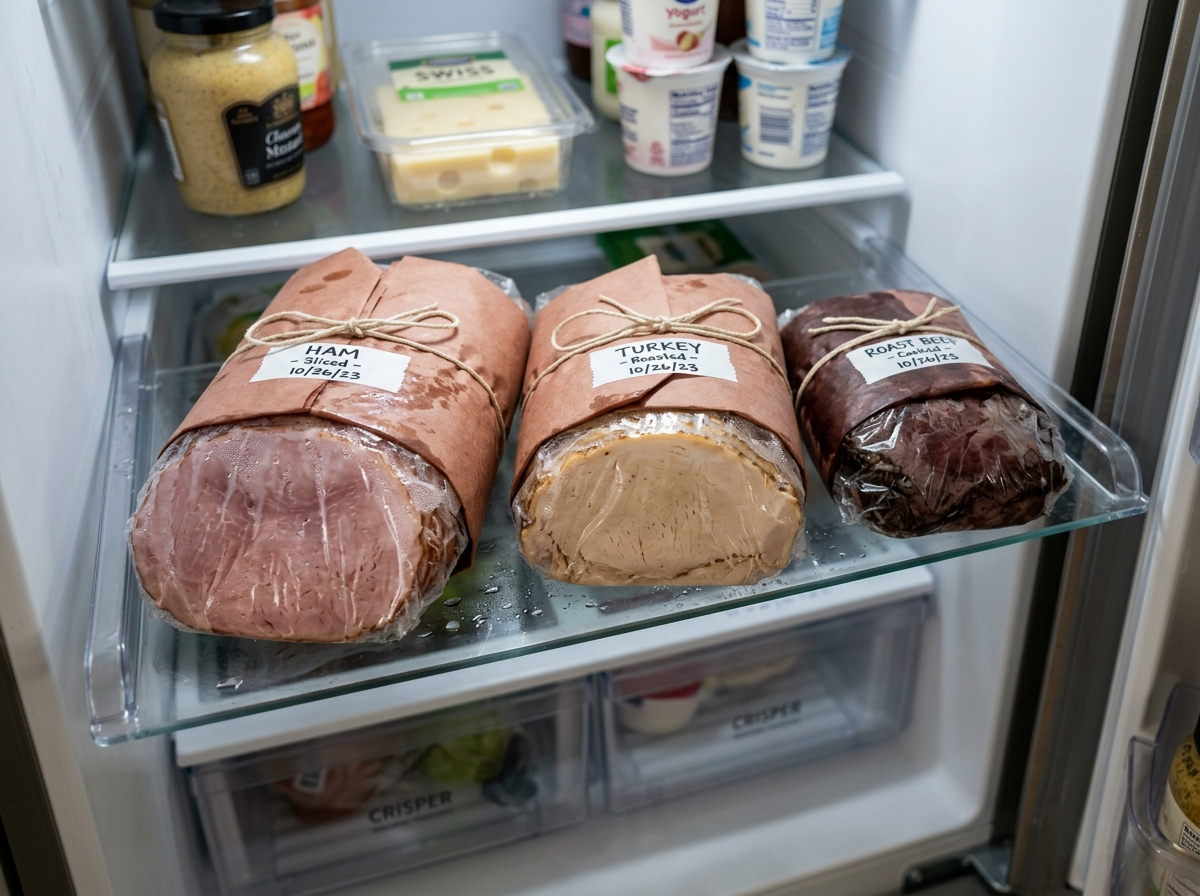
You pull a package of sliced turkey from the fridge and notice the date stamped on it was three days ago. Is it still safe to eat, or should it go straight in the trash? The honest answer depends on whether the package is opened, what type of meat it is, and how your fridge is actually set — details most people skip right past.
Here’s everything you need to know about deli meat shelf life so you stop guessing and start making confident calls every time you reach for those cold cuts.
How Long Does Deli Meat Last in the Fridge?
The quick answer most people want: opened deli meat lasts 3 to 5 days in the fridge. Unopened factory-sealed packages can last up to 2 weeks, sometimes a bit longer if the sell-by date hasn’t passed.
But that blanket number hides some real nuance, and getting it wrong is how people end up eating meat they shouldn’t — or throwing away perfectly good food. Let’s break it down.
Unopened vs. Opened Packages
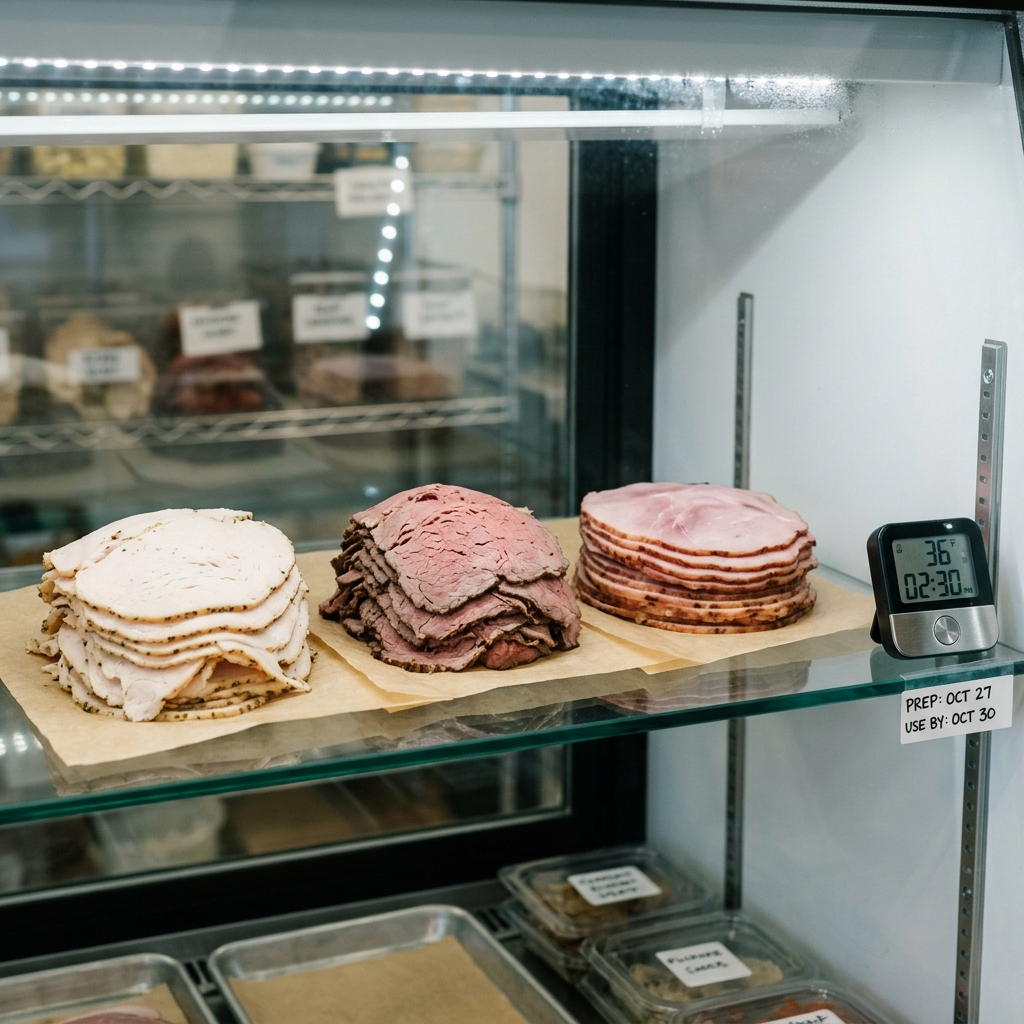
This is the single biggest factor in how long your deli meat stays fresh. An unopened, factory-sealed package of lunch meat has been packed in a controlled environment with minimal oxygen exposure. That seal is doing a lot of heavy lifting. As long as your fridge stays at or below 40°F, an unopened package is generally good until the date printed on the label, and often a few days beyond it.
Once you break that seal, the clock resets — and it ticks faster. Exposure to air, moisture, and whatever bacteria were already floating around your fridge means you now have 3 to 5 days to use it up. This is true whether the original date says you have two more weeks or not. The moment air touches those slices, the original timeline no longer applies.
I’ve seen people look at a “use by” date that’s still a week away and assume they’re fine, even though the package has been sitting open since Tuesday. That date was printed for a sealed package. It doesn’t account for your kitchen.
Deli Counter vs. Pre-Packaged
There’s a meaningful difference between the vacuum-sealed packs you grab from the refrigerated aisle and the meat sliced fresh at the deli counter.
Pre-packaged deli meat from the store shelf tends to last a bit longer unopened because of the vacuum-sealing process and the preservatives (like sodium nitrite) commonly added during manufacturing.
Deli-counter meat, on the other hand, is sliced to order and wrapped in paper or a simple plastic bag. It has more surface exposure from the moment it’s cut, and it usually contains fewer preservatives. The USDA Food Safety and Inspection Service recommends using deli-counter sliced meats within 3 to 5 days of purchase, even if the package is technically “unopened” in the sense that you haven’t unwrapped it yet.
If you want a deeper look at how to handle and store your cold cuts properly, this guide on how to store deli meat covers the basics well.
How to Tell If Deli Meat Has Gone Bad
Dates on packages are helpful guidelines, but your senses are the real final check. Deli meat doesn’t always spoil on a neat schedule. Sometimes it goes bad a day early; sometimes it’s fine a day past the date. Here’s what to actually look for.
The Smell Test
Fresh deli meat should smell mild, slightly salty, and meaty. If you open the package and get hit with a sour, tangy, or ammonia-like odor, that’s your answer. Toss it. Don’t try to convince yourself it’s “probably fine.” Your nose evolved to detect spoiled protein for a reason.
One thing worth noting: some cured meats like salami or pepperoni have a naturally stronger, slightly fermented smell because of how they’re made. That’s different from the sharp, unpleasant sourness of meat that’s actually turning. If you’re unsure, compare it to how it smelled when you first bought it.
Visual Signs to Watch For
Color changes are one of the earliest warning signs. Fresh turkey or chicken breast deli meat should be a pale pink or off-white. If you see it turning gray, greenish, or developing dark spots, bacteria are already at work. Ham that’s shifting from rosy pink to a dull brown or gray is heading in the wrong direction too.
Also watch for any visible mold — even tiny fuzzy spots. Unlike a block of hard cheese where you can cut mold away, deli meat is too thin and porous for that trick. If there’s mold on sliced lunch meat, the entire package is contaminated.
Texture Changes (the Slime Factor)
This is the one most people notice first. Fresh deli meat should feel slightly moist but clean to the touch. If the slices feel slimy, tacky, or leave a sticky residue on your fingers, the meat has started to break down. That slick film is a biofilm created by bacterial growth, and no amount of rinsing will make it safe again.
Here’s a practical detail people often miss: sometimes the slime only shows up on the bottom few slices of the stack, where moisture pools. If the top slices look and feel fine but the bottom ones are slick, the whole package has been sitting in contaminated moisture. Don’t just peel off the top layers and call it good.
⚠️ Food Safety Disclaimer: The information in this article is general guidance based on USDA and food safety recommendations. It is not a substitute for professional food safety advice. When in doubt, throw it out — foodborne illness from deli meats can be serious, especially for pregnant individuals, older adults, and anyone with a weakened immune system.
Why Deli Meat Spoils Faster Than You Think
If you’ve ever wondered why a whole roast can sit in your fridge for a week but sliced deli meat goes bad in a few days, the answer comes down to surface area.
Surface Area and Bacteria
A whole cut of meat — think a roast beef or an intact turkey breast — has most of its interior protected from bacteria. The outside might have some microbial activity, but the inside is essentially sterile. When you slice that roast into thin deli cuts, you expose vastly more surface area to air, moisture, and bacteria. Every single slice is now a potential breeding ground.
This is the same reason ground beef spoils faster than a steak. More surface area equals more opportunity for bacteria to multiply. Thin-sliced deli meat is basically the extreme version of this principle.
The Listeria Factor
Deli meats carry a specific risk that sets them apart from many other refrigerated foods: Listeria monocytogenes. Unlike most foodborne bacteria, Listeria can actually grow at refrigerator temperatures. It doesn’t need warmth to multiply — it just needs time. This is why the CDC specifically warns that deli meats are one of the most common sources of Listeria infection.
This doesn’t mean every package of cold cuts is a ticking time bomb. It does mean that the “I’ll just leave it in the fridge for a while” approach carries more risk with deli meat than with, say, a block of cheddar cheese. The 3-to-5-day rule for opened packages exists for a real reason, not just as a conservative guess.
Best Ways to Store Deli Meat in the Fridge
How you store your deli meat matters almost as much as how long you keep it. Good deli meat fridge storage habits can squeeze an extra day or two out of your cold cuts and keep them tasting fresh.
Temperature Matters
Your fridge should be set at 40°F (4°C) or below. This sounds obvious, but most household fridges fluctuate more than people realize. The door shelves are the warmest spot and the worst place for deli meat. The back of the bottom shelf is typically the coldest and most consistent zone.
If you’re serious about food safety, a small fridge thermometer costs about five dollars and takes the guesswork out entirely. You might be surprised to find your fridge is running at 44°F when you thought it was at 37°F.
Packaging Tips That Actually Work
If your deli meat came in a resealable plastic package, that’s decent for short-term storage. But once the original seal is broken, those zip closures rarely create a truly airtight environment.
For better results, transfer your opened slices to an airtight container or wrap them tightly in plastic wrap before placing them in a zip-top bag with the air pressed out. The less oxygen touching the meat, the slower bacteria will grow.
Here’s a trick that works well: place a folded paper towel inside the container or bag with the meat. The paper towel absorbs excess moisture, which is one of the main things that accelerates spoilage and creates that slimy texture. Change the paper towel every day or two if you’re keeping the meat for the full 5-day window.
For more detailed storage strategies, check out this breakdown on storing leftover sandwich meat.
Can You Freeze Deli Meat to Make It Last Longer?
Yes, and it’s a great option if you bought too much or found a sale you couldn’t pass up. Frozen deli meat stays safe indefinitely at 0°F, but for the best quality, you’ll want to use it within 1 to 2 months.
The texture will change slightly after freezing and thawing — the slices may be a bit more crumbly or release more moisture than fresh meat. This makes previously frozen deli meat better suited for cooked applications like hot sandwiches, casseroles, or omelets rather than cold lunch sandwiches.
To freeze deli meat properly, separate the slices with small squares of parchment paper so they don’t fuse into a solid block. Then wrap the stack tightly in plastic wrap and place it in a freezer bag with the air squeezed out. When you’re ready to use it, thaw the meat in the fridge overnight — never on the counter at room temperature.
If you want a full walkthrough on freezing techniques, this guide to freezing deli meat covers the details.
Deli Meat Shelf Life by Type
Not all cold cuts spoil at the same rate. Cured, dried, and fermented meats last longer than freshly sliced poultry or roast beef because of their lower moisture content and higher salt levels. Here’s a quick comparison to help you plan.
| Deli Meat Type | Unopened (Fridge) | Opened (Fridge) | Freezer |
|---|---|---|---|
| Turkey or Chicken Breast | 7–10 days past sell-by | 3–5 days | 1–2 months |
| Ham (sliced) | 7–10 days past sell-by | 3–5 days | 1–2 months |
| Roast Beef | 7–10 days past sell-by | 3–5 days | 1–2 months |
| Bologna | 1–2 weeks past sell-by | 5–7 days | 1–2 months |
| Salami (hard/dry) | 2–3 weeks past sell-by | 2–3 weeks | 1–2 months |
| Pepperoni (sliced) | 2–3 weeks past sell-by | 2–3 weeks | 1–2 months |
| Pastrami | 7–10 days past sell-by | 3–5 days | 1–2 months |
Hard, dry-cured meats like salami and pepperoni have a naturally longer deli meat shelf life because the curing and drying process removes much of the moisture that bacteria need to thrive. Freshly sliced turkey and chicken, on the other hand, have high moisture content and minimal preservatives, making them the most perishable options in the deli case.
Frequently Asked Questions
How long does deli meat last after the sell-by date?
The sell-by date is a guideline for the store, not a hard expiration for you. An unopened package of deli meat is typically safe for 3 to 5 days past the sell-by date if it’s been stored properly at 40°F or below. Once opened, the sell-by date becomes irrelevant — you have 3 to 5 days from the day you opened it, regardless of what the label says. Always rely on smell, color, and texture as your final check.
Is deli meat still good if it looks fine but smells a little off?
No. If the smell is noticeably different from when you bought it — sour, tangy, or just “wrong” — don’t eat it. Odor is one of the most reliable indicators of bacterial activity. Meat can sometimes look acceptable in the early stages of spoilage while already harboring harmful bacteria. Trust your nose over your eyes in this situation.
Can I eat deli meat that’s been in the fridge for a week?
If the package is unopened and factory-sealed, a week is usually fine as long as the sell-by date hasn’t passed. If the package has been open for a week, the USDA recommends discarding it. The 3-to-5-day window for opened meat isn’t arbitrary — it accounts for the rate at which Listeria and other bacteria can multiply on sliced meat even under refrigeration. It’s not worth the risk, especially for anyone in a high-risk group.
Your best defense against food waste and foodborne illness is a simple routine: write the date you opened the package on the bag with a marker, keep your fridge at 40°F or colder, and do a quick smell-and-look check before you make your sandwich. If something feels off, trust that instinct.
And if you find yourself constantly tossing half-eaten packages of cold cuts, consider buying smaller quantities more often or freezing portions you won’t use within a few days. A little planning goes a long way when it comes to keeping your lunch safe and your grocery budget intact.
Ready to put those fresh cold cuts to good use? Learn how to build the perfect deli sandwich with the right layering, bread, and condiment choices to make every bite count.