

You know that tangy, herby kick you get from a deli hoagie? The one that makes you think, “Why can’t I make this at home?” The secret is simpler than you’d expect. A proper oil and vinegar hoagie dressing takes about five minutes and a handful of pantry staples. No fancy equipment, no hard-to-find ingredients. Just the right ratio, the right vinegar, and a couple of seasoning tricks most recipes leave out. Here’s everything you need to nail that classic Italian sub dressing recipe in your own kitchen.
What Makes a Great Oil and Vinegar Hoagie Dressing?
The dressing on a good hoagie isn’t just a splash of oil and a splash of vinegar thrown on at the last second. It’s a simple vinaigrette — and yes, that’s technically what it is — but with a specific balance that sets it apart from a salad dressing you’d toss with greens.
A great oil and vinegar hoagie dressing hits three notes at once. You get the richness of the oil, the sharp tang of the vinegar, and a layer of dried herbs and spices that clings to the meat and cheese. That third layer is where most homemade versions fall short.
If you’ve ever drizzled plain olive oil and red wine vinegar on a sandwich and wondered why it tasted flat, you’re not doing anything wrong. You’re just missing the seasoning step that pulls everything together. The oil carries the fat-soluble flavors. The vinegar cuts through the richness of the deli meats. And the spices — especially dried oregano — give it that unmistakable deli-counter aroma.
Understanding what a hoagie actually is helps explain why the dressing matters so much. A hoagie is built on a crusty roll with layers of meat, cheese, and vegetables, and the dressing is the thread that ties all those layers together. Without it, you just have a pile of cold cuts on bread.
The Best Oil and Vinegar Hoagie Dressing Recipe
This is the version I keep coming back to. It’s close to what you’d get at a classic East Coast hoagie shop, and it takes almost no effort.
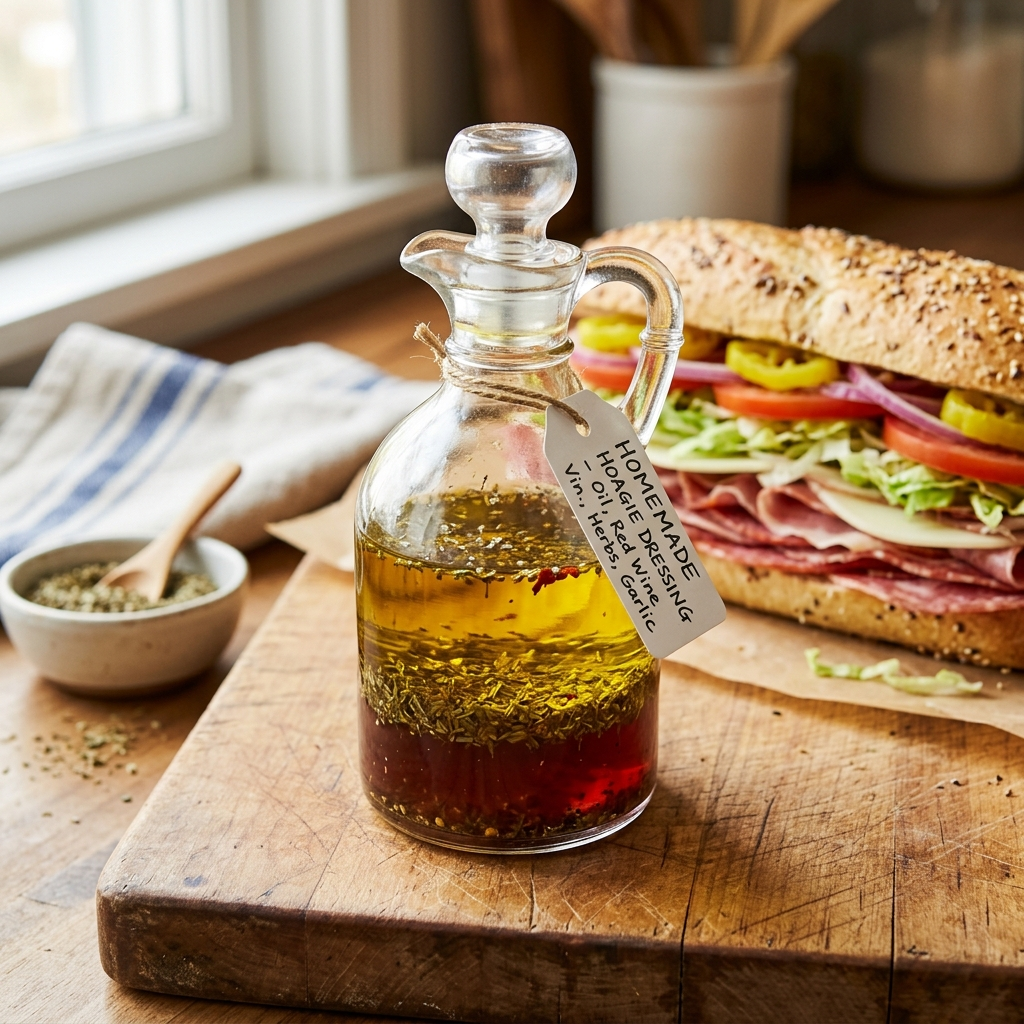
Ingredients You’ll Need
- ½ cup extra virgin olive oil (or a mild olive oil if you find EVOO too strong)
- ¼ cup red wine vinegar
- 1 teaspoon dried oregano
- ½ teaspoon garlic powder
- ¼ teaspoon red pepper flakes (optional, but recommended)
- ½ teaspoon salt
- ¼ teaspoon black pepper
- ½ teaspoon sugar
Step-by-Step Instructions
Step 1: Combine the vinegar and seasonings first. Pour the red wine vinegar into a jar or small bowl. Add the oregano, garlic powder, red pepper flakes, salt, pepper, and sugar. Stir or shake until the salt and sugar dissolve. This matters because salt doesn’t dissolve well in oil — it needs the vinegar’s water content to break down properly.
Step 2: Add the oil. Pour in the olive oil. If you’re using a jar with a tight lid, close it and shake hard for about 15 seconds. You want the oil and vinegar to temporarily emulsify, which means they blend into a cloudy, slightly thickened mixture instead of sitting in two separate layers.
Step 3: Taste and adjust. Dip a piece of lettuce or a corner of bread into the dressing. Does it need more tang? Add a splash of vinegar. Too sharp? A tiny bit more oil or another pinch of sugar will smooth it out. Trust your palate here — the “right” balance is the one you enjoy.
Step 4: Let it rest. If you have 15 to 30 minutes, let the dressing sit at room temperature before using it. The dried oregano needs a little time to rehydrate and release its flavor. This is the step most people skip, and it’s the reason deli dressing tastes more complex than the one you just shook together in a hurry.
Choosing the Right Oil and Vinegar
The recipe above gives you a solid starting point, but the specific oil and vinegar you choose will change the final flavor more than you might expect.
Which Oil Works Best?
Extra virgin olive oil is the traditional choice for an Italian sub dressing recipe, and it gives you that fruity, slightly peppery backbone. But here’s the thing — not everyone loves the assertive flavor of a bold EVOO on a sandwich. If your olive oil tastes almost bitter on its own, it’ll compete with the meats and cheese instead of supporting them.
A good middle ground is a “light” or “pure” olive oil. These are still olive oil, but they’ve been refined to have a milder flavor. You get the smooth mouthfeel without the strong grassy notes that can overwhelm a delicate turkey hoagie.
Some delis actually use a blend of olive oil and a neutral oil like canola or vegetable oil. This keeps costs down and produces a lighter dressing that doesn’t overpower the other ingredients. If you want to try this approach, go with a 50/50 split and taste as you go.
Avoid strongly flavored oils like sesame, walnut, or coconut. They’ll clash with the Italian seasoning profile and make your hoagie taste confused.
Which Vinegar Should You Use?
Red wine vinegar is the standard for oil and vinegar hoagie dressing, and for good reason. It has a clean, bright acidity with just enough fruity depth to complement the olive oil. It’s what you’ll find in most deli shops from Philadelphia to New York, and it’s the backbone of any authentic Italian hoagie dressing.
White wine vinegar is a fine substitute if that’s what you have in the pantry. It’s slightly milder and a touch more delicate, which works well if you’re making a lighter hoagie with turkey or chicken.
Balsamic vinegar is a popular swap, but it changes the character of the dressing significantly. It’s sweeter, darker, and thicker. It works beautifully on a caprese-style sandwich, but it won’t give you that classic deli tang. If you want to experiment, try a 50/50 blend of red wine and balsamic for a middle ground.
Plain white distilled vinegar is too harsh for this application. It lacks the complexity you need, and the sharpness will overpower everything else on the sandwich. Save it for pickling and cleaning.
Seasoning Secrets for Authentic Deli Flavor
The seasoning blend is where the magic happens, and it’s also where most home recipes come up short. Getting these details right is what separates a hoagie dressing recipe that tastes “fine” from one that tastes like it came straight from the deli counter.
Dried oregano is non-negotiable. This is the single most important spice in any hoagie dressing. It’s what gives the dressing that earthy, slightly minty aroma you recognize the moment you walk into a good deli. Use dried, not fresh — dried oregano has a more concentrated flavor that stands up to the oil and vinegar. Here’s a trick: rub the dried oregano between your fingers for a few seconds before adding it. This breaks open the tiny leaves and releases the essential oils, giving you a noticeably stronger flavor.
Garlic powder beats fresh garlic here. I know that sounds counterintuitive. Fresh garlic is usually the better choice in cooking. But in a cold dressing that sits on a sandwich, raw minced garlic can turn harsh and overpowering within minutes. Garlic powder gives you a mellow, even garlic flavor that distributes through the dressing without creating hot spots of raw bite.
A pinch of sugar makes a real difference. You’re not trying to make a sweet dressing. The sugar — even just half a teaspoon — softens the acidic edge of the vinegar and helps the flavors round out. Think of it the same way a pinch of salt improves a chocolate chip cookie. You don’t taste the sugar directly, but you’d notice if it were missing.
Red pepper flakes are optional but worth it. They add a gentle warmth that builds as you eat the sandwich. If you’re serving kids or anyone sensitive to heat, leave them out entirely. The dressing will still taste great without them.
If you want to go a step further, a small pinch of onion powder and a shake of Italian seasoning blend can add even more depth. But the core four — oregano, garlic powder, salt, and pepper — will get you 90% of the way there.
How to Store Your Hoagie Dressing Recipe
One of the best things about this dressing is that it keeps well. You can make a big batch and use it throughout the week, which makes weeknight sandwich-making a lot easier.
Store it in a sealed glass jar in the refrigerator. It’ll stay good for about one to two weeks. The olive oil may solidify slightly in the cold — that’s completely normal and not a sign that anything has gone bad. Just take the jar out about 10 minutes before you plan to use it, give it a good shake, and it’ll come right back together.
According to USDA food safety guidelines, any homemade dressing should be refrigerated promptly and used within a reasonable timeframe. Since this recipe uses dried spices and no fresh dairy or raw produce, you have a bit more flexibility than you would with a creamy dressing, but two weeks is a safe upper limit.
Always give it a sniff before using. If it smells off or you see any mold (unlikely but possible), toss it and make a fresh batch. It only takes five minutes, after all.
Note: This is general food safety information and not a substitute for professional advice. If you have specific dietary concerns or health conditions, consult a qualified food safety professional or dietitian.
Tips for Applying Dressing Without a Soggy Hoagie
Making the dressing is only half the battle. How you apply it determines whether your hoagie stays crisp or turns into a soggy mess by the third bite.
The biggest mistake people make is pouring the dressing directly onto the bread. The oil soaks into the crumb immediately, and the vinegar breaks down the structure of the roll. Within minutes, you’re holding a sandwich that falls apart in your hands and drips down your wrist.
Instead, dress the fillings, not the bread. Lay out your meats and cheese, drizzle the oil and vinegar hoagie dressing over those, and then add your lettuce, tomato, and onion on top. The vegetables act as a barrier between the wet dressing and the bread. This is one of the most effective ways to prevent a soggy sandwich, and it works every single time.
If you’re packing the hoagie for lunch later, keep the dressing in a small separate container and add it right before eating. It takes an extra 30 seconds and makes a huge difference in texture. Nobody wants a sad, mushy sandwich at noon.
Another trick: lightly toast the inside of your hoagie roll before assembling. The toasted surface creates a slight crust that resists moisture better than soft, untoasted bread. You don’t need to go heavy — just a quick pass under the broiler or in a dry skillet is enough.
Oil and Vinegar Hoagie Dressing Variations
Once you have the base recipe down, you can tweak it to match whatever style of hoagie you’re building. Here are a few variations worth trying.
For a classic Italian hoagie: Stick with the recipe as written. The red wine vinegar, olive oil, and oregano combo is the gold standard for a traditional hoagie loaded with salami, capicola, ham, and provolone. It’s the flavor profile that made the classic Italian sub famous in the first place.
For a lighter turkey or chicken hoagie: Swap half the olive oil for a neutral oil and use white wine vinegar instead of red. This gives you a brighter, less heavy dressing that won’t overwhelm leaner meats. You might also add a squeeze of fresh lemon juice for extra freshness.
For a spicy hoagie: Double the red pepper flakes and add a teaspoon of giardiniera brine — the liquid from a jar of pickled hot peppers. The brine adds heat and a vinegary punch that layers beautifully with the base dressing.
For a crowd-pleasing party platter: Make a big batch of the dressing and serve it in a squeeze bottle alongside a build-your-own hoagie bar. People love being able to control how much dressing they get, and the squeeze bottle makes it easy to apply without flooding the sandwich. Pair it with a spread of popular sandwich toppings and let your guests get creative.
For a roasted vegetable hoagie: Add a teaspoon of dried basil and a splash of balsamic vinegar to the base recipe. The sweeter, more herbaceous profile complements grilled zucchini, roasted peppers, and eggplant beautifully.
Frequently Asked Questions
What is the best oil to vinegar ratio for hoagie dressing?
The standard ratio is 2 parts oil to 1 part vinegar. This gives you a rich, balanced dressing that coats the fillings without being too acidic. If you prefer a tangier kick, you can shift to a 1:1 ratio, but start with 2:1 and adjust to your taste. Most deli shops land somewhere in that range.
What kind of vinegar do delis use on hoagies?
Most traditional delis use red wine vinegar. It provides the right balance of acidity and fruitiness that pairs well with Italian meats and cheeses. Some shops may use a blend of red wine vinegar and white vinegar to cut costs, but red wine vinegar is the authentic choice and the one you should reach for first.
Can I make this dressing ahead of time?
Yes, and it actually tastes better if you do. Making the dressing a few hours ahead — or even the night before — gives the dried herbs time to rehydrate and the flavors time to meld together. Store it in the fridge and shake well before using. It keeps for up to two weeks.
Why does my oil and vinegar dressing separate?
Oil and vinegar naturally separate because they don’t mix on a molecular level — oil is nonpolar and vinegar is water-based. Shaking the jar creates a temporary emulsion, but it won’t last forever. This is completely normal and not a sign of a bad recipe. Just shake it again right before you use it. If you want a more stable emulsion, add a teaspoon of Dijon mustard, which acts as a natural emulsifier.
Is oil and vinegar dressing healthier than mayo?
Generally, yes. A basic oil and vinegar dressing avoids the added sugars and preservatives found in many commercial mayonnaises, and olive oil provides heart-healthy monounsaturated fats. That said, oil is calorie-dense, so portion size still matters. This is general nutritional information and not a substitute for personalized advice from a registered dietitian.
Wrapping It Up
A great oil and vinegar hoagie dressing doesn’t need a long ingredient list or any special technique. It needs good vinegar, decent oil, and the patience to let the dried herbs do their work. Once you make your first batch, you’ll probably stop buying the bottled stuff entirely.
Grab a jar, shake up a batch tonight, and drizzle it over your next deli-style sandwich. You’ll taste the difference immediately. And if you want to explore more ways to level up your hoagie game from roll to filling, our guides on sandwich building and toppings have plenty more ideas to try.