
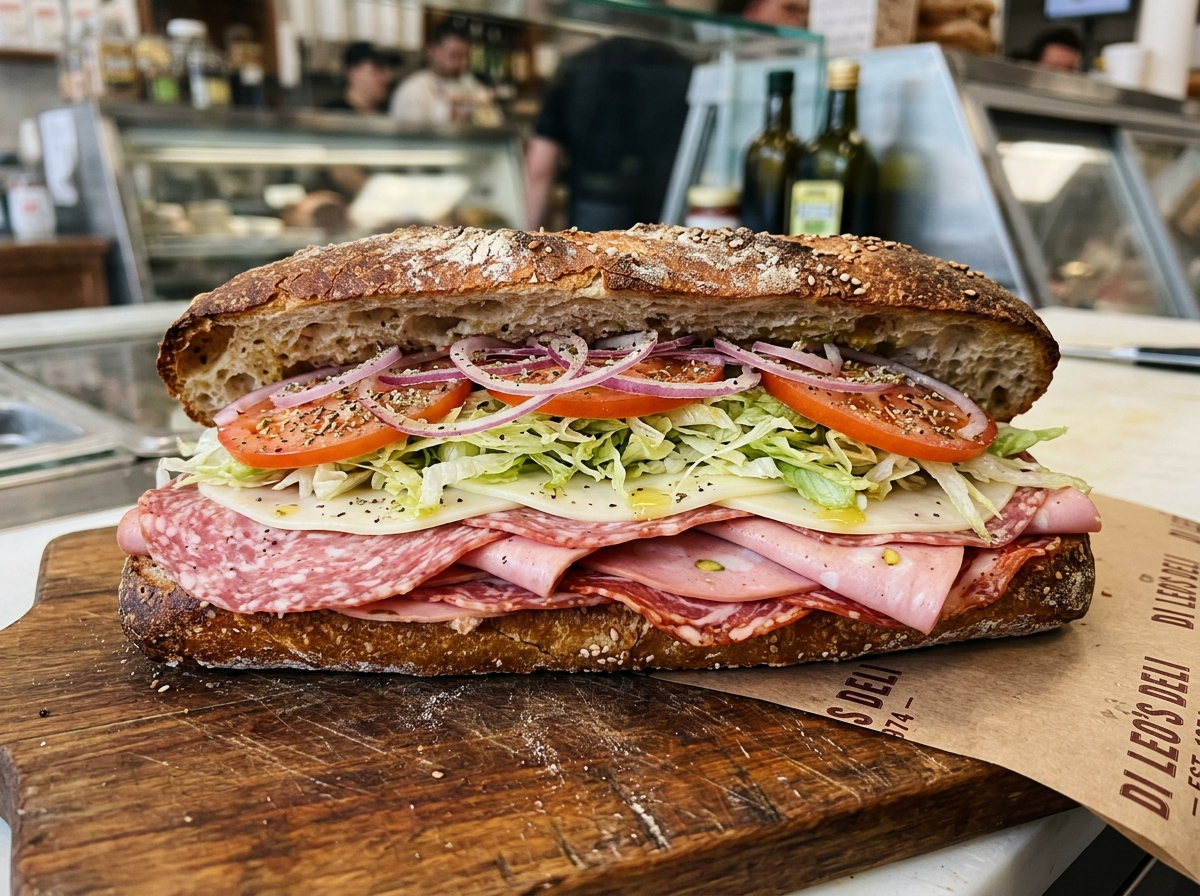
You’ve seen it on deli menus from Philly to Pittsburgh and probably wondered what makes an Italian hoagie different from any other cold cut sandwich. The short answer: specific cured meats, sharp provolone, crisp vegetables, and a heavy hand with oil and vinegar — all stuffed into a crusty long roll. But the real magic is in the details, and getting those details right is the difference between a forgettable sandwich and one you’ll think about for days.
What Is an Italian Hoagie?
An Italian hoagie is a cold sandwich built on a long, crusty roll and loaded with a combination of Italian-style cured meats, provolone cheese, fresh vegetables, and a simple oil-and-vinegar dressing. It’s one of the most popular sandwiches in the United States, especially in the Mid-Atlantic region.
The thing that separates an Italian hoagie from a generic ham-and-cheese on a roll is the meat selection. You’re not just grabbing whatever’s in the deli case. A proper Italian hoagie uses at least two or three Italian cured meats — think salami, capicola, and ham — layered together so every bite has a mix of salty, spicy, and mild flavors.
The Philadelphia Connection
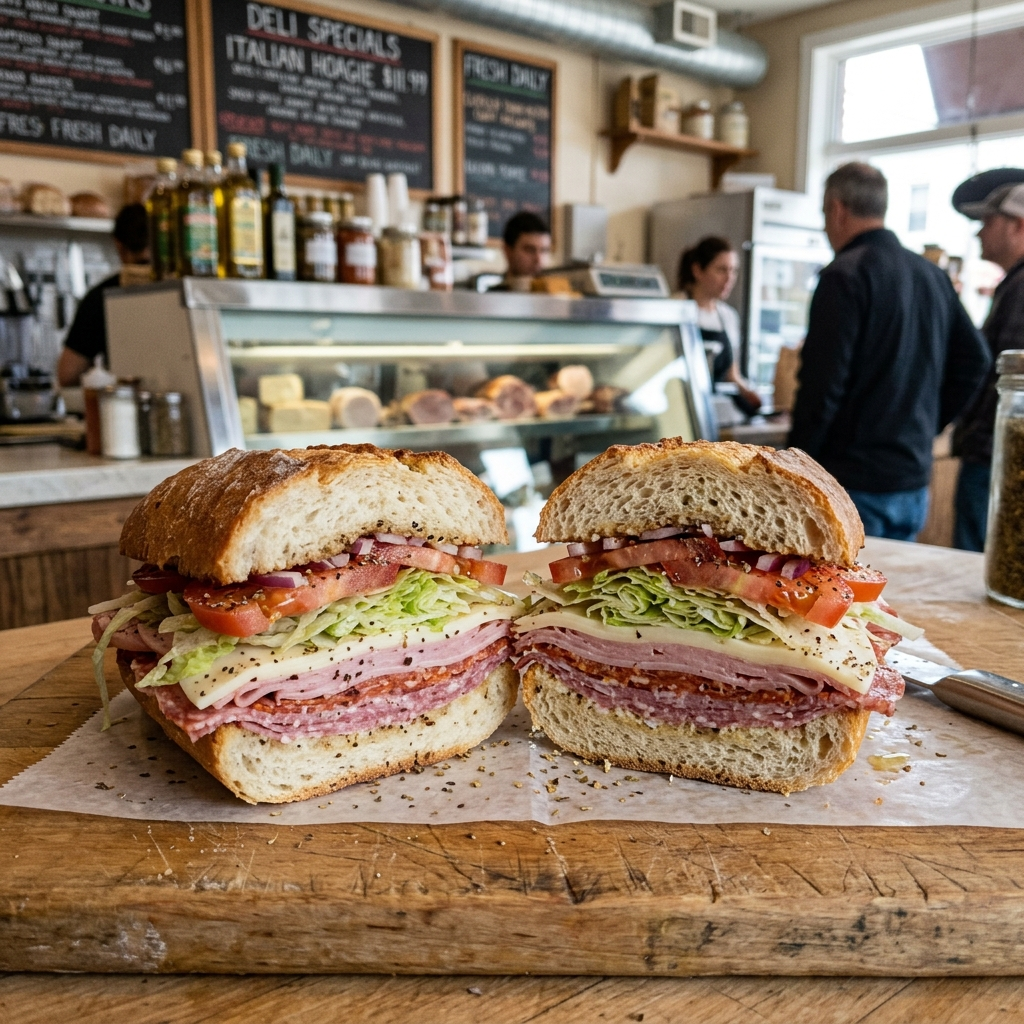
The Italian hoagie traces its roots to Philadelphia in the early 1900s. Italian immigrants working at the Hog Island shipyard during World War I reportedly built these sandwiches for their lunch breaks, piling cured meats from home onto long rolls. The name “hoagie” itself is widely believed to come from “Hog Island,” though food historians still debate the exact origin story.
What started as a working-class lunch became a Philadelphia institution. Today, you’ll find Italian hoagies at corner delis, Wawa convenience stores, and high-end sandwich shops across the city. The sandwich has spread well beyond Philly, but the core formula hasn’t changed much in over a century.
Hoagie vs Sub vs Grinder — Is There a Real Difference?
This is where things get a little regional. In Philadelphia, it’s a hoagie. In New York, you might hear “hero.” In New England, it’s a “grinder.” In most other places, people call it a “sub.”
The sandwich itself is largely the same — cold cuts on a long roll. The differences are mostly about local naming conventions and slight variations in bread style. A grinder roll in Connecticut tends to be softer than a Philly hoagie roll, for example. But if you order an “Italian” version in any of these regions, you’ll get roughly the same combination of meats and toppings.
If you want a deeper breakdown of these regional names, this guide on hoagie vs sub vs grinder covers the distinctions in more detail.
Italian Hoagie Ingredients — The Meats
The meat is the star of the show, and this is where an Italian hoagie earns its name. You won’t find turkey or roast beef here. The classic lineup sticks to Italian-style cured and cooked meats.
The Classic Cured Meat Lineup
A traditional Italian hoagie includes three to four of the following:
Salami — Usually a hard, dry-cured Genoa salami. It brings a garlicky, slightly tangy flavor and a firm chew. This is the backbone of the sandwich and the one meat you’ll find on virtually every version.
Capicola (also called coppa or gabagool, depending on who you ask) — A dry-cured pork shoulder meat seasoned with wine and spices. It’s tender, mildly spicy, and adds a richness that salami alone can’t provide. If you’re not familiar with this cut, this explainer on what capicola is breaks down how it’s made and why it tastes the way it does.
Ham — Specifically, a cooked Italian-style ham like prosciutto cotto (not to be confused with dry-cured prosciutto). It’s mild and slightly sweet, which balances out the saltier cured meats.
Soppressata — Some delis swap this in for salami or add it as a fourth meat. It’s a dry-cured sausage with a coarser grind and a bolder, sometimes spicy kick.
Prosciutto — The dry-cured version shows up in more upscale builds. It’s paper-thin, salty, and melts in your mouth.
The exact combination varies by deli and by personal preference. Some shops use a pre-mixed “Italian combo” that blends salami, capicola, and ham in one pile. Others let you pick and choose. There’s no single correct answer, but you want at least two different textures and flavor profiles in there — one salty and firm, one mild and tender. That contrast is what makes the sandwich interesting to eat.
The Cheese, Toppings, and Dressing
Meat gets the glory, but the supporting cast is what makes an Italian hoagie a complete sandwich rather than a pile of cold cuts on bread.
Provolone — The Non-Negotiable
Provolone is the cheese for an Italian hoagie. Not cheddar, not Swiss, not American. Provolone. Specifically, you want a sharp or aged provolone (provolone piccante) rather than the mild, rubbery stuff you find pre-sliced in the dairy aisle. Sharp provolone has a tangy, almost smoky flavor that stands up to the bold cured meats without disappearing into the background.
Most delis lay two to three slices across the meat. Some fold the cheese into the meat layers so it distributes more evenly throughout the sandwich. Either way, provolone is the standard, and swapping it out changes the character of the whole thing.
Lettuce, Tomato, and Onion — The Fresh Layer
The vegetable trio on an Italian hoagie is simple: shredded iceberg lettuce, sliced tomato, and thinly sliced raw onion (usually white or sweet Vidalia).
The lettuce should be shredded, not leafed. Shredded lettuce distributes evenly across the sandwich and adds crunch without creating a giant leaf that pulls out in one bite. The tomato adds juiciness and a bit of acidity. The onion brings a sharp bite that cuts through all the fat from the meats and cheese.
Some people skip the tomato because it can make the bread soggy if the sandwich sits around too long. That’s a valid choice, especially if you’re packing the hoagie for later. If you do include tomato, pat the slices dry with a paper towel first — it makes a real difference in how well the bread holds up.
Oil, Vinegar, and the Seasoning Debate
Here’s where opinions get strong. The classic Italian hoagie dressing is a generous drizzle of olive oil and red wine vinegar, followed by a shake of dried oregano, salt, and black pepper. That’s it. No mayo. No mustard. No ranch.
The oil and vinegar soak into the bread slightly and tie all the flavors together. The oregano is what gives the sandwich its distinctly “Italian” aroma — you can smell it before you take a bite.
Some delis use a pre-mixed Italian vinaigrette. Others keep the oil and vinegar in separate squeeze bottles and let you control the ratio. If you’re building one at home, this guide on oil and vinegar hoagie dressing walks through how to get the ratio right.
A quick note on the mayo question: adding mayo to an Italian hoagie is controversial in sandwich circles. Purists say no. But if you like it, nobody’s going to stop you. Just know that in Philadelphia, asking for mayo on an Italian hoagie might get you a raised eyebrow from the person behind the counter.
The Roll Matters More Than You Think
You can have the best meats and the sharpest provolone, but if your bread is wrong, the sandwich falls apart — sometimes literally.
An Italian hoagie needs a long roll with a crisp, slightly chewy crust and a soft, airy interior. The outside should have enough structure to hold up to the oil and vinegar without turning to mush. The inside should be soft enough to compress when you bite into it, so you’re not fighting the bread with every chew.
In Philadelphia, Amoroso rolls are the gold standard. They’ve been baking hoagie rolls in the city since 1904, and most local delis use them exclusively. Outside of Philly, look for a fresh Italian or French-style long roll from a local bakery. Avoid the soft, squishy sub rolls from the grocery store bread aisle — they’ll turn gummy the moment the oil hits them.
A good trick: if you can squeeze the roll flat with one hand and it doesn’t spring back, it’s too soft for a hoagie. You want some resistance. For tips on how to properly prep and cut your roll, check out this guide on how to slice a hoagie roll.
Classic Italian Hoagie Recipe — How to Build One at Home
Building an Italian hoagie is straightforward, but the order in which you layer the ingredients actually matters. Get it wrong and you end up with a soggy bottom and a dry top. Get it right and every bite is balanced.
Step-by-Step Layering Order
Here’s the build that works best, based on how most experienced deli counters assemble them:
Pro Tip: If you’re making the hoagie ahead of time for a lunchbox or picnic, leave the tomato and dressing off until you’re ready to eat. Wrap the undressed sandwich tightly in parchment paper or deli paper, and it’ll hold up well for a few hours without getting mushy.
Italian Hoagie Toppings — Variations and Add-Ons
Once you’ve nailed the classic build, there’s plenty of room to customize. Here are some popular additions that stay true to the Italian hoagie spirit without turning it into a completely different sandwich:
Hot peppers — Sliced banana peppers or hot cherry peppers add a vinegary heat that pairs perfectly with the cured meats. Some delis offer a “hot” version of the Italian hoagie that includes spicy soppressata and cherry peppers by default.
Giardiniera — This pickled vegetable mix (cauliflower, carrots, celery, peppers) is a Chicago-Italian staple that works beautifully on a hoagie. It adds crunch and tang without the sogginess of fresh tomato.
Roasted red peppers — Sweeter and softer than fresh peppers, these add a smoky depth. Pat them dry before adding, or they’ll waterlog the bread.
Extra cheese — Some people add a layer of fresh mozzarella alongside the provolone for a creamier texture. It’s not traditional, but it works well if you like a milder, softer cheese pull.
Olive tapenade or sun-dried tomatoes — These push the sandwich in a more Mediterranean direction. They’re not classic, but they complement the cured meats and provolone nicely.
The beauty of the Italian hoagie is that the foundation is solid enough to handle variations without losing its identity. As long as you keep the cured meats, provolone, and oil-and-vinegar core intact, you can adjust the toppings to suit your taste.
A Quick Note on Deli Meat Freshness
Since an Italian hoagie relies heavily on deli-sliced cured meats, it’s worth paying attention to freshness. Cured meats like salami and capicola last longer than cooked meats like ham, but once they’re sliced at the deli counter, the clock starts ticking faster. Sliced deli meats generally stay good in the refrigerator for three to five days when stored in airtight packaging, according to the USDA Food Safety and Inspection Service.
If the meat looks slimy, smells sour, or has an off-color sheen, don’t use it — even if it’s technically within the date range. Trust your senses over the calendar. This is general food safety information and not a substitute for professional guidance, so when in doubt, check with your local health department or a food safety expert.
Frequently Asked Questions
What is the difference between an Italian hoagie and an Italian sub?
Practically speaking, there isn’t one. “Hoagie” is the Philadelphia term, while “sub” is used in most other parts of the country. Both refer to the same sandwich: Italian cured meats, provolone, lettuce, tomato, onion, and oil and vinegar on a long roll. The ingredients and preparation are identical — only the name changes based on where you are.
What meats go on a classic Italian hoagie?
The classic combination includes Genoa salami, capicola (coppa), and cooked ham. Many delis also add soppressata or prosciutto as a fourth meat. The key is using Italian-style cured and cooked meats rather than American deli staples like turkey or roast beef.
Do you put mayo on an Italian hoagie?
The traditional answer is no. A classic Italian hoagie uses olive oil and red wine vinegar as its only dressing, along with dried oregano, salt, and pepper. That said, some people enjoy mayo on their hoagie, and there’s no rule against it — just be aware that it’s not part of the original Philadelphia-style build.
The Italian hoagie is one of those sandwiches that proves simplicity wins. You don’t need a long list of exotic ingredients or complicated techniques. You need good cured meats, sharp provolone, a crusty roll, and the confidence to pour on the oil and vinegar. Start with the classic build, get a feel for the layering, and then make it your own. Your next lunch break is about to get a lot more interesting.