
You’re staring at a deli menu and see “hoagie” listed right next to “sub.” Same sandwich? Different sandwich? And why on earth is it called a hoagie?
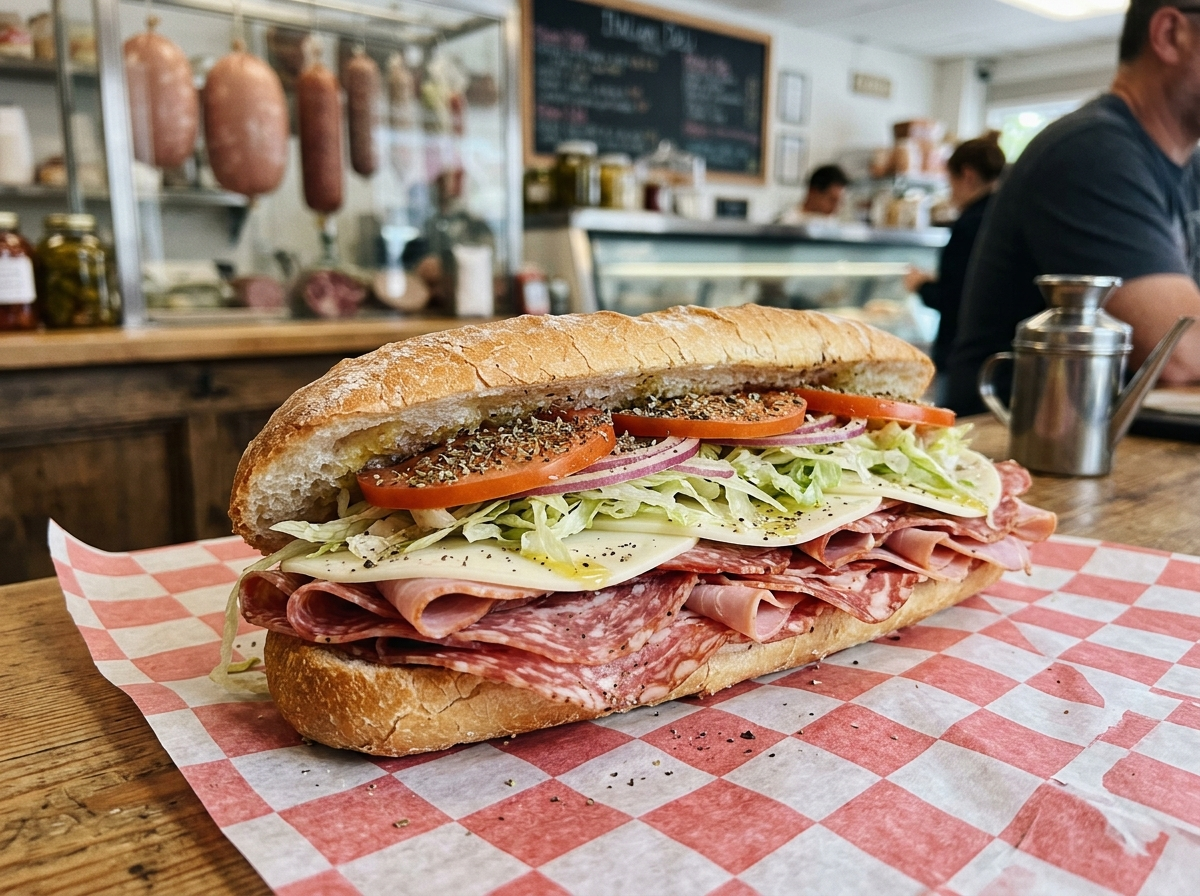
A hoagie is a long sandwich built on a crusty Italian roll, stacked with deli meats, provolone, shredded lettuce, tomato, onion, and a generous splash of oil and vinegar. It’s a Philadelphia icon, and the name has a surprisingly debated origin story.
Here’s everything you need to know about what makes a hoagie a hoagie — and why people have been arguing about the name for nearly a century.
What Is a Hoagie, Exactly?
A hoagie is a cold (or sometimes hot) sandwich served on a long, crusty Italian-style roll. The classic version — the one Philadelphians will defend with their lives — is the Italian hoagie. That means layers of salami, capicola, and ham, topped with provolone cheese, shredded iceberg lettuce, sliced tomato, raw onion, and a drizzle of olive oil and red wine vinegar.
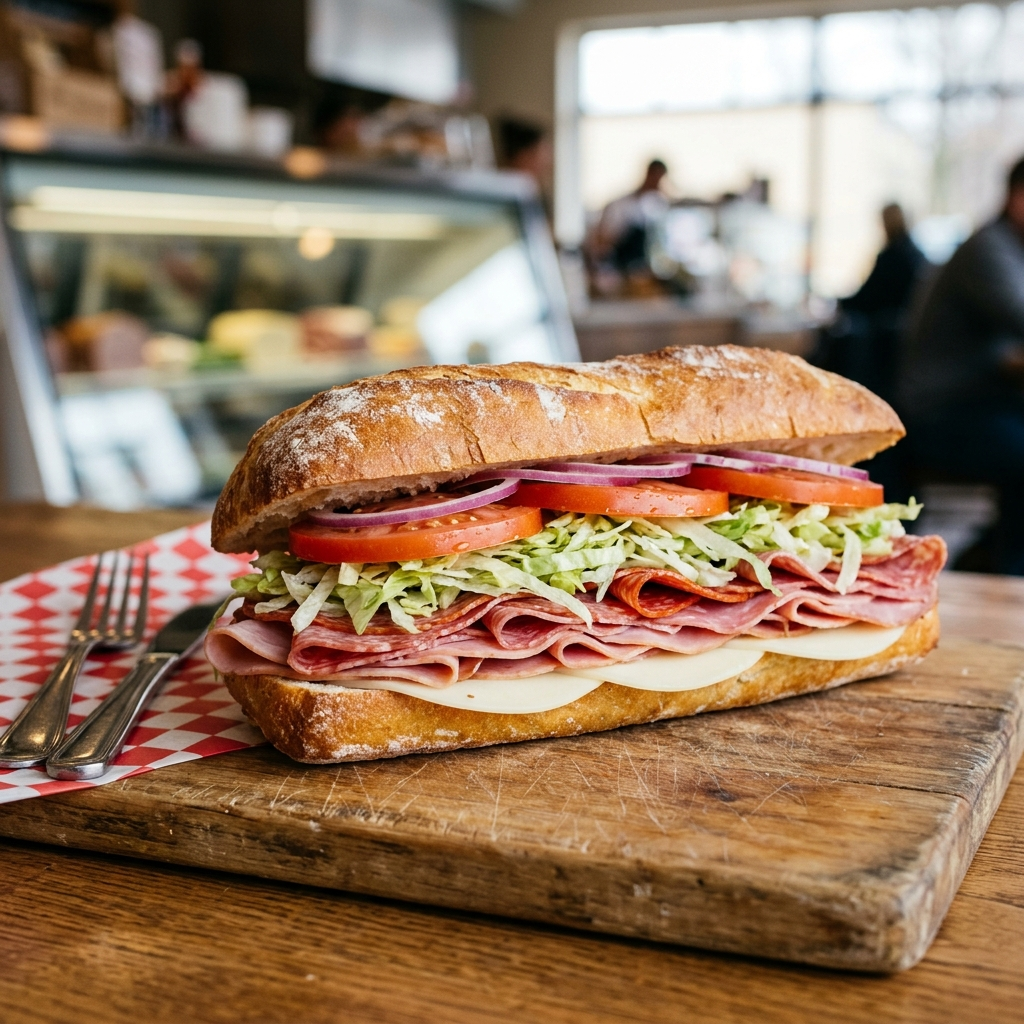
The roll matters more than you’d think. A real hoagie roll has a crisp exterior and a soft, airy interior that soaks up the oil and vinegar without falling apart. If the bread gets soggy and collapses in your hands, that’s not a hoagie. That’s a disappointment.
Structurally, a hoagie is a deli sandwich built for maximum flavor in every bite. The layering order isn’t random. Meats go on the bottom, cheese on top of the meats, and the vegetables and dressing finish it off. This keeps the bread from getting wet too fast and gives you that perfect ratio of salty meat, creamy cheese, and crunchy, acidic toppings.
You’ll find hoagies at corner delis, sandwich shops, and gas stations all across the Philadelphia metro area and South Jersey. Ask for one in Chicago or Los Angeles, though, and you might get a blank stare. The name is deeply regional, even though the sandwich itself travels under different aliases everywhere.
The Hoagie Name Origin — Where Did the Word Come From?
This is where things get fun (and a little messy). There’s no single, universally agreed-upon origin for the word “hoagie.” What we do have are a few competing theories, each with passionate supporters.
The Hog Island Story (Most Popular Theory)
The most widely told version traces the name back to World War I. Workers at the Hog Island Shipyard in Philadelphia — a massive emergency shipbuilding facility along the Delaware River — supposedly brought large sandwiches to work for lunch. These workers were nicknamed “Hoggies.” Over time, the sandwiches they carried became known as “Hoggie sandwiches,” which eventually shortened and shifted to “hoagies.”
The Philadelphia Encyclopedia, a peer-reviewed digital project run by local universities, documents this as the leading explanation. It’s the story you’ll hear from most longtime Philly residents, and it lines up with the timeline of when the word started appearing in local usage during the 1920s and 1930s.
The “Hokey” Theory
A less common but still cited explanation involves the word “hokey.” In early 20th-century Philadelphia slang, “hokey” meant something that was a mix of leftovers or odds and ends — basically a little bit of everything thrown together. Since a hoagie is packed with multiple meats, cheeses, and toppings, some food historians suggest the name evolved from “hokey” to “hoagie” as a description of the sandwich’s overstuffed nature.
Other Origin Stories
A few other theories float around. One credits a South Philadelphia street vendor named Al De Palma, who supposedly started selling large submarine-style sandwiches in the 1920s and called them “hoggies” because you’d have to be a “hog” to eat something that big. Another story ties the name to Italian immigrant communities in South Philly, though the exact linguistic path from Italian to “hoagie” is harder to pin down.
The honest truth? The Hog Island explanation has the most documented support, but sandwich etymology is notoriously slippery. Words shift and morph through oral tradition long before anyone writes them down. The Dictionary of American Regional English records “hoagie” as a primarily Philadelphia and South Jersey term, which at least confirms the geographic origin even if the exact naming moment stays fuzzy.
What Goes on a Classic Hoagie?
If you want to understand what makes a hoagie different from any old long sandwich, you need to look at the ingredients. A hoagie isn’t just a pile of stuff on bread. The specific combination and the way it’s assembled are what give it its identity.
The Roll
Everything starts with the bread. A proper hoagie roll is about 6 to 12 inches long, with a firm, slightly chewy crust and a pillowy interior. The crumb structure needs to be open enough to absorb dressing but sturdy enough to hold up under a pound of fillings. Slicing the roll correctly makes a real difference — you want a hinge, not two separate pieces of bread.
Amoroso’s Baking Company, a Philadelphia institution since 1904, is the gold standard for hoagie rolls. If you’re outside the Philly area, look for a fresh Italian roll at a local bakery. Supermarket hot dog buns won’t cut it.
The Meats and Cheese
The classic Italian hoagie uses a trio of Italian deli meats: hard salami, capicola (a seasoned pork shoulder cold cut), and cooked ham. Some shops add pepperoni or prosciutto, but the salami-capicola-ham combo is the traditional foundation. Capicola, in particular, is what gives the Italian hoagie its distinctive spicy, slightly funky flavor that sets it apart from a generic sub.
Provolone is the cheese. Not American, not Swiss, not cheddar. Sharp or mild provolone, sliced thin and layered directly on top of the meats so it melds into the stack.
The Toppings and Dressing
Here’s where the hoagie really separates itself from other long sandwiches. The standard toppings are shredded iceberg lettuce, thin-sliced tomato, and raw white onion rings. Some people add hot or sweet banana peppers, and oregano is a common finishing sprinkle.
But the real signature move is the oil and vinegar dressing. A proper hoagie gets a generous pour of olive oil and red wine vinegar right over the vegetables. The acid cuts through the fatty meats, the oil carries the flavors into the bread, and the whole thing comes together in a way that a dry sandwich never could. Skip the mayo. Mayo is not traditional on an Italian hoagie, and many Philly deli regulars will side-eye you for asking.
Hoagie vs Sub vs Grinder vs Hero — What’s the Difference?
This is the question that starts arguments at family cookouts. Are these all the same sandwich? Yes and no.
Structurally, a hoagie, a sub, a grinder, and a hero are all long sandwiches on Italian-style rolls filled with deli meats, cheese, and toppings. The biggest difference is geography.
| Name | Region | Key Detail |
|---|---|---|
| Hoagie | Philadelphia, South Jersey | Oil and vinegar are essential |
| Sub | Most of the U.S. | The generic, catch-all term |
| Grinder | New England | Often toasted or heated |
| Hero | New York City | Tends to be larger and overstuffed |
The real distinction is cultural, not structural. A hoagie in Philadelphia carries specific expectations — the oil and vinegar, the Italian meat trio, the Amoroso roll. A “sub” in most of the country is a broader category that can include turkey clubs, meatball sandwiches, and anything else on a long roll.
If you want a deeper breakdown of the regional differences, this hoagie vs sub vs grinder comparison covers the details more thoroughly.
How to Build a Proper Hoagie at Home
Making a great hoagie at home is straightforward, but the details matter. Here’s what actually works when you’re assembling one in your own kitchen.
Start with the best roll you can find. Freshness is non-negotiable. A day-old roll will be too tough, and a pre-sliced supermarket roll will be too soft. If you can get to an Italian bakery, go.
Slice the roll lengthwise, leaving a hinge on one side. Don’t cut all the way through — you want the sandwich to stay connected so the fillings don’t spill out the back.
Layer the meats first. Fold or drape the salami, capicola, and ham rather than laying them flat. Folding creates air pockets that give the sandwich a better texture and make it feel more substantial. This is one of those small tricks that deli workers do automatically but most home cooks skip, and you can taste the difference immediately.
Add the provolone on top of the meats. If you want it slightly melted, you can pop the open-faced sandwich under a broiler for about 30 seconds at this stage, but a traditional Italian hoagie is served cold.
Pile on the shredded lettuce, tomato slices, and onion. Then hit the whole thing with olive oil and red wine vinegar. Don’t be shy with the dressing — the bread should absorb some of it. A pinch of dried oregano and a few grinds of black pepper finish it off.
Close the roll, press down gently, and cut it in half on a diagonal. The diagonal cut isn’t just for looks. It gives you a better angle for that first bite and distributes the fillings more evenly from end to end.
For a full walkthrough on building a deli-quality sandwich at home, including tips on meat-to-bread ratios and storage, check out that guide.
The Hoagie’s Place in American Sandwich Culture
The hoagie isn’t just a lunch option. In Philadelphia, it’s a cultural touchstone. The city’s sandwich identity revolves around two pillars: the cheesesteak and the hoagie. While the cheesesteak gets more national attention, many locals will tell you the hoagie is the sandwich they actually eat on a regular Tuesday.
The rise of the hoagie tracks with the broader story of Italian-American deli culture in the Northeast. Italian immigrants in the late 19th and early 20th centuries brought their cured meats, cheeses, and bread traditions to cities like Philadelphia, New York, and Boston. The long sandwich was a practical, portable meal for working-class families, and each city developed its own name and style over the decades.
Today, the hoagie has spread well beyond Philadelphia, though the name hasn’t always traveled with it. National chains like Wawa — a Pennsylvania-based convenience store chain beloved for its hoagies — have introduced the term to new audiences across the Mid-Atlantic. And the Italian hoagie remains the benchmark against which all other variations are measured.
Whether you call it a hoagie, a sub, or something else entirely, the core idea is the same: a generous, flavorful sandwich that doesn’t take itself too seriously but rewards you for paying attention to the details.
Frequently Asked Questions
What is a hoagie sandwich?
A hoagie is a long sandwich made on a crusty Italian roll, typically filled with Italian deli meats like salami, capicola, and ham, along with provolone cheese, shredded lettuce, tomato, onion, and an oil and vinegar dressing. The name is used primarily in Philadelphia and South Jersey.
Why is it called a hoagie?
The most widely accepted explanation traces the name to World War I workers at the Hog Island Shipyard in Philadelphia. These workers, nicknamed “Hoggies,” brought large sandwiches to work, and the name eventually shifted from “Hoggie” to “hoagie.” Other theories connect it to Philadelphia slang or local street vendors, but the Hog Island story has the most historical documentation.
Is a hoagie the same as a sub?
Structurally, yes — both are long sandwiches on Italian rolls with deli meats and toppings. The difference is regional. “Hoagie” is the Philadelphia term and usually implies a specific style with oil and vinegar and Italian meats. “Sub” is the more generic, nationwide term that covers a wider variety of long sandwiches.
What makes a hoagie different from a grinder?
A grinder is the New England term for a similar long sandwich. The main practical difference is that grinders are often toasted or heated, while a traditional hoagie is served cold. The bread and filling choices can also vary by region, but the basic concept is the same.
The next time you see “hoagie” on a menu, you’ll know exactly what you’re getting — and you’ll have a pretty good story about where the name came from. Whether you stick with the classic Italian or branch out into roast pork or turkey variations, the key is good bread, quality meats, and enough oil and vinegar to make the whole thing sing.
Grab a fresh roll, hit your local deli counter, and build one yourself. You might just start calling every long sandwich a hoagie from now on.