
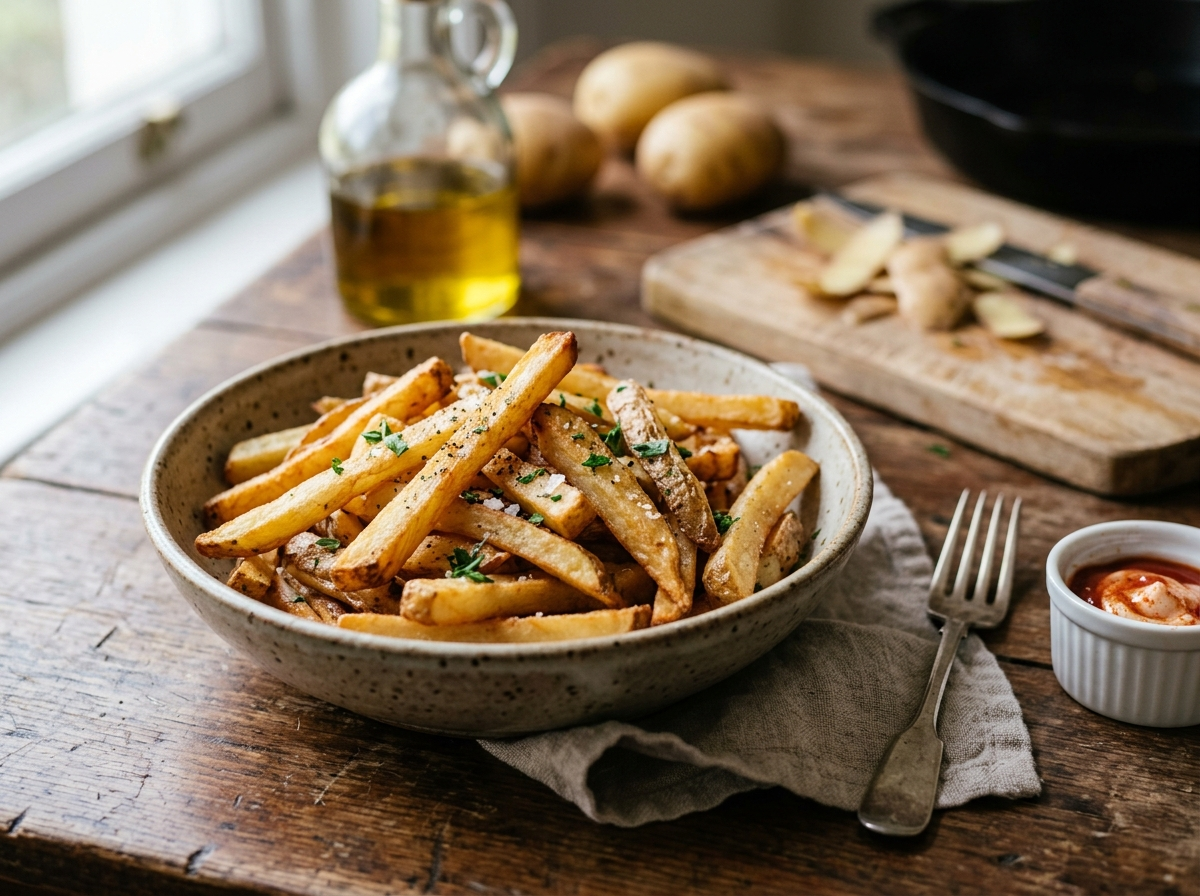
There’s a good chance you’ve eaten french fries more times than you can count. They show up at birthday parties, late-night diners, game day spreads, and kitchen experiments on rainy Sundays. But almost nobody stops to ask — where did this thing actually come from? Who looked at a raw potato and thought, let me slice this thin and drop it in hot oil?
The history of french fries is messier, more disputed, and honestly more interesting than most people expect. And once you understand where they came from, making them at home feels like you’re part of something bigger than a snack.
The Potato Had to Come First
Before there were french fries, there had to be potatoes in Europe. That sounds obvious, but it’s worth remembering — potatoes weren’t always part of the European diet. They’re native to South America, specifically the Andean regions of modern-day Peru and Bolivia, where indigenous peoples had been cultivating them for thousands of years.
Spanish conquistadors brought the potato back to Europe sometime around the mid-1500s. But for a surprisingly long time, Europeans didn’t really know what to do with it. In France and parts of Germany, people actually believed potatoes caused disease. There were regions where growing them was outright banned.
It took roughly two centuries for the potato to go from “suspicious foreign tuber” to a kitchen staple across Europe. By the late 1700s, it had become a critical food source — particularly for working-class and rural communities who needed something cheap, filling, and growable in rough soil.
Once the potato got comfortable in European kitchens, it was only a matter of time before someone figured out that hot oil and salt made it taste extraordinary.
Belgium vs. France: The Great Origin Debate
Ask someone where french fries come from, and they’ll say France. It’s right there in the name, after all. But the Belgians have a strong counter-argument, and food historians have been sorting through this for decades.
The Belgian Claim
The most documented origin story points to Belgium, specifically the Meuse Valley region. According to a manuscript supposedly written around 1781, local villagers there had a tradition of frying small fish from the river. During winter, when the river froze and fishing wasn’t possible, they sliced potatoes into fish-like strips and fried those instead.
Whether that specific manuscript is fully reliable is debated. But what’s less debatable is that fried potato strips were a well-established street food in Belgium by the early 19th century. Street vendors called friteries (or fritkots in Flemish) were selling paper cones of fried potatoes long before the dish became globally famous.
Belgians take this seriously. The Belgian waffle might share the spotlight internationally, but ask any Belgian and they’ll tell you the frite is their true national food. Belgium even submitted a bid to UNESCO to have its frite culture recognized as intangible cultural heritage — and that recognition was granted in 2023.
The French Connection
The French claim largely comes from Thomas Jefferson, of all people. Jefferson served as the U.S. Minister to France from 1784 to 1789, and he developed a deep appreciation for French cuisine during that time. He brought back several recipes, and among his handwritten notes is a recipe for “potatoes fried in the French manner.”
When he served these at Monmouth House and later at the White House, Americans encountered what they called “french fried potatoes.” The “french” here likely referred to the French cut — a cooking technique of slicing food into thin strips — rather than the country of origin. But the name stuck, and the association with France became permanent in American food culture.
So who really invented them? Honestly, it’s probably Belgium. But France handed them to America, and America handed them to the world.
How Homemade French Fries Became an American Obsession
By the time the 20th century arrived, fried potatoes were everywhere in America — but they still looked quite different from what we think of today. Thick-cut, pan-fried potato slices were common at home. The thin, crispy, uniform strip we now call a french fry was more of a restaurant thing.
The Diner Era
The American diner culture of the 1920s and 1930s made french fries a fixture on every menu. They were cheap to make, fast to serve, and customers loved them. Diners standardized the look — long strips, golden brown, salted, served alongside a burger or sandwich.
If you want to see what that era of fried comfort food looked like, the tradition is still very much alive. Game day chili cheese fries and loaded potato dishes trace a direct line back to those diner-era side dishes.
The Fast Food Revolution
Then came McDonald’s. Ray Kroc and the McDonald brothers didn’t invent the french fry, but they industrialized it. By the 1960s, McDonald’s had worked out a system for producing consistent, perfectly golden fries at massive scale. Their secret at the time involved beef tallow — a frying fat that gave the fries a flavor that’s still talked about nostalgically today.
As fast food chains multiplied, the frozen french fry industry grew alongside them. By the 1970s, most Americans were eating fries that had been processed and frozen before ever reaching the fryer. It was convenient, consistent, and completely removed from anything homemade.
That industrialization is part of why homemade french fries feel special now. They’re a return to something.
The Homemade French Fry Renaissance
Something shifted in American home cooking around the early 2000s, and it’s accelerated since. People started caring about what was actually in their food. Food TV exploded. Farmers markets came back. And home cooks started realizing that making fries from scratch wasn’t actually that hard — it just required understanding a few key things.
The biggest realization? Oil matters enormously. Not all frying oils are the same, and the oil you choose affects flavor, crispiness, and how clean the whole thing tastes. If you’ve ever wondered why your homemade fries don’t taste like restaurant fries, the oil is usually the first place to look. Choosing the best oil for homemade french fries is a whole conversation on its own, and it’s worth having before you fire up the stove.
The second realization was that the double-fry method — frying once at a lower temperature, letting the fries rest, then frying again at higher heat — is what separates genuinely crispy fries from soggy ones. This technique wasn’t invented by home cooks. It came from professional kitchens, and it’s been standard in good restaurants for a long time.
Pro Tip: If you’re serious about getting that golden crisp result at home, the golden crisp french fries method is exactly the kind of approach that makes the difference between fries you’re proud of and fries you’re apologizing for.
What Makes Homemade Fries Different from Frozen
This is where it gets interesting for anyone who actually wants to cook.
Frozen fries go through a process called blanching before they’re frozen — they’re partially cooked in hot water or steam, then dried, sometimes coated with a thin starch layer, and then flash-frozen. That pre-processing is what lets them cook quickly from frozen and still come out reasonably crispy.
When you make fries from scratch at home, you’re skipping all of that industrial processing. You’re working with a raw potato, which has more moisture and more natural starch. That’s actually an advantage if you know how to work with it — but it does mean the process is a bit more hands-on.
The type of potato matters too. Russet potatoes are the standard choice for classic french fries. They’re high in starch and relatively low in moisture, which means they crisp up well and have that fluffy interior texture. Waxy potatoes like red potatoes or Yukon Golds hold their shape better but don’t get quite as crispy — they’re better suited for roasted potatoes or homemade potato chips.
Soaking your sliced potatoes in cold water before frying is another step that makes a real difference. It pulls out excess surface starch, which would otherwise cause the fries to stick together and brown unevenly. Thirty minutes to an hour in cold water, then dried thoroughly before they hit the oil — that’s a step most home cooks skip and most good cooks don’t.
French Fries Around the World
Once french fries escaped their Belgian and French origins, they didn’t just stay the same. Every culture that adopted them eventually put their own stamp on them.
In the UK, chips are thick-cut and served with malt vinegar and salt — a completely different eating experience from American fries. British fish and chip shops have been a cultural institution since the 1860s, and the chip’s role there is almost sacred.
Canadian poutine — fries topped with cheese curds and gravy — originated in Quebec in the late 1950s and has become one of Canada’s most recognized dishes internationally.
In Belgium (circling back to the origin), fries are still served in paper cones with a generous scoop of mayonnaise or one of dozens of regional sauces. The mayo thing confuses Americans every time, but once you try a good Belgian friterie sauce, you start to understand.
South Korea and Japan have developed their own elevated takes — seasoned with furikake, drizzled with teriyaki, or topped with things like kimchi and cheese in fusion-style dishes. Street food markets in Seoul serve loaded fry variations that would make a traditional Belgian vendor do a double-take.
And in America, the variations never stop evolving. Waffle fries, curly fries, steak fries, sweet potato fries, seasoned fries, loaded fries — the base idea keeps getting built on. They pair naturally with everything from Nashville hot chicken to smash burgers, which is probably why they’ve become the default side dish for half the comfort food universe.
Why People Still Make Them at Home
With frozen fries available everywhere and fast food on every corner, why does anyone bother making french fries from scratch?
Part of it is control. When you make them at home, you know exactly what oil went in, how fresh the potato was, and how much salt ended up on them. For families with dietary preferences or anyone trying to cut back on processed food, that control matters.
Part of it is also just satisfaction. There’s something genuinely rewarding about pulling a batch of perfectly golden fries out of the oil, draining them on a rack, hitting them with salt while they’re still hot, and hearing that crunch on the first bite. It doesn’t happen by accident, but when it does happen, it feels earned.
And part of it is that homemade fries, done right, actually taste better. The flavor of a fresh russet potato fried in good oil is something frozen fries can’t fully replicate — no matter how sophisticated the industrial process gets.
If you’re also someone who enjoys frying at home more broadly, knowing how to fry at home without deep frying opens up a lot of options. You don’t necessarily need a dedicated deep fryer to get good results — though the right setup does help.
FAQ
Q: Are french fries actually French or Belgian?
Most food historians lean toward Belgium as the true origin. The evidence for Belgian fried potato strips predates any clear French documentation. The “French” in the name most likely comes from the culinary term “French cut,” referring to slicing food into thin strips, rather than the country itself. Thomas Jefferson helped popularize the term in America after his time in France, which cemented the French association permanently — even if it isn’t historically accurate.
Q: What’s the best potato for homemade french fries?
Russet potatoes are the standard for a reason. They have a high starch content and relatively low moisture, which produces that crispy outside and fluffy inside combination that good fries are known for. Avoid waxy varieties like red potatoes for this purpose — they’re better suited to other preparations.
Q: Why do homemade fries go soggy quickly?
Moisture is almost always the culprit. If you don’t dry your potatoes thoroughly after soaking, that surface water hits the hot oil and steams the fry from the outside instead of crisping it. The double-fry technique helps too — the first fry cooks the interior, and the second fry at higher heat creates the crust. Eating them right out of the oil also helps. Fries don’t hold well, and that’s just the nature of the thing.
Q: When did Americans start eating french fries regularly?
The widespread American habit of eating french fries grew significantly during the diner era of the 1920s and 1930s, and then exploded with the rise of fast food chains in the 1950s and 1960s. McDonald’s in particular played a massive role in making french fries the default American side dish, which is a position they haven’t given up since.
Q: Is there a difference between fries and chips?
Yes, and it depends on where you are. In the United States, “chips” typically means thin, crispy potato chips (like Lay’s). In the UK and Australia, “chips” refers to what Americans call french fries — thick-cut fried potatoes. And what Americans call potato chips, the British call “crisps.” It’s the same food with a different name depending on which side of the Atlantic you’re on.
Making Them Your Own
French fries have traveled a long road — from Andean potato fields to Spanish ships, from European street vendors to American diners, from fast food counters to your own kitchen. That’s a surprisingly rich history for something most people eat without thinking twice.
The best version of a french fry you’ll ever have is probably one you made yourself, with a good potato, the right oil, and a little patience with the process. Start with understanding what you’re working with, and the rest follows naturally.
Your kitchen is as good a place as any to continue a tradition that’s been going for a few centuries now.