
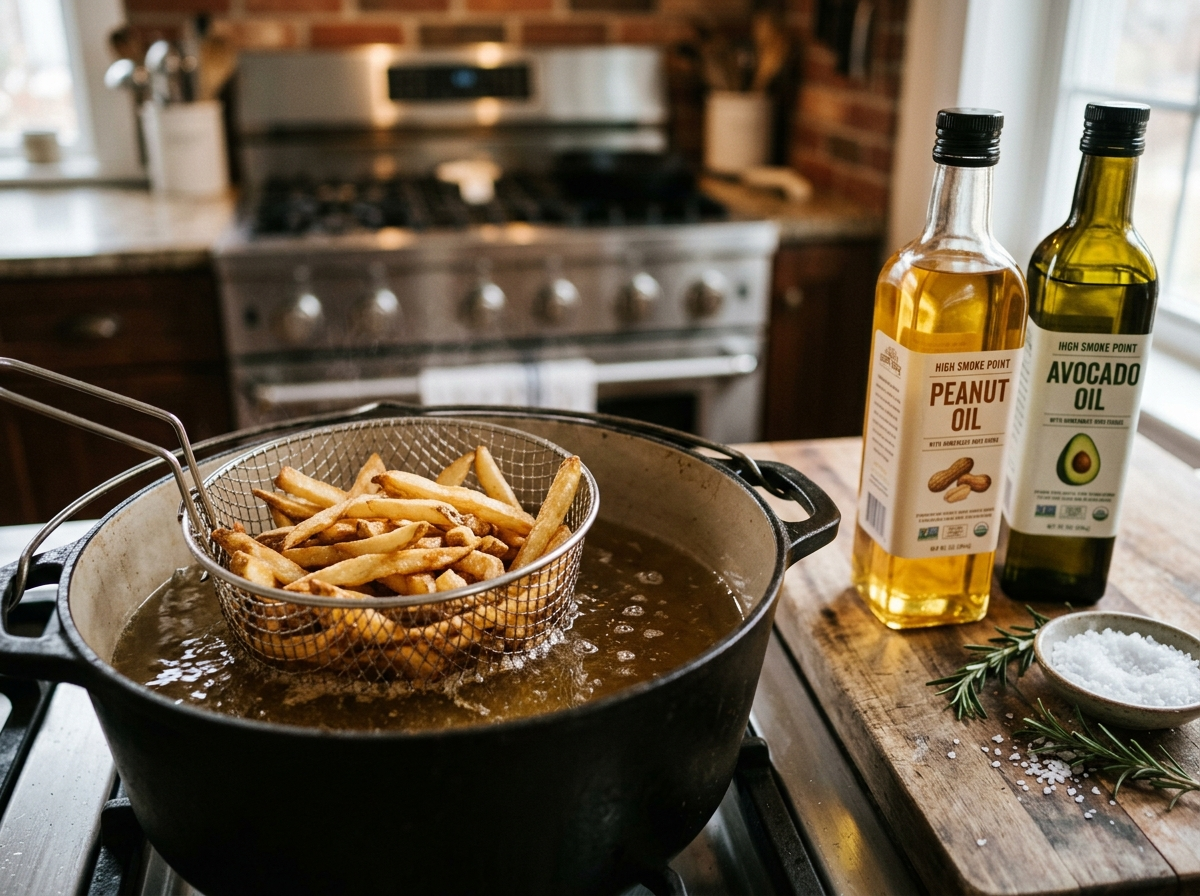
Bad fries usually aren’t a potato problem. They’re an oil problem. You can cut Russets perfectly and still end up with limp, greasy fries if your oil tastes heavy, smokes too early, or loses heat fast. If you’re trying to choose the best oil for homemade French fries, keep it simple: pick an oil that handles high heat well, stays fairly neutral, and matches the kind of fry you actually want to eat.
Why the oil matters more than most home cooks think
A lot of people focus on the potatoes first. That makes sense. Russets matter. Cutting size matters. Soaking helps. Drying matters even more. Still, the oil often decides whether your fries come out crisp and light or soft and oily.
Think of oil as the cooking environment for your fries. If that environment is too cool, the potatoes sit there and soak up fat before they can crisp. If it’s too hot, the outside browns fast while the inside stays undercooked. If the oil has a strong taste, you’ll notice that too, even after salting.
That’s why the best oil for homemade French fries isn’t just the one with the highest smoke point. You want an oil that can stay steady around 350°F to 375°F, tastes clean, and won’t make your kitchen smell like something went wrong.
If you like food backstories, it’s also fun to see how fries got here in the first place. This quick piece on the homemade French fries background and history adds some nice context before you start frying your own.
What makes the best oil for homemade French fries?
High smoke point helps, but steady heat matters more
For French fries, most home cooks fry in the 350°F to 375°F range. Your oil should comfortably handle that heat without smoking or breaking down too fast.
That’s where smoke point comes in. Smoke point is the temperature where oil starts to smoke and taste burnt. For frying, you want some breathing room above your target temperature. That’s why oils like refined peanut, canola, sunflower, and avocado are popular.
Still, smoke point isn’t the whole story.
Some oils look great on paper because the bottle lists a very high smoke point. Then you fry with them once and think, “Why does this still not taste right?” That happens because flavor, oil freshness, and how well the oil recovers after cold potatoes hit the pot matter too.
Quick Fact: Fries usually turn greasy because the oil is too cool, not because the oil itself is “too oily.”
Flavor should support the potato, not cover it
Classic French fries taste like potato, salt, and a little fried richness. That’s why neutral oils work so well. They let the potato do the talking.
Canola oil is very neutral. Refined peanut oil has a light, pleasant fry-shop taste without being too strong. High-oleic sunflower oil also stays fairly clean in flavor.
Then there’s beef tallow. It’s not neutral, and that’s the point. Tallow gives fries a deeper, richer, old-school flavor. If you love diner-style or steakhouse fries, that extra savory note might be exactly what you want.
Refined oils usually beat unrefined oils for frying
You’ll see this come up a lot: refined vs. unrefined.
For homemade French fries, refined oils are usually the better choice. They have a milder taste and hold up better under frying heat. Unrefined oils keep more of their natural flavor, which sounds nice until your fries taste like sesame, coconut, or grassy olive oil.
That doesn’t mean unrefined oils are “bad.” They’re just better for dressings, finishing, or lower-heat cooking.
Price, allergies, and diet count too
The best oil on paper may not be the best oil for your kitchen.
If you fry often, cost matters. A large Dutch oven takes more oil than people expect. Refined avocado oil works well, but it can get expensive fast. Canola oil is easier on your budget. Peanut oil sits in the middle for many stores.
Diet matters too. Beef tallow tastes great, but it isn’t vegetarian. Peanut oil is excellent for frying, but peanut allergies make that a serious consideration.
Warning: If you’re cooking for anyone with a peanut allergy, don’t guess. Even though highly refined peanut oil is often considered lower risk because allergenic proteins are largely removed, allergy decisions should be personal and cautious. If there’s any doubt, choose another oil.
Best oil for homemade French fries: top picks that actually work
Here’s the short answer: the best oil for homemade French fries is usually a neutral, high-heat oil that won’t fight the flavor of the potato.
| Oil | Approx. Smoke Point | Flavor | Cost | Best For |
|---|---|---|---|---|
| Refined peanut oil | 450°F | Light, clean | Medium | Best overall fries |
| Canola oil | 400°F | Very neutral | Low | Everyday home frying |
| High-oleic sunflower oil | 440°F+ | Neutral | Medium | Crisp fries with clean taste |
| Vegetable oil blend | 400–450°F | Neutral | Low | Easy, budget-friendly batches |
| Beef tallow | Around 400°F | Rich, savory | Medium to high | Old-school fry flavor |
| Refined avocado oil | 500°F+ | Mild | High | Premium small batches |
Peanut oil: best overall for crisp, clean fries
If you want one answer and don’t want to overthink it, refined peanut oil is a strong pick.
It handles heat well. It has a mild flavor that still feels a little more “restaurant-like” than canola. It also recovers temperature nicely after you add potatoes, which helps with crispness.
A lot of home cooks notice that peanut oil gives fries that familiar fry-stand taste without making them heavy. If you’ve ever had fries from places that specialize in fresh-cut potatoes, there’s a good chance peanut oil played a role.
Canola oil: best everyday choice
Canola oil is the easy, practical answer.
It’s affordable. It’s easy to find. It tastes neutral. And it works well at normal fry temperatures. If you make fries once in a while and don’t want to buy a special oil just for that, canola is a smart move.
Some cooks assume cheap means lower quality. Not here. Good frying is more about fresh oil, correct temperature, and small batches than about using the most expensive bottle in the store.
Sunflower oil or vegetable oil: best classic, mild option
If you like fries that taste very clean and simple, high-oleic sunflower oil is a great choice. It stays stable at frying temperatures and doesn’t add much flavor.
A standard vegetable oil blend can work well too. Just check the label. “Vegetable oil” often means a blend of soybean, canola, corn, or sunflower oil. Many of these blends fry perfectly fine at home.
The only catch is consistency. One brand’s vegetable oil may perform a little differently from another. If you find one you like, stick with it.
Beef tallow: best for old-school flavor
If flavor is your top priority, beef tallow deserves a serious look.
Tallow gives fries a richer, deeper taste than neutral oils. It also creates great browning and a solid crust. That’s why people who chase steakhouse fries or old fast-food flavor keep coming back to it.
The trade-off is simple. Tallow is heavier, less neutral, and higher in saturated fat than canola or sunflower oil. It also doesn’t fit every household.
Did you know? McDonald’s famously cooked fries in beef tallow for years in the United States before changing to vegetable oil in 1990. A lot of people still say that older style had a richer taste.
Refined avocado oil: best premium option
Refined avocado oil handles heat extremely well and tastes mild, which makes it a solid option for fries.
So why doesn’t everyone use it?
Mostly price. If you’re filling a pot for deep frying, avocado oil can feel like a lot of money for one batch of fries. It makes more sense if you fry small amounts, already keep it at home, or want a high-heat oil for several uses.
It’s a good oil. It’s just not the most practical choice for every kitchen.
Oils that can work, and oils I’d skip for most fries
Olive oil can work if it’s refined or “light”
This surprises people, but light olive oil can fry just fine. “Light” doesn’t mean fewer calories. It means the oil is more refined and milder in taste.
If that’s what you already have, and you’re frying a smaller batch, it can work. The same goes for some refined olive oils.
Still, olive oil usually isn’t the first pick for classic homemade French fries. It costs more than canola or vegetable oil, and its flavor profile doesn’t always give you that familiar fry-shop result.
Extra virgin olive oil, butter, and toasted oils aren’t great fry choices
Extra virgin olive oil is better saved for finishing, dipping, and cooking where you want its flavor to stand out. It can handle more heat than people sometimes think, but for deep frying fries, it’s expensive and too flavorful for most tastes.
Butter is even less practical because the milk solids burn quickly.
Toasted sesame oil, walnut oil, and flaxseed oil are also poor fits here. They bring strong flavors and don’t love sustained frying heat.
Coconut oil and other strong-flavored fats change the taste
Coconut oil can fry food, but it gives fries a distinct flavor and mouthfeel that most people don’t want in a classic batch.
The same idea applies to duck fat or specialty fats. Can they taste good? Sure. Are they the easiest answer for everyday homemade fries? Not really.
If your goal is “crispy fries like the ones I actually crave,” neutral oils or beef tallow are the safer lane.
How to fry homemade French fries with the right oil
The right oil helps a lot, but oil alone won’t save a weak method. If you want crisp fries with a fluffy center, a double-fry setup still works best for most home kitchens.
A simple double-fry method that works
Use Russet potatoes if you want classic fries. They’re high in starch and lower in moisture, which helps with texture. Yukon Gold potatoes can work too, but they’ll be a little creamier inside.
- Cut the potatoes evenly. Keep your fries the same thickness so they cook at the same pace.
- Soak or rinse them, then dry well. A 30-minute soak helps remove surface starch. Drying matters even more. Wet potatoes and hot oil are a bad mix.
- Heat your oil to 325°F. Use a thermometer if you can. Guessing is how greasy fries happen.
- Fry the potatoes until pale and tender. This usually takes about 3 to 5 minutes, depending on thickness. Don’t let them brown much yet.
- Rest them, then raise the oil to 375°F. Let the fries cool for 10 to 20 minutes. Fry again until golden and crisp, usually another 2 to 4 minutes.
- Salt right away. Season while the fries are hot so the salt sticks.
If you want a full texture-focused walkthrough, pair this with our guide to golden crisp French fries. And if you don’t want a full pot of oil on the stove, these same principles still help when learning how to fry at home without deep frying.
Small habits that keep fries crisp, not greasy
Dry potatoes are non-negotiable. Even a little surface water cools the oil and causes splatter.
Small batches help more than people expect. If you crowd the pot, the oil temperature drops fast. Then the fries steam and absorb oil before they can crisp.
A wire rack works better than stacking hot fries on a plate. Paper towels are fine for a quick drain, but a rack keeps steam from getting trapped underneath.
Temperature control matters across fried foods. The same basic rule behind golden non-greasy fried chicken applies here too: steady heat gives you better crust and less oiliness.
Pro Tip: A cheap clip-on thermometer pays for itself fast. It’s one of the easiest upgrades you can make for better fries.
How to reuse fry oil safely
Yes, you can reuse oil after frying French fries, as long as you handle it well.
Let the oil cool completely. Strain out crumbs with a fine-mesh strainer, cheesecloth, or coffee filter. Store it in a sealed container away from light and heat. A cool pantry works. The fridge works too if you have space.
For plain fries, many home cooks can reuse oil 2 to 4 times before quality drops. That number changes based on how hot you ran the oil, how many crumbs ended up in it, and whether you used it for strongly flavored foods.
Throw the oil out if it:
- smells rancid, fishy, or like old paint
- looks very dark or sticky
- foams a lot during heating
- smokes much earlier than it used to
- makes fresh food taste burnt or stale
If you enjoy other crispy potato snacks, the same oil care habits help when making homemade potato chips, too.
Common mistakes people make when choosing fry oil
Choosing oil by smoke point alone
A lot of people look up a smoke point chart, pick the highest number, and stop there.
That sounds logical, but it misses the real goal. You’re not trying to win a chemistry contest. You’re trying to make fries that taste good and cook evenly.
An oil with a super-high smoke point can still be too expensive, harder to find, or not much better in your actual pan. For most people, canola, peanut, sunflower, or a good vegetable oil blend are already more than enough.
Using tired oil or mixed-purpose oil
Oil remembers.
If you fried fish in it last week, your fries may taste like fish today. If you let crumbs burn in the pot, the next batch may taste bitter. If the oil sat around too long and started to break down, even great potatoes won’t save it.
Fresh, clean oil almost always beats fancy oil that’s already past its best days.
Crowding the pot and blaming the oil
Sometimes the oil gets blamed for a technique problem.
You chose canola. Your friend chose peanut. Their fries came out better. Was it really the oil? Maybe. Or maybe they fried in smaller batches and kept the heat steady.
If the pot gets too crowded, the oil temperature falls. That’s why fries come out pale, limp, and oily.
Buying expensive oil for a big pot before testing it
This is a small mistake, but it’s common.
You read that avocado oil is great. You buy a lot of it. Then you realize you actually prefer the flavor of peanut oil or the price of canola.
Test your favorite method with a smaller batch first. Once you know what you like, then commit to a larger bottle.
Warning: Never fill a frying pot more than halfway with oil, and never add wet potatoes to hot oil. Hot oil and water are a rough combination.
FAQ Section
What is the best oil for homemade French fries?
The best oil for homemade French fries is usually refined peanut oil if you want the best mix of crispness, clean flavor, and heat performance. If you want a cheaper everyday option, canola oil is hard to beat.
Can I use olive oil for homemade French fries?
Yes, but refined or light olive oil works better than extra virgin olive oil for frying. Extra virgin has a stronger flavor and costs more, so it usually isn’t the best match for classic fries.
What is the healthiest oil for homemade fries?
There isn’t one perfect answer for every person. Many people choose canola oil or high-oleic sunflower oil because they’re neutral and lower in saturated fat than beef tallow. Still, portion size, frying temperature, and how often you eat fried food matter just as much. If you need personal nutrition advice, talk to a doctor or registered dietitian.
Why are my fries greasy even with good oil?
Greasy fries usually happen because the oil was too cool, the pot was overcrowded, or the potatoes were still wet. The oil choice matters, but technique matters just as much.
How many times can I reuse French fry oil?
If you strain it well and store it properly, you can often reuse French fry oil 2 to 4 times. Stop sooner if the oil darkens a lot, foams, smells off, or starts smoking earlier than normal.
Is peanut oil safe for someone with a peanut allergy?
Don’t assume it is. Highly refined peanut oil is often considered lower risk because most allergenic proteins are removed, but peanut allergies can be serious and personal. If you’re serving someone else, the safest move is to ask them directly or use a different oil.
5. Conclusion
If you want the easy answer, start with peanut oil for the best overall results or canola oil for the best value. If you want richer, old-school flavor, try beef tallow. If you already have sunflower or a good vegetable oil blend at home, those can make excellent fries too.
Pick one oil, use a thermometer, and fry in small batches this weekend. That one change alone can take your fries from “pretty good” to the kind people reach for straight off the rack. And once you nail the basics, you can keep them simple with salt or turn them into a full tray of game-day chili cheese fries.