
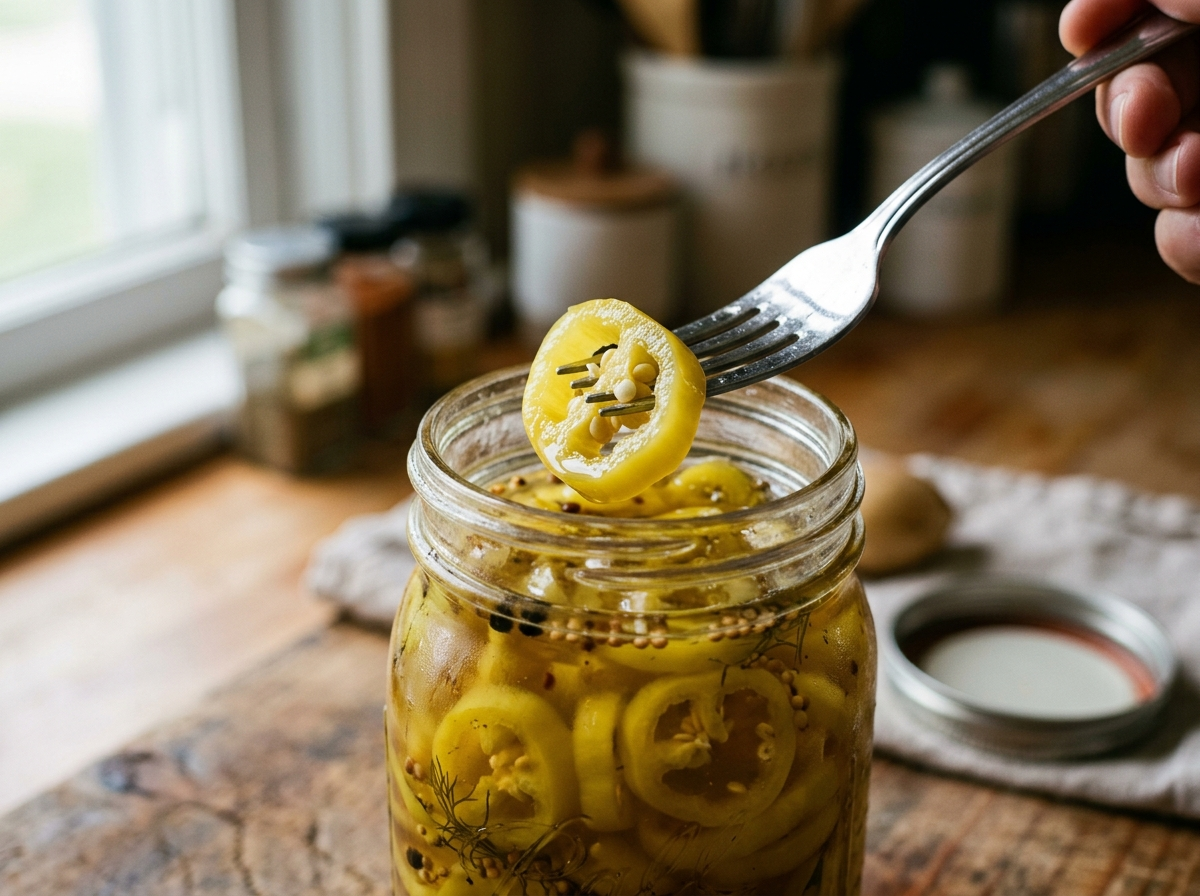
Most jarred banana peppers from the grocery store taste like straight vinegar and turn your sandwich bread into mush within minutes. You deserve better. Making your own banana peppers for sandwich topping takes about 15 minutes of actual work, and the result is crisp, tangy, and exactly as spicy (or mild) as you want. Whether you go fresh, quick-pickled, or roasted, this guide walks you through every method so your next sandwich tastes like the one from your favorite deli.
What Exactly Are Banana Peppers?
Banana peppers get their name from their shape — long, curved, and yellow, kind of like a banana. They belong to the same species as jalapeños and bell peppers (Capsicum annuum), but they sit much lower on the heat scale.
Here’s where people get tripped up. There are two main types you’ll find at the store or farmers market, and they taste very different.
Sweet banana peppers register between 0 and 500 Scoville Heat Units (SHU). That’s basically no heat. They taste mild, slightly sweet, and a little tangy. According to the Chile Pepper Institute at New Mexico State University, sweet banana peppers are among the mildest members of the Capsicum annuum family.
Hot banana peppers can reach up to 5,000 SHU. That puts them in the same neighborhood as a mild jalapeño. Still not extreme, but enough to make your nose run if you’re not expecting it.
The real problem? They look almost identical on the outside. I’ve grabbed what I thought were sweet peppers at a farm stand and ended up with a sandwich that made my eyes water. The safest move is to taste a tiny sliver of the raw pepper before you prep the whole batch. If it burns, you’ve got hot ones. If it’s mild and grassy, you’re working with sweet.
Some people confuse banana peppers with pepperoncini, and honestly, the mix-up is understandable. Pepperoncini are shorter, wrinklier, and usually a bit more bitter. They work great on sandwiches too, but they’re a different pepper with a different flavor profile.
How to Prepare Banana Peppers for Sandwiches
You’ve got four solid options here, and each one gives your sandwich a totally different character. The right choice depends on what you’re building and how much time you have.
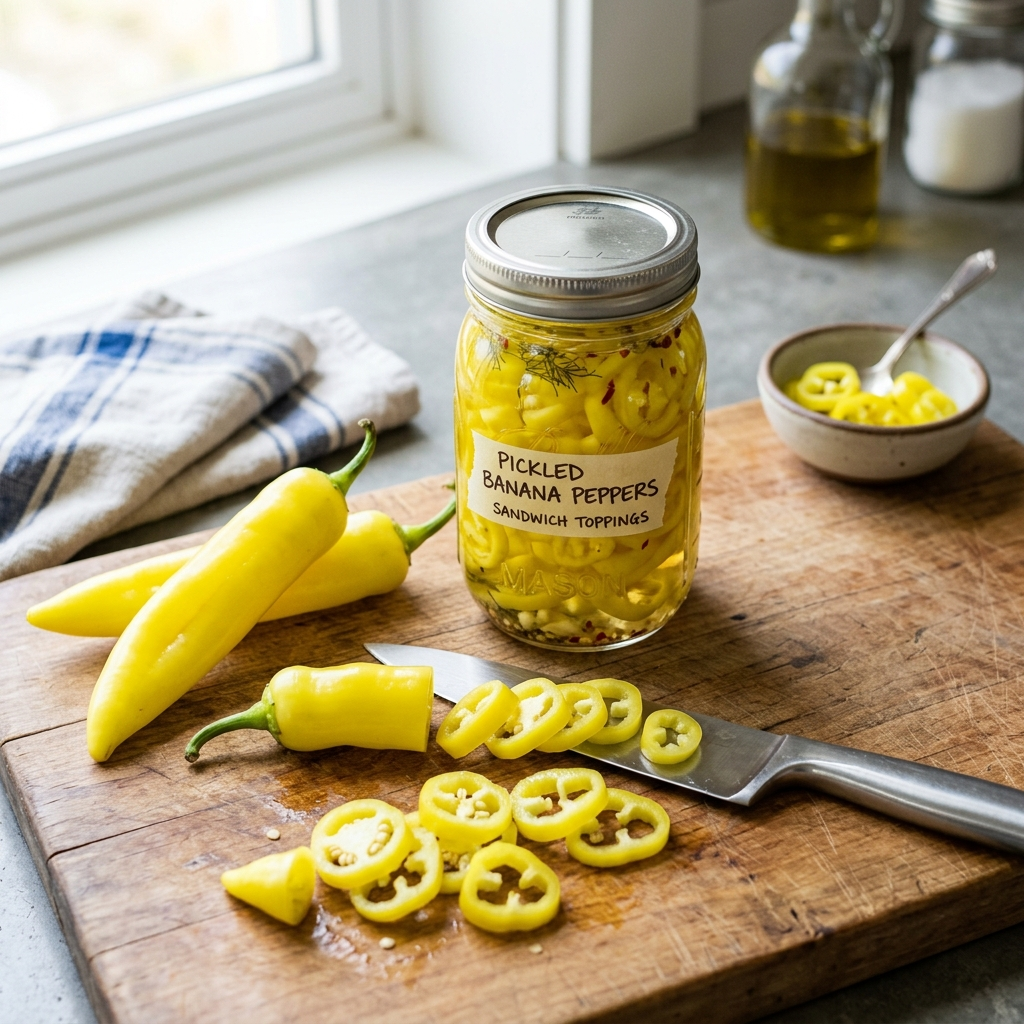
Fresh Sliced Banana Peppers
This is the fastest route. Wash the peppers, slice them into thin rings (about 1/8 inch thick), and toss them right onto your sandwich. Fresh banana peppers bring a clean, grassy crunch that works especially well on cold deli sandwiches and wraps.
A couple of practical notes. First, remove the seeds and white ribs inside the pepper if you want to keep the heat as low as possible. Most of the capsaicin — the compound that makes peppers spicy — lives in those ribs, not the flesh itself. Second, slice them thin. Thick chunks of raw pepper tend to slide right out of a sandwich when you take a bite, and nobody wants to chase a pepper ring across their plate.
Fresh slices are best used the same day. They’ll soften and lose their snap after about 24 hours in the fridge.
Quick-Pickled Banana Peppers
This is the method most people are actually looking for, and it’s the one that gives you that classic deli-style tang. Quick-pickling (also called refrigerator pickling) doesn’t require a canning setup or a boiling water bath. You make a hot brine, pour it over sliced peppers in a jar, and let the fridge do the rest.
The peppers stay crunchy, the flavor develops overnight, and they’ll last for several weeks. I’ll give you the full recipe in the next section. If you’ve never tried making homemade pickles before, banana peppers are one of the easiest vegetables to start with.
Roasted Banana Peppers
Roasting changes the game entirely. The heat caramelizes the natural sugars in the pepper, giving you a smoky, slightly charred flavor with a softer texture. Roasted banana peppers are incredible on hot sandwiches — think cheesesteaks, grilled chicken, or a fried pork tenderloin sandwich.
To roast them, cut the peppers in half lengthwise, remove the seeds, and lay them skin-side up on a baking sheet. Broil on high for 5 to 7 minutes until the skins blister and blacken. Let them cool, then peel off the charred skin and slice into strips. The texture is silky and the flavor is deeper than anything you’ll get from a jar.
Marinated Banana Peppers
This sits somewhere between fresh and pickled. You slice the peppers and let them soak in a mix of olive oil, red wine vinegar, garlic, and dried oregano for a few hours. The result is tender but still snappy, with a rich, herby flavor. Marinated banana peppers pair beautifully with a classic Italian sub or any sandwich loaded with cured meats like salami, capicola, or prosciutto.
Quick-Pickled Banana Peppers Recipe
This is the version you’ll come back to again and again. It takes about 15 minutes of hands-on time, and the peppers are ready to eat by the next morning.
What you’ll need:
- 1 pound banana peppers (sweet or hot, your call)
- 1 cup white vinegar (5% acidity)
- 1 cup water
- 1 tablespoon kosher salt
- 1 tablespoon sugar
- 2 cloves garlic, smashed
- 1 teaspoon whole black peppercorns (optional)
- A clean pint-sized glass jar with a tight lid
Step-by-step:
The peppers will taste good after 24 hours, but they hit their peak around day three. The vinegar mellows out, the garlic flavor deepens, and the peppers stay satisfyingly crunchy for about two to three weeks.
Food safety note: This is a refrigerator pickle recipe, not a shelf-stable canning recipe. These peppers must stay refrigerated at or below 40°F. If you want to can banana peppers for long-term pantry storage, follow the USDA’s Complete Guide to Home Canning for tested, safe processing times and acidity requirements. Home canning with improper acidity or processing carries a real risk of botulism — don’t improvise with untested recipes. This information is for general guidance and is not a substitute for professional food safety advice.
Tips for the Best Banana Peppers Sandwich Topping
Knowing how to prep the peppers is only half the battle. How you use them on the sandwich matters just as much. Here’s what actually makes a difference once the peppers hit the bread.
Layer them in the middle, not on top. If you pile banana peppers on the very top of your sandwich, they’ll fall off the moment you pick it up. Tuck them between layers of meat and cheese so everything stays put. This is one of the core principles of building a perfect deli sandwich — structural integrity matters more than presentation.
Pat pickled peppers dry. Here’s a detail most recipes skip entirely. When you pull pickled banana peppers out of the jar, they’re dripping with brine. If you drop them straight onto your bread, that vinegar-soaked liquid will turn your sandwich soggy within minutes. Lay the pepper rings on a paper towel for 30 seconds before adding them. You keep all the flavor and lose the excess moisture. This simple trick alone will help prevent a soggy sandwich, especially if you’re packing lunch to eat a few hours later.
Mix sweet and hot. If you can find both varieties at your market, try a 50/50 mix in your pickling jar. You get the mild sweetness alongside just enough heat to keep things interesting. It’s the same idea behind using giardiniera on sandwiches — a blend of peppers gives you a more complex bite than a single variety.
Don’t overdo it. Banana peppers have a strong, acidic punch. Three to five rings per sandwich is usually the sweet spot. Pile on too many and they’ll overpower the meat, cheese, and bread. Think of them as a supporting player, not the main event.
Storing Your Banana Peppers
Storage depends entirely on which preparation method you used, so here’s a quick breakdown.
Fresh sliced peppers will keep in an airtight container in the fridge for about two to three days. After that, they start to soften and lose their bright, grassy flavor.
Quick-pickled peppers (the recipe above) stay good in the fridge for two to three weeks. Always use a clean fork to pull them out of the jar. Dipping a knife you’ve already used on other food introduces bacteria that can shorten their shelf life faster than you’d expect.
Roasted peppers should be stored in an airtight container with a thin layer of olive oil drizzled on top to prevent drying. They’ll last about five to seven days in the fridge.
If you make a big batch and want to keep them longer, pickled banana peppers freeze reasonably well. The texture softens a bit after thawing, so they won’t have that fresh crunch, but the flavor stays strong. Thawed pickled peppers work fine on hot sandwiches, stirred into pasta salad, or melted into a grilled cheese.
FAQ
Are banana peppers the same as pepperoncini?
No, though they look similar and get confused all the time. Banana peppers are longer, smoother, and slightly sweeter. Pepperoncini are shorter, wrinklier, and have a more bitter, earthy flavor. Both work as sandwich toppings, but they’re different peppers. If a recipe calls for one, you can usually substitute the other without ruining anything — just expect a slightly different taste.
How do I make banana peppers less spicy?
The heat in any pepper lives mostly in the white ribs (the pith) and the seeds attached to them. To reduce the spice level, cut the pepper open and scrape out all the ribs and seeds before slicing. If you’re working with hot banana peppers and even that isn’t enough, soak the sliced rings in cold water for 15 to 20 minutes. The water pulls out some of the capsaicin and takes the edge off.
Can I use apple cider vinegar instead of white vinegar for pickling?
Yes, but it will change the flavor. Apple cider vinegar gives the peppers a fruitier, slightly sweeter tang compared to the clean, sharp bite of white vinegar. If you go this route, make sure your apple cider vinegar is 5% acidity (check the label) so the brine stays safe for refrigerator pickling. A 50/50 blend of white and apple cider vinegar gives you a nice balanced flavor.
Your Sandwiches Just Got an Upgrade
Once you start making your own banana peppers, the jarred stuff from the grocery store starts to taste like a letdown. The homemade version is crunchier, fresher, and completely customizable to your heat tolerance. Start with the quick-pickled recipe — it’s the easiest, it lasts the longest, and it works on practically every sandwich you’d want to put a pepper on.
Next time you’re building a sandwich, grab a few rings from your jar, pat them dry, and tuck them between your meat and cheese. That little bit of tang and crunch pulls the whole thing together in a way that plain lettuce and tomato just can’t match.
If you’re looking for more ways to level up your sandwich game, check out our roundup of popular sandwich toppings for ideas that go well beyond peppers. Your lunch break is about to get a lot more interesting.