
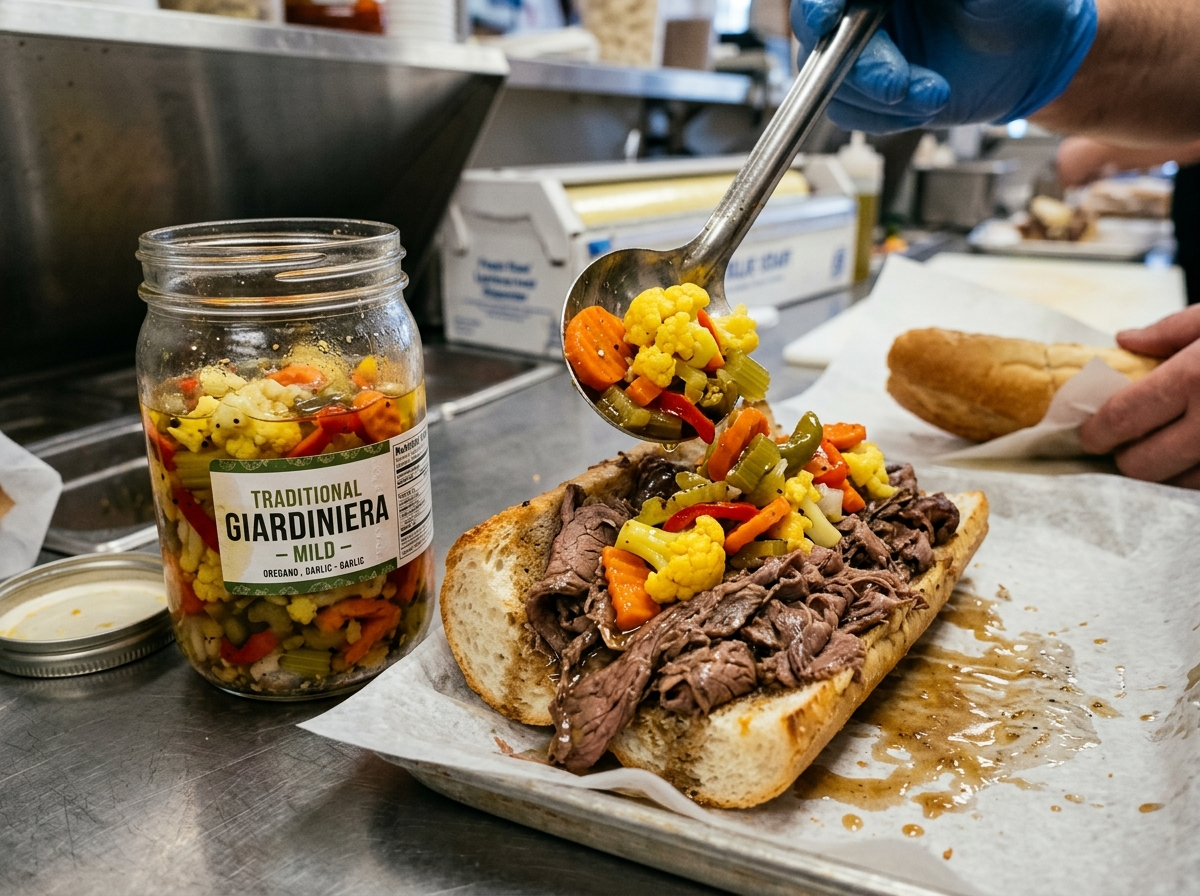
You’ve probably walked past a jar of giardiniera at the deli counter without giving it a second look. That colorful mix of pickled vegetables sitting next to the Italian beef? That’s the stuff. And once you understand what it is and how to use it, you’ll wonder how you ever ate a sandwich without it.
Giardiniera is an Italian pickled vegetable relish made from a mix of cauliflower, carrots, celery, peppers, and olives, preserved in vinegar or oil. It adds crunch, tang, and heat to anything it touches — especially sandwiches.
Let’s break down exactly what goes into it, why there are two very different styles, and how to put it to work on your next sandwich.
What Is Giardiniera, Exactly?
The word “giardiniera” comes from the Italian word giardino, meaning garden. Think of it as a “garden mix” — a way to preserve the best vegetables of the season so you can enjoy them year-round. The concept is centuries old and rooted in the Italian tradition of sott’aceto (preserved in vinegar) and sott’olio (preserved in oil).
At its core, giardiniera is a chopped, marinated blend of crunchy vegetables. The exact mix varies by region and by family recipe, but you’ll almost always find cauliflower florets, carrots, celery, and some type of hot or sweet pepper. The vegetables are chopped into small, bite-sized pieces — not sliced into ribbons like a typical pickle, but diced so you get a little bit of everything in each forkful.
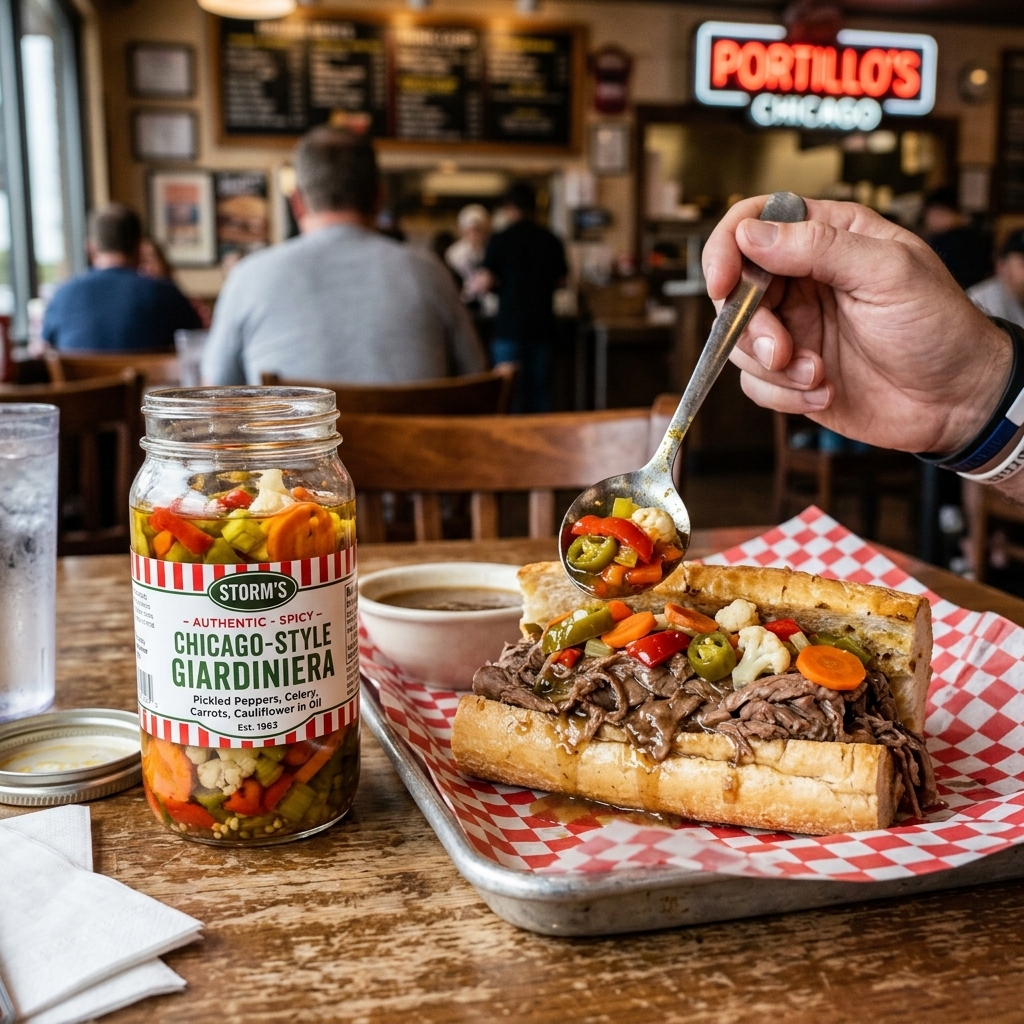
The flavor profile hits multiple notes at once. You get the sharp tang from vinegar, the mellow richness from oil (in the Chicago style), the crunch from raw-ish vegetables, and a slow-building heat from the peppers. It’s not just a condiment. It’s more like a flavor bomb that wakes up everything around it.
If you’ve ever eaten a muffuletta in New Orleans, you’ve had something similar. The olive salad that makes a muffuletta iconic is a close cousin to giardiniera. The idea of preserving a mix of vegetables and using them as a bold topping is a thread that runs through Italian-American cooking in a lot of different cities.
Italian Giardiniera vs. Chicago Giardiniera
This is where most people get confused, and honestly, the difference matters a lot when you’re picking a jar off the shelf.
Traditional Italian giardiniera is milder and tangier. It’s preserved primarily in vinegar (sott’aceto), which gives it a bright, acidic bite. The vegetable mix tends to include more sweet peppers and fewer hot ones. You’ll often see it served as part of an antipasto platter in Italy, alongside cured meats and cheeses. It’s a supporting player, not the star of the show.
Chicago giardiniera is a different animal entirely. It’s hotter, oilier, and bolder. The Chicago style is preserved in oil (sott’olio), which mellows the vinegar sharpness and gives the whole mix a richer, more savory flavor. Chicago giardiniera leans heavily on hot peppers — sport peppers, serrano peppers, or even crushed red pepper flakes — and it’s chopped finer than the Italian version. It was born out of the city’s Italian-American deli culture and is practically inseparable from the Chicago Italian beef sandwich.
| Feature | Italian Giardiniera | Chicago Giardiniera |
|---|---|---|
| Preservation | Vinegar-based (sott’aceto) | Oil-based (sott’olio) |
| Heat level | Mild to medium | Medium to very hot |
| Texture | Chunkier pieces | Finely chopped |
| Flavor profile | Bright, tangy, acidic | Rich, savory, spicy |
| Common use | Antipasto, salads | Italian beef, sandwiches |
| Pepper types | Sweet peppers, mild chilies | Sport peppers, serranos |
If you’re buying giardiniera for the first time, check the label. If it says “hot” and the ingredient list mentions oil before vinegar, you’re probably looking at a Chicago-style product. Brands like Marconi and Scala’s are well-known Chicago staples that have been making giardiniera for decades.
What’s Actually in Giardiniera?
The beauty of giardiniera is its simplicity. There’s no long list of mystery ingredients. Here’s what you’ll typically find in a jar:
Cauliflower is the backbone. It holds its crunch better than almost any other vegetable when pickled, and its mild flavor soaks up the marinade without overpowering anything else.
Carrots add sweetness and color. They also stay firm during the pickling process, which is key to that satisfying crunch.
Celery brings a subtle bitterness and a snappy texture that balances out the softer vegetables.
Bell peppers (red, green, or a mix) contribute sweetness and a fleshy bite. In the Italian style, these play a bigger role.
Hot peppers are the wildcard. Depending on the recipe, you might get sport peppers (a Chicago favorite), serrano peppers, jalapeños, or dried red pepper flakes. This is what determines whether your giardiniera is a gentle warmth or a serious kick.
Olives (usually green) show up in many recipes, adding a briny, salty note.
Garlic, oregano, and sometimes fennel seed round out the seasoning.
The preserving liquid is either vinegar, oil, or a combination of both. The ratio of vinegar to oil is really what defines the character of the final product. More vinegar means brighter and sharper. More oil means richer and smoother.
How to Use Giardiniera as a Giardiniera Sandwich Topping
This is the part you probably came here for. Giardiniera is one of the most versatile popular sandwich toppings you can keep in your fridge, and it works on way more than just the classic Italian beef.
The Classic Italian Beef Sandwich
You can’t talk about giardiniera without talking about the Chicago Italian beef sandwich. Thinly sliced roast beef, soaked in seasoned jus, piled onto a crusty roll, and then buried under a generous scoop of hot giardiniera. That’s the sandwich that made giardiniera famous in the United States.
The reason it works so well is contrast. The beef is soft, juicy, and savory. The bread is chewy and soaked through. The giardiniera cuts through all that richness with its crunch, acidity, and heat. Without it, an Italian beef sandwich is good. With it, it’s a completely different experience.
If you want to go full Chicago, order your sandwich “dipped” (the whole thing gets dunked in jus) and loaded with hot giardiniera. It’ll be messy. That’s the point.
Beyond Italian Beef — Other Sandwich Pairings
Giardiniera doesn’t stop at Italian beef. Once you start using it, you’ll find it sneaks onto almost everything. Here are some pairings that genuinely work:
Chicken sandwiches. A fried or grilled chicken sandwich with a smear of mayo, some shredded lettuce, and a spoonful of giardiniera is a serious upgrade. The tang and heat cut through the fried coating the same way pickles do, but with more complexity. If you’re already a fan of a good spicy chicken sandwich, giardiniera will take it up another notch.
Italian hoagies and subs. Pile your capicola, salami, provolone, and lettuce on a good roll, then add giardiniera instead of (or alongside) your usual banana peppers. The mix of pickled vegetables adds a layer of flavor that single-ingredient toppings just can’t match. It’s a natural fit on a classic Italian sub or an Italian hoagie.
Burgers. This might surprise you, but giardiniera is incredible on a burger. The crunch and acidity play the same role as pickles and onions, but with more depth. Try it on a smash burger with melted provolone — the giardiniera’s oil blends into the cheese and creates something really special.
Breakfast sandwiches. A sausage, egg, and cheese on a roll with a little giardiniera on the side (or right on top if you’re bold) adds a bright, spicy kick that cuts through the heaviness of the egg and cheese.
Pulled pork and brisket. Rich, smoky, fatty meats love acid. A spoonful of giardiniera on a pulled pork sandwich works the same way coleslaw does — it refreshes your palate between bites.
Hot vs. Mild — Which Should You Pick?
This comes down to your heat tolerance and what you’re putting it on. If you’re new to giardiniera, start with mild. You’ll get all the crunch and tang without the burn, and you can always add hot pepper flakes on the side.
If you’re putting giardiniera on something already rich and heavy — like an Italian beef or a fried chicken sandwich — go hot. The heat cuts through the fat and keeps the sandwich from feeling one-note.
One practical tip: if you buy hot giardiniera and it turns out to be too hot, you can tame it by draining some of the oil and mixing in a little extra vinegar or even a spoonful of the mild version. You can always adjust.
A Simple Italian Giardiniera Recipe to Try at Home
Making giardiniera at home isn’t hard, but it does require patience. The flavor gets better the longer it sits, so plan to make it at least a week before you want to eat it.
Ingredients
- 1 small head cauliflower, cut into tiny florets
- 2 carrots, diced
- 2 celery stalks, diced
- 1 red bell pepper, diced
- 1 green bell pepper, diced
- 4-6 serrano peppers, sliced (adjust for heat)
- 3 cloves garlic, smashed
- 1 cup white vinegar
- 1 cup water
- 2 tablespoons salt
- 1 tablespoon sugar
- 1 teaspoon dried oregano
- ½ teaspoon red pepper flakes
- Extra-virgin olive oil (enough to cover)
Steps
Step 1: Salt the vegetables. Toss all your chopped vegetables with the salt in a large bowl. Cover and refrigerate for 12 to 24 hours. This draws out excess moisture and keeps the vegetables crunchy.
Step 2: Rinse and drain. After the salting period, rinse the vegetables thoroughly under cold water and drain them well. Pat them dry with a clean towel. This step matters more than you’d think — leftover water will dilute your marinade and make the giardiniera mushy.
Step 3: Make the brine. Combine the vinegar, water, sugar, oregano, and red pepper flakes in a saucepan. Bring to a simmer, stirring until the sugar dissolves. Let it cool to room temperature.
Step 4: Pack the jars. Divide the vegetables and smashed garlic between clean glass jars. Pour the cooled brine over the vegetables, leaving about an inch of space at the top. Then pour olive oil over the top until the vegetables are fully submerged.
Step 5: Wait. Seal the jars and refrigerate for at least one week. Two weeks is better. The flavors need time to meld and mellow.
Food Safety Note: This recipe is for refrigerator giardiniera, not shelf-stable canned giardiniera. Home canning of low-acid vegetables in oil carries a risk of botulism if not done correctly. Always keep homemade giardiniera refrigerated and consume it within 2 to 3 months. For shelf-stable canning guidance, refer to the National Center for Home Food Preservation for tested, safe procedures. This is general information and not a substitute for professional food safety advice.
Storing and Serving Tips
Store-bought giardiniera is shelf-stable until you open it. Once opened, keep it in the fridge. It’ll last for months — the vinegar and oil act as natural preservatives. Just make sure the vegetables stay submerged in the liquid. If they’re poking out above the oil line, they’ll dry out and lose their texture.
Homemade giardiniera should always live in the fridge and is best used within 2 to 3 months.
Here’s a practical tip that took me a few soggy sandwiches to learn: drain your giardiniera slightly before putting it on a sandwich. The oil and vinegar are delicious, but if you scoop it straight from the jar onto soft bread, you’ll end up with a wet, falling-apart mess. Use a slotted spoon or fork to let the excess liquid drip off before you pile it on. You still get all the flavor and crunch without turning your bread into a sponge. If you want more detail on keeping your bread intact, check out these tips on how to prevent a soggy sandwich.
When serving giardiniera as part of an antipasto spread (rather than on a sandwich), you can serve it straight from the jar with all the oil and vinegar intact. Drizzle some of that flavorful liquid over crusty bread — it’s almost as good as the vegetables themselves.
If you’re looking to build the perfect deli sandwich at home, giardiniera is one of those small additions that makes a big difference. Layer it on top of your meats and cheeses, not underneath, so it stays crunchy and doesn’t get lost in the stack.
Frequently Asked Questions
What is giardiniera made of?
Giardiniera is made from a mix of chopped vegetables — typically cauliflower, carrots, celery, bell peppers, and hot peppers — preserved in vinegar, oil, or a combination of both. Garlic, oregano, and olives are common additions. The exact mix varies by recipe and region.
Is giardiniera the same as relish?
Giardiniera is a type of relish, but it’s quite different from the sweet pickle relish you’d put on a hot dog. Giardiniera is chunkier, spicier, and more complex. It’s made from a variety of vegetables rather than just cucumbers, and it’s typically savory and tangy rather than sweet.
How long does giardiniera last after opening?
Store-bought giardiniera lasts for several months in the refrigerator after opening, as long as the vegetables remain submerged in their liquid. Homemade giardiniera should be used within 2 to 3 months. Always check for off smells, mold, or discoloration before eating.
Can I use giardiniera on things other than sandwiches?
Absolutely. Giardiniera works great as a topping for pizza, stirred into pasta salads, spooned over grilled chicken or steak, mixed into scrambled eggs, or served as part of an antipasto platter. It’s one of those condiments that improves almost anything savory.
What’s the difference between hot and mild giardiniera?
The difference comes down to the type and amount of hot peppers used. Hot giardiniera includes more serrano peppers, sport peppers, or red pepper flakes, giving it a noticeable kick. Mild giardiniera uses mostly sweet peppers and has a gentler flavor. The base vegetables and preservation method are usually the same.
Giardiniera is one of those ingredients that flies under the radar until you try it, and then you start putting it on everything. Whether you grab a jar of Chicago-style hot giardiniera from the deli aisle or take the time to make your own batch at home, you’re adding a layer of crunch, tang, and heat that most sandwiches are desperately missing.
Start simple. Pick up a jar of mild giardiniera, drain it well, and pile it on your next Italian sub or burger. Once you taste the difference, you’ll understand why Chicagoans have been fiercely loyal to this stuff for generations. Then, when you’re ready, grab the hot version and see what it can really do.
If you want more ideas for leveling up your sandwich game, browse the full collection at Antney’s Grub for recipes and tips that go way beyond the basics.