
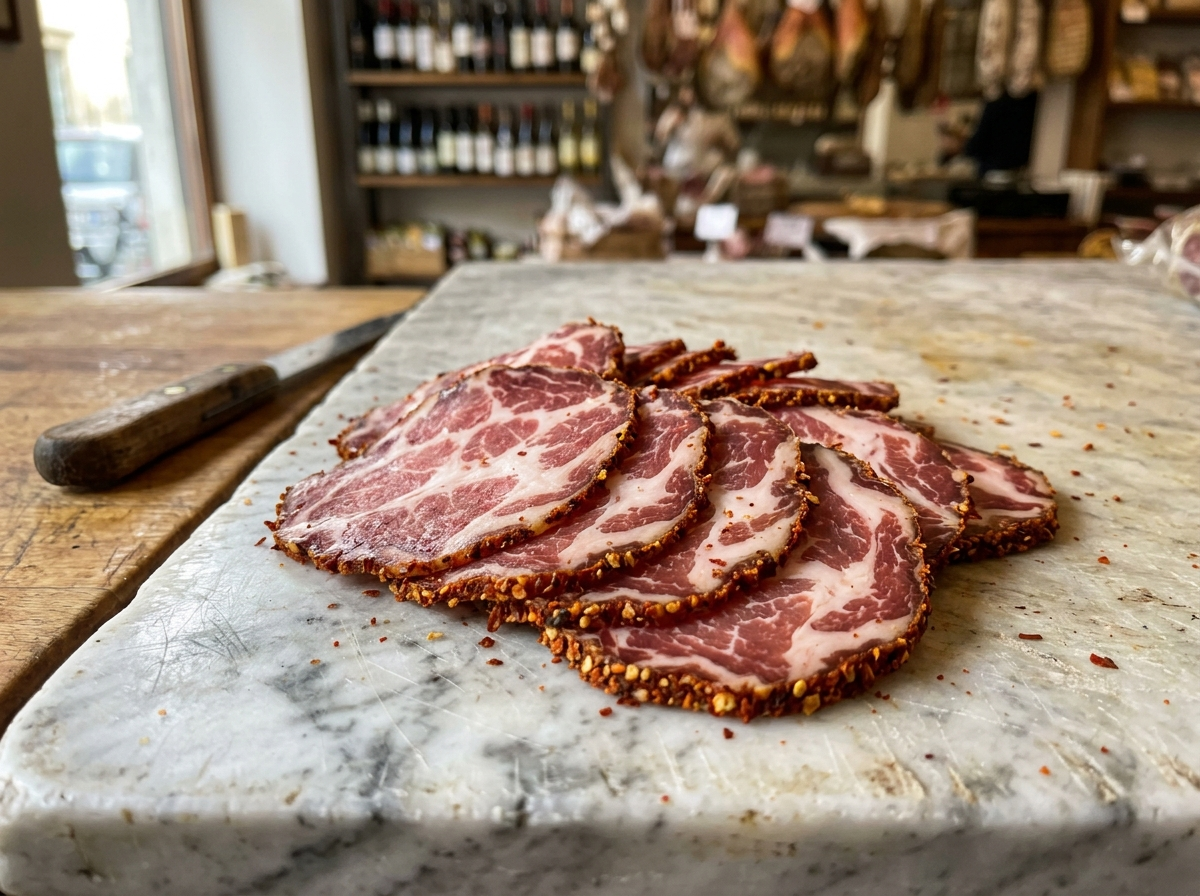
You’re at the deli counter, scanning the glass case, and you spot a roll of marbled, deep-red meat labeled “capicola.” Maybe you’ve seen it on an Italian sub menu or heard someone call it “gabagool” and wondered what the fuss is about. Capicola is one of the most flavorful cured meats in the Italian tradition, and once you know what you’re tasting, you’ll reach for it every time. Here’s everything you need to know about what capicola is, what it tastes like, and how to use it.
What Is Capicola?
Capicola is a dry-cured Italian deli meat made from pork shoulder or pork neck. The cut runs from the neck down to about the fourth or fifth rib of the pig, which gives the meat a beautiful balance of lean muscle and fat. That fat marbling is the real secret to capicola’s rich, tender texture — you’ll notice those white streaks running through the deep red meat the moment you see it sliced thin at the deli counter.
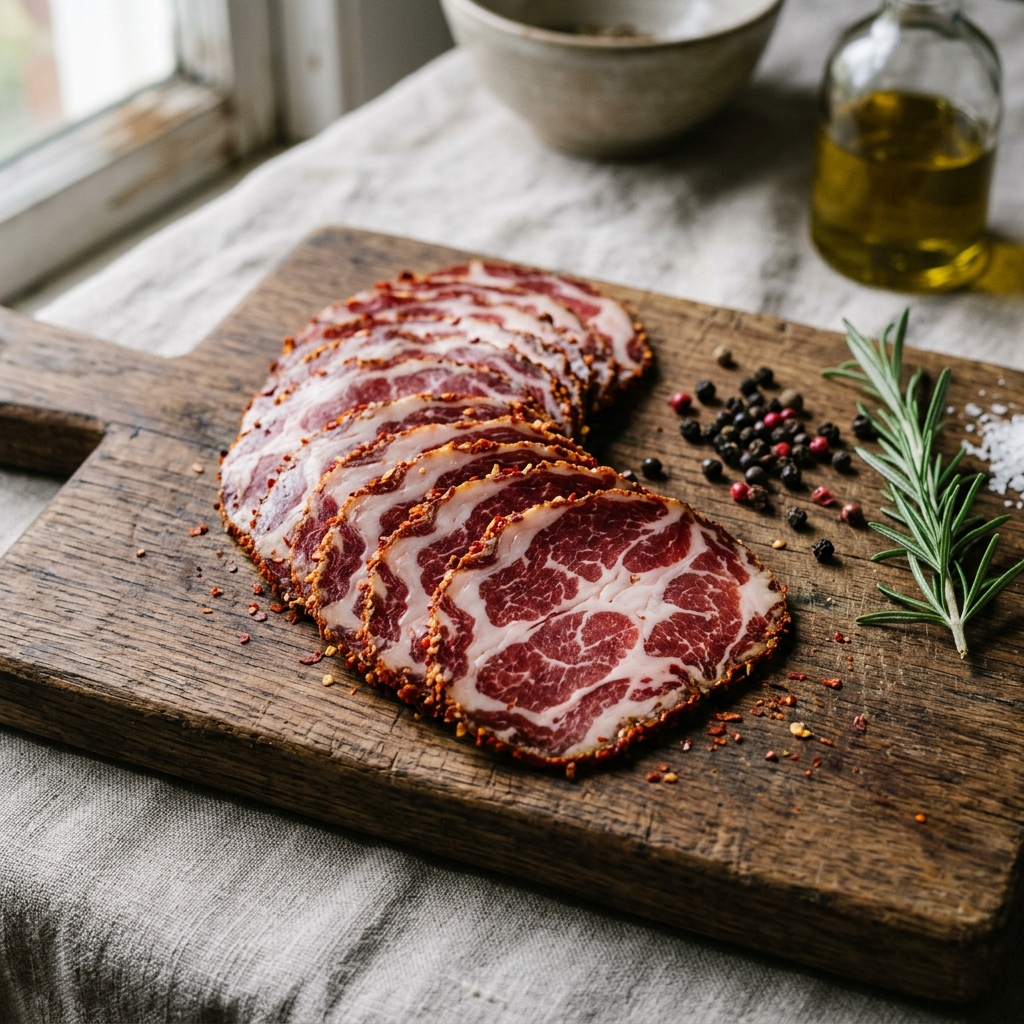
The curing process takes several months. The meat gets rubbed with salt, spices, and sometimes wine, then stuffed into a natural casing and left to age in a controlled environment. The result is a firm but yielding slice of meat you can eat straight from the package. No cooking needed.
The Many Names of Capicola
One thing that trips people up right away is the naming situation. Capicola goes by several names depending on where you are and who you’re talking to. In Italy, you’ll hear it called capocollo (literally “head of neck” in Italian) or coppa. In parts of the United States, especially in Italian-American communities across the Northeast, it’s often pronounced “gabagool” — a dialect shift that stuck around for generations and became its own cultural marker.
You might also see it labeled as coppa di testa or simply coppa on charcuterie boards at restaurants. Don’t let the different names confuse you. They all point to the same basic product: a cured pork shoulder or neck cut with that signature marbling.
Where Does Capicola Come From?
Capicola has deep roots in southern Italy, particularly in regions like Calabria, Campania, and Basilicata. Each region puts its own spin on the spice blend and aging time, which means capicola from one town can taste noticeably different from capicola made a hundred miles down the road. The tradition stretches back centuries, born from the practical need to preserve pork through the winter months before refrigeration existed.
Today, you’ll find capicola produced all over the world, but the Italian originals still carry serious weight. Coppa Piacentina from Emilia-Romagna and Capocollo di Calabria both hold Protected Designation of Origin (PDO) status under European Union law. That label means the meat was made in a specific region using traditional methods, which generally translates to a more complex and layered flavor profile.
What Does Capicola Taste Like?
This is the question most people actually care about, so let’s get right into it.
Capicola has a rich, savory, slightly sweet pork flavor with a gentle warmth from the spices used during curing. Think of it as deeper and more complex than your standard deli ham, but not as aggressively salty as some other cured meats you might be used to. The fat marbling melts on your tongue, giving each bite a buttery, almost silky quality that sets it apart from leaner cuts.
The specific spice blend varies by producer, but you’ll typically pick up notes of black pepper, garlic, fennel, and sometimes a hint of red wine. The meat itself tastes distinctly porky — not in a heavy or greasy way, but in a clean, satisfying way that reminds you this is a whole-muscle cut, not a processed mash-up of trimmings.
Hot vs Sweet Capicola
Most delis carry two varieties: hot and sweet. The names can be a little misleading if you’ve never tried them before.
Sweet capicola doesn’t taste sugary. “Sweet” here means mild. It’s seasoned with gentler spices like fennel and black pepper, giving it a smooth, rounded flavor that works well if you’re new to cured meats or want something that won’t overpower the other ingredients in your sandwich.
Hot capicola gets a kick from red pepper flakes or chili powder rubbed into the meat before curing. It’s not “burn your mouth” hot — more like a slow, pleasant warmth that builds as you chew. If you enjoy a little spice in your food, the hot version is the one to grab.
Here’s what actually happens when you taste them side by side: the sweet version lets the pork flavor take center stage, while the hot version pushes the spice forward and makes the meat taste more assertive and bold. Both are excellent, but they play different roles depending on what you’re building.
Texture and Mouthfeel
Capicola slices thin and drapes beautifully, which is why it looks so good layered on a sub roll. The texture is firm enough to hold its shape but tender enough to practically dissolve when you bite into it. That marbling isn’t just for looks — those thin veins of fat soften the chew and keep the meat from feeling dry or tough.
Compared to salami, capicola is softer and less chewy. Compared to prosciutto, it’s a bit thicker and meatier. It sits right in that satisfying middle ground where you get real substance without heaviness.
How Is Capicola Made?
The process starts with selecting the right cut — that pork shoulder-to-neck muscle we talked about earlier. The butcher trims the meat, then coats it in a dry rub of salt, curing salts, and a spice mix that varies by recipe and region. Some producers add garlic, some lean heavily on fennel seed, and others incorporate red wine or vinegar into the rub for extra depth.
After the initial seasoning, the meat rests in a cool environment for about a week so the salt can fully penetrate the muscle. Then it gets rinsed, re-seasoned, and stuffed into a natural casing — usually a beef or pork intestine. The cased meat hangs in a temperature- and humidity-controlled aging room for anywhere from three to six months, sometimes even longer.
During that aging period, the meat slowly loses moisture, which concentrates the flavor and firms up the texture. The fat doesn’t dry out the same way the lean muscle does, which is why capicola stays tender and luscious even after months of hanging. By the time it’s ready to slice, the meat has transformed from a raw pork cut into something deeply savory and complex.
Quick Fact: The longer capicola ages, the more intense and concentrated the flavor becomes. A three-month coppa will taste milder and softer than a six-month version.
Capicola vs Prosciutto: What’s the Difference?
People mix these two up all the time, and it makes sense — they’re both Italian, both cured, both delicious. But they’re quite different once you look closer at the details.
| Feature | Capicola | Prosciutto |
|---|---|---|
| Cut of meat | Pork shoulder/neck | Pork hind leg |
| Fat content | Higher, visible marbling | Lower, fat mostly on the edge |
| Texture | Tender, slightly firm | Silky, almost melt-in-your-mouth |
| Flavor | Rich, spiced, porky | Delicate, salty, subtly sweet |
| Curing time | 3–6 months | 9–24 months |
| Spice level | Mild to spicy | Generally mild |
| Best for | Sandwiches, bold flavors | Wrapping, delicate pairings |
The biggest practical difference is the cut. Prosciutto comes from the pig’s hind leg, which is a leaner, larger muscle. That’s why prosciutto slices are wider, thinner, and more delicate on the palate. Capicola comes from the shoulder area, which gets more exercise and has more intramuscular fat, giving it that marbled look and richer bite.
Flavor-wise, prosciutto leans salty and sweet with a clean, elegant finish. Capicola brings more spice and depth because of the rub and the higher fat content. If you’re building a sandwich with bold toppings like hot peppers, sharp provolone, and a tangy vinaigrette, capicola holds its own much better. If you want something lighter — maybe wrapped around melon or draped over a fresh arugula salad — prosciutto is the better pick.
For more on how prosciutto works specifically in sandwich applications, this guide to prosciutto on sandwiches is a useful companion read.
How to Use Capicola in Your Kitchen
Capicola is incredibly versatile. You can eat it straight from the package as a quick snack, but it really shines when you pair it with the right ingredients and let its flavor play off other components.
On Sandwiches and Hoagies
This is where capicola earns its reputation. It’s a star player on the classic Italian hoagie, layered with provolone, crisp lettuce, tomato, onion, and a splash of oil and vinegar. The meat’s richness stands up to sharp cheeses and tangy dressings without getting lost in the mix.
If you’re building an Italian sub at home, try folding the capicola slices rather than laying them flat. Folding creates little pockets of air between the layers, which makes each bite feel lighter and more textured. It’s a small trick, but it makes a real difference in how the sandwich eats. Check out this breakdown of how to build the perfect deli sandwich for more layering techniques.
Capicola also works beautifully on a classic Italian sub alongside salami and mortadella for that traditional three-meat combo you’ll find at old-school deli counters.
On Charcuterie Boards
Capicola is a natural fit for any charcuterie spread. Roll the slices into loose cylinders or fold them into ribbons and arrange them next to cheeses like aged provolone, fresh mozzarella, or a sharp pecorino Romano. The meat’s spice and fat pair especially well with something creamy to balance it out.
Add some olives, roasted peppers, and crusty bread, and you’ve got a board that looks impressive without much effort. The marbling in capicola makes it one of the more visually striking meats on a board, so place it front and center where people can see it.
In Cooked Dishes
While capicola is most commonly eaten cold, you can absolutely cook with it. Dice it up and sauté it with onions and peppers for a quick pasta sauce base. The fat renders out and flavors the whole pan, similar to how you’d use pancetta or guanciale in a traditional Italian recipe. You can also wrap it around chicken breasts before roasting or stuff it into omelets for a salty, savory punch at breakfast.
Just keep in mind that capicola is already fully cured and seasoned, so go easy on the extra salt when you cook with it. Taste as you go and adjust from there.
Buying and Storing Capicola
When you’re shopping for capicola, head to a deli counter rather than grabbing pre-packaged slices if you have the option. Freshly sliced capicola tastes noticeably better — the flavor is brighter and the texture is more tender than the pre-sliced stuff that’s been sitting in plastic for days. Ask for it sliced thin but not paper-thin. You want just enough body to feel the marbling when you eat it.
If you’re buying pre-packaged capicola, check the ingredient list carefully. The best versions have a short, recognizable list: pork, salt, spices, and curing agents. Avoid anything with a long string of artificial preservatives or fillers you can’t pronounce.
For storage, keep capicola tightly wrapped in the refrigerator. According to deli meat fridge life guidelines, opened cured meats like capicola typically last about three to five days in the fridge when stored properly. If you need to keep it longer, you can freeze it for up to two months, though the texture may soften slightly after thawing.
Pro Tip: If your capicola slices start to dry out in the fridge, lay a barely damp paper towel over them before wrapping. It helps maintain moisture without making the meat soggy.
Food Safety Note: Cured meats like capicola are preserved through salt and drying, which inhibits bacterial growth, but they are not immune to spoilage. Always follow USDA food safety guidelines for storing and handling deli meats, and discard any meat that smells off, looks slimy, or has changed color significantly. This is general information and not a substitute for professional food safety advice.
Frequently Asked Questions
What is the difference between capicola and salami?
Capicola is a whole-muscle cut cured from the pork shoulder or neck, while salami is made from ground meat that gets seasoned, stuffed into a casing, and fermented. Capicola has a smoother, more uniform texture with visible fat marbling running through it, whereas salami has a speckled, grainy look from the ground meat and fat chunks. Flavor-wise, capicola tends to be richer and less tangy than salami, which often has a slight fermented sourness from the curing process.
Is capicola the same thing as gabagool?
Yes, they are exactly the same meat. “Gabagool” is simply the Italian-American pronunciation of capicola, shaped by the dialect shifts that happened when southern Italian immigrants settled in the northeastern United States in the early 20th century. If you hear someone order gabagool at a deli in New Jersey or New York, they’re asking for the exact same cured pork. The name sounds different, but the product is identical.
Can you eat capicola without cooking it?
Absolutely. Capicola is a dry-cured meat, which means the curing process preserves it and makes it safe to eat without any additional cooking. It’s designed to be sliced thin and eaten as-is, whether on a sandwich, a charcuterie board, or straight from the package. This puts it in the same ready-to-eat category as prosciutto, bresaola, and other traditional Italian salumi.
Capicola is one of those ingredients that quietly upgrades everything it touches. Once you understand its flavor — that rich, spiced, buttery pork profile — you’ll start spotting opportunities to use it everywhere. Toss it into your next Italian hoagie night, fold a few slices onto a weeknight cheese board, or crisp it up in a pan for a pasta topping that’ll make people ask what your secret is.
Start with the sweet variety if you’re easing in, then graduate to the hot version once you’re comfortable with the base flavor. And next time someone at the deli counter asks what you’d like, skip the usual turkey and ask for a quarter pound of capicola. Your sandwich game will thank you.