
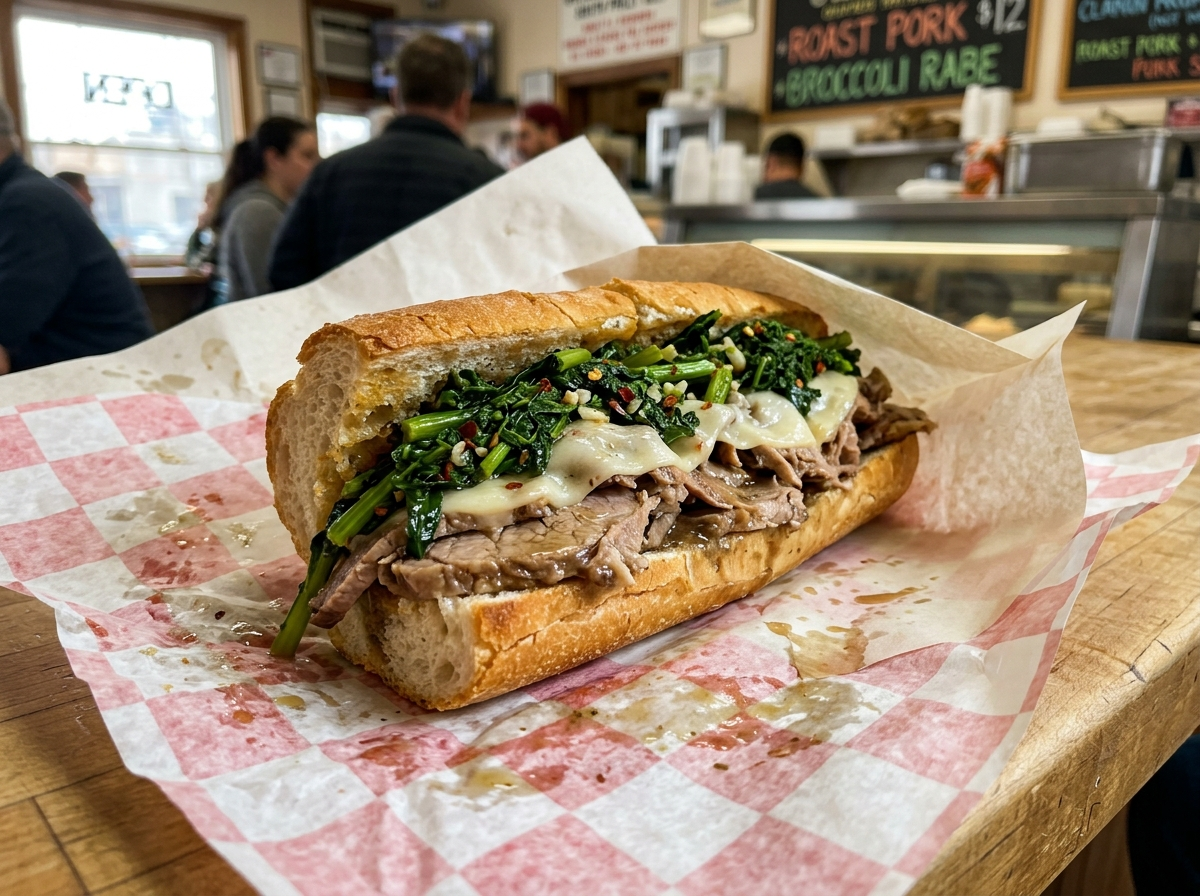
Most people visit Philadelphia and head straight for a cheesesteak. But locals will tell you the real star is the South Philly roast pork sandwich — a messy, garlicky, gloriously overstuffed creation that outsells cheesesteaks at the city’s best sandwich shops. If you’ve never had one, you’re missing out on what might be America’s most underrated sandwich. Here’s everything you need to know about what goes into it, where it came from, and how to build one in your own kitchen.
What Exactly Is a South Philly Roast Pork Sandwich?
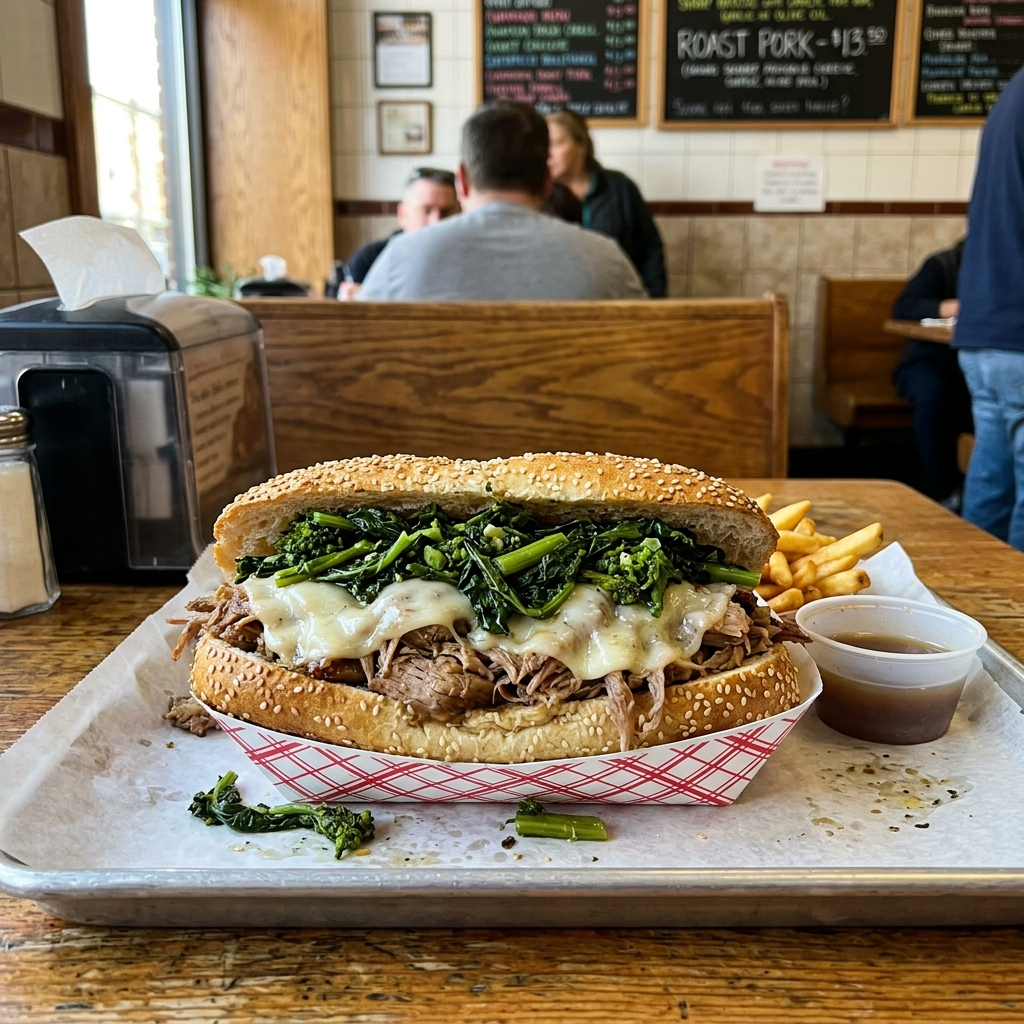
A South Philly roast pork sandwich is a hot Italian-American sandwich built on four pillars: slow-roasted pork shoulder, melted sharp provolone, garlicky sautéed broccoli rabe, and a crusty seeded hoagie roll. The pork gets sliced thin, piled high, and drenched in its own roasting juices until the roll is soaked through but still holds together.
That last part matters more than you’d think. The sandwich should be juicy — bordering on wet — but the bread needs enough structure that it doesn’t collapse into a soggy mess in your hands. Getting that balance right is what separates a great roast pork sandwich from a disappointing one. If you’ve ever dealt with a sandwich that falls apart halfway through, you know the struggle. Here’s a deeper look at how to prevent a soggy sandwich from ruining your lunch.
You’ll sometimes see this called a “Philly roast pork” or just “roast pork” on menus around the city. Don’t confuse it with a plain roast pork sandwich you’d find at a deli counter. The South Philly version is a specific thing with specific rules, and locals take those rules seriously. If you want a broader look at the category, this roast pork sandwich guide covers the basics beyond the Philly style.
The History Behind Philadelphia Roast Pork
The South Philly roast pork sandwich didn’t show up on a food trend list somewhere. It grew out of the Italian-American neighborhoods of South Philadelphia, specifically around the 9th Street Italian Market — one of the oldest continuously operating open-air markets in the country, according to the City of Philadelphia’s historical records.
Italian Immigrants and the 9th Street Market
In the early 1900s, waves of Italian immigrants settled in South Philly and brought their pork-roasting traditions with them. In southern Italy, slow-roasted pork seasoned with garlic, rosemary, and fennel was a staple for Sunday dinners and feast days. When those families opened butcher shops and sandwich counters along 9th Street, they started stuffing that roasted pork into crusty rolls for workers who needed a cheap, filling lunch.
The sandwich as we know it today — with broccoli rabe and provolone — solidified around the mid-20th century. Shops like DiNic’s (which opened in the Reading Terminal Market in 1918) and John’s Roast Pork (a South Philly institution since 1930) turned the roast pork sandwich into a daily ritual for thousands of Philadelphians.
Here’s something most visitors don’t realize: for a long time, the roast pork sandwich was actually more popular than the cheesesteak among locals. The cheesesteak got the national spotlight because it was flashier and easier to market to tourists. But walk into any sandwich shop in South Philly on a Friday afternoon, and you’ll see more roast pork orders flying across the counter than cheesesteaks. If you’re curious about how the cheesesteak got so famous, the history of the Philly cheesesteak is a wild ride of its own.
The Four Non-Negotiable Components
You can argue about whether a cheesesteak needs Cheez Whiz or provolone. The roast pork sandwich has less room for debate. These four ingredients are the whole point.
The Pork (Bone-In Shoulder)
The meat is a bone-in pork shoulder — sometimes called pork butt, even though it comes from the upper shoulder, not the rear. This cut has the right mix of fat and connective tissue to stay juicy during a long, slow roast. You’re looking at a roast that cooks for several hours at a moderate temperature until the internal temperature reaches around 195°F to 200°F, which breaks down the collagen and gives you that pull-apart tenderness.
The seasoning is simple but specific: garlic (lots of it), salt, black pepper, and often rosemary or fennel seed. Some shops rub the pork with a garlic paste the night before roasting. The goal is deeply savory, aromatic meat — not sweet, not smoky, not barbecue-adjacent.
After roasting, the pork rests, then gets sliced thin against the grain. You want thin slices that still have some chew, not shredded pulled pork. If you want tips on getting clean, even slices, learning to slice meat thin properly makes a huge difference here.
The roasting juices — that garlicky, fatty liquid at the bottom of the pan — get ladled over the sliced meat right before it hits the roll. This is non-negotiable. Dry roast pork is not a South Philly roast pork sandwich.
Sharp Provolone (Not Mild, Not Mozzarella)
This is where out-of-towners often get it wrong. The cheese on a South Philly roast pork sandwich is sharp provolone, sometimes labeled “aged provolone” or “provolone piccante.” It has a tangy, slightly funky bite that cuts through the richness of the pork.
Mild provolone is too bland. Mozzarella is too soft and milky. American cheese doesn’t belong anywhere near this sandwich. The sharp provolone melts just enough to bind everything together while adding a layer of flavor that stands up to the garlic and the bitter greens.
You’ll typically see two or three thick slices draped over the hot pork so they soften and slump into the meat. You don’t want fully melted, gooey cheese — you want it semi-melted, with some texture left.
Broccoli Rabe (Rapini)
Broccoli rabe is the ingredient that surprises people the most. It’s a leafy green with small florets that looks a bit like broccolini but tastes significantly more bitter. When you sauté it in olive oil with garlic and a pinch of red pepper flakes, that bitterness mellows out and becomes the perfect counterpoint to the fatty pork and creamy cheese.
Some shops use spinach or regular broccoli as a substitute, and while those are fine in a pinch, they don’t give you the same flavor profile. The bitterness of broccoli rabe is the point. It keeps the sandwich from being one-note.
If you’ve never cooked with broccoli rabe before, blanch it in salted water for about 90 seconds before sautéing. This tames the harshest bitterness while keeping the green’s character intact.
The Seeded Hoagie Roll
The roll matters more than most people give it credit for. A South Philly roast pork sandwich goes on a seeded Italian hoagie roll — the kind with a crisp, crackly crust and a soft, airy interior. The seeds (usually sesame or a sesame-poppy blend) add texture and a subtle nuttiness. If you’re not sure what sets a hoagie roll apart from a regular sub roll, here’s a clear breakdown of what a hoagie actually is.
You need a roll that’s sturdy enough to absorb a serious amount of pork juice without disintegrating. A soft hamburger bun or a squishy sub roll won’t work. The bread has to have backbone.
Many shops in Philly get their rolls from local bakeries like Amoroso’s, which has been supplying the city’s sandwich shops for over a century. If you’re making this at home, look for a crusty Italian roll at a good bakery. Skip the pre-packaged stuff from the grocery store aisle.
South Philly Roast Pork vs. Cheesesteak
This is the debate that splits Philadelphia right down the middle, and it’s worth understanding if you’re planning a visit or just trying to figure out what to cook.
The cheesesteak is all about the sizzle — thinly sliced ribeye cooked fast on a flat-top grill, loaded with melted cheese and maybe some fried onions. It’s rich, salty, and intensely beefy. The texture is uniform: soft meat, soft cheese, soft onions, soft roll.
The roast pork sandwich is more complex. You get the savory depth of slow-roasted pork, the sharp tang of aged provolone, the bitter crunch of broccoli rabe, and the garlicky punch of the jus soaking into the crusty roll. Every bite has more going on. The textures contrast — tender meat, slightly chewy greens, crisp bread crust.
Most Philly locals will tell you the roast pork is the better sandwich. The cheesesteak is the one they let tourists have. That’s a generalization, obviously, and plenty of Philadelphians love both. But if you want to eat like a local, the roast pork is the move.
How to Make a Roast Pork Sandwich at Home
You won’t perfectly replicate a John’s Roast Pork sandwich in your home oven, and that’s okay. The commercial ovens and decades of technique give those shops an edge. But you can get remarkably close, and the result will still be one of the best sandwiches you’ve ever made. This roast pork sandwich recipe breaks it down into manageable steps.
Seasoning and Roasting the Pork
Start with a 4- to 5-pound bone-in pork shoulder. Pat it dry, then rub it aggressively with a paste made from minced garlic, kosher salt, black pepper, chopped fresh rosemary, and a drizzle of olive oil. If you have time, do this the night before and let the pork sit uncovered in the fridge. That dry brine deepens the flavor and helps the crust develop.
Roast the pork at 325°F on a rack set over a roasting pan. You want the pan to catch all the drippings — that’s your jus later. Cook until the internal temperature hits about 195°F, which usually takes 3 to 4 hours depending on the size of the roast. Don’t rush it. Low and slow is how you get tender, juicy meat.
Let the pork rest for at least 30 minutes before slicing. This gives the juices time to redistribute. If you slice too early, all that moisture runs out onto the cutting board instead of staying in the meat.
Slicing and Assembling
While the pork rests, sauté your broccoli rabe. Blanch it first, then cook it in olive oil with sliced garlic and a pinch of red pepper flakes until tender, about 3 to 4 minutes. Season with salt.
Slice the pork thin against the grain. Warm the slices in a skillet with a few ladles of the roasting jus from the pan. You want the meat hot and saturated with that garlicky liquid.
Split your seeded hoagie roll and toast it lightly — just enough to firm up the crust. Layer the hot, juicy pork on the bottom half, drape the sharp provolone on top, then pile on the broccoli rabe. Ladle a little more jus over everything. Close the sandwich, press down gently, and eat it immediately over a plate or a paper towel. It’s going to be messy. That’s the point.
Pro Tip: If your roasting jus is too thin, pour it into a saucepan and simmer it for 10 minutes to reduce and concentrate the flavor. A splash of white wine in the roasting pan during the last hour of cooking also adds depth to the jus.
Where to Get the Best South Philly Roast Pork
If you’re visiting Philadelphia, here are the spots that locals actually line up for:
John’s Roast Pork on 14th Street in South Philly is the gold standard. They roast the pork on-site, use sharp provolone and spinach (their version swaps broccoli rabe for spinach, which is a legitimate variation), and serve it on a seeded roll from a local bakery. Expect a line, especially on Fridays.
DiNic’s Roast Pork in the Reading Terminal Market has been at it since 1918. Their version uses broccoli rabe and sharp provolone, and the pork is some of the juiciest in the city. The Reading Terminal location means you can grab one while browsing the market stalls.
Tony Luke’s in South Philly offers a solid roast pork alongside their more famous cheesesteaks. It’s a good option if you want to try both sandwiches in one stop.
Carmen’s Famous Italian Hoagies in the Italian Market area is a smaller, less touristy option that does a no-frills roast pork the old-school way.
Quick Fact: The 9th Street Italian Market stretches for about 10 blocks and has been operating since the 1880s. It’s the oldest continuously operating open-air market in the United States and the spiritual home of the South Philly roast pork sandwich.
Frequently Asked Questions
What is the difference between a roast pork sandwich and a South Philly roast pork sandwich?
A regular roast pork sandwich might just be sliced deli pork on bread with some mustard. A South Philly roast pork sandwich is a specific construction: slow-roasted pork shoulder, sharp provolone, sautéed broccoli rabe, and a seeded hoagie roll, all soaked in garlicky roasting jus. The ingredients and the technique are what make it distinct.
Can I use a pork loin instead of pork shoulder for a roast pork sandwich?
You can, but the result will be drier and less flavorful. Pork loin is lean, which means it doesn’t have the fat and connective tissue that break down during a long roast to create that juicy, tender texture. Pork shoulder (pork butt) is the right cut for this sandwich. If loin is all you have, roast it to no more than 145°F and slice it very thin, but know that the texture will be noticeably different.
Is a South Philly roast pork sandwich the same as an Italian roast pork sandwich?
They’re closely related and often used interchangeably on menus. The “Italian” label usually refers to the same combination of pork, provolone, and broccoli rabe on an Italian roll. Some shops add roasted long hot peppers or giardiniera to an “Italian roast pork” version, but the core sandwich is the same. The name varies more by shop than by recipe.
How do I reheat leftover roast pork for sandwiches?
Slice the cold pork thin and warm it gently in a skillet with a splash of the roasting jus or chicken broth. Keep the heat low — you want to warm the meat without cooking it further, which would dry it out. Reheat the broccoli rabe separately. Assemble the sandwich fresh with a toasted roll. For more on reheating sandwiches without ruining the texture, check out this guide on how to reheat a sub sandwich properly.
The South Philly roast pork sandwich doesn’t get the national fame of the cheesesteak, and honestly, most Philadelphians prefer it that way. It’s a sandwich built on patience — slow-roasted meat, bitter greens, sharp cheese, and a crusty roll that soaks up every drop of garlicky jus. Whether you’re planning a trip to 9th Street or firing up your oven this weekend, this is one sandwich that rewards the effort.
Grab a bone-in pork shoulder, find a good seeded roll, and don’t skip the broccoli rabe. Your kitchen is going to smell incredible, and your lunch is going to be unforgettable.