
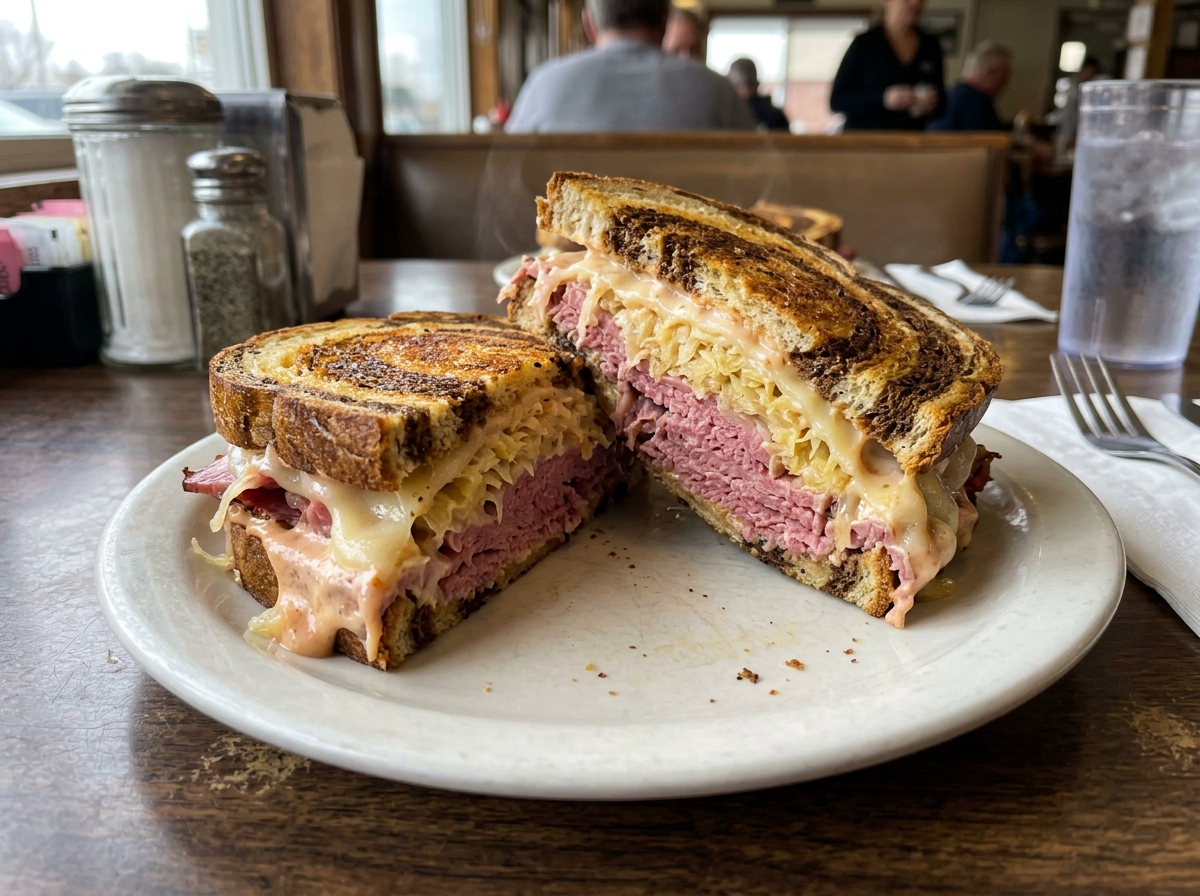
A Reuben sandwich is a grilled deli sandwich stacked with corned beef, Swiss cheese, sauerkraut, and Russian dressing on rye bread. That combination of salty, tangy, creamy, and crunchy is hard to beat. But if you ask where it came from, you’ll get two very different answers from two very different cities. The Reuben sandwich origin is one of the food world’s most entertaining debates, and the real story is more interesting than most people realize.
What Is a Reuben Sandwich?
Let’s start with the basics. A Reuben sandwich is a hot, grilled sandwich built on rye bread and loaded with four key fillings: sliced corned beef, Swiss cheese, sauerkraut, and Russian dressing. You butter the outside of the bread and grill it on a flat top or in a skillet until the cheese melts and the bread turns golden and crisp.
That’s the textbook definition, and it’s the version you’ll find at most delis across the United States. The magic of a Reuben lives in the contrast. You get the salty richness of the corned beef, the sharp tang of the sauerkraut, the mild creaminess of the melted Swiss, and the slightly sweet kick of the dressing. Every bite hits a different part of your palate, and that’s why people keep ordering it decade after decade.
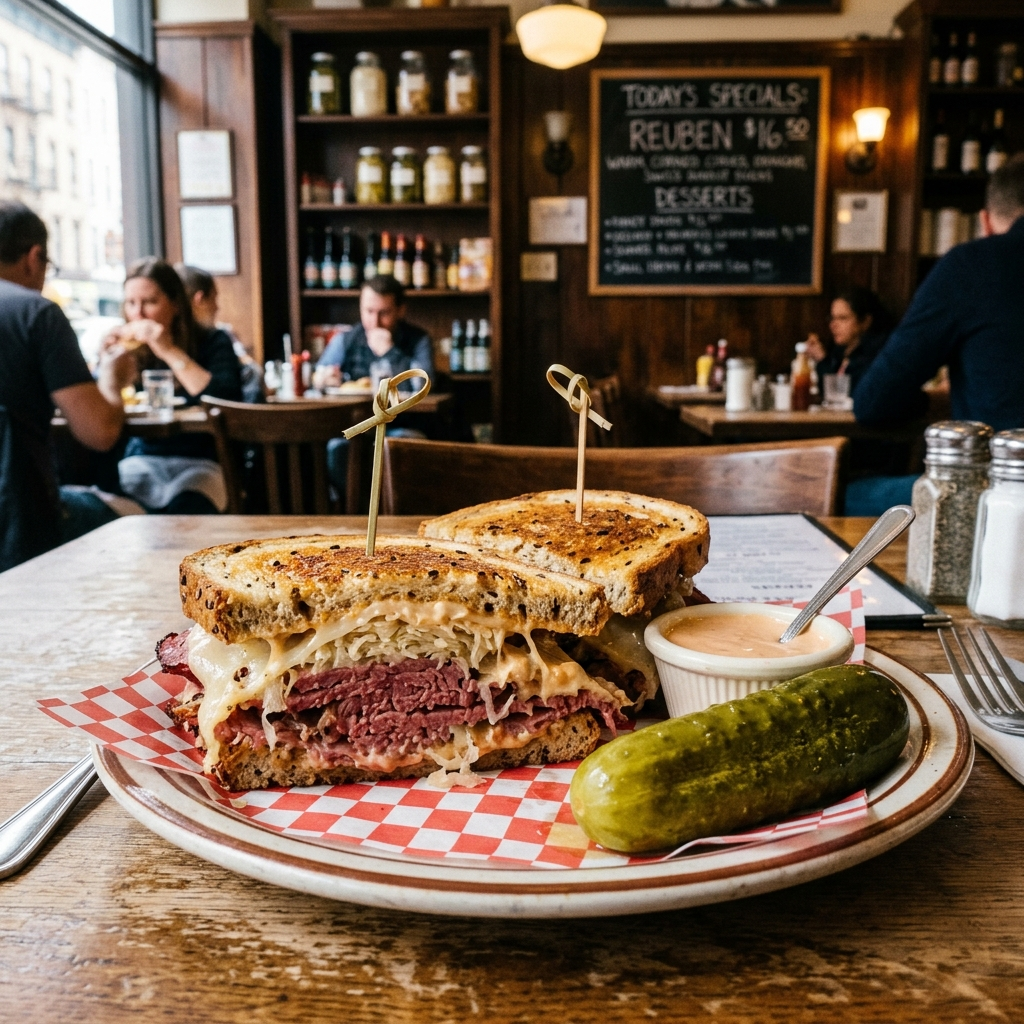
The Reuben belongs to the broader family of American deli sandwiches, right alongside the classic club sandwich and the French dip. It’s the kind of sandwich that feels like a full meal, not a snack.
The Classic Reuben Ingredients Breakdown
Getting the classic Reuben ingredients right matters more than you might think. Swap one component, and you’ve technically made a different sandwich. Here’s what goes into the real deal:
Corned beef. This is the star. Corned beef is brisket that’s been cured in a seasoned salt brine, which gives it that distinctive pink color and salty, slightly spiced flavor. You want it sliced thin but not shaved to paper — you need some texture. A common mistake is confusing corned beef with pastrami. They start from similar cuts, but pastrami gets smoked and coated in a pepper crust after curing. If you’re curious about the differences, this corned beef vs. pastrami comparison breaks it down clearly.
Swiss cheese. Swiss is the traditional choice because its mild, nutty flavor doesn’t overpower the corned beef. It also melts beautifully, which is critical since the sandwich gets grilled. Cheddar would be too sharp. Provolone would be too bland. Swiss sits right in the sweet spot.
Sauerkraut. Fermented cabbage brings the acid that cuts through all the fat and salt. Here’s a detail most recipes skip: you need to squeeze the sauerkraut dry before it goes on the sandwich. I learned this the hard way the first time I made Reubens at home. I piled on wet sauerkraut straight from the jar, and within two minutes the rye bread turned into a soggy mess that fell apart in my hands. Drain it well, and your sandwich holds together. If you’re dealing with moisture issues in your sandwiches generally, these tips to prevent a soggy sandwich are worth a read.
Russian dressing. The original Reuben calls for Russian dressing, which is a mayonnaise-based sauce with ketchup, horseradish, and sometimes a bit of pickle relish. A lot of modern delis swap in Thousand Island dressing, which is similar but sweeter and usually includes chopped hard-boiled eggs. Both work. Purists will argue for Russian, but honestly, the difference in the finished sandwich is subtle.
Rye bread. Specifically, you want a sturdy, seeded rye — often marble rye, which has those swirled light and dark layers. The bread needs to be thick enough to hold up to the grilling process and the wet fillings without disintegrating. Flimsy sandwich bread won’t survive.
The Reuben Sandwich Origin: Two Cities, Two Stories
Here’s where things get fun. The Reuben sandwich origin is genuinely disputed, and both sides have passionate defenders. There’s no single, universally accepted answer, and food historians are still debating it.
The New York Claim: Arnold Reuben
The most widely repeated story credits Arnold Reuben, a German-Jewish restaurateur who owned Reuben’s Delicatessen in New York City. According to this version, around 1914, an actress named Annette Seelos wandered into his restaurant late at night and asked for something she hadn’t tried before. Reuben grabbed some ham, turkey, Swiss cheese, coleslaw, and Russian dressing, slapped it between rye bread, and handed it to her. She loved it, and the sandwich went on the menu.
There’s a problem with this story, though. The ingredients don’t match what we now call a Reuben. Ham and turkey aren’t corned beef. Coleslaw isn’t sauerkraut. So even if Arnold Reuben did create a sandwich that carried his name, it looked very different from the version you’d order at a deli today.
The Omaha Claim: Reuben Kulakofsky
The competing story comes from Omaha, Nebraska, and it actually lines up better with the modern recipe. As the story goes, a local grocer named Reuben Kulakofsky invented the sandwich around 1925 during his weekly poker game at the Blackstone Hotel. He asked the hotel’s chef, Charles Schimmel, to put together a sandwich with corned beef, sauerkraut, Swiss cheese, and Russian dressing on rye bread. Schimmel grilled it, the poker group loved it, and the hotel eventually added it to its menu.
This version has some solid backing. The Omaha World-Herald has reported on the Kulakofsky claim extensively, and the Blackstone Hotel’s connection to the sandwich is well-documented in local records. In 2016, the city of Omaha even hosted the National Reuben Sandwich Cook-Off, which helped cement the city’s claim in the public eye.
So which story is true? The honest answer is that we don’t know for certain. The New York story is older and more famous, but the Omaha story matches the actual ingredients. It’s entirely possible that both men created similar sandwiches independently, and the name “Reuben” stuck because it was already associated with deli culture through Arnold Reuben’s well-known restaurant.
Reuben Sandwich History: From Poker Game to American Icon
Regardless of who invented it, the Reuben sandwich history follows a familiar path for American deli food. It started as a regional specialty, spread through word of mouth, and eventually landed on menus from coast to coast.
The sandwich gained real traction in the 1950s and 1960s, when American deli culture was at its peak. Jewish delis in New York, Chicago, and Los Angeles put their own versions on the menu, and the Reuben became a standard alongside pastrami on rye and matzo ball soup. The grilling step — which turns it from a cold stack into a hot, melty, crispy-edged sandwich — became the norm during this era.
By the 1970s, the Reuben had crossed over from deli menus into mainstream American restaurants. Diners, diners, and casual chains all started offering it. The sandwich’s appeal was obvious: it used affordable ingredients, it was filling, and it tasted great. You didn’t need to be a food snob to appreciate a well-made Reuben.
One interesting footnote in the Reuben’s history is its connection to competitive cooking. Omaha’s National Reuben Sandwich Cook-Off, which ran for several years, drew contestants from across the country and helped keep the origin debate alive in the press. Events like this remind us that food history isn’t just academic — it’s something people genuinely care about and argue over at cookouts and dinner tables.
How a Reuben Differs from Similar Sandwiches
If you’re new to the deli counter, the Reuben can look a lot like a few other sandwiches. Let’s clear up the most common mix-ups.
Reuben vs. Rachel
The Rachel sandwich is the Reuben’s closest cousin, and the differences are small but specific. A Rachel swaps the corned beef for turkey (or sometimes pastrami) and replaces the sauerkraut with coleslaw. The dressing and cheese usually stay the same. Think of the Rachel as a lighter, slightly sweeter variation. It’s a great option if you find corned beef too salty or sauerkraut too pungent.
Reuben vs. a Plain Corned Beef Sandwich
A standard corned beef sandwich is just corned beef on rye, usually with mustard. No cheese, no sauerkraut, no dressing, no grilling. It’s a simpler, colder, more straightforward sandwich. The Reuben takes those same base ingredients and adds layers of fat, acid, and heat that completely transform the experience. If you’re trying to decide between the two, it really comes down to whether you want something simple or something indulgent.
Hot or Cold?
A true Reuben is always served hot. The grilling step is what melts the Swiss cheese into the corned beef and toasts the rye bread to a crisp shell. A cold version with the same ingredients is technically a corned beef sandwich with toppings, not a Reuben. If you want to understand how temperature changes a sandwich’s character, this hot vs. cold sandwich breakdown explains why the heat matters so much.
Tips for Building a Better Reuben at Home
Making a Reuben at home isn’t complicated, but a few small details separate a good one from a great one. If you want a step-by-step walkthrough, this guide to making a classic Reuben covers the full process. In the meantime, here are the tips that make the biggest difference.
Get the bread-to-filling ratio right. This is where most homemade Reubens go wrong. You need enough filling to justify the sandwich, but too much corned beef and sauerkraut will overwhelm the bread and make the whole thing collapse. A good rule of thumb is about 4 to 5 ounces of corned beef per sandwich, a thin layer of sauerkraut (remember, squeezed dry), and one or two slices of Swiss. The bread should be sturdy enough to hold everything without cracking when you pick it up.
Butter the outside generously. The butter is what creates that golden, crispy crust on the rye bread. Don’t be shy with it. Spread a thin, even layer on both outer faces of the sandwich before it hits the skillet or griddle. Medium heat works best — too hot and the bread burns before the cheese melts, too low and you end up with a greasy, pale sandwich.
Layer strategically. Put the cheese directly against the bread on both sides. This creates a melted barrier that helps protect the rye from the moisture in the sauerkraut and dressing. The corned beef goes in the middle, with the sauerkraut and dressing tucked between the meat and cheese. This small change in layering makes a noticeable difference in structural integrity.
Use a press or a heavy pan. If you have a sandwich press, use it. If not, place a heavy skillet or a foil-wrapped brick on top of the sandwich while it cooks. The weight compresses everything together, helps the cheese melt evenly, and gives you those crispy, flattened edges that make a deli Reuben so satisfying.
A note on food safety. Since you’re working with deli meat, make sure your corned beef is fresh and has been stored properly. Deli meats can spoil faster than you’d expect, especially after the package is opened. If you’re not sure how long your meat has been in the fridge, check this guide to deli meat fridge life before you start building your sandwich.
Frequently Asked Questions
Is a Reuben sandwich Irish?
No, despite the corned beef connection. The Reuben was created in the United States, most likely by Jewish-American deli owners or hotel chefs. Corned beef became associated with Irish-American cuisine in the 19th century, but the Reuben sandwich itself has no direct ties to Ireland. It’s a thoroughly American invention born out of the deli culture in cities like New York and Omaha.
What’s the difference between Russian dressing and Thousand Island?
Russian dressing is tangier and spicier, typically made with mayonnaise, ketchup, horseradish, and sometimes chili sauce. Thousand Island is sweeter and creamier, often containing sweet pickle relish and chopped hard-boiled eggs. The original Reuben recipe calls for Russian dressing, but many modern delis use Thousand Island because it’s more widely available and appeals to a broader audience. Either one will give you a tasty sandwich.
Can you make a Reuben with pastrami instead of corned beef?
You can, but technically you’d be making a different sandwich — sometimes called a “Pastrami Reuben” or a variation on the Rachel. Pastrami is smoked and pepper-crusted, which gives the sandwich a bolder, smokier flavor. It’s delicious, and plenty of delis offer it as an option. Just know that purists will tell you a true Reuben uses corned beef, and they’re not wrong by the traditional definition.
The Reuben sandwich is one of those rare dishes where the whole really is greater than the sum of its parts. Corned beef, Swiss, sauerkraut, and Russian dressing are all perfectly fine on their own, but stacked together on grilled rye, they create something that’s kept people coming back to deli counters for nearly a century. Whether the sandwich was born in a New York restaurant or an Omaha poker game, the result is the same — a hot, melty, tangy, deeply satisfying sandwich that earns its spot on the menu.
Your next move is simple. Grab some rye bread, hit the deli counter for freshly sliced corned beef, and make one at home this weekend. Once you nail the grilling technique and get that cheese properly melted, you’ll wonder why you ever settled for the cold version.