
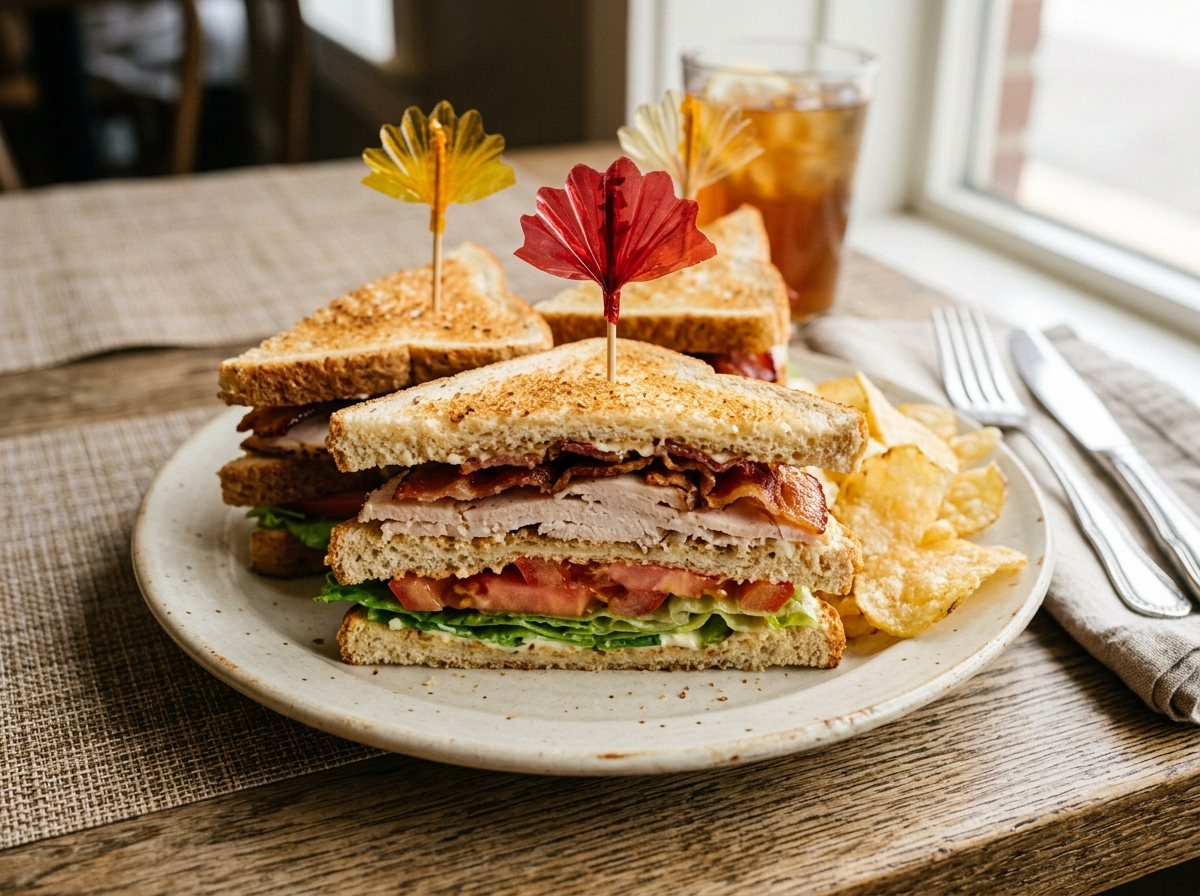
A club sandwich falls apart in your hands, the bread goes soggy, and suddenly you’re eating a sad pile of ingredients instead of the towering beauty you pictured. Sound familiar? The good news is that a great classic club sandwich recipe comes down to a few simple choices — the right bread, proper toasting, and a specific layering order that keeps everything stable. You don’t need fancy equipment or hard-to-find ingredients. You just need to know how the pieces fit together. Here’s exactly how to make a club sandwich that holds up from first bite to last.
What Makes a Club Sandwich a Club Sandwich?
A club sandwich is a triple decker sandwich built with three slices of toasted bread, two layers of filling, and a specific set of ingredients: poultry (usually turkey or chicken), bacon, lettuce, tomato, and mayonnaise. That’s the classic definition, and it’s been remarkably consistent since the sandwich first appeared on American menus in the late 1800s.
The name most likely traces back to the Saratoga Club House, a famous gambling establishment in Saratoga Springs, New York. Food historians have documented this origin in several culinary reference works, though some debate remains about whether the sandwich was actually invented there or simply popularized on its menu. What nobody argues about is the structure.
That third slice of bread in the middle isn’t decoration. It gives the sandwich a second structural layer that keeps the top and bottom halves from sliding apart when you pick it up. Think of it like a two-story building. Without that middle floor, the whole thing collapses under its own weight. That middle slice of bread is the load-bearing wall of your sandwich.
Classic Club Sandwich Ingredients
You don’t need a long shopping list, but the quality of each ingredient matters more here than in simpler sandwiches. Because a club has so many layers, a weak ingredient gets exposed fast. There’s nowhere to hide a bland tomato or floppy bacon in a triple decker build.
The Bread
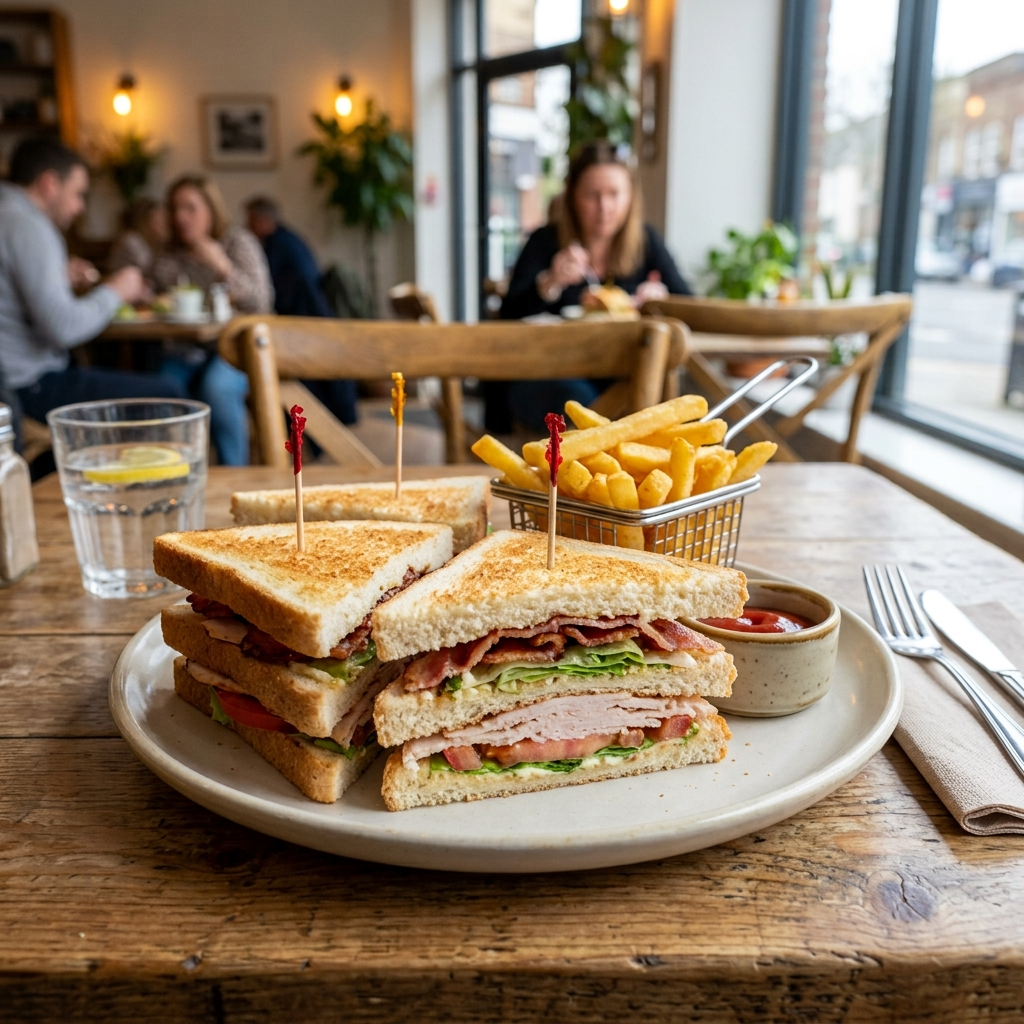
White sandwich bread is the traditional choice, and there’s a practical reason for it. White bread toasts up crisp on the outside while staying soft enough inside to bite through cleanly. Wheat or sourdough can work, but they tend to be denser, which makes a triple-decker harder to eat. You’re already stacking three slices — you don’t want to wrestle the bread on every bite.
Slice thickness matters too. Standard sandwich slices from the grocery store work perfectly. Thick-cut artisan bread sounds appealing in theory, but it turns a club sandwich into a jaw workout. Keep it simple.
The Proteins
The classic club uses sliced turkey or chicken along with bacon. You can use deli-sliced turkey breast or roast your own and slice it thin at home. If you go the deli route, look for meat that’s sliced fresh at the counter rather than pre-packaged in plastic. The texture is noticeably better, and the flavor is cleaner without that processed aftertaste.
For the bacon, you want it crispy. Not chewy, not floppy — properly crispy. The bacon provides the crunch that balances out the soft bread, the creamy mayo, and the juicy tomato. If your bacon is limp, the whole sandwich loses its textural contrast and starts to feel mushy.
The Fixings
Lettuce, tomato, and mayonnaise round out the classic build. Iceberg lettuce is traditional because it’s crunchy and doesn’t wilt quickly against the warm toast. Romaine works if you prefer a bit more flavor, but skip the delicate greens like arugula or spring mix. They’ll get crushed flat under the weight of the layers and turn into green mush.
Use a ripe tomato, sliced about a quarter-inch thick. Pat the slices dry with a paper towel before you build. This is one of those small details that separates a great club from a soggy disappointment. Wet tomato slices dump moisture straight into the bread, and once that toast goes soft, you’ve lost the structural advantage you worked for. If you want more detail on keeping your sandwich crisp, check out these tips on how to prevent a soggy sandwich.
Mayonnaise is the standard spread, and it does double duty. Beyond adding flavor, mayo creates a thin fat barrier between the bread and the wet ingredients, which slows down sogginess significantly. Use a thin, even layer on each slice of bread rather than glopping it on in one spot.
How to Make a Club Sandwich Step by Step
Building a triple decker club sandwich takes about 10 minutes once your ingredients are prepped, but the order of operations matters more than you’d think. Get the layering wrong and the sandwich slides apart the moment you pick it up. Get it right and it holds together beautifully through the last bite.
Prep Your Ingredients
Start by getting everything ready before you touch the bread. Cook your bacon until it’s fully crisp, then drain it on paper towels. Slice your tomato and pat the slices dry. Wash and dry your lettuce leaves thoroughly. Slice your turkey or chicken thin if you haven’t already.
Having everything within arm’s reach makes the assembly quick, which matters because you want the toast to still be warm when you build. Warm toast holds its crunch longer than cold toast, and it melts the mayo slightly, which helps it bond to the bread surface.
Toast the Bread
Toast three slices of bread per sandwich until they’re golden brown. You want a solid crunch, not a light warming. A standard toaster works fine for one or two sandwiches, but if you’re making several clubs at once, you can toast sandwich bread in the oven on a sheet pan for faster, more even results.
Here’s a detail most recipes skip entirely: let the toast cool for about 30 seconds before you start building. If you slap mayo onto piping-hot bread, the steam gets trapped underneath and softens the toast from the inside out. Thirty seconds is enough to let the surface set while keeping the bread pleasantly warm.
Build the First Layer
Lay down your first slice of toast and spread a thin layer of mayo on the top side. Add your lettuce first, then the tomato slices, then the turkey or chicken. The lettuce goes directly against the bread to act as a moisture shield for the toast. The tomato sits on top of the lettuce, and the protein goes on top of the tomato.
Place the second slice of toast on top, mayo side down. Press gently to compress the layer. You’re not trying to flatten it — just settle the ingredients so they’re not shifting around inside.
Build the Second Layer
Now spread mayo on the exposed top side of that middle bread slice. Layer your bacon here, followed by more lettuce and another slice or two of turkey. Some people put the bacon on the bottom layer, but placing it in the upper half keeps it crispier because it sits further from the tomato’s moisture.
Top everything with the third slice of toast, mayo side down. Press gently one more time.
Secure and Cut
This is where most people lose the plot. A triple decker club sandwich is tall, and it will fall apart if you just grab a knife and saw through it without preparation.
Insert four toothpicks or long sandwich picks through the sandwich, one near each corner, about an inch from the edges. Push them straight down through all three layers of bread. These picks are what hold the structure together while you cut and while you eat. They’re not optional.
Now cut the sandwich diagonally from corner to corner, then again the other way, creating four triangles. Use a serrated knife and cut with a gentle sawing motion. Don’t press down — let the knife do the work. Pressing squishes the layers and pushes the fillings out the sides like toothpaste from a tube.
If you want a deeper look at sandwich construction techniques that apply beyond just clubs, this guide on how to build the perfect deli sandwich covers layering principles worth knowing.
Tips for a Better Club Sandwich
Once you’ve nailed the basic build, a few small upgrades can take your club from good to the kind of sandwich people specifically ask you to make again.
Season your tomato. A light sprinkle of salt and black pepper on the tomato slices brings out their natural sweetness and makes the whole sandwich taste more balanced. This takes two seconds and makes a bigger difference than you’d expect.
Use room-temperature mayo. Cold mayo straight from the fridge is thick and hard to spread evenly, which means you end up with clumps in some spots and bare bread in others. Let it sit out for a few minutes or give it a quick stir to loosen it up before spreading.
Double up the bacon. The classic recipe calls for two or three strips, but if you’re a bacon person, go ahead and add more to that second layer. The bacon is the star flavor in a club sandwich, and skimping on it is a missed opportunity.
Try a turkey club variation. Swapping in smoked turkey or even a mix of turkey and ham gives the sandwich a different flavor profile while keeping the same triple-decker structure. If you’re curious about that route, this turkey club sandwich recipe walks through the specifics.
Serve it with the right sides. A club sandwich pairs naturally with something crispy and salty. Sides you’d serve alongside a classic BLT — potato chips, coleslaw, or a pickle spear — keep the meal simple and satisfying. French fries work too, but they can make the plate feel heavy alongside an already substantial sandwich.
Common Mistakes That Ruin Your Club Sandwich
Even with a straightforward recipe, a few wrong moves can turn a beautiful triple decker into a sad mess on the plate. Here are the ones to watch out for.
Skipping the toast. This is the single most common mistake, and it’s a dealbreaker. Untoasted bread simply can’t support the weight of a triple-decker build. The layers slide, the bread tears, and you end up eating a deconstructed salad with bread crumbs. Always toast. No exceptions.
Overloading the layers. It’s tempting to pile on extra turkey, extra tomato, extra everything. But a club sandwich relies on proportion. Too much filling and the bread can’t contain it. Aim for two to three thin slices of meat per layer, one or two tomato slices, and a single leaf of lettuce. You can always make a second sandwich.
Using wet ingredients. Tomato is the main culprit, but wet lettuce causes problems too. Dry everything before it touches the bread. If you’re making clubs ahead of time for a party or a lunchbox, consider leaving the tomato off entirely and adding it right before serving.
Cutting without toothpicks. If you skip the picks and try to cut a triple decker freehand, the top layer will slide off before the knife makes it halfway through. The toothpicks aren’t decorative — they’re structural. Use them every time.
A quick food safety note: If you’re using deli-sliced turkey or chicken, keep in mind that opened deli meats should be consumed within three to five days and stored at or below 40°F. The USDA’s food safety guidelines recommend discarding any deli meat that smells off or feels slimy, regardless of the date printed on the package. For more specifics on storage timelines, this breakdown of deli meat fridge life covers the details you need.
Disclaimer: The food safety information above is general guidance based on USDA recommendations and is not a substitute for professional food safety advice. When in doubt, follow the specific storage instructions on your product’s packaging.
Frequently Asked Questions
What makes a club sandwich different from a regular sandwich?
A club sandwich is defined by its triple-decker structure — three slices of toasted bread with two distinct layers of filling. The standard ingredients are turkey or chicken, bacon, lettuce, tomato, and mayonnaise. A regular sandwich uses two slices of bread with a single layer of filling. The extra slice of bread in the middle gives the club its height and stability, and it’s what separates it from a standard turkey sandwich or a BLT.
Do you have to use turkey in a club sandwich?
No. While turkey is the most common protein in a modern club sandwich, the original versions often used chicken. You can also use ham, roast beef, or a combination of meats. The defining features of a club are the triple-decker build and the bacon-lettuce-tomato combination, not the specific type of poultry. That said, if you swap out both the poultry and the bacon, you’re drifting into a completely different sandwich.
Can I make a club sandwich ahead of time?
You can, but it won’t be as good as one assembled fresh. The toast will soften over time as moisture from the tomato and mayo migrates into the bread. If you need to prep ahead, toast the bread and prep all the fillings separately, then assemble the sandwich within 30 minutes of serving. If you must build it early, wrap it tightly in parchment paper and refrigerate, but expect some loss of crunch. For best results, keep the tomato separate and add it right at the last minute.
Why is it called a club sandwich?
The most widely accepted origin story traces the name to the Saratoga Club House in Saratoga Springs, New York, where the sandwich reportedly appeared on the menu in the late 19th century. Some food historians suggest the word “club” may also be a shortened form of “clubhouse,” referring to the type of social establishment where the sandwich was commonly served. The exact origin is still debated among culinary historians, but the name has stuck for well over a century.
How do I keep a club sandwich from falling apart?
The key is the toothpicks and the cutting technique. Insert four toothpicks through all three layers before you cut, spacing them near the corners. Use a serrated knife and a gentle sawing motion rather than pressing straight down. Keeping the filling layers thin and even also helps — overstuffed layers create uneven pressure that pushes the sandwich apart from the inside out.
A great club sandwich isn’t complicated, but it does reward attention to the small things. Toast your bread properly, dry your tomatoes, layer in the right order, and use those toothpicks without fail. Once you’ve built your first proper triple decker, you’ll wonder why you ever settled for a floppy two-slice version. Grab your ingredients, fire up the toaster, and build yourself a club worth cutting into four perfect triangles.