
You’re staring at the deli counter or your own kitchen, trying to decide: should this sandwich be hot or cold? It seems like a small choice, but it changes everything — the bread you grab, the fillings you stack, and even how long it can safely sit out before you eat it.
The difference between hot and cold sandwiches goes way beyond temperature. It affects texture, flavor, and food safety in ways most people don’t think about until something goes wrong. Here’s a clear breakdown so your next sandwich turns out exactly right.
What Actually Makes a Sandwich “Hot” or “Cold”?
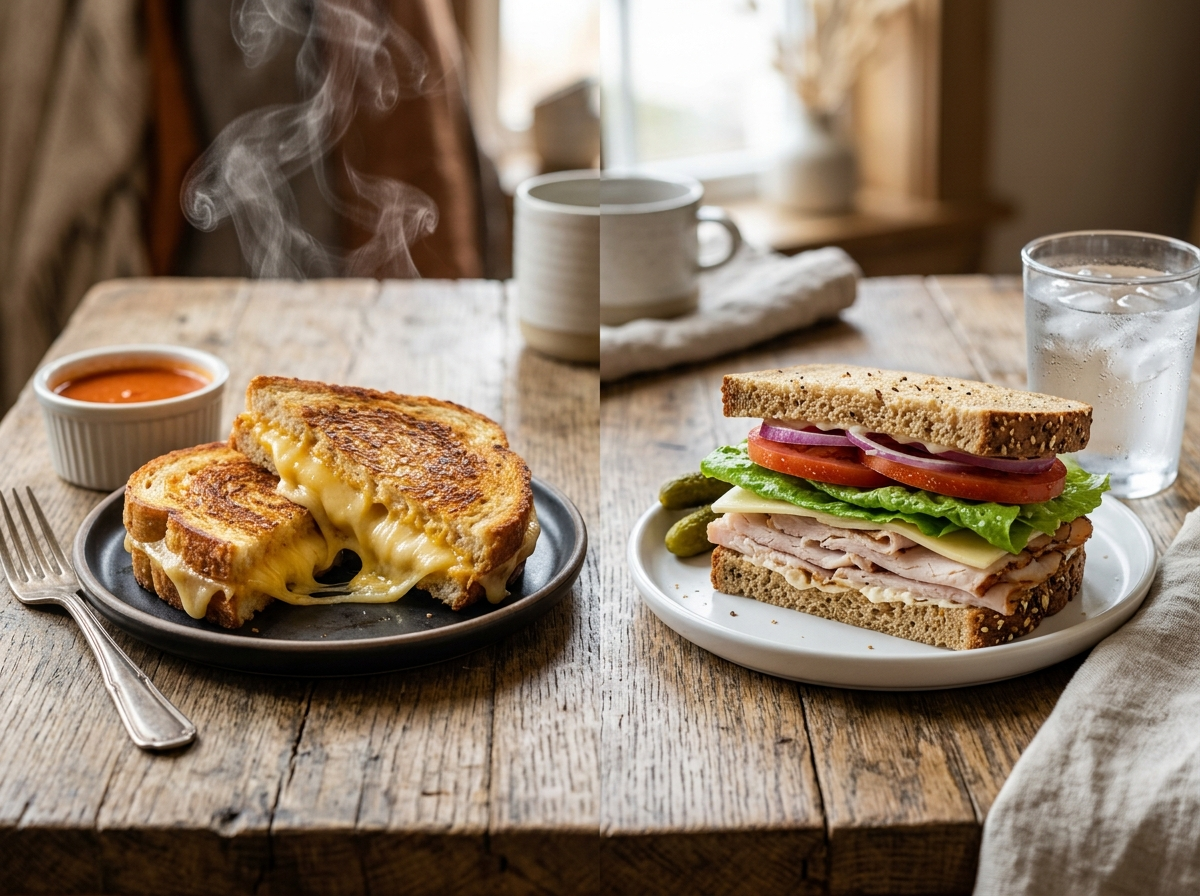
A hot sandwich is one where the main filling, the bread, or both are heated as a deliberate part of the recipe before serving. Think of a Philly cheesesteak, a grilled cheese, or a Reuben straight off the griddle. The heat is a core part of the eating experience — it melts cheese, warms the meat, and toasts the bread into something crispy.
A cold sandwich is assembled with ingredients served at room temperature or chilled. Your classic deli turkey on rye, a BLT, or an Italian hoagie all fall into this category. Nothing gets heated during assembly. The appeal is in the fresh, crisp textures and the clean, distinct flavors of each ingredient.
Here’s where people get confused: some sandwiches blur the line. A melt, panini, or grilled cheese is obviously hot. But what about a sandwich with warm roasted turkey layered on cold lettuce and tomato? Most cooks still call that a hot sandwich because the primary protein was intentionally heated. The rule of thumb is simple — if heat is a deliberate part of how you build and serve it, it’s a hot sandwich.
The Real Differences Between Hot and Cold Sandwiches
The hot vs cold sandwich debate isn’t just about what the thermometer reads. It changes nearly every decision you make from the moment you reach for the bread.
Bread Choices Matter More Than You Think
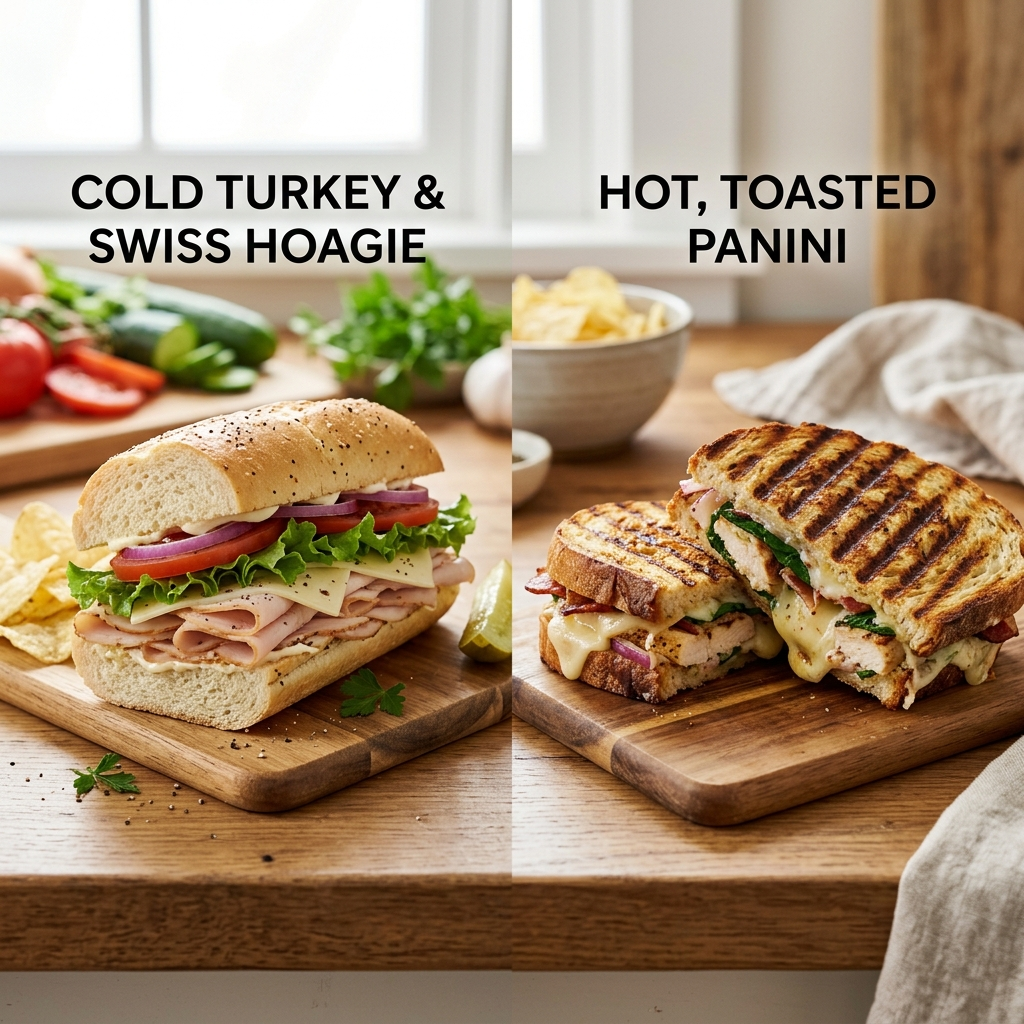
Hot sandwiches need bread that can handle heat without collapsing into a sad, soggy pile. You want something with a sturdy crumb and a crust that crisps up under pressure. Ciabatta, sourdough, French rolls, and dense rye are all strong picks. When you press a sandwich on a griddle or slide it under a broiler, the bread needs to hold its structure while the inside gets melty and warm. A flimsy slice of soft white bread will turn to mush the second cheese starts leaking through.
Cold sandwiches give you much more flexibility. Soft white bread, whole wheat, pita, wraps, and even lettuce cups all work because nothing is stressing the bread with heat. The main enemy of a cold sandwich is moisture, not temperature. Wet ingredients like tomatoes, pickles, and heavy dressings can turn soft bread into a soggy mess in minutes. If you’ve dealt with that problem before, learning how to prevent a soggy sandwich with a few simple layering tricks will change your lunch game.
Fillings and Ingredients
Hot sandwiches shine with ingredients that physically transform under heat. Cheese melts into gooey ribbons. Caramelized onions get sweeter and softer. Meats like pastrami, corned beef, and thinly sliced steak release their juices and become more tender. The heat actually changes the flavor profile of what’s inside, creating new tastes that don’t exist in the cold version of the same ingredients.
Cold sandwiches rely on ingredients that taste great exactly as they are. Fresh deli meats, crisp lettuce, ripe tomatoes, sharp cheeses, and tangy condiments are the stars. You’re working with the natural flavors and textures of each component. There’s no heat to blend everything together, so ingredient quality really shows. A cold sandwich made with cheap, watery tomatoes and stale bread has nowhere to hide.
Preparation and Assembly
Building a cold sandwich is straightforward — layer, spread, close, and eat. You can make a dozen cold sandwiches ahead of time for a party, wrap them tightly, and they’ll hold up reasonably well for a few hours if stored in a cooler. This is one of the biggest practical advantages cold sandwiches have.
Hot sandwiches demand more of your attention. You’re managing a heat source, timing the melt on your cheese, and making sure the bread doesn’t burn before the inside warms through. They’re almost always made to order and eaten immediately. A grilled cheese that sits on a plate for 20 minutes is a completely different experience than one you bite into fresh off the pan. The window of peak quality is narrow.
Texture and Flavor
This is the difference you’ll actually notice the moment you take a bite. Hot sandwiches give you contrast — crispy, golden bread on the outside, gooey cheese and warm, juicy meat on the inside. That textural contrast is a huge part of why people crave them. The flavors meld together into something richer and more unified than the sum of their parts.
Cold sandwiches offer a different kind of satisfaction. The crunch of fresh lettuce, the snap of a pickle, the smooth spread of mayo on soft bread. Everything stays distinct. You taste each ingredient clearly, one by one, instead of everything blending into a single warm, melty bite. Neither approach is better. They’re just different experiences.
| Feature | Hot Sandwich | Cold Sandwich |
|---|---|---|
| Bread | Sturdy, crusty (sourdough, ciabatta, rye) | Flexible (white, wheat, wraps, pita) |
| Fillings | Melted cheese, warm meats, cooked veggies | Fresh deli meats, crisp produce, cold cuts |
| Prep time | Made to order, eaten immediately | Can be prepped hours ahead |
| Texture | Crispy outside, melty inside | Crunchy, fresh, distinct layers |
| Best for | Small groups, comfort food, cold weather | Large groups, packed lunches, warm weather |
| Food safety | Must stay above 140°F | Must stay below 40°F |
Popular Hot Sandwich Types
Let’s walk through some of the hot sandwiches you probably already know and love, plus a few you might want to try.
The grilled cheese is the classic starting point. Bread, butter, cheese, heat. It sounds almost too simple, but getting that perfect golden crust with a fully melted center takes more skill than people give it credit for.
The Reuben layers corned beef, Swiss cheese, sauerkraut, and Russian dressing on rye, then gets grilled until everything is hot, melty, and slightly crispy on the outside. If you want to try building one yourself, this guide to making a classic Reuben walks you through the whole process.
The Philly cheesesteak features thinly sliced ribeye melted with provolone or Cheez Whiz on a long, soft hoagie roll. The heat is absolutely non-negotiable here — a cold cheesesteak is basically just cold meat on a bun, and nobody wants that.
The French dip piles sliced roast beef on a French roll and serves it alongside a small bowl of hot au jus for dipping. The warmth of the jus soaking into the crusty bread is the entire point of the sandwich.
The panini is really more of a method than a specific recipe. You can put almost anything between two slices of sturdy bread and press it in a hot grill until you get those signature char marks and a warm, compressed interior.
Other hot favorites worth mentioning include the Cuban sandwich, the patty melt, the croque monsieur, and the open-faced hot turkey sandwich with gravy.
Popular Cold Sandwich Types
Cold sandwiches are the backbone of delis, lunchboxes, office fridges, and picnic baskets everywhere. They’re the workhorses of the sandwich world.
The BLT is as simple as it gets — bacon, lettuce, tomato, mayo on toasted bread. And yes, even though the bacon was cooked hot and the bread is often toasted, the BLT is still classified as a cold sandwich because the assembled sandwich isn’t heated as a whole.
The Italian hoagie stacks cured meats like salami, capicola, and prosciutto with provolone, shredded lettuce, tomato, onion, and a sharp oil-and-vinegar dressing. If you want the full breakdown of what goes into a proper one, this guide to the classic Italian sub covers every layer.
The club sandwich is a triple-decker affair with turkey, bacon, lettuce, tomato, and mayo on toasted bread, usually held together with frilly toothpicks. It’s a cold sandwich staple at diners and hotels for a reason.
The tuna salad sandwich, the chicken salad wrap, and the classic turkey and Swiss on rye round out the most popular everyday cold options.
Pro Tip: Cold sandwiches are the clear winner when you’re feeding a crowd. You can prep them hours ahead, stack them in a cooler, and serve them without any last-minute cooking stress. Try doing that with a grilled cheese and you’ll see the problem immediately.
Food Safety: Hot vs Cold Sandwiches
This section matters more than most people realize, especially if you’re making sandwiches for a party, a potluck, a school lunch, or a food truck. Getting this wrong can make people genuinely sick.
Cold Sandwich Safety
Cold sandwiches often contain deli meats, which are highly perishable. According to the USDA Food Safety and Inspection Service, cold foods need to stay at or below 40°F (4°C) to remain safe. If a cold sandwich sits out at room temperature for more than two hours — or just one hour if the outdoor temperature is above 90°F — it enters what food safety professionals call the “danger zone,” where bacteria like Listeria and Staphylococcus multiply rapidly.
Here’s a practical detail most articles skip: the clock starts when you take the ingredients out of the fridge, not when you finish assembling the sandwich. If your sliced turkey has been sitting on the counter for 30 minutes while you chop tomatoes and find the right bread, you’ve already burned through a quarter of your safe window. For more specifics on how long your deli meats actually last once opened, check out this breakdown of deli meat fridge life.
Disclaimer: This food safety information is general guidance based on USDA recommendations. It is not a substitute for professional food safety training, ServSafe certification, or your local health department’s regulations — especially if you’re serving food commercially.
Hot Sandwich Safety
Hot sandwiches need to stay hot — at or above 140°F (60°C) — to remain safe for eating. Once a hot sandwich drops below that temperature, the same bacterial growth rules kick in. This is exactly why hot sandwiches at buffets, catering events, and food trucks need warming trays, heat lamps, or insulated carriers.
The tricky part is that most hot sandwiches are meant to be eaten within minutes of being made. They don’t sit around. But if you’re preparing them for an event where they’ll sit on a platter, you need a real plan to keep them warm. A hot sandwich that’s been sitting out for an hour at room temperature is a food safety risk, even if it still feels vaguely warm when you touch the bread.
For a broader look at the rules around how long any sandwich can safely sit out at a gathering, this piece on sandwich sit-out time covers the key guidelines you need to follow.
When Should You Choose Hot vs Cold?
So which one should you actually make? The honest answer is that it depends on the situation, not on personal preference alone.
Go hot when you want comfort food that feels satisfying and hearty. Hot sandwiches are perfect for small groups where you can make them to order — think a family dinner or a late-night snack for two. They’re also the obvious choice when you’re working with ingredients that improve dramatically with heat, like melty cheese, caramelized onions, or warm sliced brisket. And on a cold winter day, a hot sandwich just hits different.
Go cold when you’re feeding a large group and need to prep everything ahead of time. Cold sandwiches are also the right call for packed lunches that won’t be eaten for a few hours, for picnics where you don’t have access to a grill or oven, and for hot summer days when a heavy, warm sandwich feels like too much. Fresh, crisp textures and clean flavors are what cold sandwiches do best.
There’s no wrong answer here. Both types have their place, and the best sandwich is the one that fits the moment you’re in.
Frequently Asked Questions
Is a BLT a hot or cold sandwich?
A BLT is considered a cold sandwich. Even though the bacon is cooked hot and the bread is often toasted, the sandwich is assembled and served with the fillings at or near room temperature. Heat isn’t applied to the finished sandwich as a whole, which is the defining factor.
Can you turn a cold sandwich into a hot one?
Absolutely, and many cold sandwiches taste fantastic when heated. A cold Italian hoagie becomes a delicious hot sub when you wrap it in foil and warm it in a 350°F oven for about 10 minutes. Just keep in mind that some ingredients don’t handle heat well — lettuce wilts, mayo separates, and tomatoes turn mushy. A good trick is to remove those fresh toppings before heating and add them back after.
Which type of sandwich is safer for outdoor events?
Cold sandwiches are generally easier to manage at outdoor events because you can keep them in a cooler with ice packs to maintain a safe temperature below 40°F. Hot sandwiches require a consistent heat source to stay above 140°F, which is much harder to maintain at a park or backyard gathering. That said, both types need proper temperature control to stay safe — neither one is automatically “safe” just because it’s hot or cold.
The Bottom Line
The difference between hot and cold sandwiches comes down to much more than a thermometer reading. It shapes the bread you choose, the fillings you layer, the textures you get, and the food safety rules you need to follow. Once you understand how heat changes every part of the sandwich experience, you’ll start making better choices without even thinking about it.
Next time you’re building a sandwich, ask yourself what the moment calls for. A crispy, melty Reuben on a cold night? A fresh, crunchy Italian hoagie for a summer picnic? Both are perfect — just in completely different ways. Grab the right bread, layer with intention, and go make something worth eating.