
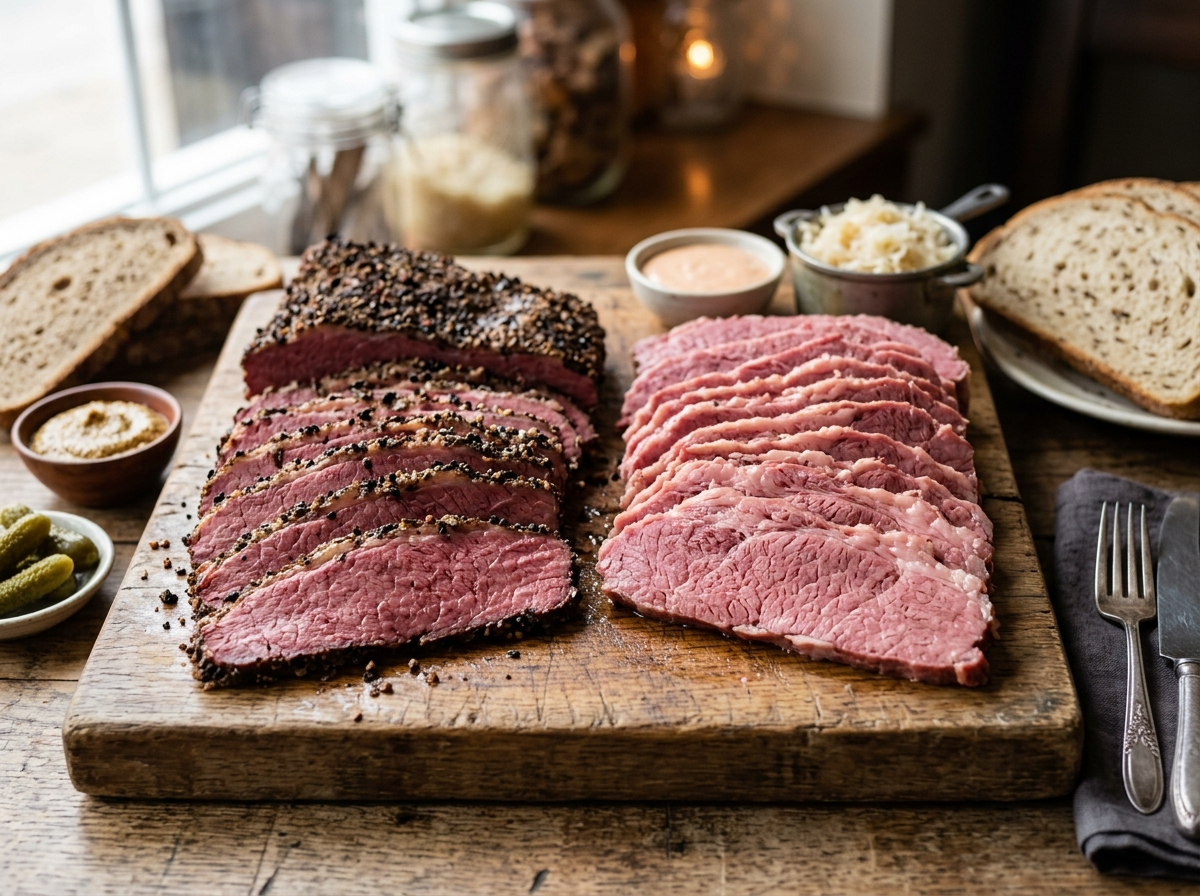
You’re at the deli counter. Corned beef on one side, pastrami on the other. They look similar — both pinkish, both sliced thin, both piled high on rye. So what’s actually different?
The short answer: they start from a similar place but take very different paths. The cut, the cure, the cooking method, and the final flavor all set them apart. Here’s everything you need to know so you never have to guess again.
What Is Corned Beef, Exactly?
Corned beef is beef brisket that’s been cured in a saltwater brine. The word “corned” doesn’t have anything to do with the vegetable. It comes from the old English word for the large grains — or “corns” — of rock salt used in the curing process.
The most common cut for corned beef is the brisket flat, which is the leaner, more uniform section of the brisket. You soak this cut in a brine loaded with pickling spices like mustard seed, bay leaves, allspice, and peppercorns. The meat sits in that brine for several days, sometimes up to a full week, absorbing salt and flavor all the way through.
After curing, you cook corned beef by simmering it slowly in water or broth until it’s fork-tender. That long, gentle boil is what gives corned beef its soft, almost melt-in-your-mouth texture. The flavor is salty, mildly tangy, and straightforward. It tastes like the spices in the brine because that’s basically all that’s happened to it — salt, spice, and slow heat.
Corned beef has deep roots in Irish-American and Jewish-American food traditions. In the U.S., it became a staple at delis and a must-have for St. Patrick’s Day dinners and the classic Reuben sandwich. If you’ve ever had a hot corned beef sandwich with mustard and a pickle on the side, you already know the appeal. It’s simple, salty, and deeply satisfying.
What Is Pastrami, Then?
Pastrami takes everything corned beef does and adds a few more steps — and a lot more flavor.
Like corned beef, pastrami starts with a cured piece of beef. But the cut is usually different. Traditional New York-style pastrami uses the beef navel, which comes from the plate section of the cow (basically the belly area). Some delis use the brisket point instead, which is the fattier, more marbled end of the brisket. Either way, you’re working with a cut that has more fat than the lean brisket flat used for corned beef.
The curing process is similar at the start. The meat gets a salt-and-spice cure, either wet or dry. But here’s where pastrami takes a sharp turn. After curing, the meat gets coated in a thick crust of cracked black peppercorns and coriander seeds. This spice rub is what gives pastrami its signature dark, almost black exterior.
Then comes the smoke. Pastrami is hot-smoked for several hours, which cooks the meat and layers on a deep, smoky flavor. After smoking, most delis steam the pastrami before slicing it. That final steam step keeps the meat juicy and tender while preserving the peppery crust.
The result? Pastrami is bolder, smokier, spicier, and more complex than corned beef. Every bite has that crack of pepper, the warmth of coriander, and a smoky richness that corned beef simply doesn’t have. If you’ve ever had a pastrami sandwich at a legendary spot like Katz’s Delicatessen in New York City, you know the flavor hits completely different.
Corned Beef vs Pastrami: The Key Differences
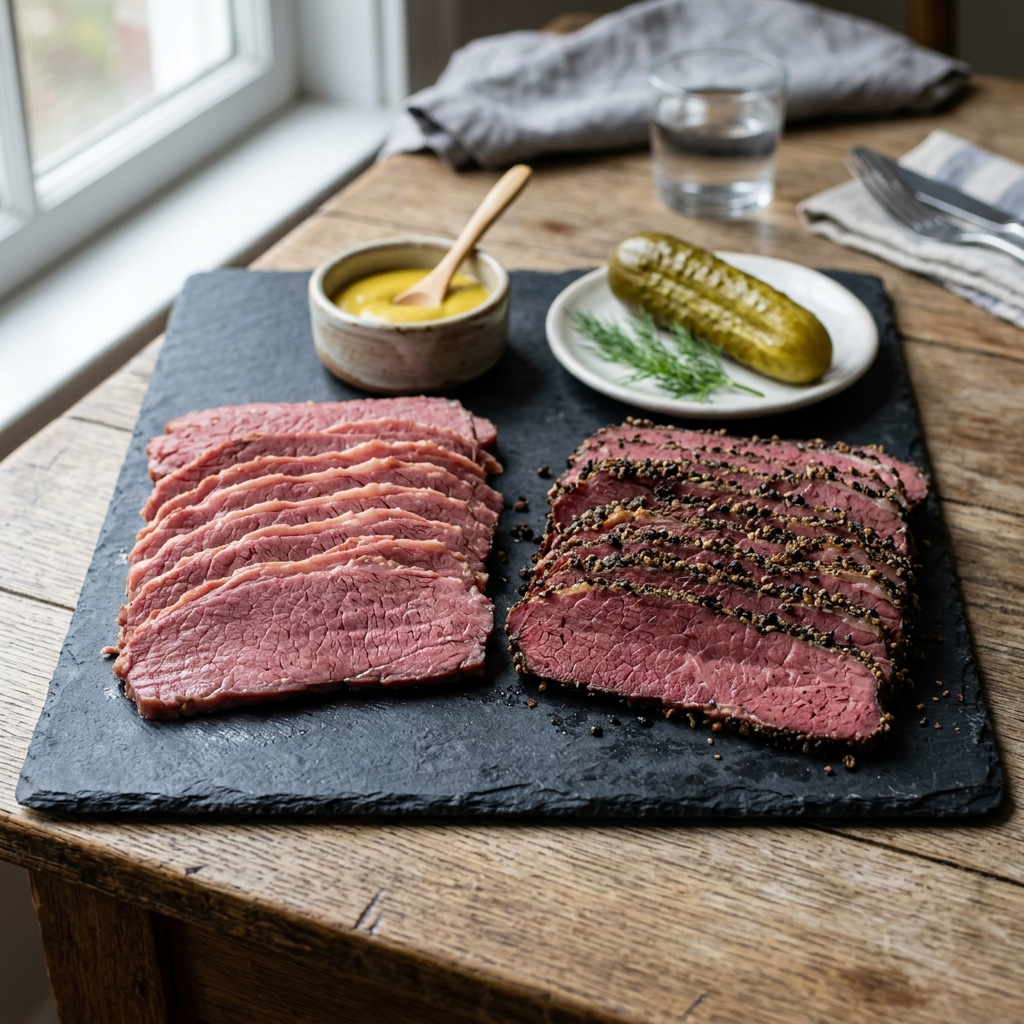
Now that you know what each one is, let’s put them side by side. The difference between corned beef and pastrami really comes down to four things: the cut, the cure, the cook, and the flavor.
| Corned Beef | Pastrami | |
|---|---|---|
| Cut of meat | Brisket flat (lean) | Beef navel or brisket point (fattier) |
| Curing method | Wet brine with pickling spices | Wet or dry cure, then spice rub |
| Cooking method | Boiled or simmered | Smoked, then steamed |
| Exterior | Pinkish-grey, no crust | Dark, peppery crust |
| Flavor profile | Salty, mild, tangy | Smoky, peppery, bold |
| Texture | Soft, tender, uniform | Juicy, slightly firmer, marbled |
| Price | Generally cheaper | More expensive (extra steps) |
The Cut of Meat
This is where a lot of the confusion starts. People assume both meats come from the exact same piece of the cow, and that’s not quite right.
Corned beef almost always uses the brisket flat. It’s lean, it slices neatly, and it holds up well to long simmering. Pastrami, on the other hand, benefits from a fattier cut. The beef navel has more intramuscular fat, which stays juicy through the smoking and steaming process. If you used a lean brisket flat for pastrami, the smoking would dry it out fast.
That said, some modern delis and home cooks do make pastrami from brisket. The point cut works well because it has enough fat to survive the smoke. But if you’re buying from a traditional Jewish deli, the navel is the classic choice.
The Curing Process
Both meats start with a cure, and this is the step that makes them cousins. The cure preserves the meat, adds salt, and gives both corned beef and pastrami that distinctive pink color (thanks to the sodium nitrite in the curing salt). According to the USDA Food Safety and Inspection Service, curing is one of the oldest methods of meat preservation, and the nitrites used in modern curing also help prevent bacterial growth.
The difference is what happens after the cure. Corned beef goes straight from brine to pot. Pastrami gets an extra step: the spice rub. That thick coating of cracked peppercorns and coriander is non-negotiable for real pastrami. It’s what creates the dark, crunchy bark on the outside of the meat.
The Cooking Method
This is the biggest practical difference, and it’s the main reason pastrami costs more.
Corned beef is a one-step cook. You simmer it until tender, and you’re done. It’s simple and forgiving. Pastrami is a multi-step process: cure, rub, smoke, steam. Each step adds time, equipment, and skill. Smoking alone can take 6 to 12 hours depending on the size of the meat and the smoker temperature.
That extra labor is why a good pastrami sandwich often costs a few dollars more than a corned beef one at the deli counter. You’re paying for the time and the technique, not just the meat.
Flavor and Texture
Here’s the part that actually matters when you’re deciding what to order.
Corned beef tastes clean and salty. The pickling spices give it a gentle warmth, but nothing overpowering. The texture is soft and consistent — every bite is pretty much the same. It’s comforting and familiar, like a good bowl of soup on a cold day.
Pastrami is a bigger experience. The pepper crust gives you heat. The smoke gives you depth. The coriander adds a citrusy, almost floral note. And because the cut is fattier, the texture is richer and more marbled. You get tender meat with little pockets of rendered fat and that crunchy spice bark on the edges.
If corned beef is a quiet acoustic song, pastrami is the full band.
Which One Should You Pick for Your Sandwich?
This depends entirely on what you’re craving, and there’s no wrong answer.
Go with corned beef if you want something mild, classic, and comforting. It’s the star of a traditional Reuben — piled on rye with Swiss cheese, sauerkraut, and Russian dressing. The mildness of the corned beef lets the tangy sauerkraut and creamy dressing do a lot of the talking. Corned beef also works great in a simple sandwich with mustard and pickles, or even chopped up in a hash with potatoes and eggs for breakfast.
Go with pastrami if you want bold, smoky flavor that stands on its own. A classic pastrami sandwich is almost absurdly simple: hot pastrami piled high on seeded rye with spicy brown mustard. That’s it. You don’t need cheese or sauerkraut because the meat already has so much going on. Pastrami also shines in a well-built deli sandwich where you want the meat to be the main event without a lot of competing toppings.
Here’s a practical tip from someone who’s ordered both more times than I can count: if you’re at a deli and you can’t decide, ask for a “combo” or “half-and-half.” Many delis will stack both meats on one sandwich. It’s the best of both worlds, and it’s a great way to taste the difference side by side in a single bite.
Can You Swap Corned Beef for Pastrami (or Vice Versa)?
Technically, yes. Practically, it depends on the recipe.
If you’re making a Reuben and you only have pastrami on hand, go ahead and use it. The sandwich will be smokier and spicier than a traditional Reuben, but it’ll still be delicious. Some people actually prefer it that way. The bold pastrami stands up well to the sauerkraut and dressing without getting lost.
The reverse swap — using corned beef in place of pastrami — works too, but the result will be milder. If a recipe calls for pastrami and you use corned beef, you might want to add a little extra cracked black pepper or a dash of smoked paprika to make up for the missing smoke and spice.
One thing to keep in mind: because pastrami has a thicker spice crust and a firmer texture, it doesn’t break down the same way corned beef does in cooked dishes. Corned beef is better for things like hash, stews, or casseroles where you want the meat to soften and blend in. Pastrami is better when you want the meat to stay distinct and flavorful, like in a hot sandwich or a chopped salad.
Nutrition and Price: A Quick Reality Check
Let’s talk numbers for a second, because this is a deli meat comparison that matters if you’re watching your diet or your budget.
Nutritionally, corned beef and pastrami are pretty close. Both are high in protein and high in sodium — that’s just the nature of cured meats. A typical 3-ounce serving of either one will give you around 200 to 250 calories, 15 to 20 grams of protein, and roughly 800 to 1,000 milligrams of sodium. Pastrami tends to be slightly higher in fat because of the cut, but the difference isn’t dramatic.
If sodium is a concern for you, neither option is ideal in large quantities. The curing process loads both meats with salt, and there’s no getting around that. The USDA Dietary Guidelines recommend keeping sodium intake under 2,300 milligrams per day, which means a single deli sandwich can put you close to half your daily limit. Enjoy these meats as an occasional treat rather than an everyday lunch, and you’ll be fine.
Note: Nutrition facts vary significantly by brand and preparation method. If you have specific dietary concerns or health conditions related to sodium intake, check the label on the product you’re buying or consult a registered dietitian for personalized guidance.
As for price, pastrami almost always costs more. The extra steps — the spice rub, the smoking, the steaming — add time and labor. At a good deli, expect to pay anywhere from $2 to $5 more per pound for pastrami compared to corned beef. At the grocery store, pre-sliced pastrami is usually a dollar or two more per package. You’re paying for the craft, and once you taste the difference, most people agree it’s worth it.
Storing and Handling Both Meats
Whether you bring home corned beef or pastrami from the deli, proper storage matters. Both are cured meats, which means they last a bit longer than fresh meat, but they’re not invincible.
Keep sliced deli meat in an airtight container or tightly wrapped in the fridge, and try to eat it within 3 to 5 days. If you bought more than you can use, freezing deli meat is a solid option — wrap it tightly in plastic wrap and then foil, and it’ll hold up for about 1 to 2 months. The texture might change slightly after thawing, but it’s perfectly fine for sandwiches.
One thing I’ve learned the hard way: don’t leave either meat sitting out at room temperature for more than two hours. Cured or not, bacteria doesn’t care about your spice rub. If you’re packing a sandwich for lunch, toss an ice pack in the bag. It’s a small step that keeps your food safe.
Frequently Asked Questions
Is pastrami just smoked corned beef?
Not exactly, though it’s a reasonable shorthand. Both start as cured beef, but pastrami uses a different cut (navel or brisket point instead of brisket flat), gets coated in a peppercorn-coriander rub, and is smoked and steamed rather than boiled. The extra steps create a very different flavor and texture. Calling pastrami “smoked corned beef” oversimplifies the process and misses the spice rub, which is a huge part of what makes pastrami taste like pastrami.
Which is healthier, corned beef or pastrami?
They’re very similar nutritionally. Both are high in protein and high in sodium because of the curing process. Pastrami may have slightly more fat due to the cut of meat used, but the difference is small. Neither is a “health food” — they’re cured, processed meats best enjoyed in moderation. If you’re watching sodium intake, check the specific product label, as amounts vary by brand and preparation.
Can I make pastrami at home from corned beef?
Yes, and it’s actually a popular project among home cooks. You can buy a pre-corned brisket, rinse off the brine, coat it heavily in cracked black pepper and coriander, and smoke it low and slow until it hits an internal temperature of about 165°F. Then steam it until tender. It won’t be identical to deli pastrami (the navel cut is hard to find at most grocery stores), but it’s a fun and delicious experiment. Just plan ahead — the whole process takes most of a day.
So the next time you’re at the deli counter, you’ll know exactly what you’re looking at. Corned beef is the mild, tender, brine-cured classic. Pastrami is its smokier, spicier, more complex cousin. Both are fantastic, and both deserve a spot in your sandwich rotation.
Your move: try them side by side. Order one of each, or grab a combo sandwich, and pay attention to the pepper crust, the smoke, and the fat. Once you taste the difference, you’ll never mix them up again. And if you’re feeling ambitious, pick up a corned brisket at the store and try turning it into homemade pastrami this weekend. Your kitchen will smell incredible, and your sandwiches will never be the same.