
You saved half a cheesesteak from last night, and now it’s sitting in the fridge looking cold and a little sad. The meat seems stiff. The roll feels hard. You know that one wrong move with heat will turn the whole thing into leather wrapped in cardboard.
The good news? Reheating cheesesteak without drying out the meat is totally doable. You just need to match the right method to your situation. Here’s exactly how to bring that leftover cheesesteak back to life.
Why Cheesesteaks Dry Out So Fast When Reheated
Before we get into the how, it helps to understand the why. A classic Philly cheesesteak is built on shaved ribeye — beef sliced so thin you can almost see through it. That thinness is what makes a fresh cheesesteak so tender and quick-cooking on the griddle.
But it’s also what makes leftovers tricky.
The Thin-Slice Problem
Thin slices of meat have a huge surface area compared to their volume. Think of it like this: a thick steak holds moisture in its center like a water balloon. A paper-thin slice of ribeye has almost no center to speak of. When heat hits it, the moisture evaporates almost instantly. That’s why a cheesesteak goes from juicy to chewy in about 90 seconds under the wrong kind of heat.
The cut of meat matters here too. Ribeye has good fat marbling, which gives you a little buffer. But even well-marbled beef can’t hold up to aggressive, dry heat when it’s sliced that thin.
The Roll and Cheese Factor
You’re not just reheating meat. You’re also dealing with a hoagie roll and melted cheese — two things that react to heat very differently than beef.
The roll wants to either get rock-hard (dry heat) or turn to mush (steam). The cheese wants to separate into a greasy puddle if it gets too hot too fast. The best cheesesteak cheese — whether that’s provolone, American, or Cheez Whiz — melts beautifully when fresh but can break down and get oily on a second round of heating.
So the real challenge of reheating a cheesesteak is managing three components that all need slightly different treatment. That’s why the “just throw it in the microwave” approach usually disappoints.
Best Way to Reheat Cheesesteak in the Oven
If you have about 20 minutes and want the most reliable results without taking the sandwich apart, the oven is your best bet. It heats gently and evenly, which is exactly what thin-sliced beef needs.
Step-by-Step Oven Method
Preheat your oven to 350°F. Don’t go higher. A hotter oven will dry out the meat before the center of the sandwich warms through.
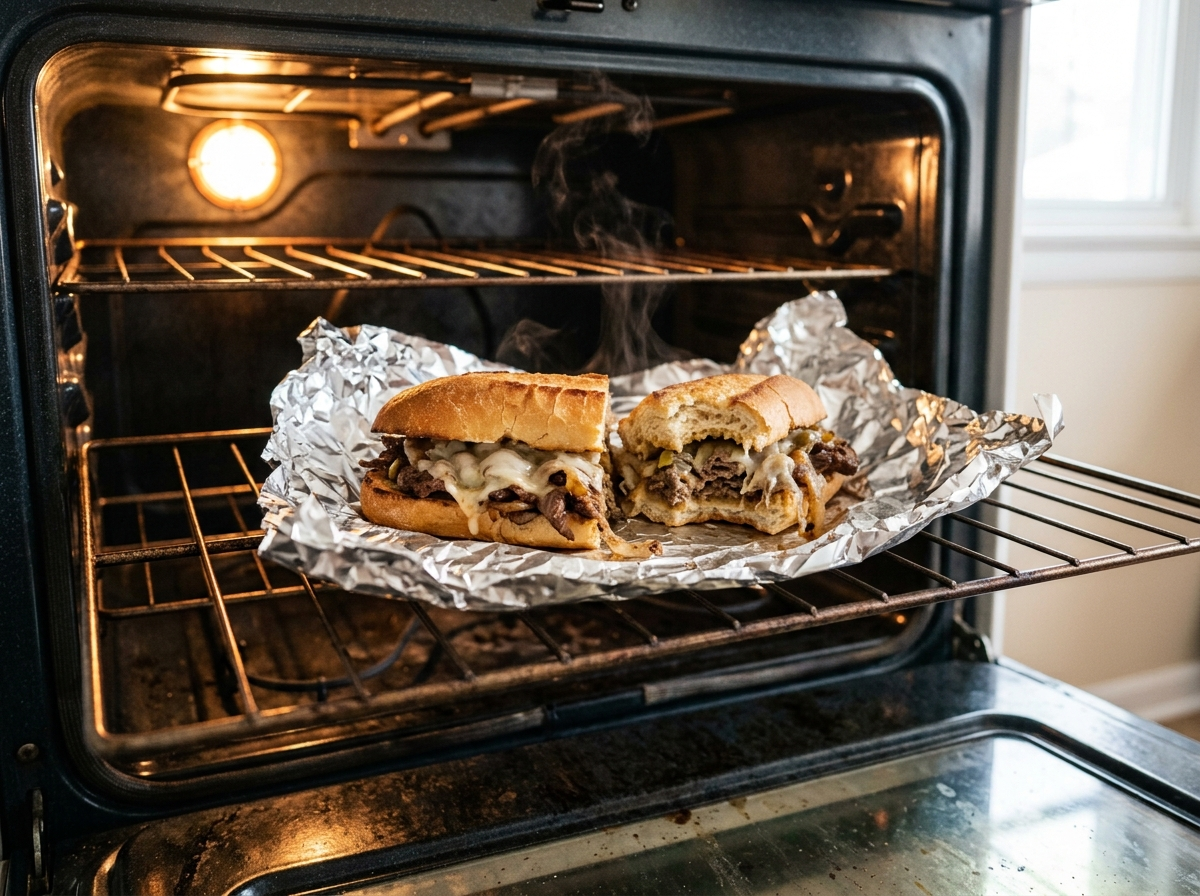
Wrap the cheesesteak tightly in aluminum foil. This is the most important step. The foil creates a sealed pocket that traps steam from the meat and cheese, keeping everything moist. Before you seal the foil, add a small splash of beef broth or even plain water — about one tablespoon — directly onto the meat. That little bit of liquid turns into steam inside the foil packet and makes a real difference.
Place the wrapped cheesesteak on a baking sheet and heat for 15 to 20 minutes. The exact time depends on the size of the sandwich and how cold it is from the fridge. A half sandwich will be ready closer to 15 minutes. A full, thick cheesesteak might need the full 20.
Check the internal temperature. You want the center of the meat to reach at least 165°F for food safety. If you don’t have a thermometer, carefully open the foil and check that the cheese is melted and the meat is steaming hot all the way through.
The Foil Trick That Saves Moisture
Here’s a detail most people miss: let the cheesesteak sit in the foil for about two minutes after you pull it from the oven. This resting period lets the steam redistribute through the meat and the roll, so you don’t lose all that moisture the second you unwrap it. It’s the same principle as letting a steak rest after grilling.
The oven method won’t give you a crispy roll. The foil keeps everything soft. If you want a little crunch on the cheesesteak bread, unwrap the sandwich for the last two to three minutes of heating and let the roll toast under the dry oven air. Just watch it closely — the line between “nicely toasted” and “dried out” is thin.
How to Reheat a Cheesesteak on the Stovetop
The stovetop method gives you more control than the oven, and it’s the approach I’d recommend if you want the filling to taste close to fresh-off-the-griddle. It does require a little more hands-on attention, though.
Skillet Method for the Filling
The key here is to reheat the meat and vegetables separately from the roll. I know that sounds like extra work, but it takes about five minutes and the payoff is huge.
Grab a skillet or frying pan and set it over medium heat. Add a small splash of beef broth — two tablespoons is plenty. When the broth starts to simmer, add the cheesesteak filling (meat, peppers, onions, whatever you’ve got). Spread it out in an even layer and let it heat for two to three minutes, stirring gently once or twice.
The broth does two things. It creates a gentle steam that warms the meat without scorching it, and it replaces some of the moisture the beef lost in the fridge. You’ll notice the meat loosens up and starts to look glossy again instead of dry and clumped together.
If your cheesesteak has cheese mixed into the filling, it will re-melt naturally as the meat heats up. If the cheese is mostly on top or has congealed into a solid layer, you can add a fresh slice of provolone or a spoonful of Cheez Whiz right at the end and let it melt into the hot filling.
Toasting the Roll Separately
While the filling heats, split your hoagie roll open and lay it cut-side down in a dry pan over medium heat. Give it about 60 to 90 seconds until the inside gets lightly golden and crisp. This step revives the texture of the hoagie roll and prevents the soggy-bottom problem you get when you reheat the whole sandwich at once.
Scoop the hot filling back into the toasted roll, and you’ve got a cheesesteak that honestly tastes about 90% as good as the original.
Reheating Cheesesteak in the Air Fryer
The air fryer is fast, which is both its strength and its weakness for this job. It circulates hot air aggressively, and that can dry out thin-sliced beef in a hurry if you’re not careful.
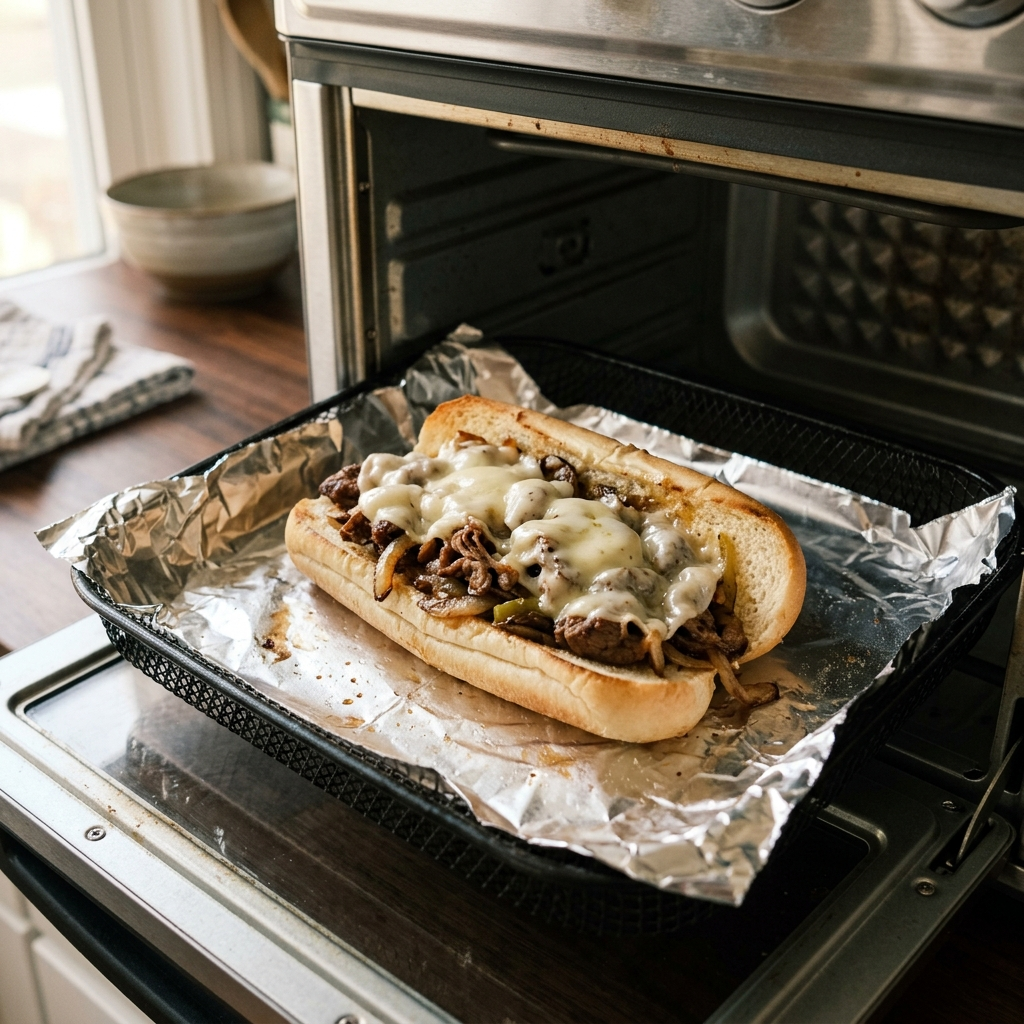
Set your air fryer to 350°F — not higher. Wrap the cheesesteak loosely in foil, leaving a small opening at the top so some air can circulate. This gives you a middle ground between the steaming effect of the oven and the crisping power of the air fryer.
Heat for 3 to 5 minutes, checking at the three-minute mark. The thin meat heats faster in an air fryer than you’d expect. I’ve seen a cheesesteak go from cold to overdone in about 90 seconds in an air fryer set to 400°F, so err on the side of lower heat and shorter time.
If you want a crispier roll, remove the foil for the last 60 seconds of cooking. The circulating air will toast the outside of the bread quickly.
The air fryer works best for smaller cheesesteaks or half-sandwiches. A big, overstuffed cheesesteak won’t heat evenly because the air can’t reach the center of the filling.
Can You Reheat a Cheesesteak in the Microwave?
Yes, but you need to manage your expectations. The microwave is the fastest method and the most likely to dry out your meat. That said, if you’re at work with a cold cheesesteak and a break room microwave, you don’t have a lot of options. Here’s how to make the best of it.
The Damp Paper Towel Method
Wrap the cheesesteak in a damp (not soaking wet) paper towel. The moisture in the towel creates a small steam environment around the sandwich, which slows down the drying process.
Set your microwave to 50% power. This is critical. Full power blasts the thin beef with intense energy and squeezes the moisture right out of it. Half power heats more gently and evenly.
Heat in 30-second bursts, checking the sandwich between each one. Most cheesesteaks will be warm enough after 60 to 90 seconds total. Stop as soon as the cheese starts to melt and the meat feels hot to the touch. Going even 15 seconds too long can make the beef rubbery.
The microwave method won’t give you a crispy roll or perfectly textured meat. But it will give you a warm, melty cheesesteak that’s a lot better than eating it cold. And honestly, a warm cheesesteak at 70% quality still beats most sandwiches at 100%.
The Deconstructed Method (Best Results for Reheating Cheesesteak Without Drying Out)
If you want the absolute best reheating cheesesteak experience and don’t mind spending an extra few minutes, take the sandwich apart before you reheat anything.
This sounds fussy, but here’s what actually happens when you do it: each component gets heated in the way that suits it best. The meat gets gentle, moist heat. The roll gets dry, toasty heat. The cheese gets just enough warmth to melt without breaking.
Step 1: Pull the meat, peppers, and onions out of the roll and set them aside. Scrape off as much cheese as you can and add it to the filling pile.
Step 2: Heat the filling in a skillet over medium heat with a splash of beef broth, just like the stovetop method above. Two to three minutes, stirring gently.
Step 3: Toast the empty roll cut-side down in a dry pan or under the broiler for about a minute.
Step 4: Pile the hot filling back into the roll. If the original cheese didn’t fully re-melt or you want extra gooeyness, add a fresh slice of cheese on top of the hot filling and let it sit for 30 seconds.
This method takes about seven minutes total and produces a reheated cheesesteak that’s shockingly close to the original. The meat stays tender, the roll has actual texture, and the cheese is creamy instead of greasy.
Food Safety Tips for Leftover Cheesesteaks
Reheating is only half the equation. How you store the cheesesteak in the first place determines whether it’s even safe to eat the next day.
Refrigerate within two hours. The USDA recommends that cooked food should not sit at room temperature for more than two hours (or one hour if the temperature is above 90°F). After that window, bacteria can multiply to unsafe levels. This is especially true for sandwiches with cooked meat and dairy, which are ideal breeding grounds for foodborne pathogens.
Store it properly. Wrap the cheesesteak tightly in plastic wrap or aluminum foil, or put it in an airtight container. This prevents the meat from drying out in the fridge and keeps the roll from absorbing fridge odors. According to USDA leftover guidelines, cooked meat leftovers are safe in the refrigerator for 3 to 4 days. If you’re keeping track of how long deli-style meats last in the fridge, the same general timeline applies to cooked steak in a cheesesteak.
Reheat to 165°F. The USDA safe temperature chart specifies that all reheated leftovers should reach an internal temperature of 165°F. Use a food thermometer to check the center of the filling, especially if you’re reheating a thick, fully assembled sandwich where the middle might still be cold even when the outside feels hot.
Food Safety Note: This article provides general food safety information based on USDA guidelines. It is not a substitute for professional food safety advice. When in doubt about whether a leftover is safe to eat, throw it out.
Quick Comparison of Reheating Methods
| Method | Time | Best For | Moisture Level | Roll Texture |
|---|---|---|---|---|
| Oven (foil-wrapped) | 15–20 min | Full sandwiches, hands-off | High | Soft |
| Stovetop (deconstructed) | 5–7 min | Best overall quality | High | Crispy |
| Air fryer | 3–5 min | Small portions, speed | Medium | Crispy |
| Microwave | 1–2 min | Convenience, office | Low–Medium | Soft/chewy |
Frequently Asked Questions
How long does a cheesesteak last in the fridge?
A properly stored cheesesteak will last 3 to 4 days in the refrigerator. Wrap it tightly in foil or plastic wrap, or store it in an airtight container. After day four, the quality drops noticeably and the food safety risk increases. If you know you won’t eat it within that window, freeze it instead.
Can you freeze a cheesesteak and reheat it later?
Yes. Wrap the cheesesteak tightly in plastic wrap, then in a layer of aluminum foil, and freeze it for up to 2 to 3 months for best quality. When you’re ready to eat it, thaw it overnight in the refrigerator and then reheat using any of the methods above. The oven method works particularly well for previously frozen cheesesteaks because the gentle, even heat thaws and warms the filling at the same time.
What is the best way to reheat a cheesesteak from frozen?
If you’re reheating directly from frozen (without thawing first), the oven is your only real option. Wrap the frozen cheesesteak in foil with a tablespoon of beef broth and bake at 350°F for 30 to 40 minutes. Check the internal temperature to make sure the center reaches 165°F. The stovetop and air fryer methods don’t work well from frozen because the outside will overcook long before the center thaws.
Why does my reheated cheesesteak taste rubbery?
Rubbery meat almost always means the heat was too high or too aggressive. Thin-sliced ribeye cooks (and overcooks) extremely fast. If you used a microwave on full power or an oven above 375°F, the proteins in the beef tightened up and squeezed out their moisture. Next time, use lower heat and add a splash of liquid to create steam.
Your Leftover Cheesesteak Deserves Better Than the Microwave
The biggest mistake people make with leftover cheesesteaks is treating them like any other sandwich. A cheesesteak isn’t a deli sub or a burger — it’s a delicate combination of paper-thin beef, melted cheese, and a crusty roll, and each of those components reacts to heat differently.
If you’ve got the time, go with the deconstructed stovetop method. It takes seven minutes and gives you results that’ll make you genuinely happy you saved that leftover half. If you’re in a rush, the oven with foil and a splash of broth is your most reliable shortcut.
And if the microwave is your only option? Use half power, a damp paper towel, and short bursts. It won’t be perfect, but it’ll be warm and melty and a whole lot better than cold.
For more tips on handling and reheating your favorite sandwiches, check out our guide on how to reheat a sub sandwich without turning it into a soggy mess. Now go enjoy that cheesesteak — you earned it.