
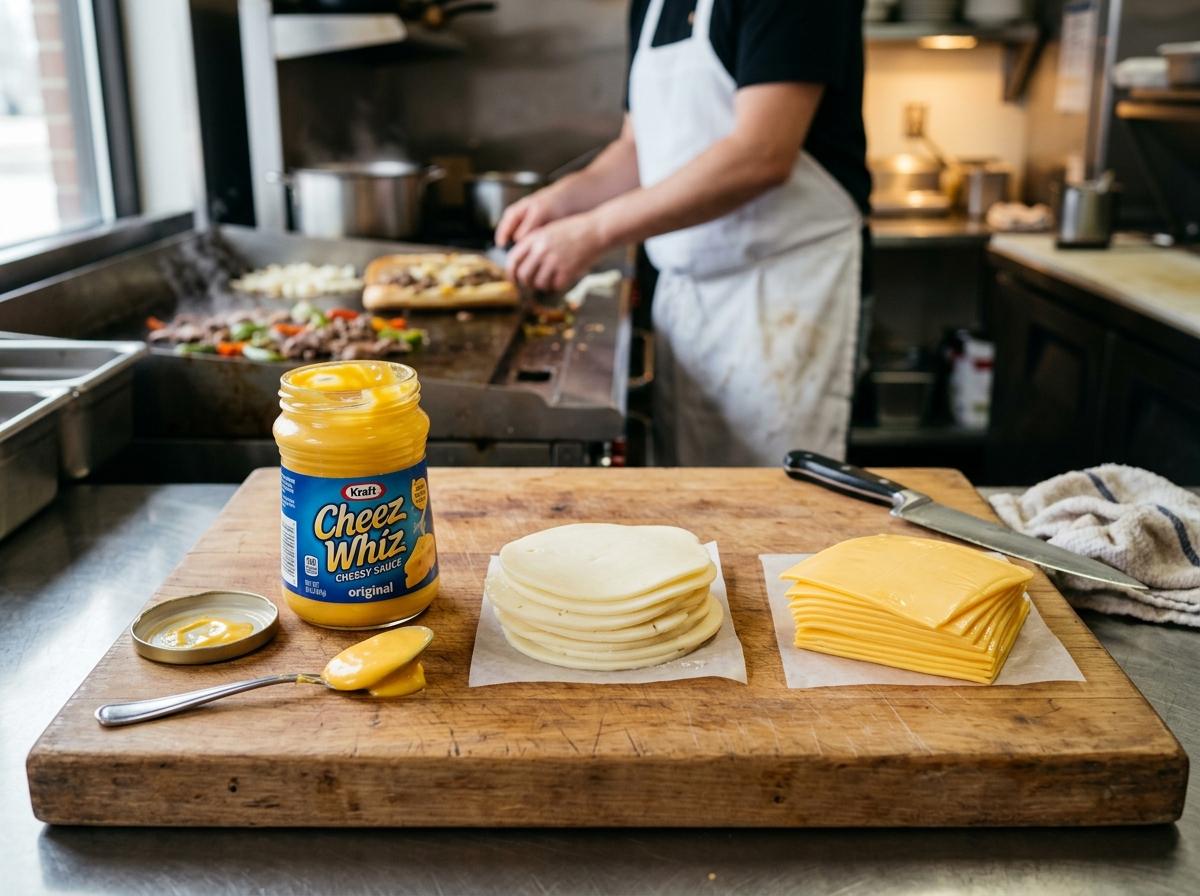
You’re standing at the stove with a pile of sizzling ribeye on the griddle, and you reach for the cheese. Then you pause. Cheez Whiz? Provolone? American? Pick the wrong one and someone in your kitchen will have an opinion about it.
The best cheese for cheesesteak depends on what you value most — gooey drip, sharp bite, or creamy melt. Each of the big three brings something different to the sandwich, and the “right” answer is a lot less settled than the internet wants you to believe.
Here’s a straightforward breakdown of Cheez Whiz vs provolone vs American so you can stop debating and start eating.
The Big Three Cheesesteak Cheese Options
Walk up to the window at Pat’s King of Steaks or Geno’s in South Philly and the person behind the counter will ask you two questions: what kind of meat, and what kind of cheese. Your cheese choices are almost always the same three — Cheez Whiz, provolone, or American.
These aren’t random picks. Each one became a cheesesteak staple for a specific reason, and each one behaves completely differently when it hits hot meat. Understanding those differences is the key to building a sandwich you’ll actually love.
If you want a deeper look at how all the pieces fit together, our full guide to the best cheesesteak cheese covers even more ground. For now, let’s focus on the headliners.
Cheez Whiz — The Controversial Classic
Let’s get the awkward part out of the way first. Cheez Whiz is a processed cheese product made by Kraft. It’s not aged in a cave. It doesn’t come in a wheel. It comes in a glass jar, and it pours out like thick, warm gravy.
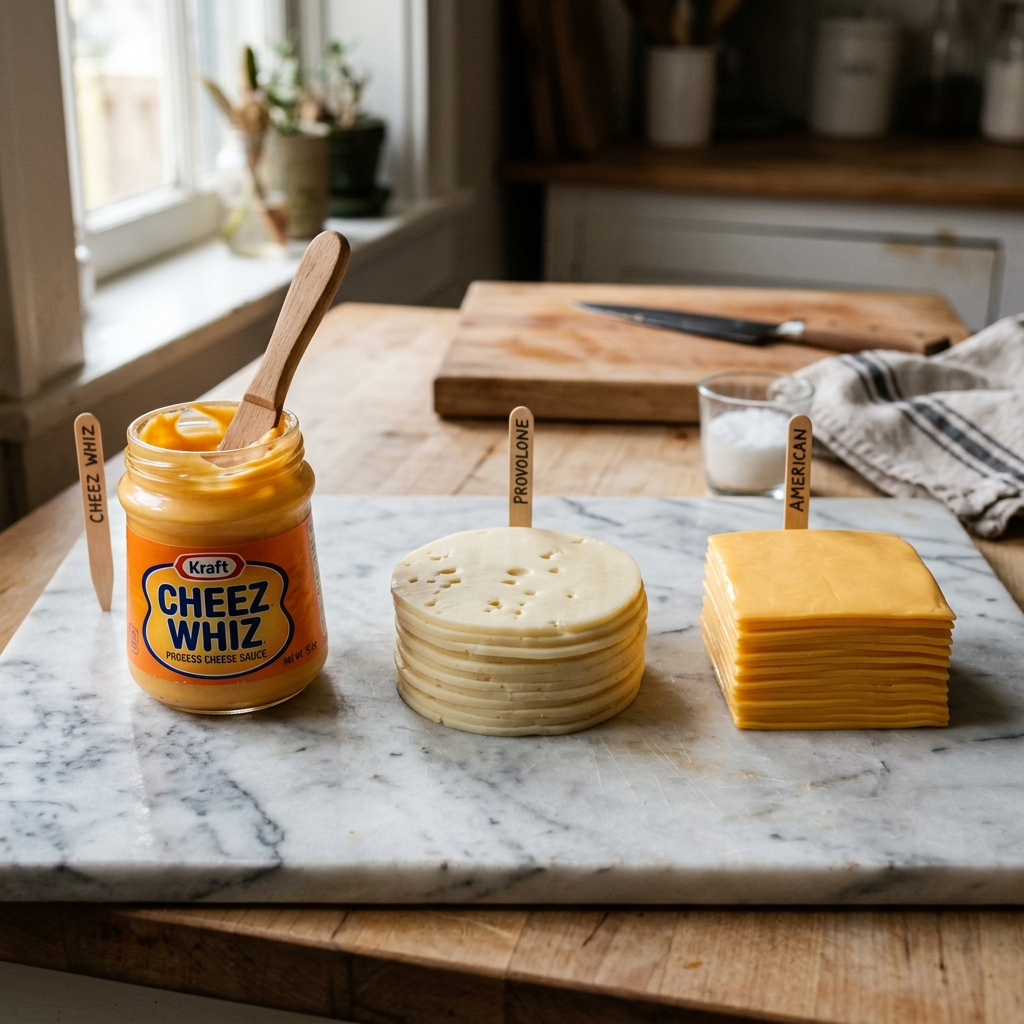
And yet, it’s the cheese most people picture when they think of a Philly cheesesteak.
How Cheez Whiz Became a Cheesesteak Staple
Here’s a fact that surprises a lot of people: the original cheesesteak didn’t have any cheese on it at all. Pat and Harry Olivieri started selling chopped steak sandwiches from a hot dog stand in South Philly in the early 1930s. Cheese came later, and the history of the Philly cheesesteak is a fascinating rabbit hole if you want the full story.
Cheez Whiz hit grocery shelves in 1953. By the late 1950s and early 1960s, it started showing up on cheesesteaks at the big South Philly shops. Why? Because it was fast. A ladle of warm Whiz over chopped ribeye coated every single piece of meat instantly. No waiting for slices to melt. No cold pockets of unmelted cheese. Just instant, uniform coverage.
That speed mattered in shops cranking out hundreds of sandwiches during the lunch rush.
What Cheez Whiz Actually Tastes Like on a Cheesesteak
The flavor is salty, tangy, and unmistakably “processed.” It doesn’t taste like cheddar or provolone — it tastes like Cheez Whiz. The texture is liquid and creamy, and it soaks into the bread in a way that sliced cheeses simply can’t.
Here’s what actually happens when you ladle it on: the Whiz seeps down between the folds of meat and into the crevices of the roll. Every bite gets some cheese. You don’t get those stretches of plain meat that you sometimes get with provolone. The trade-off is that the bread can get soggy faster, especially if you don’t eat the sandwich right away.
The Case For Whiz
- Coats the meat more evenly than any sliced cheese
- Delivers the iconic “Philly tourist” experience
- Extremely easy to apply at home — just warm it up and pour
- Stays liquid longer, so the sandwich stays gooey
The Case Against Whiz
- The flavor is one-note and very salty
- It can overwhelm the taste of good ribeye
- Makes the roll soggy if the sandwich sits for more than a few minutes
- Purists argue it was never the “original” cheesesteak cheese, and they’re right
Provolone — The Purist’s Pick
If you ask a lifelong Philadelphian what cheese they order on their cheesesteak, a huge number of them will say provolone. Not Whiz. Provolone.
This makes sense historically. Provolone was almost certainly the first cheese added to the cheesesteak, back when the Olivieri brothers and early competitors started experimenting with cheese toppings in the 1940s. It was the cheese already sitting in Italian delis all over South Philly, so it was the natural choice.
What Provolone Brings to the Sandwich
Provolone is a semi-hard Italian cheese with a flavor that ranges from mild and buttery (young provolone, called dolce) to sharp and tangy (aged provolone, called piccante). Most cheesesteak shops use mild provolone, which melts well and doesn’t compete with the beef.
The texture is where provolone really separates itself. When you lay slices of provolone over hot ribeye and let them soften, you get a stretchy, slightly chewy layer of cheese that pulls apart in satisfying strings. It doesn’t pool or drip the way Whiz does. Instead, it clings to the meat in sheets.
The flavor is cleaner and more dairy-forward. You can actually taste the beef through the cheese, which matters a lot if you’re using a good cheesesteak meat cut like well-marbled ribeye.
The Melting Challenge
Here’s the practical issue that trips up home cooks. Provolone doesn’t melt as fast or as completely as processed cheeses. If you just throw cold slices on top of your meat and immediately stuff the sandwich into a roll, you’ll end up with half-melted slabs of cheese and cold spots.
The fix is simple but important. Lay the provolone slices on the meat while it’s still on the griddle, then cover the whole thing with a lid or a metal bowl for about 30 to 45 seconds. The trapped steam does the heavy lifting and melts the cheese evenly. Skip this step and you’ll wonder why your homemade cheesesteak doesn’t taste like the shop version.
The Case For Provolone
- Cleaner, more complex flavor that lets the beef shine
- Authentic to the earliest cheesesteak tradition
- Better texture — stretchy and satisfying without being soupy
- Doesn’t make the roll soggy
The Case Against Provolone
- Takes a little more effort to melt properly
- Can leave uneven coverage if you don’t use enough slices
- Mild provolone can taste bland to people who expect bold cheese flavor
- Aged provolone doesn’t melt as smoothly
American Cheese — The Underrated Melter
American cheese gets a bad rap, and most of it is unfair. Yes, it’s a processed cheese product. But it’s a different kind of processed cheese than Cheez Whiz, and it behaves differently on a cheesesteak in ways that actually matter.
Why American Cheese Works So Well
American cheese is made by blending real cheese (usually cheddar or Colby) with emulsifying salts like sodium citrate. Those salts are the secret weapon. They allow the cheese to melt into a perfectly smooth, creamy sheet without separating into a greasy puddle. You’ve seen what happens when you try to melt a slice of sharp cheddar — it breaks, oils out, and gets grainy. American cheese doesn’t do that.
On a cheesesteak, American cheese gives you the best of both worlds. It melts faster and more evenly than provolone, but it has a milder, less aggressive flavor than Cheez Whiz. It coats the meat in a creamy layer without drowning out the beef or turning the bread into mush.
A lot of home cooks who try all three cheeses end up quietly preferring American, even if they won’t admit it in front of their Philly friends.
The Flavor Profile
American cheese tastes like… cheese. Mild, creamy, slightly salty, slightly tangy. It’s not exciting on its own, but that’s exactly why it works on a cheesesteak. It acts as a supporting player. The ribeye stays the star, the onions and peppers do their thing, and the cheese just ties everything together with a smooth, melty blanket.
The Case For American
- Melts faster and more evenly than provolone
- Milder flavor than Whiz — won’t overpower the beef
- Doesn’t make the roll soggy as quickly as Whiz
- Cheap, easy to find, and consistent every time
The Case Against American
- Lacks the bold personality of Whiz or the sharpness of aged provolone
- Some people consider it “boring”
- Still a processed product, which bothers certain eaters
- Doesn’t have the cultural cachet of Whiz or provolone in Philly
Cheez Whiz vs Provolone vs American: Side-by-Side
Sometimes you just need to see the differences lined up clearly. Here’s how the three cheesesteak cheese options stack up across the categories that actually matter when you’re building a sandwich.
| Feature | Cheez Whiz | Provolone | American |
|---|---|---|---|
| Melt speed | Instant (liquid) | Slow to moderate | Fast |
| Texture on meat | Creamy, saucy coating | Stretchy, sheet-like | Smooth, creamy blanket |
| Flavor intensity | High — salty, tangy | Medium — clean, milky | Low — mild, subtle |
| Effect on bread | Makes it soggy quickly | Minimal sogginess | Low sogginess |
| Ease of use at home | Very easy | Requires steam/lid trick | Very easy |
| Beef flavor visibility | Low — cheese dominates | High — beef shines through | Medium — balanced |
| Philly tradition | Iconic at Pat’s & Geno’s | Original cheesesteak cheese | Common but less celebrated |
| Cost | Moderate | Moderate to high | Low |
How to Choose the Best Cheese for Your Cheesesteak
There’s no single right answer here, and anyone who tells you otherwise is just protecting their personal preference. The best cheese for cheesesteak depends on three things: what you value in a sandwich, who you’re feeding, and how much effort you want to put in.
Go with Cheez Whiz if you want the full, messy, dripping South Philly experience and you don’t mind a sandwich that needs to be eaten immediately. It’s the right pick for game day parties where people want something bold and nostalgic. It’s also the easiest option if you’re making cheesesteaks for a crowd and don’t want to fuss with melting individual slices.
Go with provolone if you care about the quality of your beef and want to taste it. If you’ve spent good money on well-marbled ribeye and you’ve sliced it paper-thin, provolone is the cheese that respects that effort. It’s also the best choice if you want a sandwich that holds up a little longer without turning the roll into a sponge.
Go with American if you want a creamy, evenly melted sandwich without the aggressive saltiness of Whiz or the extra melting step that provolone requires. It’s a great middle-ground pick and honestly the most forgiving option for beginners.
You can also combine cheeses. A lot of shops will let you order “Whiz and provolone,” and the combo gives you the creamy coating of Whiz with the stretchy texture of provolone. At home, try laying down a slice of American first for the melt, then adding a slice of sharp provolone on top for the flavor.
And if you’re building the full sandwich, don’t forget that the best cheesesteak bread matters just as much as the cheese. A soft, sturdy hoagie roll with a slightly crisp crust is what keeps everything together.
Pro Tips for Melting Cheese on a Cheesesteak
Getting the cheese right is about more than just picking the right type. How you apply it makes a huge difference in the final sandwich.
Warm your Cheez Whiz before you pour it. Cold Whiz straight from the jar will cool down your hot meat and create a temperature mismatch that makes the sandwich feel lukewarm. Heat the Whiz in a small saucepan or in the microwave until it’s pourable and warm, then ladle it over the meat right before you scoop everything into the roll.
Use the lid trick for provolone. I mentioned this earlier, but it bears repeating because it’s the single biggest mistake home cooks make. After you lay the provolone slices on the meat, trap the steam with a lid or an inverted metal bowl. Give it 30 to 45 seconds. The cheese will go from cold and stiff to perfectly melted and draping over the meat.
Layer American cheese directly on the griddle surface. Here’s a trick that works really well. Instead of putting American cheese on top of the meat, lay a slice flat on the hot griddle and then pile the meat on top of it. The cheese melts from the bottom up and creates a creamy base layer that coats the underside of the meat. You can add another slice on top if you want extra coverage.
Don’t over-cheese the sandwich. This is a common mistake. Too much cheese drowns the beef and makes the roll fall apart. A good rule of thumb is about two slices of provolone or American per sandwich, or roughly two to three tablespoons of Cheez Whiz. You want the cheese to complement the meat, not replace it.
Think about reheating. If you’re making cheesesteaks ahead of time or saving leftovers, the cheese choice matters even more. Provolone reheats the best because it doesn’t separate or get grainy. Whiz tends to soak into the bread and make it mushy after refrigeration. Check out our guide on how to reheat a cheesesteak without ruining the texture.
Frequently Asked Questions
What is the most popular cheese on a Philly cheesesteak?
At the big tourist-facing shops like Pat’s and Geno’s, Cheez Whiz is the most ordered cheese by a wide margin. Among local Philadelphians, provolone is the more common everyday choice. American cheese is popular but less frequently discussed. The “most popular” answer genuinely changes depending on whether you’re asking a tourist or a local.
Is Cheez Whiz real cheese?
Cheez Whiz is classified by the FDA as a “pasteurized process cheese sauce,” not a natural cheese. It’s made from a blend of cheese, whey, milkfat, and emulsifiers. It contains real dairy ingredients, but it’s heavily processed. If that matters to you, provolone is a natural, aged cheese with no added emulsifiers.
Can I use other cheeses on a cheesesteak?
Absolutely. While Whiz, provolone, and American are the traditional cheesesteak cheese options, plenty of people use mozzarella, pepper jack, or even a sharp white cheddar. The key is to pick a cheese that melts well and doesn’t overpower the beef. Mozzarella gives you a great stretch, and pepper jack adds a nice kick if you like heat. Just be aware that harder, aged cheeses like Parmesan or extra-sharp cheddar won’t melt smoothly and can make the sandwich feel dry. If you’re experimenting with a chicken cheesesteak, you have even more flexibility since chicken pairs well with a wider range of cheese flavors.
The Real Answer Is the One You Like
The Cheez Whiz vs provolone vs American debate will never be fully settled, and that’s actually a good thing. It means you get to try all three and figure out what works for your taste buds.
Start with provolone if you want to taste the beef. Switch to Whiz if you want the messy, saucy, classic experience. Try American if you want something easy and creamy that just works without drama.
Then make the sandwich your own. The best cheesesteak is the one you actually want to eat — not the one someone on the internet told you to make. Fire up the griddle, slice your ribeye thin, and grab whichever cheese makes you hungry just thinking about it.