
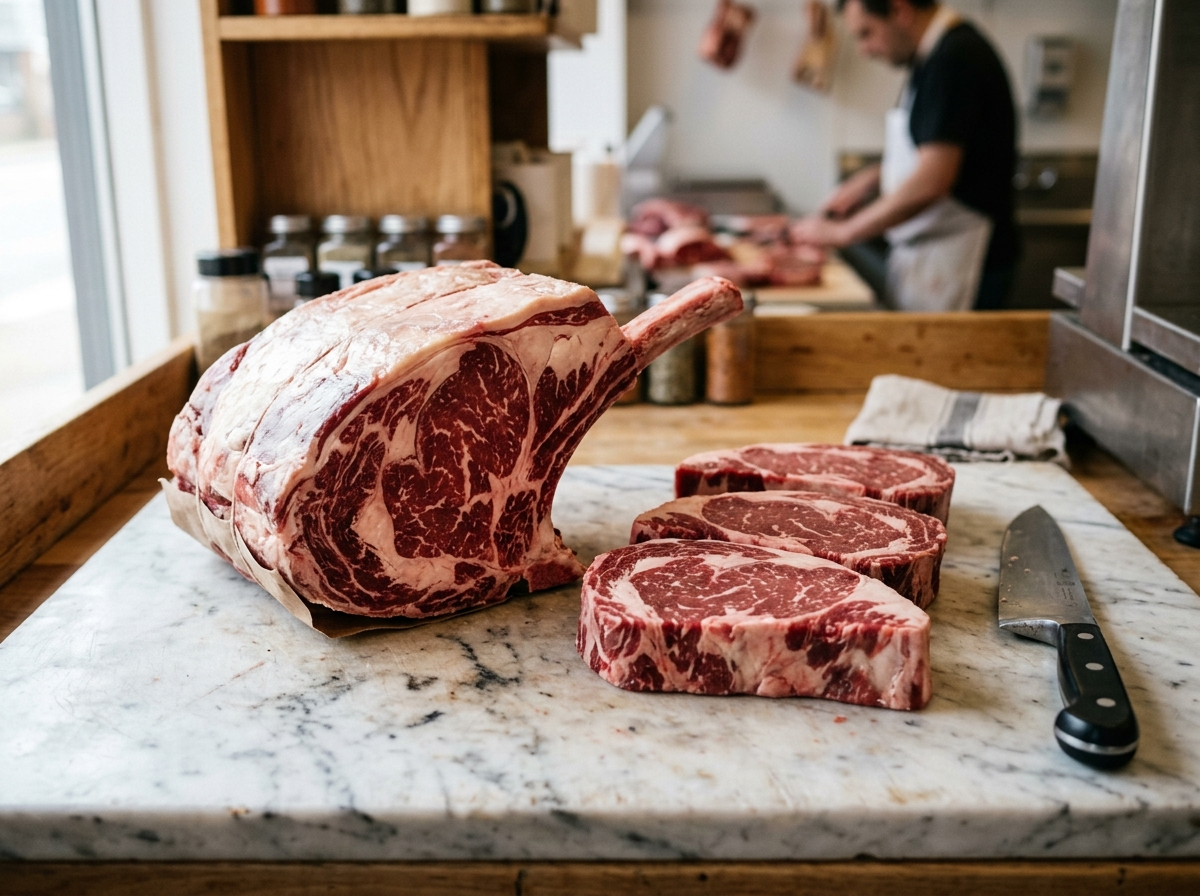
You’ve decided to make a Philly cheesesteak at home. You’re standing in the meat aisle, staring at a dozen different cuts, and you have no idea which one to grab. Most people will tell you ribeye is the only answer. That’s partly true — but it’s not the full story. The cut of meat you choose changes the flavor, the texture, and the price of your sandwich in a big way. Let’s break down what meat is used in cheesesteaks, what the actual shops in Philadelphia use, and what you should buy for your next cook.
The Short Answer: What Cut of Meat Is Used for a Philly Cheesesteak?
The most widely accepted answer is ribeye. If you walk into a well-known cheesesteak spot in South Philly and ask what they use, ribeye is the answer you’ll hear from the biggest names. It’s the gold standard, and for good reason.
But here’s where things get interesting. Ribeye isn’t the only cut that works, and it’s not even the cut that every shop in Philadelphia uses. A lot of neighborhood spots and smaller operations go with top round instead. It’s leaner, cheaper, and still makes a fantastic sandwich when you handle it right.
So the real answer to “what cut of meat is used for a Philly cheesesteak” depends on who you ask. The famous tourist spots? Ribeye. The corner shop that’s been feeding locals for 30 years? Often top round. Your home kitchen? Either one can work, as long as you understand what each cut brings to the table.
If you want the full backstory on how this sandwich came together in the first place, the history of the Philly cheesesteak is a fun read that explains why the meat choice became such a big deal.
Why Ribeye Is the Best Meat for Cheesesteak
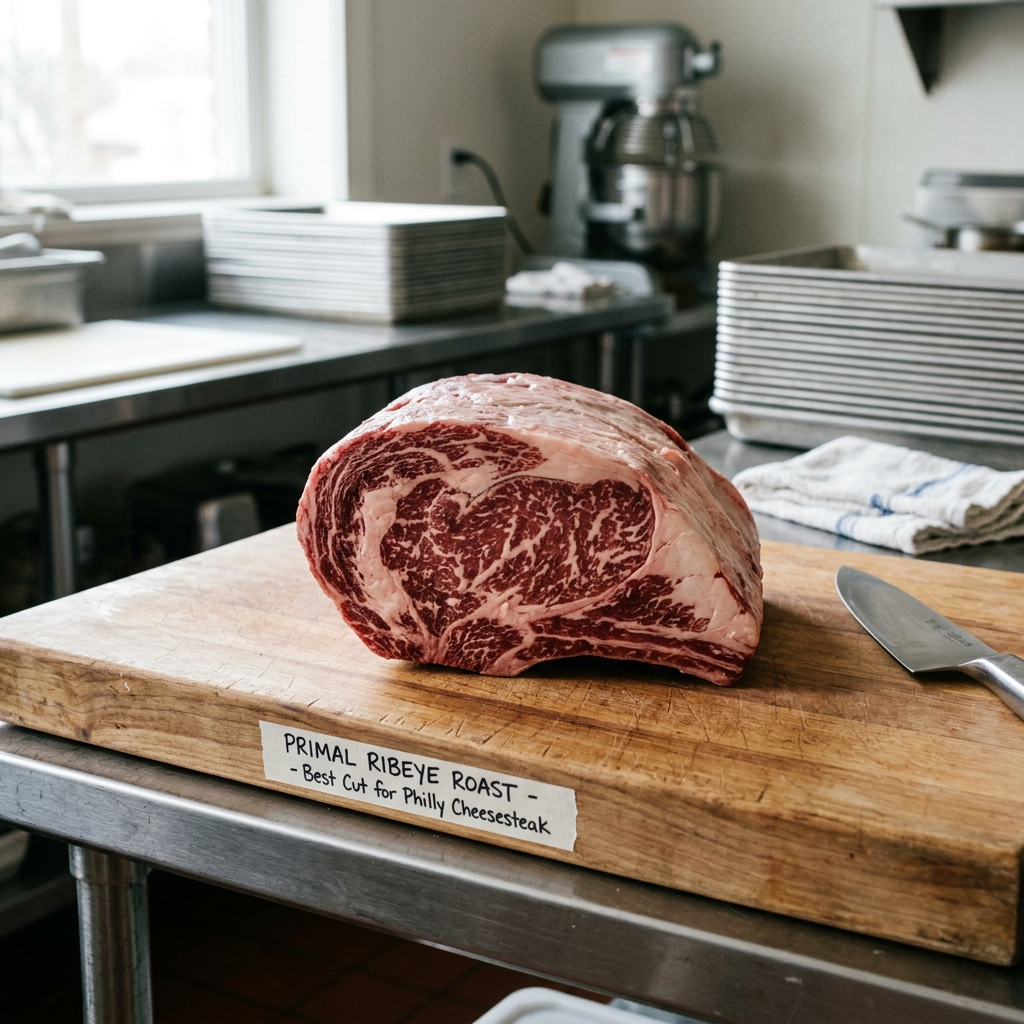
Marbling Makes the Difference
Ribeye comes from the rib section of the cow, right between the shoulder and the loin. This area doesn’t do a ton of heavy lifting, which means the muscle stays tender. More importantly, ribeye is loaded with marbling — those little white streaks of fat running through the red meat.
When you throw thinly sliced ribeye on a hot griddle, that marbling melts fast. The fat renders out and basically bastes the meat from the inside. You get a rich, beefy flavor and a juicy texture that leaner cuts just can’t match on their own.
The USDA grades beef partly on marbling, and ribeye consistently scores high on that scale. According to the USDA’s beef grading standards, higher marbling correlates directly with better flavor and tenderness — which is exactly what you want when the meat is the star of the sandwich.
How Ribeye Behaves on the Griddle
Here’s a practical detail most articles skip. When you cook ribeye for a cheesesteak, you’re not searing a thick steak. You’re working with paper-thin shavings on a screaming-hot flat top. At that thickness, the meat cooks in seconds.
Ribeye’s fat content gives you a small but real margin of error. If you accidentally leave the meat on the griddle a few seconds too long, the fat keeps it from drying out completely. Try that with a super-lean cut, and you’ll end up with something closer to beef jerky stuffed in a roll.
The fat also creates those crispy, caramelized edges that make a great cheesesteak so addictive. You get little pockets of crunch mixed in with the tender, melty interior. That contrast is a big part of what makes the sandwich work.
What Meat Do Actual Philly Shops Use?
Ribeye at the Big Names
Pat’s King of Steaks and Geno’s Steaks — the two most famous rivals sitting across the street from each other in South Philly — both use ribeye. That’s well-documented and part of their brand identity. When people argue that ribeye is the “authentic” choice, they’re usually pointing to these two spots.
And honestly, it makes sense for them. They charge premium prices, and ribeye delivers a premium flavor. Tourists line up for hours expecting a specific experience, and ribeye is a big part of that.
Top Round: The Quiet Workhorse
But step away from the tourist corridor and walk into a neighborhood cheesesteak joint, and the story changes. A lot of local shops use top round, which comes from the rear leg of the cow. It’s a lean, budget-friendly cut that costs significantly less per pound than ribeye.
Why would a shop choose a cheaper cut? Because when you’re slicing meat razor-thin and cooking it fast on a flat top with oil or butter, the difference between ribeye and top round shrinks. The cooking method does a lot of the heavy lifting. A skilled cook can make top round taste incredible by adding a little extra fat to the griddle and seasoning aggressively.
Top round also has a firmer texture that some people actually prefer. It holds its shape better in the sandwich and doesn’t get quite as mushy as heavily marbled ribeye can when it’s chopped up fine.
The takeaway? Both cuts are “authentic.” The cheesesteak meat cut debate doesn’t have a single right answer, even in Philadelphia itself.
Other Cuts That Work (and a Few That Don’t)
Sirloin
Sirloin sits right behind the short loin and offers a solid middle ground between ribeye and top round. It’s more flavorful than top round but leaner and cheaper than ribeye. If you want a good beefy taste without paying ribeye prices, sirloin is a smart pick.
The trade-off is that sirloin has less fat, so you need to be more careful not to overcook it. Keep your griddle hot, keep your cook time short, and consider adding a small pat of butter to the surface before you throw the meat on.
Chuck
Chuck comes from the shoulder and is one of the most flavorful cuts on the entire cow. It’s got great beefy depth and plenty of connective tissue that breaks down into richness when cooked. The problem? Chuck is tough when sliced thin and cooked fast, which is exactly what a cheesesteak demands.
If you want to use chuck, it works better for a chopped or ground-style cheesesteak rather than the traditional shaved preparation. Some home cooks swear by it, but it takes more effort to get the texture right.
Skirt Steak
Skirt steak is a long, flat cut from the plate section of the cow. It’s intensely beefy and has a loose grain that makes it easy to chew when sliced against the grain. It’s a popular choice for fajitas, and it translates well to cheesesteaks too.
The catch is that skirt steak can be hard to find thinly sliced at a regular grocery store. You’ll likely need to buy it whole and slice it yourself, which brings us to the prep section below. If you’re up for the extra work, it’s a genuinely great option.
Cuts to Avoid
Stay away from anything labeled “stew meat” or pre-packaged “sandwich steak” from the discount bin. These are usually random trimmings pressed together, and they’ll cook unevenly and taste bland. You also want to avoid very tough cuts like brisket or shank unless you plan to slow-cook them first — which defeats the whole point of a quick griddle sandwich.
And if beef isn’t your thing, a chicken cheesesteak is a legit alternative that uses similar techniques with a different protein.
How to Prep Your Cheesesteak Meat at Home
Getting the Slice Right
The single most important thing about cheesesteak meat isn’t the cut — it’s the thickness. You want the meat shaved so thin it’s almost translucent. This is what gives the sandwich its signature texture and lets the meat cook in under a minute on a hot surface.
Here’s the trick most home cooks don’t know: freeze the meat for 30 to 45 minutes before slicing. You don’t want it rock-solid, just firm enough that your knife glides through cleanly instead of squishing the meat. A sharp chef’s knife or a long slicing knife works best. Cut against the grain in long, smooth strokes.
If you’d rather skip the knife work entirely, ask your butcher to shave the meat for you on their commercial slicer. Most butchers will do this for free or a small fee if you buy the meat from them. Just tell them you need it “cheesesteak thin” or “shaved for Philly steak.” They’ll know exactly what you mean. For more detailed guidance, check out this guide on how to slice meat thin for sandwiches and other dishes.
Cooking Tips for the Best Results
Get your cooking surface as hot as you reasonably can. A cast-iron skillet or a flat-top griddle works best. You want the meat to sizzle the instant it hits the surface.
Spread the shaved meat out in a thin, even layer. Don’t pile it up in a mound, or it’ll steam instead of sear. Let it sit undisturbed for about 30 seconds so the bottom gets some color, then chop and flip it with a spatula. The whole cook should take 60 to 90 seconds, tops.
Season with salt and pepper while the meat is on the griddle. Some people add a splash of Worcestershire sauce or a pinch of garlic powder, and that’s totally fine. Just don’t overcomplicate it. The meat and the cheese should be the main event.
Speaking of cheese, the type you choose matters almost as much as the meat. If you haven’t settled on a favorite yet, this breakdown of the best cheesesteak cheese options covers the classic choices and a few surprises.
Food safety note: Since you’re working with thinly sliced beef that cooks very quickly, make sure your meat is fresh and has been stored properly. The USDA recommends cooking whole cuts of beef to a minimum internal temperature of 145°F with a three-minute rest. Thinly shaved meat on a hot griddle will hit that temperature almost instantly, but it’s worth keeping in mind if you’re cooking for kids, elderly guests, or anyone with a compromised immune system.
Quick Comparison: Cheesesteak Meat Cuts
| Cut | Flavor | Tenderness | Fat Content | Price | Best For |
|---|---|---|---|---|---|
| Ribeye | Rich, beefy | Very tender | High | $$$ | The classic choice |
| Top Round | Clean, mild | Moderate | Low | $ | Budget-friendly, everyday |
| Sirloin | Bold, meaty | Good | Medium | $$ | Great middle ground |
| Skirt Steak | Intense | Chewy if sliced wrong | Medium | $$ | Deep beef flavor |
| Chuck | Deep, savory | Tough when fast-cooked | High | $ | Chopped-style steaks |
Don’t forget that the bread matters just as much as the meat. A soggy or dense roll will ruin even the best ribeye. A proper cheesesteak bread should be soft on the inside with a slightly crisp exterior that holds up to the juicy filling without falling apart.
Frequently Asked Questions
Can I use pre-sliced deli roast beef for a cheesesteak?
You can, but it won’t taste the same. Deli roast beef is cooked, cooled, and sliced cold, which gives it a completely different texture than raw meat shaved and cooked fresh on a griddle. If you’re in a real pinch and it’s all you have, toss it on a hot skillet with a little butter and warm it through quickly. Just don’t expect the same caramelized, juicy result you’d get from fresh-shaved ribeye or top round. It’s a decent weeknight shortcut, not a weekend showstopper.
How much meat do I need per cheesesteak?
Plan on about 6 to 8 ounces of raw meat per sandwich. The meat shrinks a bit as the fat renders out, so 8 ounces of raw ribeye will give you a generously stuffed sandwich once it’s cooked. If you’re feeding a crowd, buy a little extra — it’s always better to have leftover cheesesteak meat than to run short. Leftovers reheat well in a skillet the next day.
Is ribeye really worth the extra cost?
That depends on your budget and how often you’re making cheesesteaks. For a special weekend dinner where the sandwich is the main event, ribeye is absolutely worth it. The flavor difference is real and noticeable. But if you’re making cheesesteaks for a family of four on a Tuesday night, top round or sirloin will give you a great sandwich at a fraction of the cost. The cooking technique and the cheese you choose will close most of the gap.
Your Next Move
The best meat for a cheesesteak is the one you can get sliced thin and cook hot and fast. Ribeye gives you the richest flavor and the most forgiving texture, which is why it gets all the attention. But top round is the quiet hero of the Philly sandwich scene, and sirloin splits the difference beautifully.
Next time you’re at the butcher counter, grab whichever cut fits your budget and ask them to shave it for you. Get your skillet ripping hot, pile on your favorite cheese, and don’t overthink it. The best cheesesteak you’ll ever make is the one you actually cook instead of just reading about. Now go fire up that griddle.