
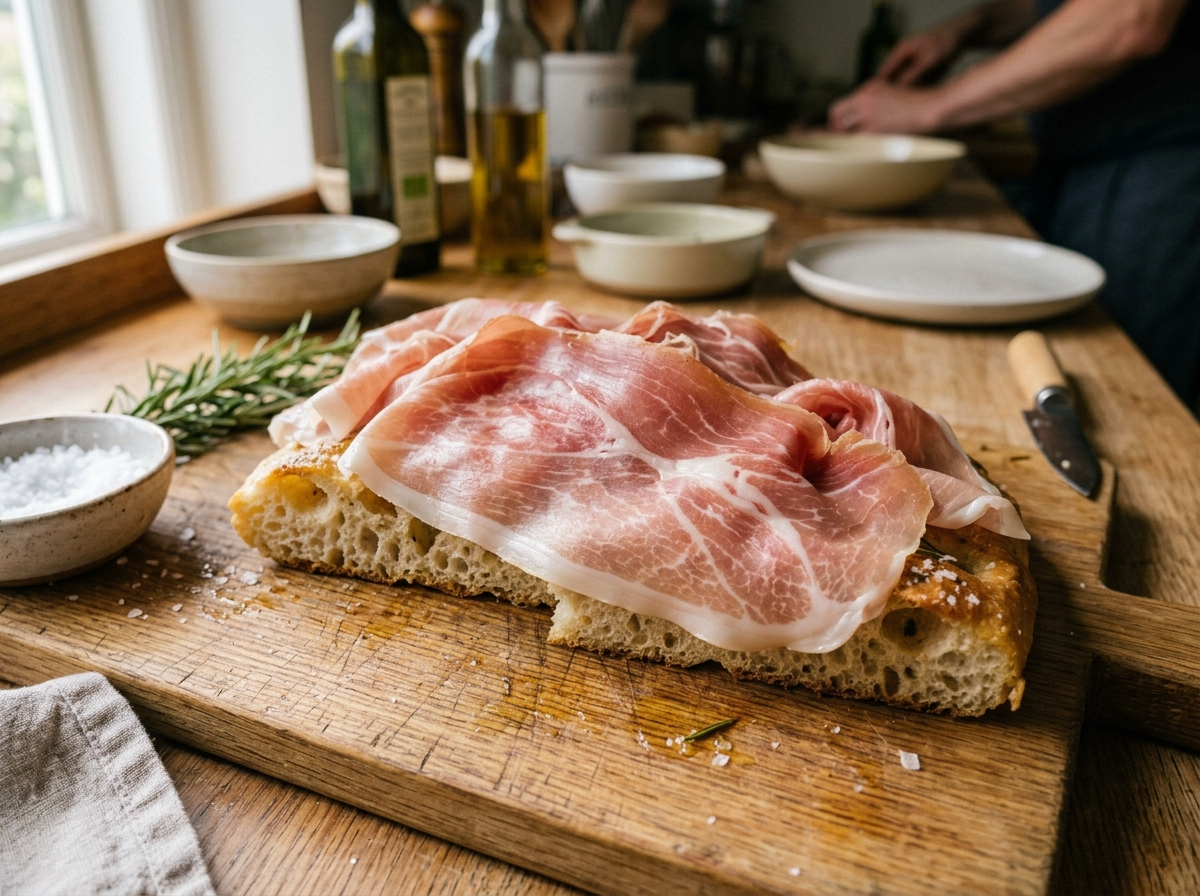
You’ve probably seen prosciutto on a deli menu or wrapped around melon at a party and thought, “Is that just fancy ham?” Sort of — but the difference matters a lot when you put it between two slices of bread.
Prosciutto is a dry-cured Italian ham with a deep, salty-sweet flavor that regular deli ham can’t match. And on a sandwich, it changes everything. The thin, almost silky slices melt into the bread in a way that thick-cut meats just don’t.
Here’s a plain breakdown of what prosciutto actually is, how it’s made, and the best ways to use it on your next sandwich.
What Is Prosciutto?
Prosciutto is an Italian cured ham made from the hind leg of a pig. The word itself comes from the Latin perexsuctus, which roughly means “thoroughly dried.” That tells you a lot about how it’s made — salt and time do almost all the work.
Unlike the pink, wet ham you grab from the deli counter, prosciutto goes through a long curing process that can last anywhere from 12 to 36 months. The result is a deeply flavored, firm meat that you eat without cooking.
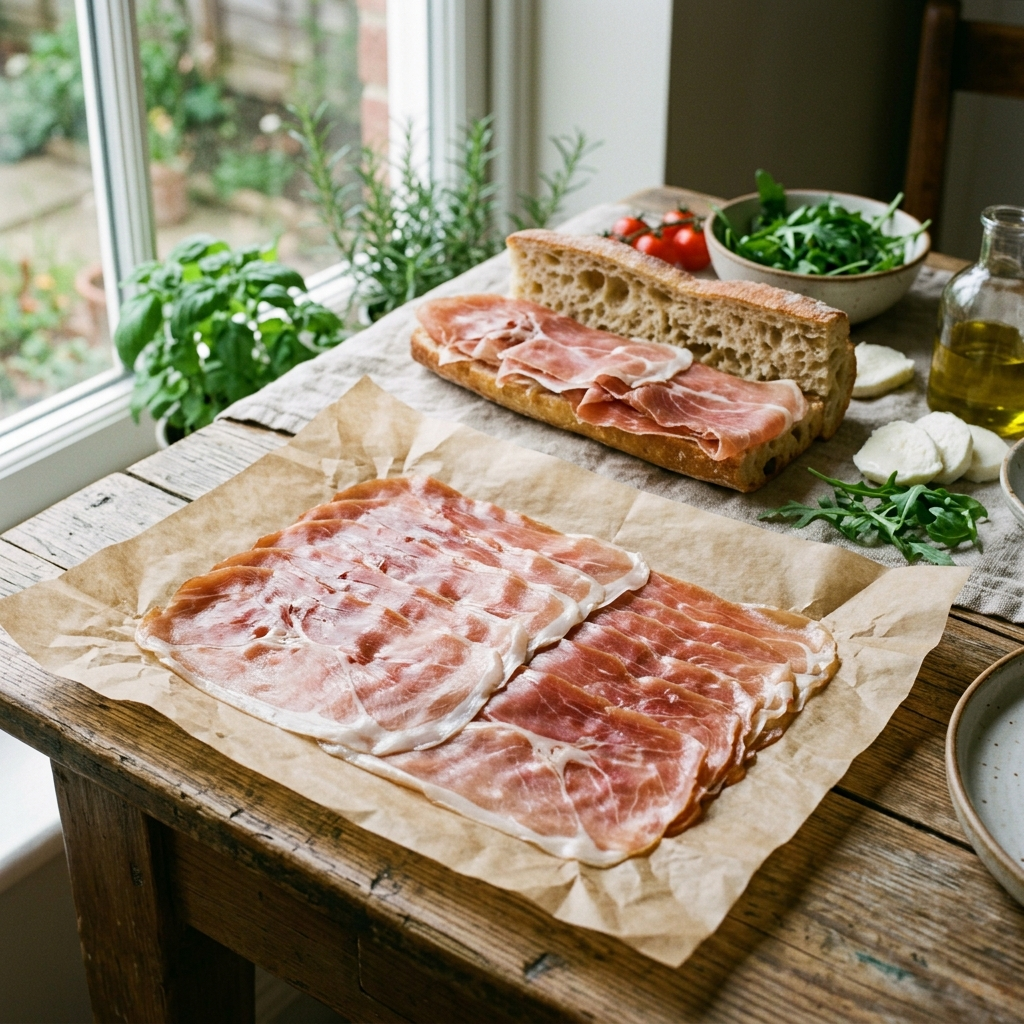
There are two main types you’ll run into, and knowing the difference helps you pick the right one for your sandwich.
Prosciutto Crudo vs Prosciutto Cotto
Prosciutto crudo is the dry-cured version most people think of when they hear “prosciutto.” It’s raw in the technical sense — never cooked with heat — but it’s completely safe to eat because the salt-curing and aging process preserves it. This is the one with the intense, savory, slightly sweet flavor and the paper-thin slices you see draped over charcuterie boards.
Prosciutto cotto is the cooked version. It’s closer to what Americans think of as standard deli ham — lighter in color, milder in flavor, and softer in texture. It’s still delicious, but it doesn’t have that concentrated umami punch that crudo delivers.
When someone asks “what is prosciutto” at a sandwich shop, they’re almost always talking about crudo. That’s the star of Italian sandwiches, paninis, and wraps. If you’re building a sandwich and want that bold, melt-in-your-mouth quality, go with crudo.
How Is Prosciutto Made?
The process is surprisingly simple in concept, even though it takes a long time. A whole pork leg gets covered in sea salt and left to rest for several weeks. The salt pulls out moisture and prevents bacteria from growing. After that, the leg is washed, hung in a cool, humid room, and left to age.
That’s basically it. No smoke, no cooking, no artificial preservatives in the traditional method. The most famous variety, Prosciutto di Parma, carries a Protected Designation of Origin (PDO) status, which means it can only be made in a specific region of Italy following strict rules. The Consorzio del Prosciutto di Parma oversees this process and stamps approved hams with its signature crown mark.
The longer the ham ages, the more complex the flavor gets. A 12-month prosciutto tastes mild and buttery. A 30-month one tastes nuttier, sharper, and more intense. For sandwiches, a 16- to 20-month prosciutto hits a nice middle ground — flavorful enough to stand out, but not so strong that it overpowers your other ingredients.
What Does Prosciutto Taste Like?
If you’ve never had it, imagine the saltiest, richest bite of ham you’ve ever tasted — then multiply that depth by about five. Prosciutto crudo has a sweet-salty balance with a slightly nutty finish. The fat is soft and creamy, almost buttery, and it dissolves on your tongue.
Here’s a detail most articles skip: the texture of prosciutto on a sandwich is unlike any other deli meat. Because it’s sliced so thin — we’re talking nearly translucent — it doesn’t give you that chewy, meaty bite you get from turkey or roast beef. Instead, it kind of collapses into the bread and the cheese and the sauce. You taste it in every bite, but you don’t feel a thick slab of meat. That’s the magic of it.
This also means you don’t need a lot. Two or three ounces of prosciutto on a sandwich will give you more flavor than a quarter pound of regular ham. That’s worth knowing because prosciutto costs more per pound, so a little goes a long way.
How to Use Prosciutto on Sandwiches
Now for the part you actually came here for. Prosciutto on sandwiches works differently than other meats, and a few small choices make a big difference in the final result.
Best Breads for Prosciutto Sandwiches
Prosciutto is delicate, so you want a bread that won’t bulldoze it. A thick, crusty sourdough can work, but you risk the bread overpowering the meat. Better options include:
- Ciabatta — airy, slightly chewy, and authentically Italian. It soaks up olive oil and vinegar beautifully without getting mushy.
- Focaccia — soft, olive-oil-rich, and flat enough that every bite gets a good ratio of bread to filling.
- A fresh baguette — crisp on the outside, soft inside. Just don’t go for one that’s been sitting out all day and turned rock-hard.
- Soft hoagie rolls — if you’re building an Italian hoagie with prosciutto alongside other meats, a good hoagie roll holds everything together without competing for attention.
Avoid dense, heavily seeded breads or anything with a strong flavor of its own (like pumpernickel). You want the bread to support the prosciutto, not fight it.
Cheese and Toppings That Pair Well
Prosciutto plays nicely with a lot of flavors, but some pairings are just classic for a reason.
Fresh mozzarella is the go-to. It’s mild, creamy, and doesn’t compete with the saltiness of the meat. Burrata works even better if you can find it — the creamy center adds a richness that makes the sandwich feel luxurious.
Provolone (especially aged provolone) adds a sharper edge that stands up well to prosciutto’s intensity. If you’re stacking prosciutto with other Italian cured meats like capicola, provolone ties everything together.
For toppings, keep it simple. Arugula adds a peppery bite that cuts through the fat. Roasted red peppers bring sweetness. A smear of fig jam or a drizzle of balsamic glaze takes the sweet-salty contrast to another level. Fresh basil, sliced tomato, and a drizzle of good olive oil are all you need for a no-fuss version.
One thing to avoid: heavy, creamy sauces like ranch or mayo-heavy spreads. They coat your mouth and block the prosciutto’s flavor. A light vinaigrette or just olive oil and a splash of red wine vinegar works much better. If you want more guidance on building layers that actually work, this guide on how to build the perfect deli sandwich covers the basics.
How to Layer Prosciutto on a Sandwich
This is where most people go wrong. They lay the slices flat, stacked on top of each other like a deck of cards. That gives you a dense, gummy layer that’s hard to bite through.
Instead, drape and fold the slices. Take each piece of prosciutto and loosely ribbon it onto the bread — fold it in half, let it bunch up a little, create some air pockets. This gives the sandwich volume and texture. When you bite down, you get layers of meat that separate easily instead of a single rubbery slab.
Also, put the prosciutto directly on the cheese or on the bread, not buried under a pile of wet vegetables. Tomatoes and pickles release moisture, and prosciutto’s thin slices turn soggy fast. If you want to keep your sandwich from getting waterlogged, these tips on how to prevent a soggy sandwich are worth a quick read.
Prosciutto Sandwich Ideas to Try
Here are a few combinations that actually work, not just random lists of ingredients thrown together.
The Classic Italian. Ciabatta, prosciutto crudo, fresh mozzarella, arugula, sliced tomato, olive oil, and a splash of red wine vinegar. Simple, fresh, and hard to mess up. This is the sandwich you’d get at a café in Bologna.
The Sweet and Salty. Focaccia, prosciutto, brie or goat cheese, fig jam, and a handful of arugula. The fig jam brings out the natural sweetness in the prosciutto, and the creamy cheese balances the salt.
The Prosciutto Panini. Sourdough or ciabatta, prosciutto, fontina cheese, roasted red peppers, and a thin layer of pesto. Press it in a panini press or a hot skillet with a weight on top until the cheese melts. The heat warms the prosciutto and makes the fat even more silky.
The Breakfast Prosciutto. A toasted English muffin or soft roll, prosciutto, a fried egg with a runny yolk, and a slice of sharp cheddar. The yolk acts as the sauce. It’s simple, and it’s a serious upgrade from a standard bacon, egg, and cheese.
The Loaded Italian Sub. A hoagie roll loaded with prosciutto, salami, capicola, provolone, shredded lettuce, tomato, onion, banana peppers, and an oil-and-vinegar dressing. The prosciutto adds depth to the other meats and keeps the sandwich from tasting like it’s all one note. You can check out more popular sandwich toppings if you want to customize this further.
Storing and Handling Prosciutto
Prosciutto is a cured meat, so it lasts longer than fresh ham — but it’s not invincible. Once you open the package or get it sliced at the deli counter, the clock starts ticking.
Keep it in the coldest part of your fridge, wrapped tightly in plastic wrap or stored in an airtight container. Pre-sliced prosciutto from the deli will stay good for about 3 to 5 days. A whole, unsliced piece of prosciutto can last several weeks in the fridge if it’s wrapped well.
Here’s a practical tip: if you buy pre-sliced prosciutto and the slices start to look dry or slightly gray around the edges, they’re past their prime. The color should be a deep rosy pink, and the fat should look white and creamy, not yellow. For more specific timelines on how long different deli meats last, this breakdown of deli meat fridge life covers the details.
One more thing — let the prosciutto come to room temperature for about 10 to 15 minutes before you put it on your sandwich. Cold prosciutto straight from the fridge tastes muted and the fat feels waxy. At room temperature, the flavor opens up and the texture softens. It’s a small step that makes a real difference.
Is Prosciutto Safe to Eat Without Cooking?
Yes. Prosciutto crudo is safe to eat as-is. The combination of salt, low moisture, and long aging time creates an environment where harmful bacteria can’t survive. That’s the whole point of the curing process — it preserves the meat without heat.
That said, there’s a food safety note worth mentioning. The USDA and other food safety agencies advise that pregnant women, older adults, and anyone with a weakened immune system should be cautious with all deli meats, including cured ones like prosciutto, because of a small risk of Listeria contamination. If you fall into one of those groups, heating the prosciutto until it’s steaming (like on a pressed panini) reduces that risk. This is general food safety information and not a substitute for advice from your doctor — when in doubt, ask your healthcare provider.
For everyone else, go ahead and enjoy it straight from the package. No cooking required.
Frequently Asked Questions
Is prosciutto the same as regular ham?
No. Regular deli ham is typically cooked, wet-cured, and often injected with a brine solution. Prosciutto is dry-cured with salt and aged for many months without any cooking. The flavor, texture, and price are all quite different. Prosciutto is saltier, more intense, and sliced much thinner than standard ham.
Can I cook prosciutto on a sandwich?
You can, and it’s delicious when you do. Pressing a prosciutto sandwich in a panini press or toasting it in a skillet warms the fat and gives the edges a slight crisp. Just don’t overcook it — prosciutto is so thin that it can go from crispy to burnt in seconds. A quick warm-up is all you need.
How much prosciutto should I put on a sandwich?
Two to three ounces per sandwich is plenty. Because prosciutto has such a concentrated flavor, you don’t need the thick stacks you’d use with turkey or roast beef. A few draped, folded slices will give you great coverage and flavor in every bite without making the sandwich too salty.
Your next sandwich doesn’t need to be complicated to be a big step up from what you’re used to. Grab some prosciutto crudo, a good roll, fresh mozzarella, and a drizzle of olive oil. Drape the meat, keep the toppings simple, and let the curing do the heavy lifting. Once you taste the difference, regular ham sandwiches are going to feel a little boring.