
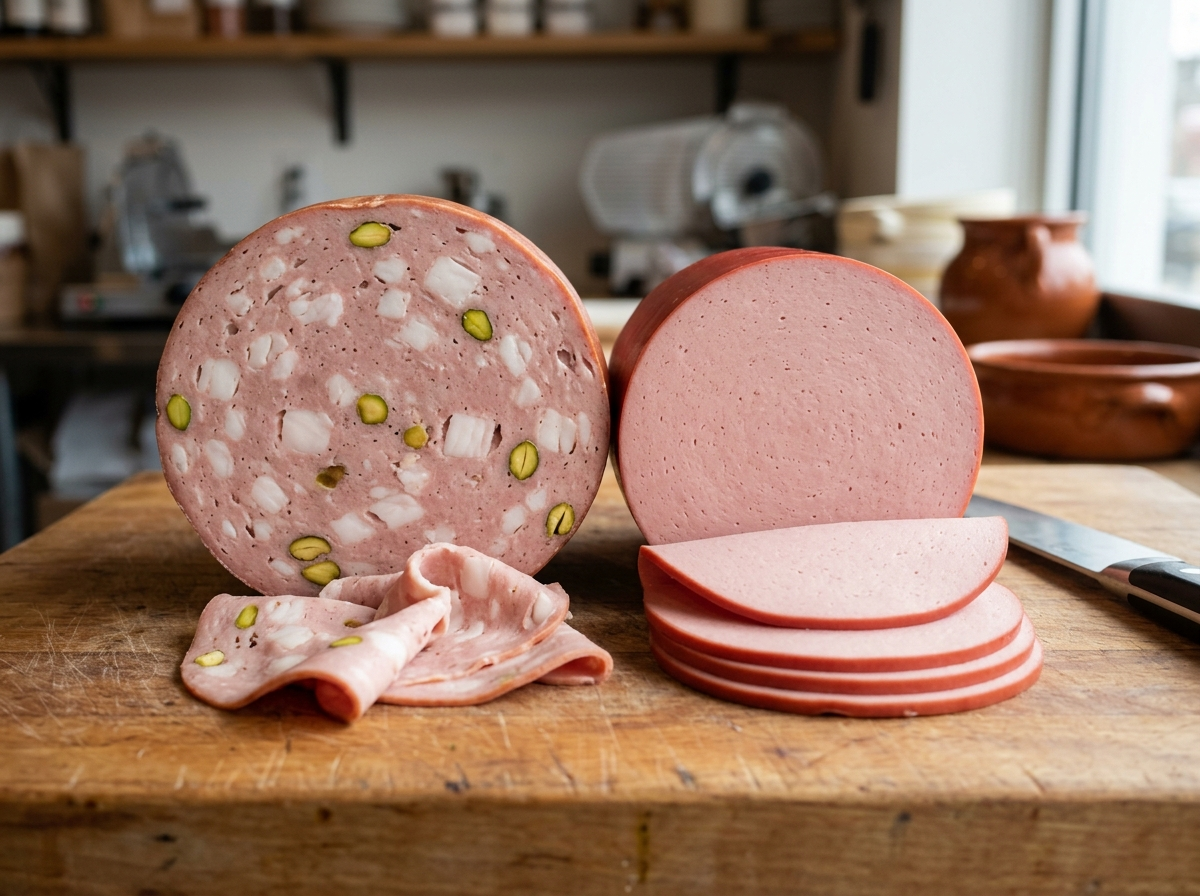
You’ve seen it at the deli counter — that pale pink, silky-smooth meat studded with little white cubes of fat and maybe a few green pistachios. The label says “mortadella,” and it costs about three times what the bologna next to it does. So what’s the deal? Is it actually worth the extra money, or is it just bologna wearing a fancier name?
The short answer: mortadella and bologna are related, but they’re definitely not the same thing. Here’s what actually sets them apart and why Italian mortadella has earned its spot on charcuterie boards and sandwich shops across the country.
What Is Mortadella? The Original Italian Deli Meat
Mortadella is a large, slow-cooked Italian sausage made from finely ground pork. It originated in the city of Bologna, Italy — yes, that Bologna — and has been a staple of Italian cuisine for centuries. Some food historians trace its roots all the way back to the Roman Empire, though the version we recognize today really took shape in the Middle Ages.
When you look at a slice of real Italian mortadella, you’ll notice a few things right away. The meat itself is a soft, uniform pink. Scattered through it are small, distinct cubes of pure white pork fat called lardelli. These aren’t blended in — they’re visible, deliberate, and they melt slightly on your tongue when you eat a slice. Many varieties also include whole pistachios or black peppercorns pressed into the meat.
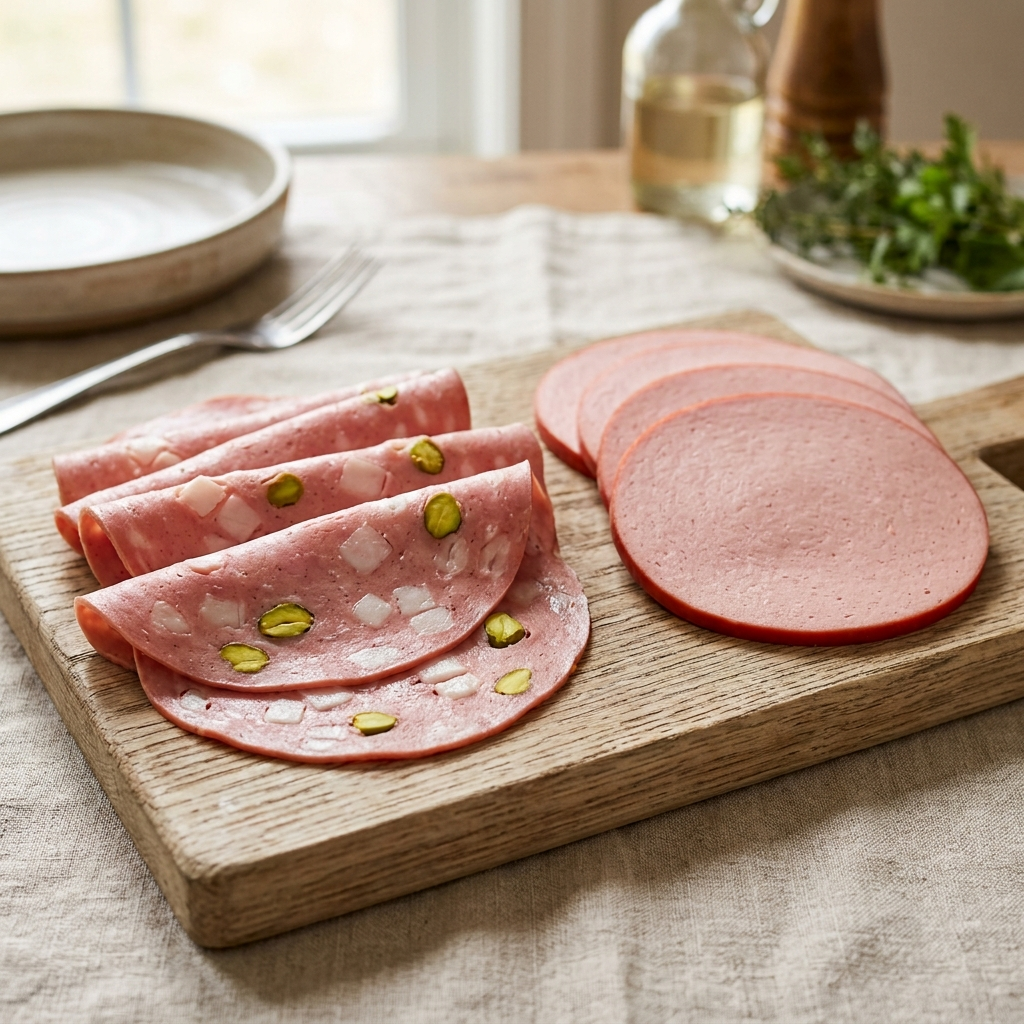
The flavor is delicate and slightly sweet, with a subtle warmth from spices like coriander, myrtle berries, and white pepper. It doesn’t hit you over the head the way a spicy salami does. Instead, it’s smooth, rich, and almost buttery. That’s a big part of why it works so well on a classic Italian sub — it adds richness without overpowering the other ingredients.
Real mortadella from Bologna carries a PGI (Protected Geographical Indication) label from the European Union. This designation, granted in 1998, means the meat must be produced in the Emilia-Romagna region of Italy following strict traditional methods. The Consorzio Mortadella Bologna oversees these standards and makes sure producers don’t cut corners. If you see that PGI seal on a package, you’re getting the real deal.
What Exactly Is Bologna?
American bologna is essentially mortadella’s distant cousin who moved overseas and changed careers. When Italian immigrants brought mortadella to the United States in the late 1800s and early 1900s, American meat producers started making their own version. Over time, that version drifted pretty far from the original.
The biggest difference is that American bologna can be made from a mix of meats — pork, beef, chicken, turkey, or any combination. USDA regulations require the meat to be ground into such a fine paste that you can’t see individual pieces of fat or meat grain. That’s why bologna has that completely uniform, almost rubbery texture when you peel a slice off the package.
Bologna also tends to be more heavily seasoned with garlic, paprika, and smoke flavoring to compensate for the milder base meats. It’s cooked faster, at higher temperatures, and the whole process is designed for mass production and long shelf life rather than artisanal quality.
Now, none of this means bologna is “bad.” A cold bologna sandwich on white bread with yellow mustard is a genuine American comfort food, and it has its place. But comparing it to mortadella is a bit like comparing a fast-food cheeseburger to a smash burger made at home — they share a family resemblance, but the ingredients, technique, and final result are worlds apart.
Mortadella vs Bologna: The Key Differences
If you’re standing at the deli counter trying to decide which one to grab, here’s what actually matters.
| Feature | Italian Mortadella | American Bologna |
|---|---|---|
| Meat used | 100% pork (PGI rules) | Pork, beef, chicken, turkey, or blends |
| Fat | Visible cubes of pork fat (lardelli) | Fully emulsified — no visible fat |
| Texture | Silky, tender, slightly yielding | Dense, uniform, slightly rubbery |
| Flavor | Delicate, sweet, subtly spiced | Bolder, smokier, more garlicky |
| Add-ins | Pistachios, peppercorns common | Rarely any visible add-ins |
| Production | Slow-cooked at low heat over many hours | Faster, high-heat cooking |
| Origin | Bologna, Italy (PGI protected) | United States, adapted from Italian tradition |
| Price | $12–$20+ per pound | $3–$7 per pound |
The texture difference is the first thing you’ll notice when you actually bite into them side by side. Mortadella practically dissolves on your tongue because of those little pockets of fat that melt at body temperature. Bologna stays firmer and chewier because all the fat has been mechanically blended into the meat paste during processing.
The flavor gap is just as noticeable. Mortadella tastes like pork — clean, slightly sweet, with a whisper of spice. Bologna tastes more like “deli meat” in a general sense. It’s saltier, smokier, and the specific meat flavors get lost in the blend.
There’s also a difference in how the two meats behave when you heat them. If you throw a slice of mortadella into a hot panini press, those fat cubes start to render and the whole slice gets glossy and fragrant. Bologna just gets warm and slightly rubbery. If you’re building a hot deli sandwich, mortadella is the clear winner for that reason.
How Real Italian Mortadella Is Made
Understanding the process helps explain why mortadella costs more and tastes so different from bologna. It’s not a complicated process, but it’s a slow and careful one.
It starts with high-quality pork — primarily from the shoulder and throat. The lean meat gets ground into a very fine paste, similar to what happens with bologna. But here’s where things diverge. The fat is handled completely separately. Producers cut the hard fat from the pork throat into small, uniform cubes — the lardelli — and keep them cold so they don’t smear or melt.
The ground lean meat gets mixed with salt, pepper, coriander, myrtle berries, and sometimes a touch of garlic or wine. The lardelli and any pistachios get folded in gently at the end so they stay intact. You want those fat cubes to remain as distinct little squares in the final product, not blended into the background.
The mixture gets stuffed into a large casing — traditional mortadella can weigh anywhere from a few pounds to over 200 pounds for the really big ones. Then it goes into a special oven for slow cooking. This is the part that takes patience. The mortadella cooks at a relatively low temperature for many hours, sometimes up to 24 hours for the largest sizes, until the internal temperature reaches about 158°F (70°C).
That slow, gentle cooking is what gives mortadella its signature silky texture. The proteins set gradually, the fat cubes soften without fully melting, and the spices infuse evenly throughout the meat. Rush this step and you end up with something closer to bologna — which is basically what happened when American producers adapted the recipe for speed and scale.
After cooking, the mortadella gets showered with cold water to stop the cooking process, then hung to cool and dry for a day or two before slicing.
Quick fact: The word “mortadella” likely comes from the Latin mortarium, meaning mortar — the bowl used to grind the meat and spices by hand in the earliest versions of this sausage.
How to Eat and Serve Mortadella
Mortadella is one of the most versatile deli meats you can keep in your fridge, and it deserves better than just being slapped between two slices of bread (though it’s great that way too).
Thin-sliced on a charcuterie board. This is where mortadella really shines. Ask your deli counter to slice it paper-thin — almost translucent. Fold the slices into loose ribbons and arrange them next to sharp cheeses like aged provolone or pecorino, some marinated olives, and crusty bread. The fat cubes catch the light and make the board look impressive without any real effort. If you’re curious about pairing it with other Italian cured meats, capicola is a natural companion on the same board.
In a sandwich or hoagie. Mortadella is a classic component of an Italian hoagie, layered with provolone, lettuce, tomato, onion, and a drizzle of oil and vinegar. The key is to pile it on generously — mortadella is mild, so you want enough of it to actually taste it. Three or four ounces per sandwich isn’t overdoing it.
Panini-pressed. Fold a few thick slices into a ciabatta roll with fresh mozzarella and a smear of pesto, then press it in a panini maker until the bread is crispy and the cheese melts. The heat transforms the mortadella completely — it gets richer and almost caramelized around the edges.
Cubed in pasta or scrambled eggs. Dice leftover mortadella into small cubes and toss it into a carbonara-style pasta or fold it into soft scrambled eggs. The fat renders into the dish and adds a subtle pork flavor that works beautifully.
A quick tip on slicing: If you’re buying a whole piece of mortadella to slice at home, keep it very cold — almost partially frozen — before slicing. The fat cubes will stay intact and you’ll get cleaner cuts. Let it warm up too much and the fat smears across the blade.
Where to Buy Real Mortadella (and What to Look For)
Finding genuine Italian mortadella in the US is easier than it used to be, but you still need to know what to look for.
Your best bet is a well-stocked Italian deli or specialty grocery store. Look for the PGI seal on the packaging — it’s a blue and yellow circle that says “Mortadella Bologna IGP” (the Italian abbreviation for PGI). Brands like Felsineo, Veroni, and Levoni are widely distributed in the US and consistently good. If you’re not sure, ask the person behind the deli counter whether their mortadella is imported from Bologna or produced domestically.
Large supermarket chains sometimes carry mortadella in the specialty cheese and deli section, but it’s often the domestic version. Domestic mortadella isn’t bad — it’s usually better than bologna — but it won’t have the same depth of flavor or the PGI certification. The fat cubes might be smaller, the spice profile simpler, and the texture a bit denser.
One thing to watch out for: some products labeled “mortadella” in the US are actually closer to bologna in production method but use the name for marketing. Check the ingredient list. Real mortadella should list pork as the only meat, with no fillers, no added starches, and no artificial smoke flavoring.
Food safety note: Mortadella is a fully cooked, ready-to-eat deli meat, so it’s safe to eat straight from the package. That said, the USDA recommends that pregnant individuals, older adults, and anyone with a compromised immune system heat deli meats to 165°F before eating to reduce the risk of listeria. This is general food safety guidance — if you have specific health concerns, talk to your doctor.
Once you bring it home, store mortadella the same way you’d store any deli meat — wrapped tightly in the fridge and consumed within three to five days of opening for the best flavor and texture.
Frequently Asked Questions
Is mortadella just expensive bologna?
No. While American bologna was originally inspired by Italian mortadella, the two meats diverged significantly over the past century. Mortadella uses 100% pork, contains visible cubes of pork fat, and is slow-cooked for many hours. Bologna uses mixed meats, has a fully emulsified texture with no visible fat, and is cooked faster. They share a family tree, but the end results are very different in taste, texture, and quality.
Does mortadella taste different from bologna?
Yes, noticeably so. Mortadella has a delicate, slightly sweet pork flavor with subtle spice notes from coriander and myrtle berries. Bologna tends to be saltier, smokier, and more aggressively seasoned. If you taste them side by side, most people can tell the difference immediately — mortadella tastes richer and more nuanced, while bologna tastes more like a generic “deli meat” flavor.
Is mortadella safe to eat without cooking?
Yes. Mortadella is fully cooked during production and is sold as a ready-to-eat product. You can eat it cold, straight from the package, just like any other deli meat. Heating it is optional and usually done for flavor rather than safety. As with all deli meats, people in high-risk groups (pregnant individuals, immunocompromised adults) should consider heating it to 165°F as a precaution.
Next time you’re at the deli counter and you see that pale pink, pistachio-studded meat sitting next to the bologna, give the mortadella a try. Grab a quarter pound, take it home, and eat a few slices on their own before you put it in a sandwich. The difference in texture and flavor speaks for itself. Once you’ve tasted real Italian mortadella, you’ll understand why it’s been a Bologna institution for over 500 years — and why it costs a few extra dollars. Your sandwich game will thank you.