
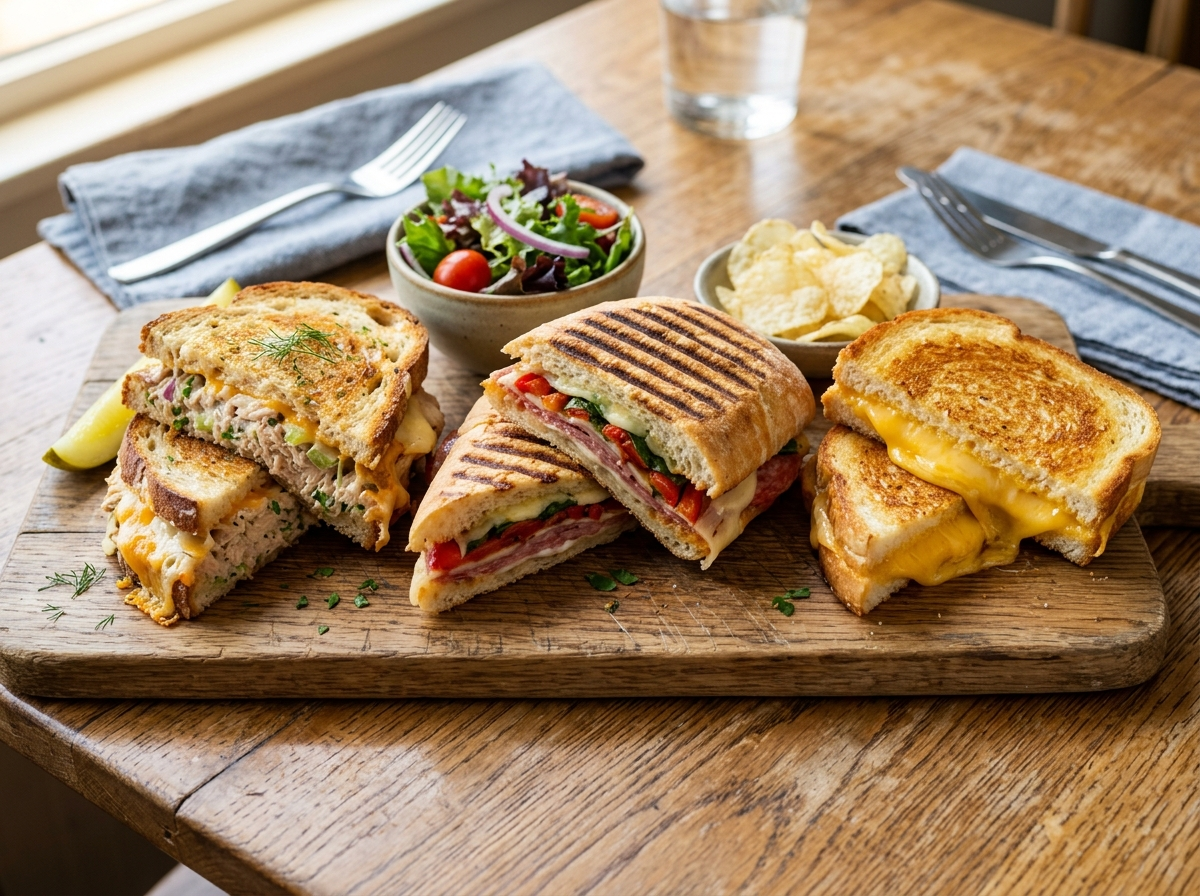
You’re staring at a café menu. One line says “tuna melt,” the next says “chicken panini,” and the third says “grilled cheese.” They all look like hot, pressed, cheesy sandwiches. So what exactly are you ordering?
The difference between a melt, a panini, and a grilled cheese comes down to three things: what’s inside, what bread you use, and how you cook it. Once you see those three variables, the whole thing clicks. Let’s break each one down so you never second-guess a menu — or your own kitchen — again.
What Is a Grilled Cheese? The Baseline
A grilled cheese is the simplest member of this family. At its core, it’s bread, cheese, and fat — nothing else required. You butter the outside of two slices of bread, layer cheese in the middle, and cook it on a flat skillet or griddle until both sides are golden and the cheese melts into a gooey stretch.
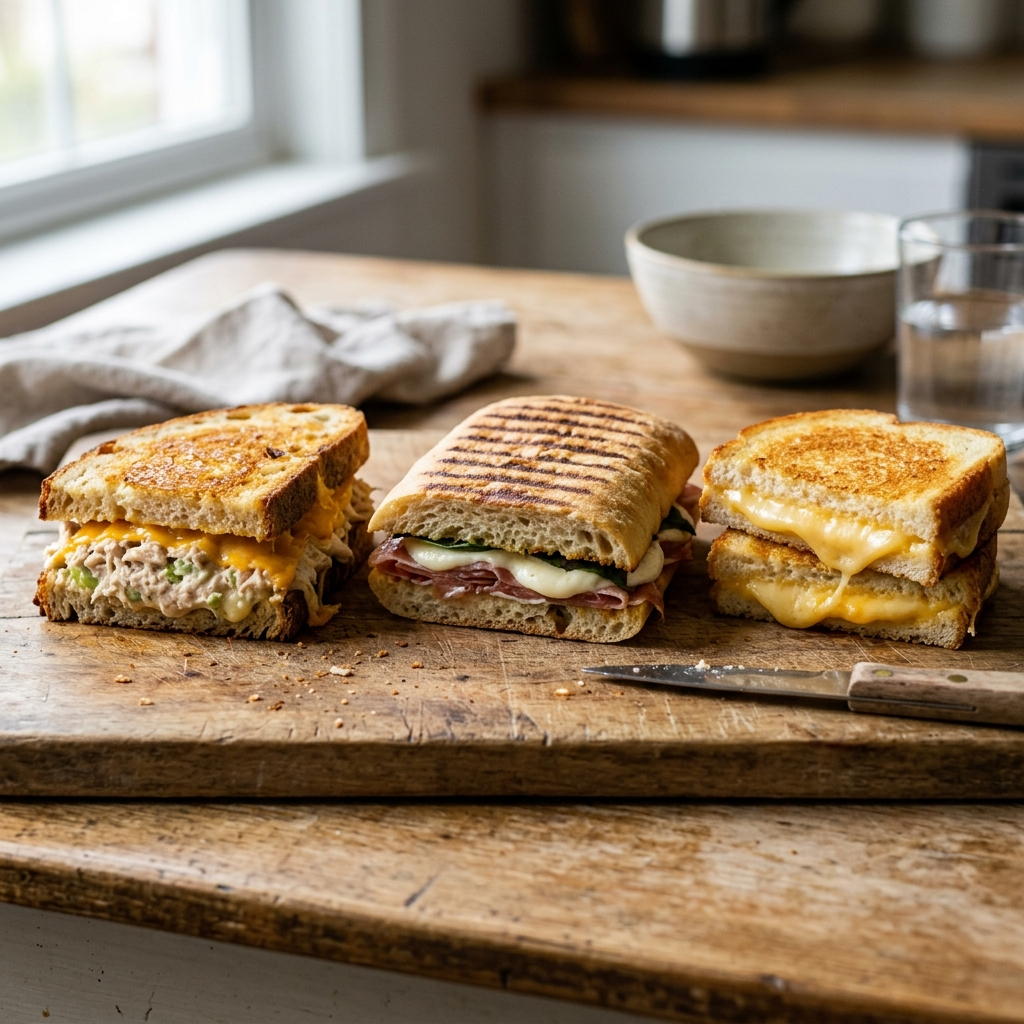
That’s it. No meat. No veggies. No fancy pressing equipment. Just heat, bread, and cheese doing their thing.
The Bread Matters More Than You Think
Most people reach for standard white sandwich bread, and honestly, that works perfectly fine. The soft crumb crisps up nicely on a buttered skillet, and it doesn’t fight the cheese for attention. Sourdough is another popular choice because its tangy flavor plays well against sharp cheddar.
The key is to avoid bread that’s too thick or too dense. A grilled cheese lives and dies by how fast the heat travels from the pan through the bread to the cheese. If your bread is a thick-cut artisan loaf, the outside will burn before the inside melts. You want something that toasts quickly and evenly. If you’ve ever ended up with a blackened exterior and a cold, unmelted center, you already know this pain. Here’s how to make grilled cheese without burning it if that sounds familiar.
The Cheese Factor
American cheese is the classic pick because it melts smoothly and evenly — no greasy separation, no clumping. Cheddar brings more flavor but can split if the heat is too high. A blend of the two gives you the best of both worlds: smooth melt plus real cheese flavor.
The cooking technique is straightforward. Medium-low heat is your friend. Rushing a grilled cheese on high heat is the single most common mistake home cooks make. You want the bread to toast gradually so the cheese has time to fully melt before the crust darkens.
What Is a Melt? The Upgraded Grilled Cheese
A melt takes the grilled cheese formula and adds a main filling on top of the cheese. That filling is usually a protein — think tuna salad, sliced turkey, corned beef, or patty melt-style ground beef — but it can also be vegetables like tomatoes, onions, or sautéed mushrooms.
Here’s the easiest way to remember the difference between a panini and a melt: a melt is a grilled cheese that got promoted. The bread and the cooking method stay largely the same. You’re still using a flat skillet or griddle. You’re still buttering the outside. You’re still going for that golden, crispy exterior with a molten interior. The only real change is that there’s more going on between the slices.
What Makes a Melt a Melt (and Not Just a Sandwich)?
The cheese is non-negotiable. If you slap turkey and lettuce between two slices of bread and toast it, that’s a toasted sandwich — not a melt. A melt earns its name because the cheese is a primary structural element, not just an afterthought. The cheese binds everything together and creates that signature oozy pull when you bite in.
A classic tuna melt is a perfect example. You mix tuna with mayo and maybe some diced celery, pile it on bread, cover it with a generous layer of cheddar or Swiss, and grill it butter-side down until the cheese bubbles. The tuna is the star filling, but the melted cheese is what makes the sandwich hold together and taste like comfort food.
Bread and Technique
Melts typically use the same breads as grilled cheese — white sandwich bread, rye, sourdough, or Texas toast. The bread needs to be sturdy enough to hold the extra filling without falling apart, so flimsy thin-sliced bread can be risky once you load it up. If you’re building a particularly heavy melt, a thicker sourdough or rye will hold up better. Building the perfect deli sandwich follows similar logic when it comes to balancing structural integrity with flavor.
The cooking method is still flat-surface griddling, but you may need to go slightly lower and slower than a plain grilled cheese because the extra filling insulates the cheese and slows down melting. Patience pays off here.
What Is a Panini? The Pressed Italian Cousin
A panini (plural: panini, though most English speakers say “paninis”) is an Italian-style pressed sandwich made with specific crusty breads and cooked in a contact grill or panini press. That pressing action is what sets it apart from both melts and grilled cheeses.
The Bread Is the Big Differentiator
You can’t make a real panini with soft sandwich bread. The whole point of a panini is the crisp, compressed crust with visible grill marks, and soft white bread will just flatten into a sad, dense pancake under the weight of a press. Panini demand bread with structure — ciabatta, focaccia, baguette, or a sturdy Italian roll. These breads have an open crumb and a firm crust that can handle being squeezed between hot ridged plates without collapsing.
Here’s a practical detail most articles skip: if your ciabatta is very airy with huge holes inside, the press can sometimes squeeze the bread so thin that the fillings squirt out the sides. Lightly pressing the bread flat with your hand before loading it helps create a more even surface. It’s a small trick, but it makes a noticeable difference in how the sandwich holds together.
The Pressing Technique
A panini press (or contact grill) cooks the sandwich from both sides at once while applying downward pressure. This compresses the bread, creates those signature ridged grill marks, and drives heat into the fillings faster than a flat skillet can. The result is a sandwich that’s thinner, crispier, and more uniformly heated than a grilled cheese or melt.
No panini press? You can fake it. Place your sandwich in a hot skillet, then set a heavy cast-iron pan or a foil-wrapped brick on top. It won’t give you perfect ridges, but you’ll get the compression and the dual-sided heat that define a panini.
Fillings and Cheese
Panini fillings lean Italian — mozzarella, provolone, prosciutto, salami, roasted red peppers, pesto, fresh basil, sun-dried tomatoes. But honestly, the panini format works with almost anything. A chicken-avocado panini or a turkey-Swiss panini are just as valid as a caprese version.
The cheese in a panini plays a slightly different role than in a grilled cheese. Because the press compresses everything tightly, the cheese melts into the bread’s crumb more thoroughly, almost fusing the layers together. You’re less likely to get that dramatic cheese pull, but you get a more integrated, cohesive bite. If you want to explore how different cheeses behave under heat, this breakdown of the best cheeses for cheesesteaks covers melting properties that apply to panini too.
Melt vs Panini vs Grilled Cheese: Side-by-Side Comparison
Here’s the quick-reference breakdown so you can see all three at a glance.
| Feature | Grilled Cheese | Melt | Panini |
|---|---|---|---|
| Core ingredients | Bread + cheese + butter | Bread + cheese + protein/veg filling | Crusty Italian bread + fillings + cheese |
| Bread type | Soft sandwich bread, sourdough | Sandwich bread, rye, Texas toast | Ciabatta, focaccia, baguette |
| Cooking method | Flat skillet or griddle | Flat skillet or griddle | Panini press or contact grill |
| Heat application | One side at a time, flipped | One side at a time, flipped | Both sides simultaneously |
| Pressure | None (just the spatula) | None | Firm downward pressure |
| Texture | Crispy outside, gooey inside | Crispy outside, hearty inside | Compressed, ridged, uniformly crisp |
| Cheese role | The star of the show | Binder + flavor layer | Integrated into the crumb |
| Grill marks | No | No | Yes (ridged press) |
The biggest takeaway? A grilled cheese is about the cheese. A melt is about the filling. A panini is about the bread and the press.
How to Make Each One at Home
Grilled Cheese Tips
Butter the bread, not the pan. This gives you more even coverage and a more consistent golden crust. Some people swear by using mayonnaise instead of butter on the outside — mayo has a higher smoke point and creates an exceptionally even browning. Try both and see which you prefer.
Keep the heat at medium-low. I know you’re hungry, but cranking the burner to high will burn the bread before the cheese melts. Give it 3-4 minutes per side. Preventing a soggy sandwich starts with getting this temperature right, because undercooked bread traps steam inside.
Melt Tips
Pre-cook your fillings. If you’re using raw onions, sauté them first. If you’re using a thick tuna salad, keep the layer thin enough that heat can reach the cheese. The biggest mistake with melts is piling on so much filling that the cheese never fully melts. Less is more — you want the cheese to do its job.
Cover the skillet with a lid for the first two minutes. This traps steam and helps the cheese melt faster, especially when there’s a thick layer of protein insulating it. Remove the lid for the last minute to let the bottom crisp back up.
Panini Tips
Preheat your press fully before loading the sandwich. A lukewarm press will dry out the bread instead of crisping it. You want the plates hot enough that the bread starts sizzling on contact.
Brush the outside of the bread with olive oil instead of butter. Olive oil handles the high direct heat of a press better and gives you a crispier, more authentic Italian-style crust. Butter can burn on a contact grill because the top plate traps heat against it.
Don’t overstuff. The press is going to compress everything by about a third of its original thickness, so a sandwich that looks perfectly loaded before pressing will turn into an overstuffed mess during. Keep fillings to two or three ingredients max.
Types of Grilled Sandwiches Worth Knowing
The grilled cheese, melt, and panini aren’t the only hot sandwiches out there. Once you understand the basic mechanics of heat + bread + filling, you’ll start recognizing other members of the family.
The Patty Melt is technically a melt, but it deserves its own mention. It’s a ground beef patty with caramelized onions and Swiss cheese on grilled rye bread. It sits right at the intersection of a burger and a melt, and it’s one of the most satisfying sandwiches you can make at home.
The Croque Monsieur is the French answer to the grilled cheese. It’s ham and Gruyère on white bread, cooked in butter, and often topped with béchamel sauce. Add a fried egg on top and it becomes a Croque Madame. The technique is closer to a melt than a panini since it’s griddled, not pressed.
The Reuben is a grilled sandwich that straddles the line between melt and griddled specialty. Corned beef, Swiss cheese, sauerkraut, and Russian dressing on rye, griddled until the cheese melts and the bread crisps. It’s technically a melt by definition (bread + cheese + protein), but its specific ingredient combo gives it its own identity.
The Quesadilla is essentially a Mexican grilled cheese — tortilla instead of bread, Oaxaca or Monterey Jack inside, cooked on a flat comal. No pressing, no ridges, just direct heat and melted cheese.
Understanding these variations helps you see that the grilled sandwich world is really a spectrum. On one end, you have the pure simplicity of bread and cheese. On the other, you have heavily loaded, pressed, multi-ingredient creations. The hot vs cold sandwich debate covers even more ground if you want to explore the full range of what a sandwich can be.
Frequently Asked Questions
Is a melt just a grilled cheese with meat?
Essentially, yes. A melt is a grilled cheese that includes an additional filling — usually a protein like tuna, turkey, or beef, but sometimes vegetables. The bread and cooking method stay the same (flat skillet, buttered bread, medium heat). The cheese is still a central ingredient, which is what separates a melt from a regular toasted sandwich. If you remove the cheese from a tuna melt, you just have a hot tuna sandwich.
Can I make a panini without a panini press?
You can. The defining feature of a panini is the compression and dual-sided heat, not the specific appliance. Place your assembled sandwich in a hot skillet, then put a heavy object on top — a cast-iron skillet, a Dutch oven, or even a brick wrapped in aluminum foil. You won’t get the ridged grill marks, but you’ll get the compressed, crispy texture that makes a panini a panini. Just make sure your weight is evenly distributed so the sandwich presses flat.
What’s the best cheese for each type of sandwich?
For a grilled cheese, American cheese melts the smoothest, while a cheddar-American blend gives you better flavor without sacrificing texture. For melts, Swiss, provolone, and pepper Jack all work well because they melt reliably even when layered over cold fillings. For panini, fresh mozzarella and provolone are the traditional Italian choices, but fontina is an underrated option that melts beautifully under pressure. The key across all three is to avoid hard, aged cheeses like Parmesan as your primary melting cheese — they add great flavor as a garnish but won’t give you the gooey texture you want.
Next time you’re at a café or standing in your kitchen at midnight, you’ll know exactly what you’re building. Grab your bread, pick your cheese, and decide whether you’re going simple, loaded, or pressed. The best part about all three of these sandwiches is that they’re forgiving — even a slightly imperfect grilled cheese is still a very good grilled cheese. Fire up the skillet and start experimenting. Your taste buds will thank you.