

Store-bought sandwich spread is mostly filler and preservatives. The good stuff — that creamy, tangy, slightly sweet spread you get at a real deli — takes about 10 minutes to make in your own kitchen. You probably already have everything you need sitting in your fridge right now.
A sandwich spread is a creamy condiment made from a mayonnaise base mixed with sweet pickle relish, mustard, and seasonings, used to add moisture and flavor to deli sandwiches. That’s the straightforward version. The version you’re about to make at home is noticeably better.
Why Homemade Sandwich Spread Beats the Jar
Crack open a jar of commercial sandwich spread and read the label. Water, high fructose corn syrup, and modified food starch usually sit right at the top. You’re paying good money for fillers that dilute the actual flavor. When you follow a homemade sandwich spread recipe from scratch, you control every single ingredient that goes in.
The flavor difference hits you immediately. Store-bought spread tastes one-note — vaguely sweet, vaguely tangy, and a little flat. A proper deli style sandwich spread has layers. You get the richness of real mayonnaise, the sharp bite of mustard, the sweet crunch of relish, and a subtle warmth from paprika or celery salt that lingers on your tongue.
Texture is the other big difference. I’ve made this spread both ways — blitzed smooth in a food processor and hand-mixed with a fork in a bowl. The hand-mixed version keeps tiny bits of relish and egg that give your sandwich real character and a little chew. The blended version is creamier and more uniform, closer to what you’d squeeze from a plastic jar. Neither approach is wrong, but knowing the difference helps you get exactly the result you’re after.
The Core Ingredients and Why Each One Matters
You don’t need a long grocery list to make great sandwich spread. Here’s what goes into a classic version and the specific role each ingredient plays in the final product.
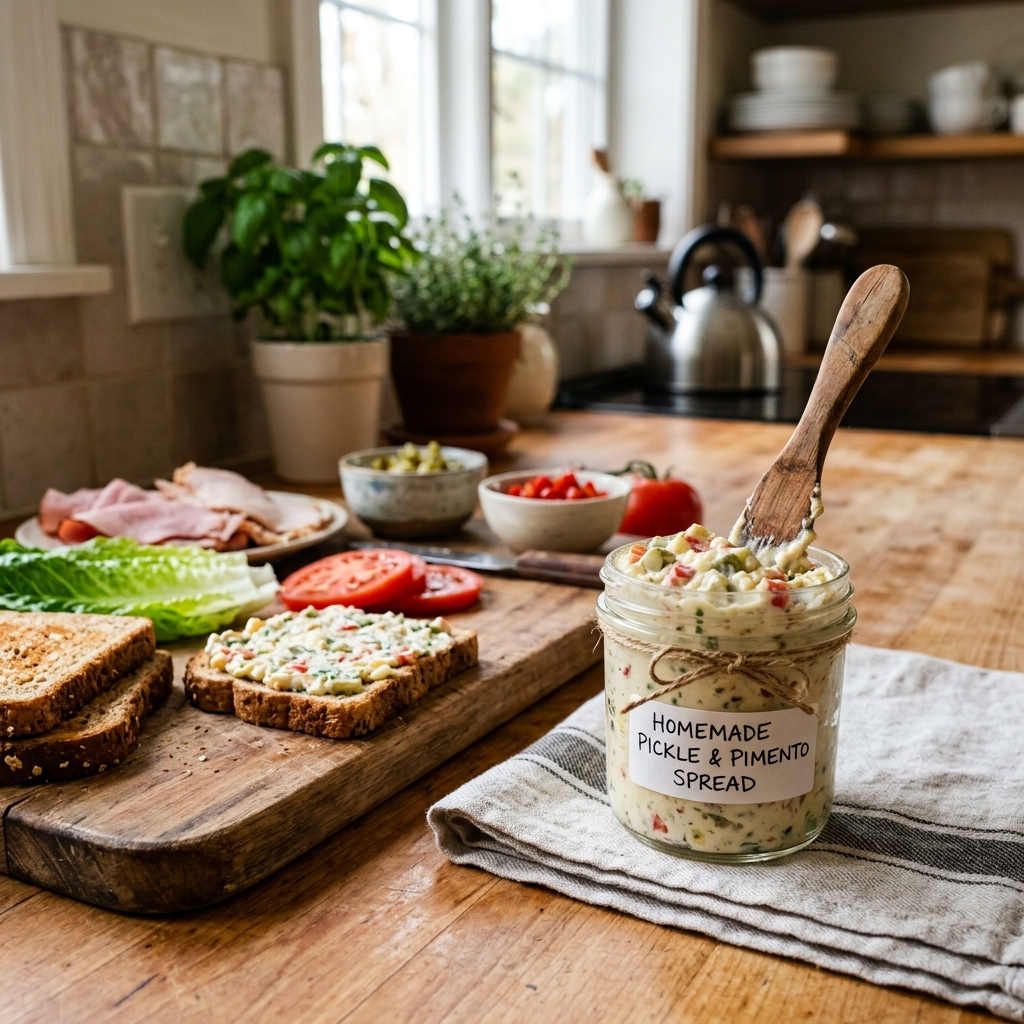
Mayonnaise is your base and your emulsion. It carries the fat and creaminess that makes the spread cling to bread instead of sliding right off. Use a real mayo made with egg yolks and oil — not a salad dressing substitute or a low-fat version. The fat content matters here because it’s what gives the spread its body and mouthfeel. A mayo with at least 65% oil content will give you the best results, which aligns with the FDA’s standard of identity for mayonnaise as a reference point for quality.
Sweet pickle relish brings the sweetness and the crunch. This is the ingredient that separates sandwich spread from plain flavored mayo. If you only have dill relish on hand, you can absolutely use it, but add a half teaspoon of sugar to balance the extra sourness.
Yellow mustard or Dijon adds acidity and sharpness. Yellow mustard gives you that classic ballpark tang most people associate with deli sandwiches. Dijon makes the spread taste more sophisticated and slightly more complex. You can also split the difference and use a tablespoon of each.
Hard-boiled eggs are the secret weapon most online recipes skip entirely. Finely chopped egg adds richness and a subtle custardy texture that mimics what you’d get at an old-school deli counter. One or two eggs is plenty for a standard batch. Don’t overcook them — a slight jammy center actually blends into the spread more smoothly than a chalky, overdone yolk.
Seasonings round everything out and tie the flavors together. Celery salt, paprika, and a splash of pickle juice or lemon juice are the most common additions. The celery salt adds an herbal, slightly bitter note that cuts through the sweetness. Paprika gives the spread a warm color and a faint smokiness. The acid from pickle juice brightens the whole mixture and keeps it from tasting heavy or flat.
Here’s a quick ratio guide to get you started:
| Ingredient | Amount | Role |
|---|---|---|
| Mayonnaise | 1 cup | Creamy base and emulsion |
| Sweet pickle relish | ¼ cup | Sweetness and crunch |
| Mustard | 2 tablespoons | Tang and sharpness |
| Hard-boiled eggs | 2, finely chopped | Richness and texture |
| Celery salt | ½ teaspoon | Herbal depth |
| Paprika | ¼ teaspoon | Color and warmth |
| Pickle juice | 1 tablespoon | Brightness and acidity |
How to Make Sandwich Spread Step by Step
This is where you’ll realize you’ve been overcomplicating things for years. The whole process takes about 10 minutes if your eggs are already boiled.
Step 1: Prep your eggs. If you don’t have hard-boiled eggs ready, boil two large eggs for 10 to 12 minutes, then cool them in an ice water bath for at least five minutes. Peel and finely chop them. You want small, pea-sized pieces — not mush. A fork works better than a knife for this because it creates slightly irregular chunks that distribute more evenly through the spread.
Step 2: Combine the wet ingredients. In a medium mixing bowl, add the mayonnaise, mustard, and pickle juice. Stir until smooth and uniform. This is your flavor foundation, so taste it right now before you add anything else. If it’s too sharp, add another tablespoon of mayo. Too flat? A squeeze of fresh lemon juice fixes that fast.
Step 3: Fold in the relish and eggs. Add the sweet pickle relish and chopped eggs to the bowl. Gently fold everything together with a spatula or wooden spoon. Don’t overmix — you want to preserve some texture so the spread isn’t completely uniform.
Step 4: Season and adjust. Sprinkle in the celery salt and paprika. Stir once more, then taste again. This is where you make the spread yours. Want it tangier? Add more mustard. Sweeter? A teaspoon of sugar or an extra spoonful of relish. More savory? A pinch of garlic powder or onion powder does the trick.
Step 5: Chill before serving. This step is easy to skip, but please don’t. Let the spread sit in the fridge for at least 30 minutes before you use it. The flavors genuinely need time to meld together. I’ve tasted it fresh out of the mixing bowl and then again the next morning — the overnight version is noticeably better. The relish softens slightly, the egg absorbs some of the tang, and everything tastes more cohesive and rounded.
Smooth vs. Chunky — Your Call
If you want a perfectly smooth deli style sandwich spread, pulse everything in a food processor for 10 to 15 seconds. Just don’t over-process or you’ll end up with something closer to salad dressing than a spreadable condiment.
For a chunkier, more rustic texture, stick with the hand-mixed method and chop your relish and eggs a bit larger. This version works especially well on thick-cut bread or toasted rolls where you want the spread to hold its own against hearty fillings like roast beef or turkey.
Five Variations to Try Once You Nail the Classic
The basic recipe above is your foundation. Once you’re comfortable with it, these tweaks take about 30 extra seconds each and completely change the character of the spread.
Spicy sandwich spread: Swap the yellow mustard for spicy brown mustard and add a teaspoon of your favorite hot sauce or a generous pinch of cayenne pepper. This version is fantastic on turkey clubs and roast beef sandwiches where you want a little heat to cut through the richness of the meat.
Garlic herb spread: Add one clove of finely minced garlic and a tablespoon of fresh chopped dill or flat-leaf parsley. This pairs beautifully with chicken salad sandwiches, grilled vegetable wraps, or anything with a Mediterranean flavor profile. Let it sit overnight if you can — raw garlic mellows significantly after a few hours in the fridge.
Smoky chipotle spread: Stir in a teaspoon of adobo sauce straight from a can of chipotles in adobo. The smokiness plays really well against sharp cheddar cheese and crispy bacon. This is also excellent as a burger sauce if you’re looking for creative ways to make your hamburgers more interesting.
Pimento cheese style: Fold in ¼ cup of shredded sharp cheddar and two tablespoons of diced pimentos. This leans Southern and works great on soft white bread with thick tomato slices and a crack of black pepper.
Horseradish kick: Add two teaspoons of prepared horseradish for a sharp, sinus-clearing spread that’s perfect with roast beef or corned beef on rye. If you’re trying to build the perfect deli sandwich at home, this variation is one of the easiest upgrades you can make.
Storage, Shelf Life, and Food Safety
This is the part most recipe blogs gloss over, and it genuinely matters because you’re working with a mayo-and-egg-based condiment that lacks commercial preservatives.
Refrigeration is non-negotiable. Store your homemade sandwich spread in an airtight container in the fridge at all times. A glass jar with a tight-fitting lid works best because glass won’t absorb odors or flavors the way plastic containers can over time.
Shelf life is 5 to 7 days. The USDA’s Food Safety and Inspection Service recommends consuming homemade egg-based products within one week when stored at or below 40°F. This is significantly shorter than store-bought spread because commercial versions contain preservatives like potassium sorbate and calcium disodium EDTA that you’re not adding at home. Don’t try to stretch it. If the spread smells sour, looks separated, or shows any discoloration, throw it out.
Food safety note: This recipe contains mayonnaise and hard-boiled eggs. The guidance above is general information and not a substitute for professional food safety advice. If you’re serving vulnerable populations — young children, elderly family members, pregnant individuals, or anyone immunocompromised — err on the side of a shorter shelf life (3 to 4 days) and make smaller batches.
Can you freeze sandwich spread? Technically yes, but the texture takes a real hit. Mayonnaise-based spreads tend to separate and turn grainy after thawing because the emulsion breaks during the freeze-thaw cycle. If you must freeze it, plan to use the thawed spread in cooked applications like casseroles, hot sandwich fillings, or baked dips where the texture change won’t be noticeable.
Batch size tip: Make only what you’ll realistically use in a week. The recipe above makes about 1.5 cups, which is plenty for a family’s weekly sandwich rotation. If you’re cooking for one or two people, halve the recipe. Fresh spread always tastes better than old spread, and there’s no advantage to making a giant batch that sits in the back of your fridge.
For more on how long your deli ingredients stay fresh, this guide on deli meat fridge life is a helpful companion to this recipe.
How to Use Your Homemade Sandwich Spread
You already know the obvious use — slather it on bread for a deli sandwich. But a good homemade sandwich spread recipe is far more versatile than most people realize.
Classic deli sandwiches: Turkey, ham, roast beef, chicken salad, bologna — they all benefit from a generous layer of spread. Apply it to both slices of bread to create a moisture barrier that prevents soggy sandwiches when you’re packing lunch to eat hours later. The fat in the mayo actively repels moisture from wet ingredients like tomatoes and pickles, keeping your bread intact until lunchtime.
Burger topping: Use it in place of plain mayo on your next burger. The relish and mustard already built into the spread mean you can skip adding those separately, which saves time and reduces the number of condiment bottles cluttering your table.
Dip for fries and chips: Thin the spread slightly with an extra splash of pickle juice and use it as a dipping sauce. It works especially well alongside homemade potato chips or crispy French fries. Kids tend to love this more than ketchup, which says something.
Wrap and roll-up base: Spread a thin layer on a flour tortilla before layering in deli meats, cheese, and greens. The creaminess holds everything together and keeps the wrap from being dry and crumbly.
Deviled egg filling shortcut: Mix a couple of tablespoons of sandwich spread into your mashed egg yolks instead of plain mayo. You’ll get built-in seasoning and a more complex flavor with zero extra effort. It’s a small trick, but it makes a real difference at potlucks.
Frequently Asked Questions
What is sandwich spread made of?
Sandwich spread is a creamy condiment made from a mayonnaise base combined with sweet pickle relish, mustard, and seasonings like celery salt and paprika. Some versions also include finely chopped hard-boiled eggs, pimentos, or a splash of vinegar for extra tang. The exact mix varies by brand and region, but the mayo-relish-mustard trio is the foundation of nearly every version you’ll find at a deli counter or in a grocery store aisle.
How long does homemade sandwich spread last in the fridge?
Homemade sandwich spread lasts 5 to 7 days in the refrigerator when stored in an airtight container at or below 40°F. Because it contains mayonnaise and hard-boiled eggs without the commercial preservatives found in store-bought versions, it has a shorter shelf life. Always check for off smells, discoloration, or visible separation before using, and when in doubt, throw it out.
Can I make sandwich spread without eggs?
Absolutely. Simply leave out the hard-boiled eggs and increase the mayonnaise by two tablespoons to make up for the lost volume. The spread will be slightly less rich but still creamy and flavorful. This is a smart option if you’re serving someone with an egg allergy or if you want to squeeze an extra day or two out of the shelf life.
Is sandwich spread the same thing as mayonnaise?
No. Mayonnaise is a simple emulsion of oil, egg yolk, and acid (usually vinegar or lemon juice). Sandwich spread is a compound condiment that uses mayo as its base but layers in sweet relish, mustard, and various seasonings. Think of mayo as the blank canvas and sandwich spread as the finished painting — related, but not interchangeable.
What’s the difference between sandwich spread and tartar sauce?
They share a mayo base, but tartar sauce typically uses dill relish or chopped capers and is seasoned with lemon juice and fresh herbs like dill or tarragon. Sandwich spread leans sweeter with sweet pickle relish and mustard as its dominant flavors. Tartar sauce is designed to complement fried seafood; sandwich spread is designed for deli meats, bread, and cold cuts.
Your first batch might not be perfect, and that’s completely fine. The beauty of a homemade sandwich spread recipe is that it’s forgiving — a little too tangy, a little too sweet, and it still tastes better than anything in a jar. Start with the classic ratio above, taste as you go, and adjust until it matches what you remember from your favorite deli.
Make a small batch this week, spread it on a simple turkey and cheese sandwich, and notice the difference. Once you taste the real thing, you won’t want to go back to the plastic jar. And if you want to keep exploring what goes into a great sandwich, browse more ideas on popular sandwich toppings to pair with your new spread.