
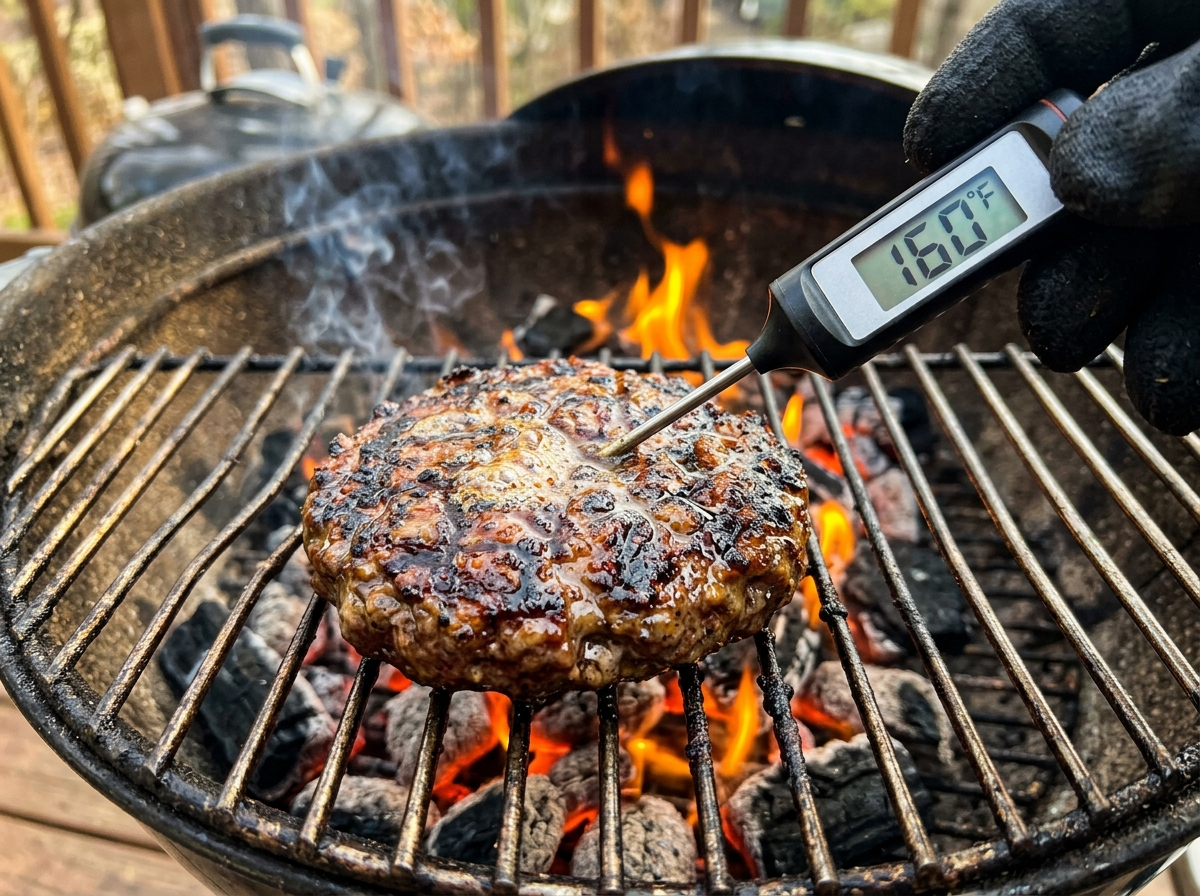
A burger can go from juicy to dry in less time than it takes to toast the buns. That’s why the best temp for burgers on the grill matters so much. If you’ve ever pulled burgers off the grate and found a burnt outside with a raw middle, or a fully cooked patty that tasted like cardboard, you’re not alone. The good news? The fix is mostly about getting the temperature right.
Most people are really asking two things at once. What should the grill be set to, and what should the burger reach inside? Once you separate those two numbers, grilling burgers gets a whole lot easier.
The short answer
If you just want the fast version, here it is:
- Preheat your grill to 450°F to 500°F for most fresh beef burgers.
- Cook over medium-high direct heat.
- Aim for an internal temperature of 160°F for ground beef.
- For thick burgers, use a two-zone setup so the outside doesn’t burn before the center is done.
Quick fact: For most backyard burgers, the sweet spot is 450°F to 500°F on the grill and 160°F in the center.
That range gives you enough heat to build a flavorful crust without drying the meat out. Think of it like toasting bread. Too cool, and it takes forever and dries out. Too hot, and it burns before the inside is ready. Burgers work the same way.
A standard beef patty around 3/4 inch thick usually takes about 8 to 10 minutes total on a properly heated grill. Thin patties cook faster. Thick pub-style burgers need a little more care and often do better if you finish them over a cooler part of the grill.
If you remember only one thing, remember this: use a thermometer, not just the clock. Grills run hot in some spots and cool in others. Wind, patty thickness, meat temperature, and fat content can all change your timing.
Why burger temperature gets confusing
Grill temp and internal temp are not the same thing
A lot of burger advice online is incomplete. One recipe says, “Cook 4 minutes per side.” Another says, “Use high heat.” A third only gives you the internal temperature. No wonder people get mixed up.
You’re dealing with two different temperatures:
- The grill temperature, which controls how fast the outside browns
- The internal burger temperature, which tells you when the inside is actually done
That second number matters most for safety. The first one matters most for texture.
There’s one more thing that trips people up: the thermometer on the grill lid. That number tells you the air temperature up in the dome, not the exact heat level on the grate where your burger sits. The grate can be hotter or cooler than you expect, especially on charcoal grills.
So if your grill lid says 450°F but your burgers are barely sizzling, trust what’s happening at grate level, not just the dial.
Doneness levels and food safety are different for burgers
With steak, people often aim for medium-rare and don’t worry much. Burgers are different because they’re made from ground beef. Once meat is ground, anything on the surface can get mixed through the patty.
That’s why the USDA still recommends 160°F for ground beef in 2026.
Here’s the simple version of burger doneness:
- Rare: 120°F to 125°F
- Medium-rare: 130°F to 135°F
- Medium: 140°F to 145°F
- Medium-well: 150°F to 155°F
- Well done / safe for ground beef: 160°F
Some people still choose to eat burgers below 160°F, especially if they grind their own meat from a whole cut and handle it carefully. That’s a personal risk choice. For most home cooks, 160°F is the safer target.
If you want a closer look at how doneness levels work, this burger internal temperature guide breaks it down in plain English.
Food safety note: If you’re cooking for kids, older adults, pregnant guests, or anyone with a weaker immune system, stick with 160°F.
Best temp for burgers on the grill by burger style
Standard backyard burgers
For the classic burger most people make at home, shoot for 450°F to 500°F on the grill.
That works best for patties that are about 3/4 inch thick and made with regular ground beef, especially an 80/20 blend. That means 80% lean meat and 20% fat. It gives you enough fat for flavor and moisture without turning the burger into a grease bomb.
If you’re still deciding what kind of beef to buy, this guide to the best meat for burgers can help you choose a blend that actually grills well.
At this temperature, you’ll usually get a nice brown crust in about 4 minutes on the first side. Flip, cook the second side, then check the center. Most standard patties finish in 8 to 10 minutes total, though exact time depends on thickness and grill hot spots.
Want the easy backyard rule? For fresh burgers that aren’t extra thick, medium-high heat wins almost every time.
Thick pub-style burgers
Thick burgers need a different approach. If your patties are 1 inch thick or more, grilling them the same way as thinner burgers often leads to trouble. The outside gets dark fast while the center stays underdone.
For thick burgers, aim closer to 375°F to 450°F, then use a two-zone fire. Start over the hotter side to build color, then move the burger to the cooler side so the center can catch up.
Think of it like baking a potato after crisping the skin. You want the inside to finish gently.
A thick burger often takes 10 to 12 minutes, sometimes a little more. Don’t rush it. If you keep it over roaring heat the whole time, you’ll end up with a hard crust and a dry ring around the edge.
Patty size matters here too. If you’re not sure how big or thick to make them, this guide on how thick burgers should be helps you avoid the “meatball on a bun” problem.
Thin patties
Thin patties like more heat and less time. For these, 450°F to 500°F is still the best zone.
A thin burger, around 1/4 to 1/2 inch thick, can cook in 4 to 6 minutes total. You’re after quick browning before the moisture disappears. That’s why thin patties do well on hot griddles and flat tops too.
On an open grill grate, keep a close eye on them. Thin burgers don’t give you much room for error. A minute too long can take them from juicy to dry fast.
If your goal is super-thin, crispy-edge burgers, a griddle or flat top usually does a better job than open grates. But if you’re grilling thin patties outside, stay hot and stay alert.
Frozen burgers
Frozen burgers are where many cookouts go sideways. People put them over high heat, the outside darkens too quickly, and the center stays cold.
For frozen patties, back the heat down a little to 375°F to 400°F.
That slower pace gives the middle time to thaw and cook. Expect around 10 to 14 minutes total, depending on thickness. Flip every few minutes and check the center near the end.
Warning: Don’t guess with frozen burgers. The outside can look done long before the center reaches a safe temperature.
If you can thaw burgers in the fridge ahead of time, do it. Fresh or fully thawed patties cook more evenly and usually taste better.
How to grill burgers so they hit the right temp
A simple 6-step method
You don’t need restaurant gear for good burgers. You just need a simple routine.
- Preheat the grill well.
Give it 10 to 15 minutes. On a gas grill, set up medium-high heat. On a charcoal grill, bank the coals so you have one hotter side and one cooler side. - Clean and oil the grates.
A clean grate helps with browning and keeps burgers from tearing when you flip them. - Form even patties and make a small center dimple.
Don’t pack the meat too hard. A gentle patty stays more tender. The little dimple helps stop the center from puffing up. - Season the outside right before grilling.
Salt and pepper are enough for a great burger. If you salt too far ahead, the texture can tighten up. - Grill over direct heat, then move if needed.
Put the patties on the hot side first. Once the first side has a good crust, flip them. If the outside browns too fast, move them to the cooler side to finish. - Check the temperature from the side.
Slide an instant-read thermometer into the center through the side of the burger, not straight down from the top. That gives you the most accurate reading.
Pro tip: Burgers don’t gain a huge amount of carryover heat after they leave the grill. For most home cooks, it’s best to remove them at 160°F, not well below that.
If you always second-guess the turning point, this guide on when to flip burgers makes that part easier.
And if you still don’t own a good instant-read tool, it’s one of the best small upgrades you can make. Here are some of the best thermometers for burgers if you want a solid option.
Timing guide for common burger styles
Use this as a starting point, not a promise:
| Burger type | Grill temp | Approx. total time | Final internal temp |
|---|---|---|---|
| Standard fresh beef patty, 3/4 inch | 450°F–500°F | 8–10 minutes | 160°F |
| Thick pub burger, 1 inch+ | 375°F–450°F | 10–12+ minutes | 160°F |
| Thin patty | 450°F–500°F | 4–6 minutes | 160°F |
| Frozen burger | 375°F–400°F | 10–14 minutes | 160°F |
Time changes if:
- your patties start ice-cold
- your grill has hot spots
- it’s windy outside
- your burgers are thicker than you think
- you keep opening the lid
That last one matters more than people expect. With the lid down, the grill traps heat and cooks more evenly. With the lid up the whole time, you lose heat and extend the cook.
Cheese goes on near the end, usually in the last 30 to 60 seconds. Close the lid to melt it cleanly.
Common temperature mistakes and simple fixes
Cooking too hot the whole time
A lot of people assume hotter is always better. That works for a quick sear, but not for the full cook on every burger.
If flames are jumping and fat is dripping hard, you’re not “locking in juices.” You’re just making it harder to control the cook.
Set up a cooler zone before you start. On gas, leave one burner lower or off. On charcoal, keep one side with fewer coals. That one move saves a lot of burgers.
Common misconception: A burger should stay over screaming-high heat from start to finish.
Not really. Standard burgers can handle medium-high heat well, but thick burgers often need a cooler finish.
Guessing by color or time
Color can fool you. Some burgers turn brown before they reach a safe temp. Others stay pink even after they’re fully cooked.
Did you know? A burger can still look pink at 160°F because of the meat’s natural pigments, smoke, or even the grill environment.
That’s why “4 minutes per side” should only be a rough guide. It’s not a guarantee.
A thermometer ends the guessing. You don’t need to stab the burger ten times. One quick reading in the center tells you more than cutting it open ever will.
Using the wrong patty setup
Sometimes the heat isn’t the real problem. The burger itself is.
Very lean beef, like 90/10, dries out faster on the grill. Overpacked patties get dense. Uneven patties cook unevenly. Tiny thin edges overcook before the middle finishes.
If dryness is your main issue, these tips on how to keep burgers juicy pair really well with the temperature advice in this article.
A good burger starts with a few boring basics done right: even shape, decent fat content, proper grill heat, and a real temperature check. Nothing fancy. Just reliable.
And one more thing: don’t press down on the burger with your spatula while it cooks. That sizzling sound might feel satisfying, but it’s your moisture leaving.
4. FAQ Section
FAQ
What temp should the grill be for burgers?
For most fresh beef burgers, set the grill to 450°F to 500°F. That’s medium-high heat and works well for standard patties. If you’re cooking thick burgers, use 375°F to 450°F and finish on a cooler zone if needed.
What internal temp should a burger be on the grill?
Ground beef burgers should reach 160°F in the center for the safest result. That’s the USDA recommendation and still the standard in 2026. Use an instant-read thermometer and check from the side into the middle.
How long do burgers take at 400 degrees?
At 400°F, most standard burgers take around 9 to 11 minutes total, depending on thickness. Thin burgers finish faster, while thick patties can take longer. Time helps, but the thermometer gives the real answer.
Is 145°F safe for burgers?
145°F is not the standard safe temperature for ground beef burgers. It may fall into a medium range for doneness, but the USDA safe target for burgers is 160°F. That’s because bacteria in ground beef can be mixed throughout the meat.
Should you grill burgers with the lid open or closed?
For most burgers, cook with the lid closed between flips and checks. That keeps the heat steady and helps the burgers cook evenly. You can open it briefly to flip, move, or check temperature.
Can burgers still be pink at 160°F?
Yes, they can. Color is not a perfect safety test. A burger may stay pink even after reaching 160°F, especially if smoke, meat pigment, or grill conditions affect the color.
5. Conclusion
The best burgers don’t come from guessing. They come from a simple target: about 450°F to 500°F on the grill for most patties, and 160°F inside for ground beef. That one combo solves most of the usual backyard problems—burnt edges, raw centers, dry texture, and last-minute panic at the grill.
So next time you fire things up, skip the guesswork. Preheat the grill, keep a cooler zone ready, and use a thermometer in the center. Your burgers will taste better, and you’ll feel a lot more relaxed serving them.