
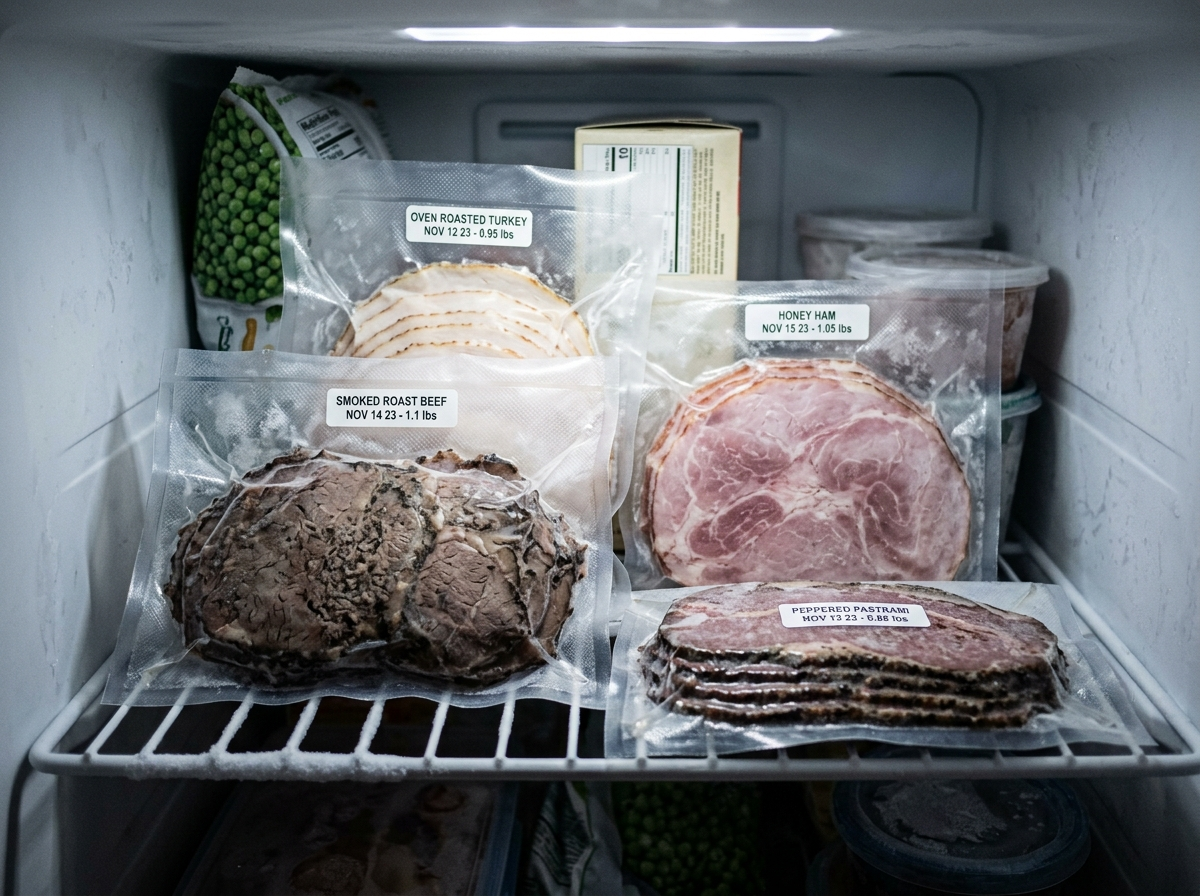
You bought too much turkey from the deli counter, and it’s sitting in your fridge. You know it won’t last the week. So can you just toss it in the freezer? Yes — but the real question is how long can you freeze deli meat before it turns into a sad, freezer-burned mess. The short answer is one to two months for best quality. The longer answer depends on the type of meat, how you wrap it, and your freezer’s temperature. Let’s break it all down so you stop wasting good sandwich fixings.
How Long Can You Freeze Deli Meat? The Short Answer
The USDA recommends keeping frozen deli meat at 0°F (-18°C) and using it within one to two months for the best quality. That’s the sweet spot. Your meat will still be safe to eat well past that mark — technically, food kept at a constant 0°F stays safe indefinitely, according to the USDA Food Safety and Inspection Service. But “safe” and “tasty” are two very different things.
After two months, ice crystals start doing real damage to the meat’s texture. The slices get dry, the flavor flattens out, and you might notice that slightly stale freezer smell when you unwrap them. Nobody wants that on their sandwich.
Here’s what actually happens in my kitchen: I freeze leftover ham slices all the time. If I use them within a month, they taste almost exactly like fresh. Push it to three months, and the edges get that papery, dried-out feel that no amount of mayo can hide. The meat isn’t dangerous — it just isn’t great anymore.
So think of that one-to-two-month window as your quality deadline, not a safety cliff.
Freezing Sliced Deli Meat by Type
Not all deli meats freeze the same way. The biggest factor is moisture content. Dry, cured meats handle the freezer like champs. Wet, freshly sliced meats struggle a lot more. Here’s a breakdown that’ll save you some trial and error.
| Deli Meat Type | Best Freezer Time | Freezes Well? | Notes |
|---|---|---|---|
| Salami / Pepperoni | 2–3 months | Yes | Low moisture means less ice damage |
| Prosciutto / Capicola | 1–2 months | Mostly | Thin slices can stick together |
| Ham (sliced) | 1–2 months | Okay | Higher moisture, wrap tightly |
| Turkey / Chicken breast | 1–2 months | Fair | Dries out fastest of all deli meats |
| Roast beef (sliced) | 1–2 months | Fair | Can get a slightly metallic taste over time |
| Bologna / Mortadella | 1–2 months | Okay | Fat content helps a little |
| Corned beef / Pastrami | 1–2 months | Good | Cured, so more freezer-friendly |
Cured and Dry Meats
Salami, pepperoni, and soppressata are your best candidates for freezing sliced deli meat. These meats are already preserved through curing and drying, so the freezer doesn’t shock them the way it does a moist turkey slice. You can stretch these to two or even three months and still get decent flavor.
The trick is separating the slices before freezing. If you toss a whole stack into a bag, they’ll fuse into a solid brick of meat. Lay them out on a sheet of wax paper, flash-freeze for about 30 minutes, then transfer to a freezer bag. You’ll be able to pull out exactly what you need later.
Moist Deli Meats
Sliced turkey, chicken breast, and fresh ham are the most popular deli picks — and unfortunately the most fragile in the freezer. Their high water content means more ice crystals form inside the meat fibers, which breaks down the texture faster.
You’ll want to use these within one month if you care about taste. They’ll still be safe at two months, but expect a slightly spongy or dry mouthfeel. If you’re planning to use thawed turkey in a cooked dish like a casserole or soup, the texture change matters less. For a cold sandwich, though, you’ll notice the difference.
Pre-Packaged vs. Fresh-Sliced
There’s a real difference between the sealed packages from the grocery aisle and the meat sliced fresh at the deli counter. Pre-packaged deli meat, still unopened in its factory seal, actually freezes better because the packaging is designed to minimize air exposure. You can freeze it right in the original wrapper and get good results for up to two months.
Fresh-sliced meat from the deli counter has been handled more, exposed to more air, and usually comes wrapped in loose paper or thin plastic. That means you need to repackage it before freezing — which we’ll get into next. If you want a deeper look at how to handle deli meat storage in general, this guide on how to store deli meat properly covers the fridge side of things.
How to Freeze Deli Meat the Right Way
The difference between deli meat that tastes great after freezing and deli meat that tastes like cardboard comes down to one thing: air. Air is the enemy. It causes freezer burn, dries out the meat, and lets off-flavors creep in. Your entire freezing strategy should focus on keeping air away from the meat.
Wrapping and Packaging
Here’s the method I use every time, and it works for everything from prosciutto to turkey:
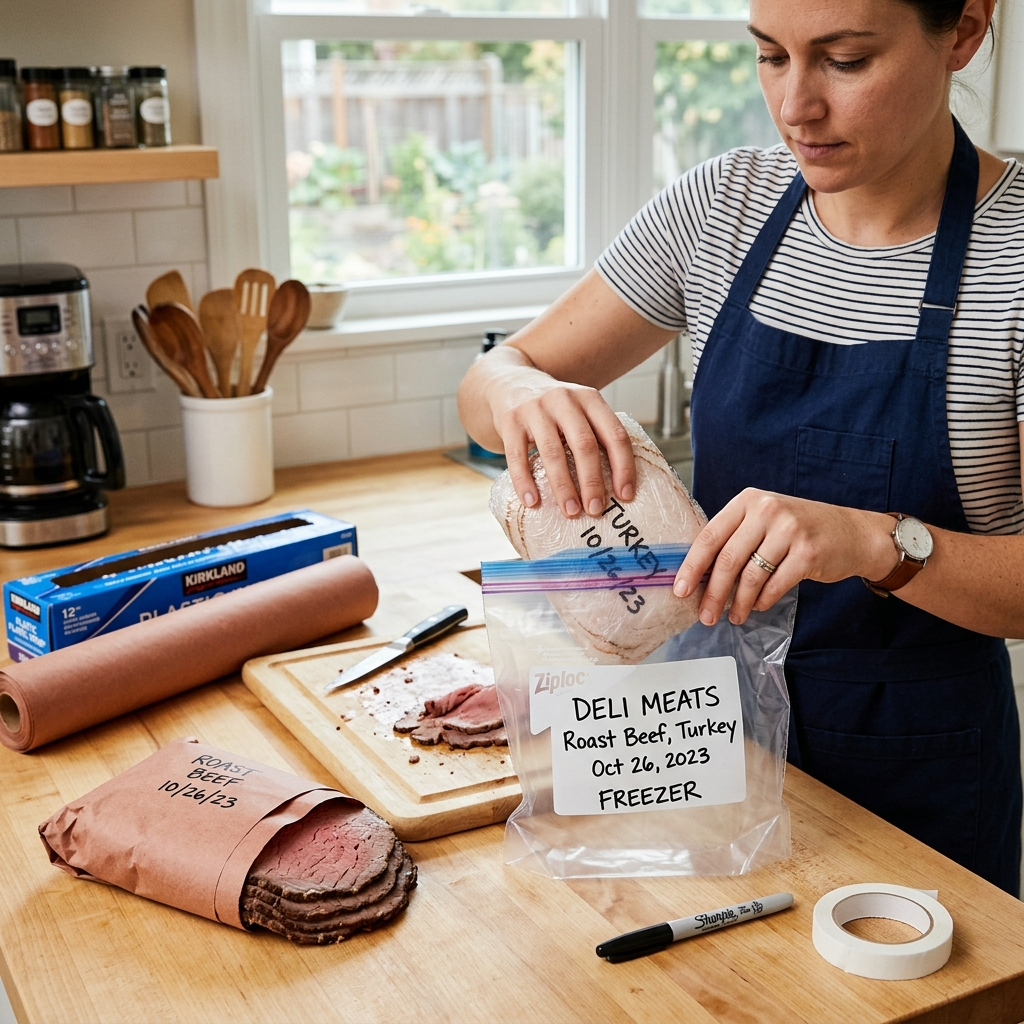
Start by dividing the meat into portions you’ll actually use in one sitting. Freezing a giant pile and then trying to thaw half of it is a recipe for waste. Wrap each portion tightly in plastic wrap, pressing out as much air as you can. Then place the wrapped bundle inside a heavy-duty freezer bag or a vacuum-seal bag.
If you have a vacuum sealer, this is where it really pays off. Vacuum sealing removes nearly all the air and can extend your quality window closer to three months for most deli meats. It’s a small investment that saves a lot of wasted food over time.
For an extra layer of protection, wrap the plastic-wrapped portions in aluminum foil before bagging. This blocks light and adds another barrier against air. It sounds like overkill, but if you’ve ever pulled a bag of gray, frost-covered turkey out of the back of your freezer, you know it’s worth the extra 30 seconds.
If you’re also curious about freezing deli meat in different formats, there are some additional tricks worth checking out.
Labeling and Organization
This sounds boring, but it matters more than you think. Write the date and the type of meat on every bag with a permanent marker. I know you’ll remember what’s in the bag when you put it in. You won’t remember in six weeks when it’s buried behind a container of frozen soup.
Keep your deli meats near the front of the freezer where you’ll actually see them. The back of the freezer is where good intentions go to die. Rotate older packages forward so you use them first.
Deli Meat Freezer Storage: Signs It’s Gone Bad
Knowing how long you can freeze deli meat is only half the battle. You also need to know when to throw it out. Freezer burn doesn’t make meat unsafe, but it does make it unpleasant. And in rare cases, meat can spoil if your freezer temperature fluctuates.
Look for these signs before using frozen deli meat:
Heavy freezer burn. A few small ice crystals are normal. But if the meat is covered in thick, white frost and the edges look gray or brown and feel leathery, the quality is gone. You can trim the worst parts and use the rest in cooked dishes, but don’t expect a great sandwich.
Off smell after thawing. Fresh deli meat smells mild and slightly salty. If your thawed meat smells sour, ammonia-like, or just “wrong,” toss it. Your nose is a reliable tool here. Trust it.
Slimy texture. If the meat feels slimy or sticky after thawing — not just wet, but genuinely slimy — that’s a sign of bacterial growth. This usually happens if the meat was close to spoiling before you froze it or if your freezer lost power at some point.
Color changes. Some darkening is normal with frozen meat, especially roast beef. But if the color shift is dramatic or uneven, combined with any of the signs above, play it safe and discard it.
⚠️ Food Safety Note: This article provides general food storage guidance based on USDA recommendations. It is not a substitute for professional food safety advice. When in doubt about whether meat is safe to eat, the safest choice is to throw it out. Pregnant individuals, young children, older adults, and anyone with a weakened immune system should be especially cautious with deli meats due to listeria risk.
Thawing Frozen Deli Meat Safely
How you thaw deli meat matters almost as much as how you freeze it. The goal is to bring the meat back to a usable temperature without giving bacteria a chance to multiply.
The best method is the simplest one: move the frozen meat from the freezer to the refrigerator the night before you need it. A standard package of sliced deli meat will thaw in about 12 to 24 hours in the fridge. Keep it in its wrapping while it thaws to catch any condensation and prevent cross-contamination with other foods.
If you’re in a rush, you can use the cold water method. Keep the meat in its sealed bag and submerge it in a bowl of cold tap water. Change the water every 30 minutes. Thin deli slices can thaw in under an hour this way. Never use warm or hot water — it raises the surface temperature of the meat into the danger zone while the inside is still frozen.
Avoid thawing deli meat on the counter at room temperature. The outer layers will hit temperatures where bacteria thrive long before the center thaws. It’s tempting when you’re in a hurry, but it’s not worth the risk.
Once thawed, use the meat within three to five days and don’t refreeze it. Refreezing thawed deli meat accelerates texture breakdown and increases the chance of quality loss. If you know you won’t use it all, thaw only the portion you need. For more tips on handling leftover sandwich meats, check out this guide on storing leftover sandwich meat.
Does Freezing Change the Taste or Texture?
Honestly? Yes. Freezing will change your deli meat to some degree, and the extent depends on the type of meat and how well you wrapped it.
The biggest change is texture. When water inside the meat freezes, it forms ice crystals that puncture the cell walls. When the meat thaws, those damaged cells leak moisture, which is why thawed deli meat often feels a bit drier or slightly spongier than fresh. This is especially noticeable with lean, high-moisture meats like sliced turkey breast.
Flavor changes are usually subtle. You might notice a slight loss of the fresh, savory taste, or a faint “freezer” flavor if the meat wasn’t wrapped tightly enough. Cured meats like salami and pepperoni hold their flavor much better because their lower moisture content means fewer ice crystals form.
Here’s a practical tip: if you know the texture won’t be perfect after thawing, plan to use the meat in ways where it matters less. Melted into a hot sandwich, layered into a perfectly built deli sandwich with plenty of condiments, or chopped into an omelet, the slight texture change is barely noticeable. It’s when you eat the meat plain, cold, and by itself that you’ll spot the difference.
How Long Can You Freeze Deli Meat — Quick Reference
If you just want the numbers without the details, here’s the quick version:
- Unopened pre-packaged deli meat: Up to 2 months in the original seal
- Fresh-sliced deli counter meat: 1–2 months, repackaged properly
- Dry cured meats (salami, pepperoni): 2–3 months
- Moist meats (turkey, chicken, ham): 1 month for best quality, 2 months max
- Cooked deli meat leftovers: 1–2 months
All timelines assume your freezer stays at or below 0°F (-18°C). If your freezer runs warmer or you open it frequently, lean toward the shorter end of each range.
Frequently Asked Questions
Can you freeze deli meat twice?
Technically, you can refreeze deli meat if it was thawed in the refrigerator and hasn’t been sitting out for more than a day or two. But each freeze-thaw cycle damages the texture further. The meat will get drier and more crumbly each time. For the best eating experience, only freeze what you’ll use in one go. If you thawed a big batch and realize you won’t eat it all, cook the extra into a hot dish rather than refreezing it raw.
How long can you freeze deli meat before it gets freezer burn?
Freezer burn can start as early as two to three weeks if the meat is poorly wrapped. With proper vacuum sealing or double-wrapping, you can push that out to two or three months. The key variables are air exposure, freezer temperature stability, and how often you open the freezer door. A freezer that gets opened 20 times a day will cause more frost damage than one that stays shut.
Is it safe to eat deli meat that’s been frozen for a year?
From a pure safety standpoint, yes. The USDA confirms that food stored continuously at 0°F remains safe to eat indefinitely. But the quality will be terrible. After a year, expect heavy freezer burn, a dry and leathery texture, and a stale taste. It won’t make you sick, but you probably won’t enjoy eating it either. Stick to the one-to-two-month window for meat you’ll actually want on your plate.
Can you freeze deli cheese along with the meat?
You can, but cheese doesn’t freeze as gracefully as meat. Hard cheeses like cheddar or Swiss hold up okay for a month or two. Soft cheeses like fresh mozzarella or brie turn crumbly and watery after thawing. If you’re prepping sandwich kits for the freezer, keep the cheese and meat in separate bags so you can thaw only what you need.
Final Thoughts on Freezing Deli Meat
Freezing deli meat is one of those simple kitchen habits that saves real money and reduces food waste. The key takeaways are straightforward: wrap tightly, label clearly, use within one to two months, and thaw in the fridge. Dry cured meats will reward your patience more than moist turkey slices, but almost any deli meat can survive a short trip to the freezer if you treat it right.
Next time you find yourself staring at a pile of leftover ham or turkey that you know you won’t finish in time, don’t feel guilty about freezing it. Just wrap it well, date the bag, and put it somewhere you’ll actually see it. Your future self — and your future sandwiches — will thank you.
If you’re looking for more ways to make the most of your deli haul, this rundown on how long deli meat lasts in the fridge is a good companion piece to bookmark alongside this one.