
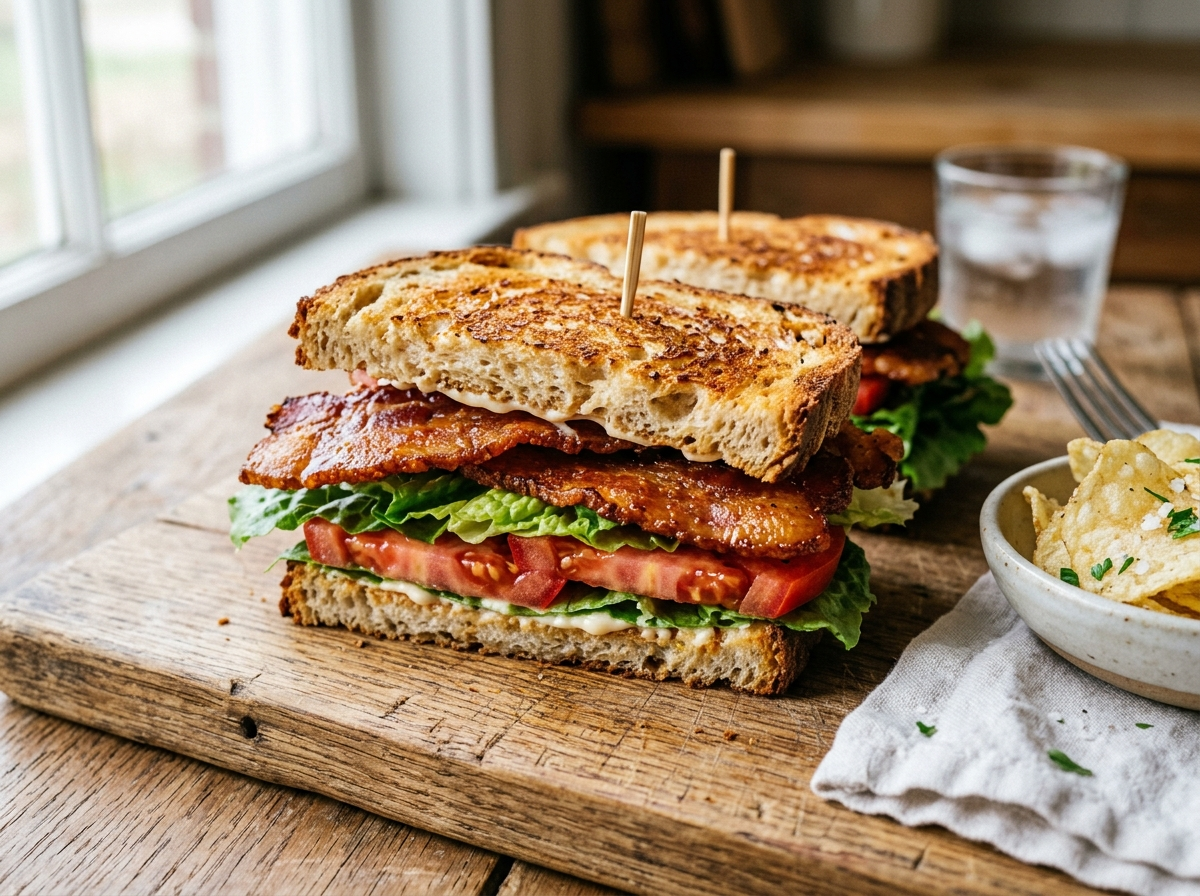
A BLT has four ingredients. That means there’s nowhere to hide. If your bacon is chewy, your tomato is mealy, or your bread is soggy, the whole sandwich falls apart. The good news? Fixing those problems is easy once you know what to look for. Here’s exactly how to make a classic BLT sandwich that’s crispy, juicy, and actually worth the effort.
What Makes a Classic BLT Sandwich Actually Good
A classic BLT sandwich is a simple build of crispy bacon, fresh lettuce, and ripe tomato layered between slices of bread with mayonnaise. That’s it. Five components. But most people rush through the details and end up with something sad and limp.
The secret isn’t a fancy technique or a hidden ingredient. It’s paying attention to each component individually before you stack them together.
Think of it this way. A burger with a dry patty and stale bun won’t be saved by great cheese. Same logic here. Your BLT is only as good as its weakest ingredient. If your tomato is pale and hard, no amount of crispy bacon will rescue it.
That’s why this guide breaks down every single piece of the sandwich. You’ll learn what to buy, how to prep it, and the assembly order that keeps everything from turning into a soggy mess. For more on building sandwiches that hold together, check out these tips on how to build a perfect deli sandwich.
Choosing and Cooking Your Bacon
Bacon is the star of a BLT. Get this wrong and nothing else matters.
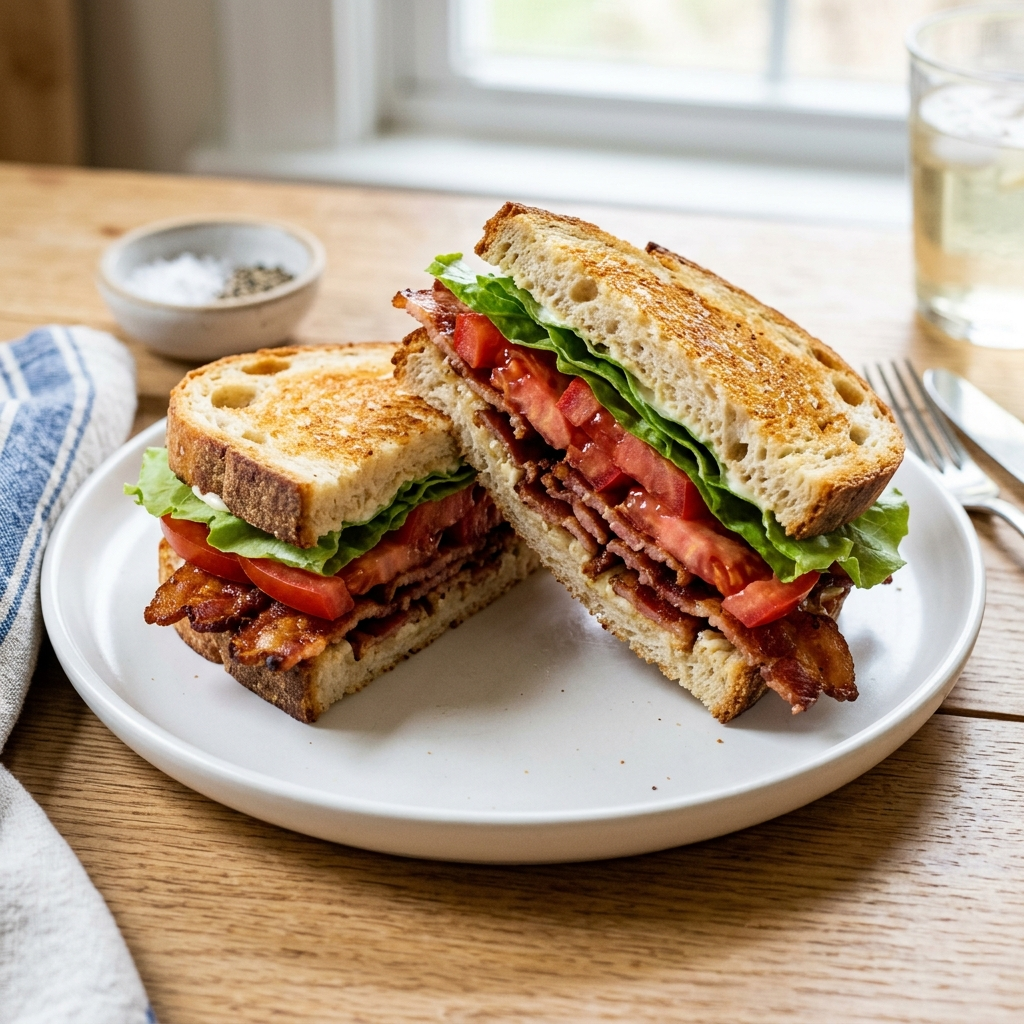
The biggest mistake people make is pulling bacon off the heat too early. Bacon continues to crisp up for about a minute after you take it out of the pan or off the baking sheet. If it looks perfectly done while it’s still cooking, it’ll be overdone by the time you bite into it. Pull it when it’s just shy of your target crispness — it’ll finish on the plate. I learned this the hard way after years of waiting for that “perfect” look in the skillet, only to end up with bacon that crumbled into dust the second I touched it.
Thick-Cut vs. Thin-Cut Bacon
This is partly personal preference, but thick-cut bacon tends to work better for BLTs. Thin bacon shatters when you bite into it, which means pieces fall out of the sandwich and onto your lap. Thick-cut bacon has enough structure to stay in place while still giving you that satisfying crunch.
That said, if you love shattery, lace-crisp bacon, thin-cut is your move. Just use more strips so you get full coverage across the bread.
The Best Way to Cook Bacon for a BLT
You have two solid options: the oven or the stovetop.
The oven method is the easiest for consistency. Lay your strips on a rimmed baking sheet — no overlapping — and bake at 400°F for 15 to 20 minutes. You get even cooking across every strip, and you don’t have to stand over a splattering pan. This is the method I use when I’m making BLTs for more than two people because you can cook an entire package at once without babysitting it.
The stovetop works fine for a quick single serving. Use medium heat, not high. High heat renders the fat too fast and leaves you with burnt edges and chewy centers. Flip the strips every couple of minutes until they reach that just-under-done look I mentioned earlier.
Food safety note: The USDA recommends cooking all pork products to a safe minimum internal temperature. For bacon, cooking until crispy generally exceeds this threshold, but you can verify specifics on the USDA safe minimum internal temperature chart. This is general food safety information and not a substitute for guidance from a food safety professional.
The Tomato Is More Important Than You Think
Food science writer J. Kenji López-Alt, who has written extensively about sandwich construction for Serious Eats, has a well-known take on this: a BLT is really a tomato sandwich. The bacon and lettuce are supporting players. The tomato is the main event.
If you take one thing away from this classic BLT sandwich recipe, let it be this — use the ripest, juiciest tomato you can find.
Ripeness and Seasonality
Tomato season matters more for BLTs than almost any other dish. A peak-summer tomato, the kind that’s heavy for its size and smells sweet at the stem, will give you a sandwich that tastes completely different from one made with a January hothouse tomato.
If it’s not tomato season where you live, you still have options. Heirloom tomatoes from a local farmers market are usually your best bet, even slightly out of season. Vine-ripened tomatoes from the grocery store are the next best thing. Avoid the pale, rock-hard tomatoes that sit in the refrigerated section — they’ll be mealy and flavorless.
And please don’t refrigerate your tomatoes before using them. Cold temperatures break down the cell structure and kill the flavor compounds. Keep them on the counter at room temperature until you’re ready to slice.
Slicing and Seasoning Your Tomato
Slice your tomato about ¼ inch thick. Thinner slices get lost in the sandwich. Thicker slices make it structurally unstable and flood the bread with juice.
Here’s a step most people skip: salt your tomato slices directly. Lay them out on a plate, hit them with a pinch of flaky salt and a crack of black pepper, and let them sit for about five minutes while you prep everything else. The salt draws out a little surface moisture (which helps prevent sogginess) and amplifies the tomato flavor dramatically. This tiny step is the difference between a good BLT and a great one.
Lettuce and Bread Choices That Make a Difference
Which Lettuce Holds Up Best
Iceberg lettuce is the traditional choice, and there’s a good reason for it. Iceberg is crunchy, watery, and mild — it adds texture without competing with the bacon and tomato. It also holds up well against moisture, which matters when you’re stacking juicy tomato slices on top of it.
Romaine is a solid runner-up if you want a bit more flavor and a sturdier leaf. Butter lettuce is softer and more delicate, which some people love, but it wilts faster against warm bacon and wet tomatoes.
Whatever you choose, dry your lettuce thoroughly after washing. Wet lettuce is the fastest route to a soggy sandwich. Spin it in a salad spinner or pat it down with paper towels. If sogginess is a recurring problem for you, this guide on how to prevent a soggy sandwich covers several tricks that work across all sandwich types.
Toast or No Toast?
This is one of the most debated questions in BLT circles, and honestly, both sides have a point.
Toasting your bread adds crunch and creates a sturdier surface that resists moisture better. It also adds a layer of flavor, especially if you’re using a good sourdough or a hearty white bread. If you’re using very juicy tomatoes or piling on the mayo, toasting is the safer bet.
Untoasted bread gives you a softer, more traditional texture that lets the bacon be the sole source of crunch. This works well if your bacon is extra crispy and your tomatoes aren’t overly wet.
My recommendation? Lightly toast the bread. You want it to have some structure without being so crunchy that it shreds the roof of your mouth. A quick run through the toaster on a medium setting is plenty. If you want more control over the toast level, here’s a helpful breakdown of how to toast sandwich bread in the oven.
For bread type, a soft white sandwich bread is the classic choice and works beautifully. Sourdough adds tang that pairs well with the salty bacon. Avoid dense, heavy breads like rye or pumpernickel — they overpower the delicate tomato flavor.
How to Make a Classic BLT Sandwich Step by Step
The order you stack your ingredients matters more than most people realize. Get it wrong and your bottom slice of bread turns to mush before you finish the first bite.
Here’s the assembly order I use, and the reasoning behind each layer:
Step 1: Spread mayo on both slices of bread.
Mayo isn’t just a flavor component — it acts as a waterproof barrier between the bread and the wet ingredients. Coat both slices edge to edge. This is the single most effective trick for keeping your bread intact. If you don’t like mayo, a thin layer of cream cheese or even a light brush of olive oil can serve a similar purpose, though the flavor profile will shift.
Step 2: Lay down the lettuce first.
The lettuce goes on the bottom slice, directly on top of the mayo. This creates a second moisture barrier between the tomato juice and the bread. Think of the lettuce as a little edible raincoat for your bread.
Step 3: Add the tomato slices.
Place your salted, peppered tomato slices on top of the lettuce. The lettuce catches any juice that drips down, keeping the bottom bread dry.
Step 4: Layer on the bacon.
Arrange your bacon strips in a single layer across the tomatoes. Try to cover as much surface area as possible so you get bacon in every bite. If you’re using thick-cut bacon, three to four strips per sandwich is usually enough. Thin-cut might need five or six.
Step 5: Top with the second slice of bread, mayo side down.
Press down gently — just enough to compress the sandwich slightly without squeezing out all the tomato juice. Cut diagonally (because triangles taste better, obviously) and serve immediately.
A BLT doesn’t hold well. The longer it sits, the more the tomato juice migrates into the bread, no matter how good your moisture barriers are. Make it, cut it, eat it. If you’re making sandwiches ahead for a party or gathering, you might want to check these guidelines on how long sandwiches can safely sit out to keep things food-safe.
Bacon Lettuce Tomato Sandwich Tips for Next-Level Results
Once you’ve nailed the basics of how to make a BLT, a few small tweaks can push your sandwich from great to unforgettable.
Use warm bacon on cool tomatoes. The temperature contrast is part of what makes a BLT so satisfying. Don’t let your bacon cool completely before assembling. Warm bacon against a room-temperature tomato creates a contrast that makes every bite more interesting.
Try adding a thin slice of avocado. Purists might object, but a few slices of ripe avocado add creaminess that complements the crispy bacon and juicy tomato beautifully. It’s not traditional, but it works.
Experiment with flavored mayo. A swipe of garlic aioli, chipotle mayo, or even a basil-infused mayo can add a subtle twist without overwhelming the core flavors. If you’re curious about other sandwich toppings that pair well with classic builds, this list of popular sandwich toppings has some good ideas.
Double up on the tomato. If you’ve got an incredible peak-season tomato, don’t be shy. Add an extra layer. The BLT is a tomato sandwich, remember? Let the star ingredient shine.
Use freshly cracked black pepper on the bacon. Most people season the tomato but forget the bacon. A few cracks of black pepper on the warm bacon strips right before assembly adds a subtle heat that ties everything together.
Frequently Asked Questions
What is the best bread for a classic BLT sandwich?
A soft, high-quality white sandwich bread is the most traditional choice. It’s mild enough to let the bacon, tomato, and mayo take center stage. Sourdough is a great alternative if you want a bit of tang and extra structure. Avoid dense or heavily flavored breads that compete with the filling.
How do I keep my BLT from getting soggy?
Three things make the biggest difference. First, spread mayo on both slices of bread to create a moisture barrier. Second, put the lettuce between the bread and the tomato so it catches the juice. Third, salt your tomato slices a few minutes before assembling to draw off excess surface moisture. And eat the sandwich right away — a BLT doesn’t improve with age.
Can I make a BLT without mayo?
You can, but you’ll lose the moisture barrier that mayo provides. If you skip the mayo, consider lightly toasting your bread to add some water resistance, and be extra diligent about drying your lettuce and salting your tomatoes. A thin spread of cream cheese or mashed avocado can also help protect the bread from tomato juice.
A great BLT doesn’t need complicated techniques or expensive ingredients. It needs ripe tomatoes, properly cooked bacon, dry lettuce, and a little attention to how you stack everything together. Once you start treating each of those four components with a bit of care, you’ll wonder why your previous BLTs ever tasted flat.
Go grab the best tomato you can find, cook your bacon just under your target crispness, and build your sandwich with intention. Your lunch will thank you.