
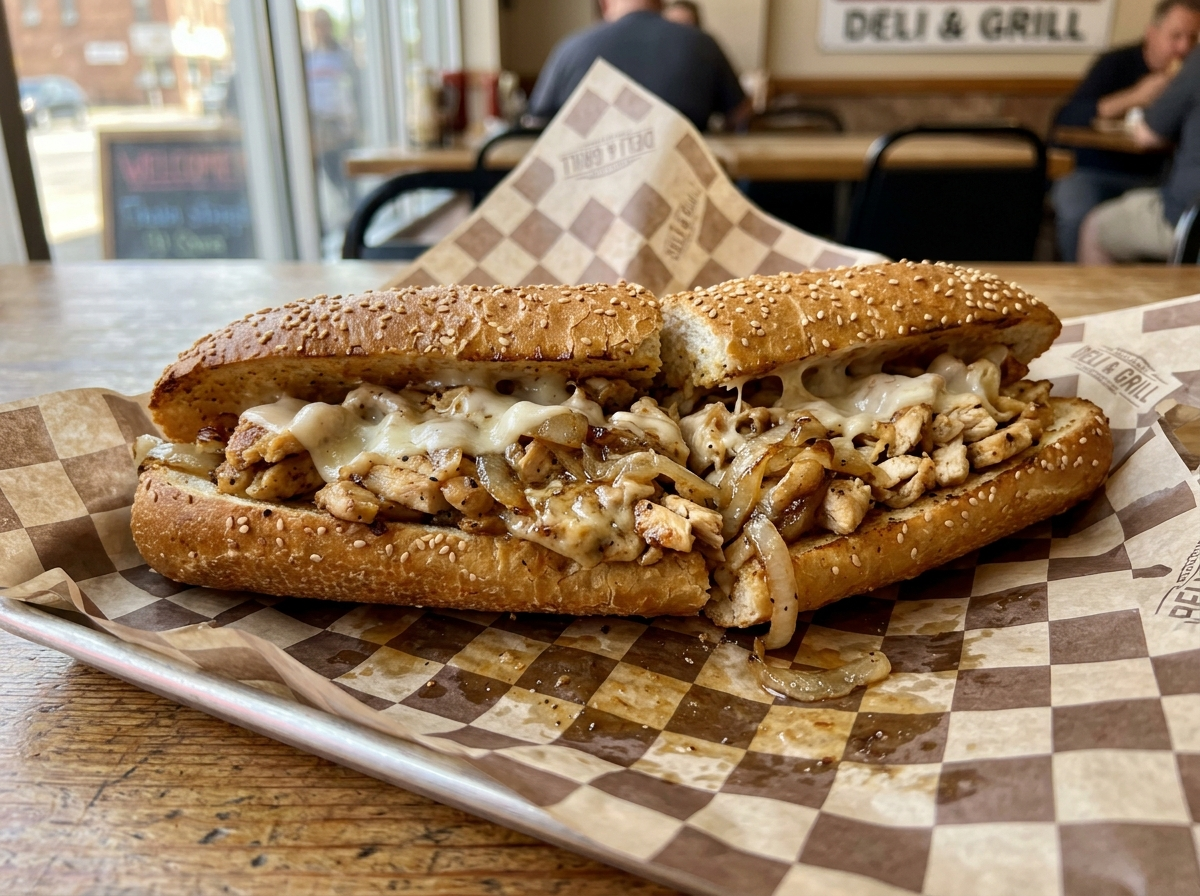
You love the idea of a Philly cheesesteak but want something lighter than beef. Or maybe you just have chicken in the fridge and a craving for something cheesy and satisfying. Either way, a chicken cheesesteak is your answer. It takes everything great about the original — the melty cheese, the soft roll, the savory peppers and onions — and swaps in seasoned chicken. Here’s exactly what it is and how to build one that actually tastes good.
What Is a Chicken Cheesesteak?
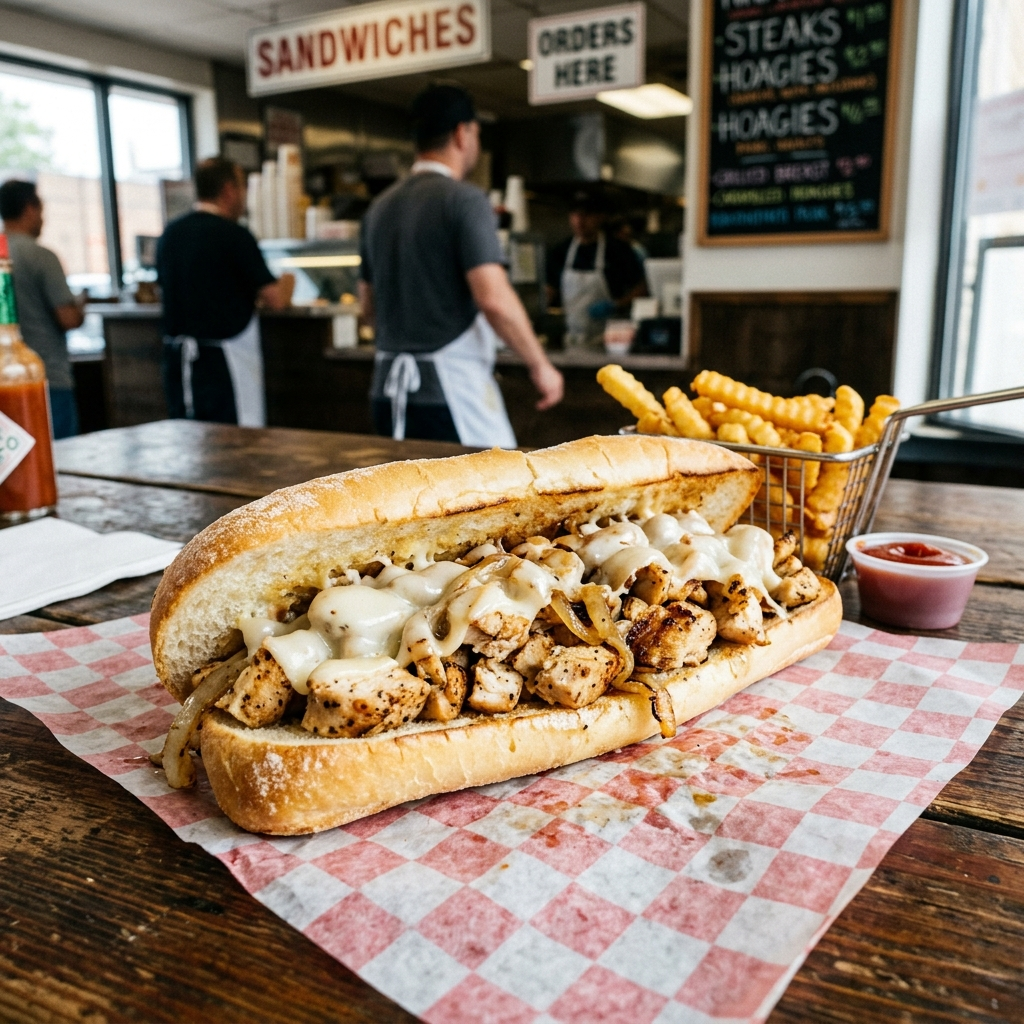
A chicken cheesesteak is a sandwich made with thinly sliced, griddled chicken, melted cheese, and usually sautéed onions and bell peppers, all piled into a soft hoagie roll. Think of it as the cousin of the classic Philly cheesesteak, which traditionally uses shaved ribeye beef.
The swap sounds simple, but it changes more than you might expect. Beef ribeye has a high fat content that practically bastes itself on the griddle. Chicken breast, on the other hand, is lean. That means you have to cook it a little differently to keep it from turning dry and rubbery. Get it right, though, and you end up with a sandwich that’s just as crave-worthy as the original — with fewer grams of saturated fat per serving.
Where Did the Chicken Cheesesteak Come From?
There’s no single inventor of the chicken cheesesteak the way Pat Olivieri gets credit for the beef version in 1930s South Philadelphia. The chicken variation grew out of the same sandwich shops and food trucks that started offering alternatives for customers who didn’t eat red meat. Over the last couple of decades, it’s become a standard menu item at delis, sports bars, and home kitchens across the country.
It’s not a “health food” by any stretch — cheese and a buttered roll will see to that — but it is a genuinely lighter option when you compare it side by side with a beef cheesesteak loaded with ribeye.
Key Ingredients for a Philly Chicken Cheesesteak
A great philly chicken cheesesteak comes down to four decisions: the chicken, the cheese, the bread, and the toppings. Skimp on any of them and the whole sandwich falls flat.
Choosing the Right Chicken Cut
This is where most people go wrong. Chicken breast is the obvious grab because it’s lean and easy to find. It works, but you need to handle it carefully since it dries out fast on high heat.
Chicken thighs are the better pick if you want more flavor and forgiveness. They have a bit more fat, which means they stay juicy even when you’re cooking them hard on a skillet or griddle. Boneless, skinless thighs are what you want.
If you do go with breast meat, here’s a trick that makes a real difference: freeze the chicken for about 20 to 30 minutes before slicing. You’re not trying to freeze it solid — just firm it up enough that your knife glides through cleanly. This lets you cut paper-thin strips, which is exactly what you need. Thick chunks of chicken won’t give you that classic cheesesteak texture, no matter how long you cook them. You can read more about why slicing meat thin matters for this style of sandwich.
The Cheese Debate
Cheese choice is almost a religion in cheesesteak circles. The three big options are:
| Cheese | Flavor Profile | Melt Quality | Best For |
|---|---|---|---|
| Provolone | Mild, slightly sharp | Smooth and even | A balanced, classic taste |
| American | Creamy, salty | Extremely gooey | That nostalgic, diner-style pull |
| Cheez Whiz | Bold, tangy, salty | Liquid melt | Authentic Philly street-style flavor |
Provolone is the most popular choice for a chicken cheesesteak because its mildness doesn’t overpower the lighter chicken flavor the way it sometimes competes with beef. American cheese is a solid runner-up if you want maximum goo. Cheez Whiz is divisive — some people swear by it, others won’t touch it — but it does give you that unmistakable South Philly taste.
Want a deeper breakdown? We’ve got a full guide on picking the best cheesesteak cheese if you want to nerd out on this.
Bread Matters More Than You Think
You need a roll that’s soft enough to squish down when you bite into it but sturdy enough to hold a pile of wet, cheesy chicken without collapsing. An Amoroso-style hoagie roll is the gold standard if you can find one. A good French roll or a soft Italian sub roll works too.
Avoid anything crusty like a baguette. The hard crust fights the filling and everything spills out the sides. You can check out our thoughts on choosing the best cheesesteak bread for more specifics.
Chicken Cheesesteak Recipe: Step-by-Step
Here’s a straightforward chicken cheesesteak recipe that works on a stovetop skillet, a flat-top griddle, or even an outdoor grill with a plancha insert.
What You’ll Need
- 1 lb boneless, skinless chicken thighs (or breasts)
- 1 large yellow onion, thinly sliced
- 1 green bell pepper, thinly sliced
- 4 slices provolone cheese (or your pick from above)
- 4 hoagie rolls
- 2 tablespoons olive oil or vegetable oil
- 1 teaspoon garlic powder
- 1 teaspoon smoked paprika
- Salt and black pepper to taste
- Optional: hot cherry peppers, banana peppers, or a drizzle of mayo
Step 1: Prep and Slice the Chicken
Pop your chicken in the freezer for 20 to 30 minutes. Once it’s firm but not frozen solid, use a sharp knife to cut it into thin strips — aim for about 1/8-inch thick. Toss the strips in a bowl with the garlic powder, smoked paprika, salt, and pepper. Let them sit for about 10 minutes while you prep the vegetables.
Slice your onion and bell pepper into thin strips that roughly match the size of the chicken. Uniformity matters here because everything cooks together on the griddle.
Step 2: Cook the Vegetables
Heat one tablespoon of oil in a large skillet or on your griddle over medium-high heat. Add the onions and peppers. Cook them for about 5 to 7 minutes, stirring occasionally, until they’re soft and starting to get some char on the edges. Move them to one side of the skillet or transfer them to a plate.
Step 3: Cook the Chicken
Add the remaining oil to the hot skillet. Spread the chicken strips out in a single layer. Don’t crowd the pan. If you pile the chicken on top of itself, it’ll steam instead of sear, and you’ll lose that slightly crispy, caramelized edge that makes a cheesesteak taste good.
Cook the chicken for about 4 to 6 minutes, tossing occasionally, until it’s cooked through. Chicken needs to reach an internal temperature of 165°F to be safe to eat, per USDA food safety guidelines. This is non-negotiable — unlike beef, you can’t serve chicken medium-rare. Use an instant-read thermometer to check a few of the thicker strips if you’re unsure.
Food Safety Note: Chicken must always be cooked to 165°F throughout. This is general food safety information and not a substitute for professional food handling guidance. When in doubt, use a calibrated meat thermometer.
Step 4: Melt the Cheese
Once the chicken is done, mix the vegetables back in. Divide the mixture into four portions right on the skillet surface. Lay a slice of provolone (or your chosen cheese) over each portion. Let it sit for about 60 seconds until the cheese droops and melts into the meat and veggies.
Step 5: Build the Sandwich
Scoop each cheesy chicken pile into a split hoagie roll. If you want to go the extra mile, toast the rolls lightly in the same skillet with a little butter before loading them up. Add hot peppers or a smear of mayo if that’s your thing. Serve immediately.
Common Mistakes That Ruin Your Chicken Cheesesteak
Even a simple sandwich can go sideways if you’re not paying attention. Here are the most frequent problems and how to avoid them:
Overcooking the chicken. This is the number one issue. Chicken thighs are more forgiving, but breast meat can go from juicy to shoe-leather in about 90 seconds on high heat. Keep the pieces moving and pull them off the skillet the moment they hit 165°F.
Slicing the chicken too thick. If your strips are closer to 1/2 inch than 1/8 inch, you’re making chicken stir-fry, not a cheesesteak. The thin slicing is what gives the sandwich its signature texture.
Using the wrong bread. A crusty roll will shatter when you bite down and dump the filling into your lap. Go soft. If you’re struggling with soggy bread from the juices, we have some tips on how to prevent a soggy sandwich that apply perfectly here.
Skipping the seasoning. Chicken is a blank canvas compared to beef. If you just throw plain, unseasoned strips on the griddle, the sandwich will taste flat. The garlic powder and smoked paprika in the recipe above make a big difference, and you can add onion powder, a pinch of cayenne, or even a splash of Worcestershire sauce to the mix.
Adding cheese too early. If you throw the cheese on while the chicken is still actively cooking and releasing moisture, the cheese will slide right off. Wait until the chicken is done, then add the cheese and let the residual heat do the work.
Variations and Toppings to Try
Once you’ve nailed the basic chicken cheesesteak recipe, you can start riffing on it. Here are some variations that work really well:
Spicy chicken cheesesteak: Add sliced jalapeños or hot cherry peppers to the onion and pepper mix. A drizzle of sriracha mayo on the roll takes it up another notch.
Mushroom and Swiss: Swap the provolone for Swiss cheese and add sliced cremini mushrooms to the skillet with the onions. The earthiness of the mushrooms pairs beautifully with the lighter chicken.
BBQ chicken cheesesteak: Toss the cooked chicken strips in a couple tablespoons of your favorite barbecue sauce right before adding the cheese. Use pepper jack instead of provolone for a smoky, spicy twist.
Buffalo chicken cheesesteak: Coat the chicken in buffalo wing sauce and top with crumbled blue cheese or a drizzle of ranch dressing. It sounds chaotic, but it works surprisingly well — especially on game day.
Loaded chicken cheesesteak: Go all out with bacon bits, pickled banana peppers, and a fried egg on top. This version is not subtle, but it’s incredibly satisfying.
The beauty of this sandwich is that it’s flexible. The framework — thin protein, melted cheese, soft roll — stays the same. Everything else is up to you.
Frequently Asked Questions
What is the difference between a chicken cheesesteak and a regular Philly cheesesteak?
The main difference is the protein. A traditional Philly cheesesteak uses thinly shaved ribeye beef, which has a rich, fatty flavor. A chicken cheesesteak swaps in thinly sliced chicken (usually thighs or breast), making it leaner and milder in taste. The cheese, bread, and toppings stay largely the same, though chicken versions often lean toward provolone over Cheez Whiz because the milder cheese complements the lighter meat better.
Can I use pre-cooked or rotisserie chicken for a chicken cheesesteak?
You can, but the texture won’t be quite right. Pre-cooked chicken tends to shred rather than sear, so you lose that caramelized, slightly crispy quality that makes a cheesesteak satisfying. If rotisserie chicken is all you have, shred it, warm it in a skillet with a little oil and seasoning, and add the cheese on top. It’ll be a decent quick meal — just don’t expect it to match the real thing.
How do I store and reheat leftover chicken cheesesteaks?
Wrap the sandwich tightly in foil and refrigerate it within two hours of cooking. It’ll keep for about 3 to 4 days. To reheat, wrap it in foil and warm it in a 350°F oven for about 10 to 15 minutes. The microwave works in a pinch but will make the bread rubbery, so the oven is worth the extra few minutes.
Your Turn to Fire Up the Skillet
A chicken cheesesteak isn’t trying to be a beef cheesesteak, and that’s exactly why it works. It’s its own thing — lighter, a little more versatile, and honestly a lot easier to nail at home since you don’t need to source perfectly marbled ribeye.
Grab some chicken thighs, a good hoagie roll, and a handful of provolone slices. Slice everything thin, keep the skillet hot, and don’t overthink it. You’ll have a sandwich on the table in under 30 minutes that’ll make you wonder why you ever waited in line at a tourist-trap cheesesteak stand.
If you enjoyed this, browse more of our sandwich and comfort food recipes for your next cookout or weeknight dinner.