
You spot soppressata at the deli counter. It looks like salami, but the label says something different, and the price tag is a little higher. So what exactly are you paying for, and is it worth tossing into your sandwich rotation?
Soppressata is a dry-cured Italian pork salami with a coarse grind, a slightly flattened shape, and a flavor that ranges from mild and garlicky to fiery hot depending on where it was made. It’s one of the most versatile cured meats you can keep in your fridge, and once you understand the basics, you’ll find yourself reaching for it way more often than plain Genoa salami.
What Is Soppressata?
Soppressata is a type of Italian dry salami — technically an insaccato, which is the Italian word for a stuffed and cured sausage. It’s made primarily from coarsely ground pork, usually from the shoulder and sometimes the ham, mixed with fat, salt, black pepper, garlic, and regional spice blends. The mixture gets stuffed into natural casings, pressed flat during the early stages of curing (that’s where the name comes from — soppressare means “to press”), and then hung to dry for several weeks to a few months.
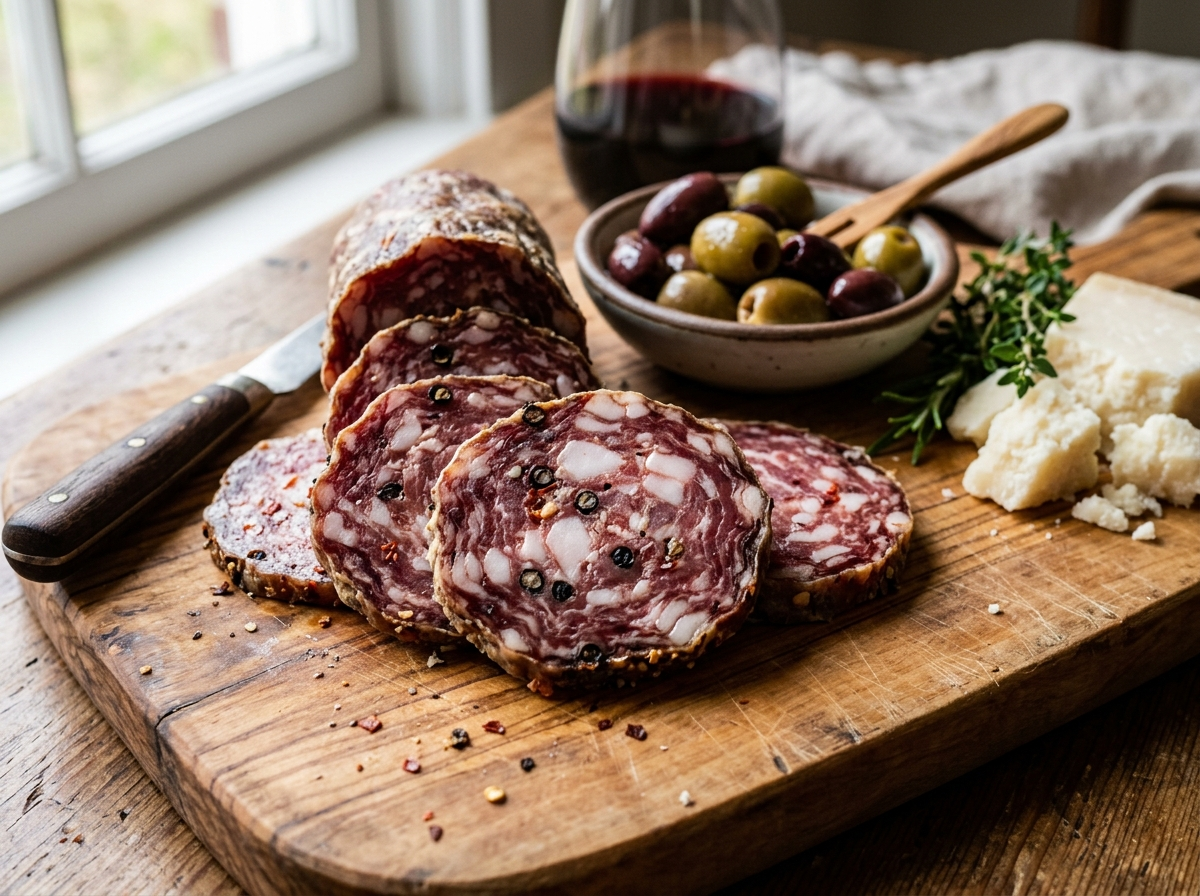
The result is a firm, sliceable salami with visible chunks of white fat running through deep red meat. The texture is noticeably coarser than your standard deli salami. When you slice it thin, you can actually see the individual grains of meat and pockets of fat, which is a big part of what makes it taste so good. The fat melts slightly on your tongue and carries all those spices with it.
Soppressata has deep roots in southern Italy, particularly in Calabria, Basilicata, Puglia, and Campania. Each region has its own version, and locals will argue passionately about whose is best — which is basically the Italian equivalent of a Texas vs. Carolina barbecue debate. The tradition goes back centuries, born out of the practical need to preserve pork through the winter months before refrigeration existed.
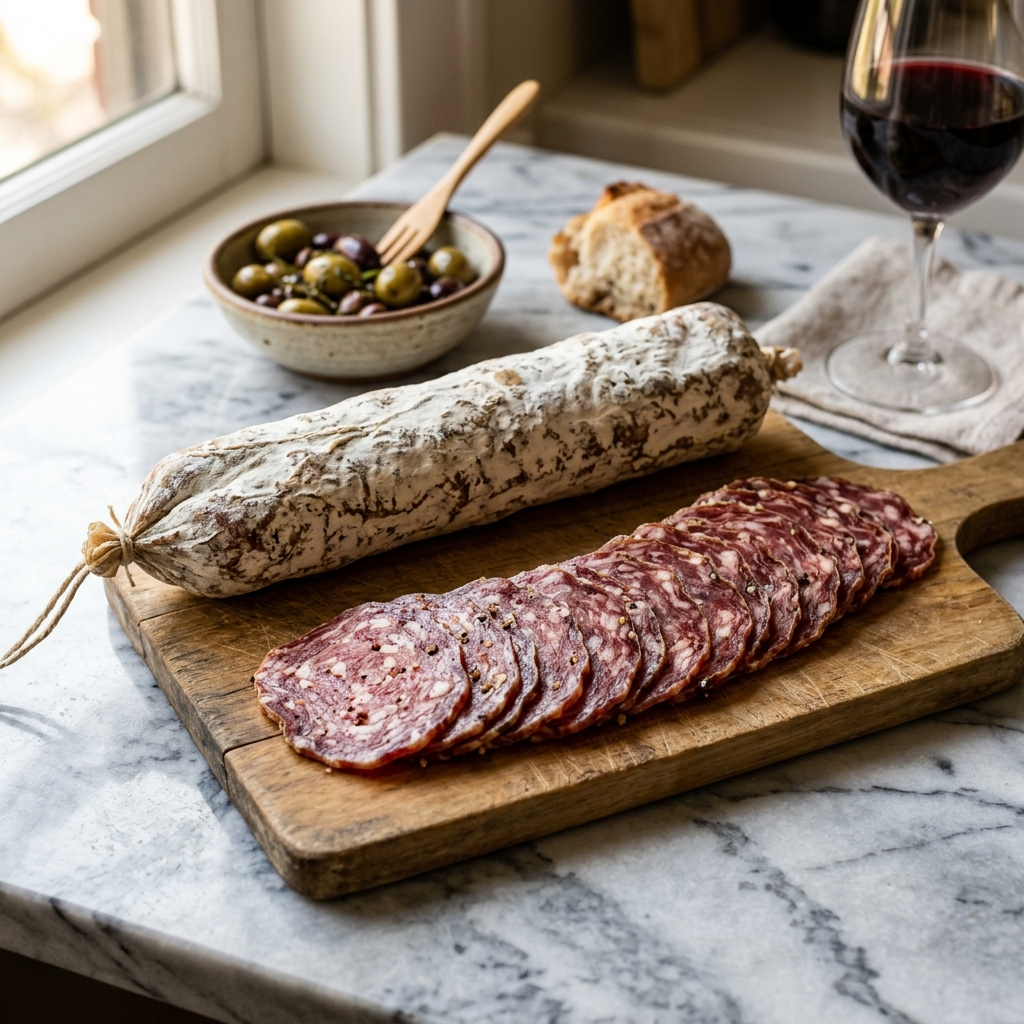
Quick Fact: The pressing step is what gives soppressata its signature oval or slightly flattened cross-section. If you look at a slice next to a perfectly round Genoa salami slice, you’ll see the difference right away.
Sweet vs. Hot: The Two Main Types of Soppressata
Most soppressata you’ll find in the U.S. falls into one of two camps, and the difference comes down to the peppers used during seasoning.
Sweet Soppressata (Soppressata Dolce)
Don’t let the word “sweet” fool you. This isn’t sugary. “Sweet” in this context means not spicy. Sweet soppressata is seasoned with black pepper, garlic, and sometimes fennel seed or white wine. The flavor is rich, porky, and savory with a gentle warmth from the black pepper. It’s the more approachable option if you’re new to Italian dry salami soppressata or if you’re serving a crowd with mixed heat tolerances.
Hot Soppressata (Soppressata Piccante)
This is the one that brings the fire. Hot soppressata gets its kick from Calabrian chili peppers — the same small, bright red peppers that show up in a lot of southern Italian cooking. The heat level can vary quite a bit from producer to producer. Some versions give you a mild tingle, while others will genuinely make your eyes water. If you’re buying from a deli counter, ask for a sample before you commit to a half pound.
Regional Variations Worth Knowing
Beyond the sweet/hot split, there are some notable regional styles:
- Calabrian soppressata tends to be the spiciest and most intensely flavored, often with a deep red color from the heavy use of local chili peppers.
- Tuscan soppressata is milder and sometimes includes orange peel or other aromatic additions you won’t find in southern versions.
- Pugliese soppressata often has a slightly softer texture and a more pronounced garlic flavor.
There’s no single “correct” version. The style you’ll enjoy most depends on your own taste, so try a few if you get the chance.
Soppressata vs. Other Salamis: What’s Actually Different?
If you’re wondering how soppressata stacks up against the other cured meats in the deli case, you’re not alone. The differences come down to grind, texture, shape, and seasoning.
Soppressata uses a coarse grind, meaning the meat and fat are chopped into larger pieces before stuffing. Compare that to Genoa salami, which has a much finer, smoother texture. When you bite into soppressata, you get distinct bursts of fat and meat. Genoa salami gives you a more uniform chew.
The flattened shape is another giveaway. Most salamis are perfectly cylindrical. Soppressata’s pressing step gives it that slightly squished look, which is more than cosmetic — it affects how the meat dries and concentrates flavor.
In terms of seasoning, soppressata leans heavily on garlic and chili peppers, especially in southern Italian styles. If you want a deeper breakdown of how cured meats compare, our guide on salami vs. pepperoni covers some of the same territory with different meats.
And if you’ve also been curious about what capicola is — another Italian cured pork product you’ll often see alongside soppressata on a sub — that’s a great next read. Capicola comes from the neck and shoulder, is typically sliced paper-thin, and has a softer, more delicate texture than soppressata’s hearty chew.
How to Use Soppressata
This is where soppressata really shines. It’s not just a fancy salami you put on a board and forget about. It works in sandwiches, cooked dishes, and snack setups in ways that add real depth of flavor.
Soppressata Sandwich Uses
Soppressata is a natural fit for sandwiches, and it’s one of the key meats in a proper classic Italian sub. The coarse texture and bold seasoning stand up well to crusty bread, sharp provolone, and tangy giardiniera without getting lost.
Here’s what actually works when you’re building a soppressata sandwich at home:
The bread matters more than you think. A soft sandwich roll will get overwhelmed by soppressata’s chew. Go for something with a sturdy crust — a hoagie roll, ciabatta, or a good baguette. You want bread that pushes back a little when you bite.
Slice it thin but not paper-thin. Soppressata is denser than most deli meats. If you slice it too thick, the texture gets rubbery. If you go tissue-paper thin like prosciutto, you lose that satisfying coarse-grain chew. Aim for about 1/8 inch — thick enough to feel the meat, thin enough to fold nicely on the roll.
Pair it with the right cheese. Sharp provolone is the classic choice. Fresh mozzarella works if you want something milder. Pecorino Romano shavings add a salty punch that plays well with hot soppressata. Avoid overly creamy cheeses like brie unless you’re going for a very specific flavor profile.
Add acid. Soppressata is rich and fatty, so it needs something bright to balance it out. Pickled hot peppers, giardiniera, a splash of red wine vinegar, or even a smear of grainy mustard will cut through the richness and make the whole sandwich taste more alive.
If you want to level up your sandwich game across the board, our guide on how to build the perfect deli sandwich walks through layering, moisture control, and bread selection in more detail.
On a Charcuterie Board
Soppressata is a charcuterie board staple for good reason. Its bold flavor and striking appearance — those white fat pockets against the deep red meat — make it one of the first things people reach for.
Fold or drape the slices rather than laying them flat. This creates height on the board and makes it easier for guests to grab a piece. Pair it with something creamy (burrata, fresh ricotta), something crunchy (grissini, crostini), and something sweet (fig jam, honey, Marcona almonds). The contrast is what makes a board interesting, and soppressata’s savory heat anchors the whole spread.
In Cooked Dishes
You can cook with soppressata the same way you’d use any dry salami or spicy sausage. Dice it up and toss it into a pasta sauce, where the fat will render out and flavor the whole dish. Scatter thin slices on a pizza before it goes into the oven — the edges will crisp up and get almost chip-like, which is fantastic. You can also fold diced soppressata into scrambled eggs or an omelet for a breakfast that actually has some personality.
One thing to keep in mind: soppressata is already fully cured and seasoned, so it brings a lot of salt to whatever you’re cooking. Taste your dish before adding extra salt, or you might overshoot.
Storing Soppressata and Food Safety
Whole, uncut soppressata that’s been properly dry-cured can last for months in a cool, dry place. Once you cut into it, though, the clock starts ticking faster.
Whole soppressata: Wrap it in butcher paper or parchment paper and store it in the crisper drawer of your fridge. Avoid plastic wrap if you can — it traps moisture and can encourage mold on the cut surface. A whole piece will keep for several weeks this way.
Pre-sliced soppressata: This dries out much faster. Keep it in an airtight container or resealable bag with a piece of parchment between the slices to prevent sticking. Use pre-sliced soppressata within 5 to 7 days for the best flavor and texture.
If you notice a thin layer of white mold on the outside of a whole soppressata, don’t panic. That’s often a natural part of the curing process and is harmless — you can wipe it off with a cloth dampened with white vinegar. But if the mold is green, black, or fuzzy, or if the meat smells sour or ammonia-like, throw it out.
Food Safety Note: This information is general guidance for home storage of commercially produced cured meats. If you have specific health concerns — especially if you’re pregnant, immunocompromised, or managing a chronic condition — consult your doctor or a food safety professional about consuming dry-cured meats. The USDA’s guidelines on dry-cured sausages provide detailed safety information for these products.
For more general tips on how long deli meats last once they’re in your fridge, check out our breakdown of deli meat fridge life.
Frequently Asked Questions
Is soppressata the same as pepperoni?
No. While both are dry-cured pork sausages, they’re quite different in texture and flavor. Pepperoni has a fine, smooth grind and a uniform, slightly smoky flavor with a consistent mild heat. Soppressata has a coarse grind with visible chunks of fat, a more complex spice profile (garlic, black pepper, sometimes fennel), and a wider range of heat levels depending on the variety. Pepperoni is an American creation inspired by Italian salami traditions, while soppressata has centuries of regional Italian history behind it.
Can you eat soppressata raw?
Yes. Soppressata is a dry-cured salami, which means it’s fully preserved through the curing and fermentation process and is safe to eat without cooking. That’s how it’s traditionally served — sliced and eaten as-is on sandwiches, charcuterie boards, or as a snack. You can cook with it if you want to (it’s great on pizza or in pasta), but cooking isn’t necessary for safety.
What does soppressata taste like?
The flavor depends on the variety. Sweet soppressata tastes rich, porky, and savory with notes of garlic and black pepper. Hot soppressata adds a layer of chili heat that can range from a gentle warmth to a serious burn. Both types have a deeper, more complex flavor than standard deli salami because of the coarse grind and longer curing time. The texture is firmer and chewier, with distinct bites of seasoned meat and creamy fat.
Where to Start
Soppressata is one of those ingredients that quietly upgrades everything it touches. A basic Italian sub becomes something you actually remember. A weeknight pasta gets a hit of savory depth without any extra effort. Even a simple plate of cheese and crackers feels more intentional when there’s a pile of folded soppressata slices next to it.
Start with a small piece from your local deli counter — ask for a few slices of both sweet and hot if they carry both. Taste them plain first so you can appreciate the texture and spice before you layer them into a sandwich. Once you figure out which style you prefer, you’ll probably find yourself adding it to your grocery list on a regular basis.
And if you’re the kind of person who likes to explore the whole world of Italian cured meats, that’s a rabbit hole worth going down. There’s a reason these traditions have survived for centuries — they just taste that good.