
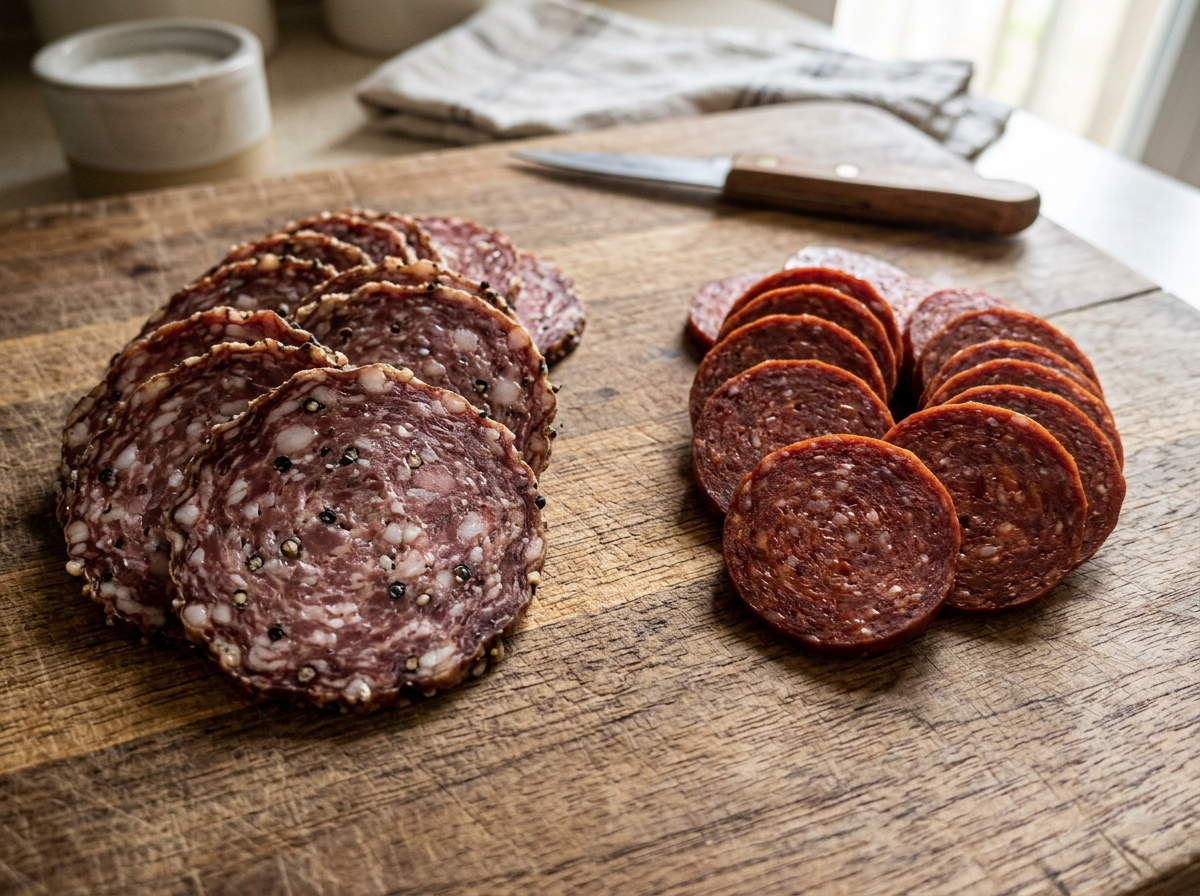
You’re standing at the deli counter, and the person behind you asks for “the spicy salami.” They mean pepperoni. Or do they? The confusion between these two cured meats is incredibly common, and honestly, it’s not your fault — pepperoni actually is a type of salami. But that doesn’t make them interchangeable. Let’s sort out the difference between salami and pepperoni so you know exactly what you’re grabbing for your next sandwich, pizza, or charcuterie board.
What Is Salami?
Salami is a broad category of cured, fermented, and air-dried sausage that traces its roots back to Italy. The word itself comes from the Italian salare, meaning “to salt.” That tells you a lot about how it’s made — salt is the star of the preservation process.
When we say “salami,” we’re not talking about one specific product. Think of it more like saying “cheese.” There are hundreds of varieties, each tied to a specific region, recipe, and tradition. Some of the most well-known types include Genoa salami, soppressata, finocchiona, and Milano. If you want to dig deeper into one of those, our guide on what soppressata is breaks down that particular variety nicely.
Traditional salami is made from ground pork (sometimes mixed with beef), fat, salt, wine, garlic, and various spices. The mixture gets stuffed into natural casings, then left to ferment and dry for weeks or even months. That long curing time is what gives salami its complex, tangy, slightly funky flavor.
Here’s something most people don’t realize: the white powdery coating you see on the outside of a real dry-cured salami is actually a harmless mold — Penicillium nalgiovense — that protects the meat during aging. It’s the same family of mold used in cheese-making. You can wipe it off or eat right through it. Either way, it’s a sign of a properly cured product.
What Is Pepperoni?
Pepperoni is an American invention inspired by Italian salami traditions. Despite the Italian-sounding name, you won’t find “pepperoni” on a menu in Rome. In Italy, peperoni (one “p”) means bell peppers. Order a “pepperoni pizza” in Naples, and you’ll get a pie covered in roasted bell peppers, not the spicy red circles you were expecting.
In the United States, pepperoni emerged in the early 1900s among Italian-American communities. It was designed to be a spicier, smokier, more consistent product than the regional salamis their families made back home. Today, it’s the single most popular pizza topping in America, which is a pretty remarkable run for a meat that didn’t exist two centuries ago.
Pepperoni is typically made from a blend of pork and beef, seasoned heavily with paprika and chili pepper — that’s what gives it the signature red-orange color and the kick of heat. It goes through a shorter curing process than most traditional salamis, and it’s often smoked, which adds another layer of flavor you won’t find in a classic Genoa salami.
So is pepperoni technically a salami? Yes. It falls under the salami umbrella because it’s a cured, fermented, dried sausage. But calling pepperoni “just a salami” is like calling a jalapeño “just a pepper.” Technically true, but it misses the point entirely.
Salami vs Pepperoni: The Key Differences
Now that you know what each one is, let’s get into the side-by-side comparison. This is where the salami vs pepperoni debate actually gets interesting.
Flavor and Spice Level
Salami flavors vary wildly depending on the type. A Genoa salami tastes mild, garlicky, and slightly winey. A finocchiona hits you with fennel. A spicy soppressata brings some heat. The flavor profile is generally more complex and layered because of the longer aging process.
Pepperoni, on the other hand, has a more straightforward flavor: smoky, spicy, and a little tangy. The paprika and chili pepper dominate. You know exactly what you’re going to get every time, which is part of why it works so well on pizza — it doesn’t compete with the sauce and cheese.
If you put a slice of each on your tongue right now, the salami would taste richer and more nuanced, while the pepperoni would hit you with an immediate, familiar warmth.
Texture and Appearance
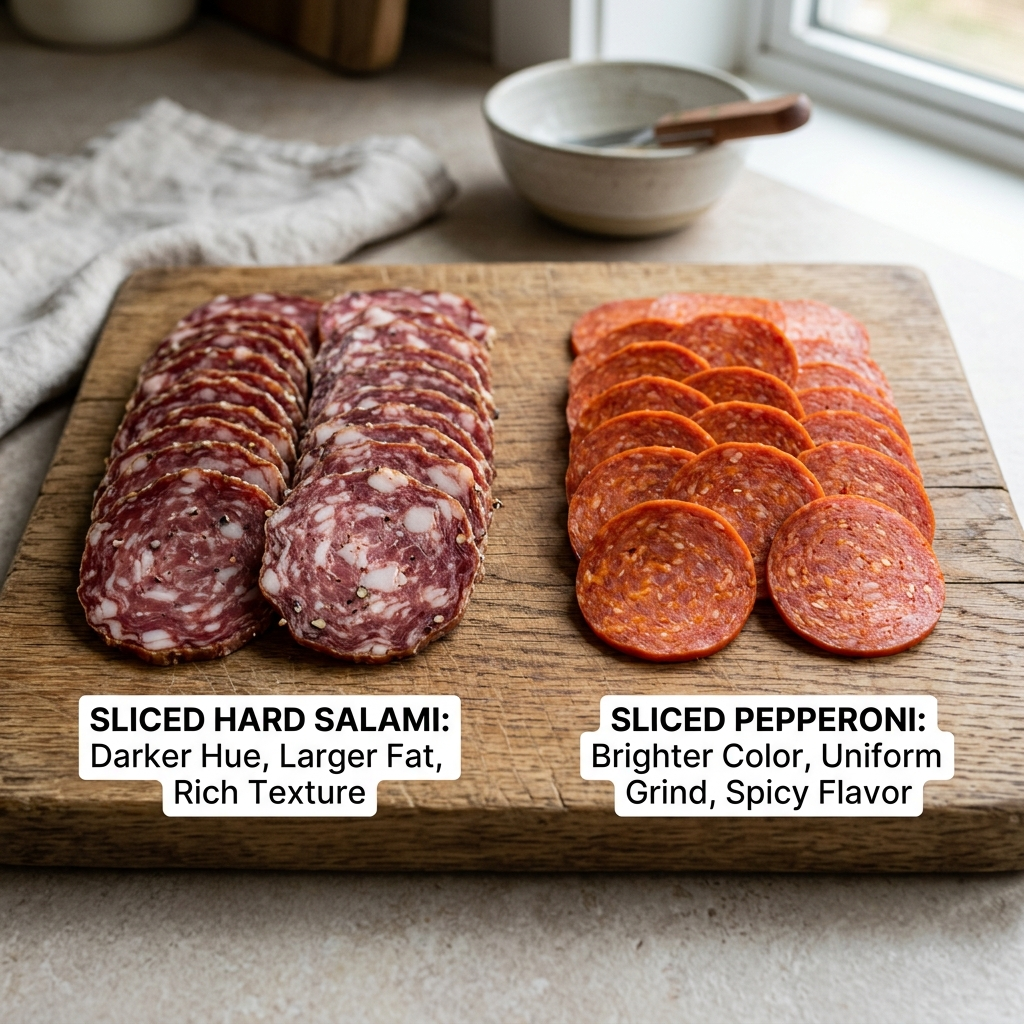
Here’s where you can tell them apart at a glance. Pepperoni is usually finer-grained, meaning the meat and fat are ground more finely before stuffing. It has a uniform, bright red color thanks to the paprika and curing agents. The slices are thin, slightly cup-shaped when cooked (those crispy little “pepperoni cups” on a good pizza are a thing of beauty), and have small, evenly distributed flecks of fat.
Salami tends to have a coarser grind. You can see distinct chunks of white fat marbled through the darker meat. The color is usually a deeper, more muted red or pinkish-brown. The texture is firmer and drier, especially in aged varieties. When you bite into a thick slice of dry-cured salami, there’s a satisfying chew that pepperoni just doesn’t have.
One practical detail I’ve noticed after years of building charcuterie boards: salami slices tend to be more flexible and fold beautifully, while pepperoni is stiffer and can crack if you try to fold it cold. That matters when you’re arranging a board and want things to look good.
Ingredients and Meat Used
| Feature | Salami | Pepperoni |
|---|---|---|
| Primary meat | Pork (sometimes beef or veal) | Pork and beef blend |
| Key spices | Garlic, black pepper, wine, fennel (varies by type) | Paprika, chili pepper, cayenne |
| Color source | Natural meat color, sometimes wine | Paprika and curing salts |
| Fat content | Higher visible fat chunks | More evenly distributed fat |
| Smoking | Rarely smoked | Often smoked |
| Curing time | Weeks to several months | Shorter, typically a few weeks |
Both meats use curing salts (sodium nitrite) to prevent bacterial growth and maintain color. This is standard practice in the cured meat industry and is regulated by the USDA. If you’re curious about how other Italian cured meats compare, our piece on capicola covers another classic you’ll often see alongside salami and pepperoni at the deli.
How They’re Made
The basic process is similar for both: grind the meat, mix in fat and seasonings, stuff into casings, ferment, and dry. The differences are in the details.
Salami fermentation relies on naturally occurring or added lactic acid bacteria, which lower the pH and create that characteristic tang. The drying phase can last anywhere from a few weeks to over a year for premium varieties. The longer it dries, the more concentrated and intense the flavor becomes.
Pepperoni follows a faster track. The meat is ground finer, the spice blend is heavier on the heat, and the smoking step (when used) adds flavor quickly without needing months of aging. The result is a product that’s ready to eat sooner and tastes more consistent from batch to batch. That consistency is exactly what large-scale pizza chains need.
Nutrition Comparison: Salami vs Pepperoni
Both are high in fat, sodium, and protein. Neither is what you’d call a health food, and it’s worth being honest about that. They’re cured meats, and the World Health Organization classifies processed meats as Group 1 carcinogens when consumed in large quantities over time. Enjoy them in moderation.
That said, here’s how they roughly stack up per 1-ounce (28g) serving:
| Nutrient | Salami (Genoa) | Pepperoni |
|---|---|---|
| Calories | ~110 | ~140 |
| Total fat | ~9g | ~12g |
| Saturated fat | ~3g | ~4g |
| Protein | ~6g | ~6g |
| Sodium | ~500mg | ~460mg |
| Cholesterol | ~25mg | ~28mg |
Pepperoni tends to be slightly higher in calories and fat because of the finer grind (more fat is evenly incorporated) and the added oils from the paprika-heavy spice blend. Salami usually edges out pepperoni on sodium, especially in heavily salted aged varieties.
The numbers vary a lot by brand and specific type, so always check the label if you’re tracking intake closely.
Food safety note: Both salami and pepperoni are shelf-stable when whole and unopened, thanks to the curing process. Once sliced, they should be refrigerated and consumed within 3–5 days. If you’re stocking up, our guide on how long deli meat lasts in the fridge has practical storage timelines for all kinds of cured and cooked meats. This is general food safety information — if you have specific dietary or health concerns, consult a healthcare professional.
When to Use Salami vs Pepperoni
This is the part that actually matters in your kitchen. Knowing the difference between salami and pepperoni is fun trivia, but knowing when to reach for each one is what makes your food better.
Use pepperoni when:
- You’re making pizza. It’s the classic choice for a reason — the fat renders out beautifully in a hot oven, creating those crispy edges and pooling little circles of orange oil on the cheese.
- You want a consistent, spicy kick without a lot of competing flavors.
- You’re making a quick snack or lunch and want something familiar that kids (and most adults) will eat without question.
- You’re cooking something where the meat will be heated — pepperoni’s flavor opens up with heat in a way that salami’s doesn’t always.
Use salami when:
- You’re building a charcuterie board or antipasto platter. The variety of textures and flavors in different salamis makes them the backbone of any good spread. Pair a mild Genoa with a fennel-forward finocchiona and you’ve got range.
- You’re making a cold sandwich or sub. A classic Italian sub relies on the layered complexity of salami, not the one-note heat of pepperoni.
- You want a meat that stands on its own as a snack. A thick slice of dry-cured salami with a piece of sharp cheese and some olives is one of the simplest, most satisfying things you can eat.
- You’re cooking a dish where you want the meat to add depth without overwhelming everything else. Salami in a pasta sauce or tossed into a salad brings a savory richness that pepperoni’s spice can sometimes overpower.
Can you substitute one for the other? Sometimes, but not always. Swapping pepperoni for salami on a pizza works fine — you’ll just get a milder, less greasy result. Swapping salami for pepperoni in a recipe that specifically calls for that smoky heat will leave you with a flatter flavor. Think of pepperoni as the bold, loud friend and salami as the one with more to say once you actually listen.
If you’re putting together a full deli-style sandwich and want to nail the construction, our guide on building the perfect deli sandwich covers layering techniques that work especially well with cured meats like these.
Frequently Asked Questions
Is pepperoni a type of salami?
Yes. Pepperoni is technically an American-style salami. It falls under the broader salami category because it’s a cured, fermented, dried sausage. The difference is that “salami” refers to a huge family of products with varying ingredients, textures, and curing methods, while pepperoni is one specific style — spicier, smokier, and more finely ground than most traditional Italian salamis.
Which is healthier, salami or pepperoni?
Neither is a health food. Both are high in sodium, saturated fat, and calories. Pepperoni is slightly higher in calories and fat per ounce, while salami can be higher in sodium depending on the variety. The bigger picture matters more than the small differences between them. If you’re watching your intake of processed meats, the best move is to enjoy either one in moderation rather than switching from one to the other thinking it makes a significant nutritional difference.
Can I use salami instead of pepperoni on pizza?
Absolutely, and a lot of people prefer it. A good Genoa or soppressata on a pizza gives you a more complex, less greasy result. The trade-off is that you won’t get the same crispy cupping and chili heat that pepperoni delivers. If you want the best of both worlds, use half and half — the spicy pepperoni pops against the richer, garlicky salami, and the combination is genuinely excellent.
Why is pepperoni called pepperoni if it’s not Italian?
The name likely comes from the Italian word peperoni (bell peppers) or peperoncino (hot peppers), reflecting the heavy use of chili and paprika in the recipe. Italian-American immigrants in the early 20th century adapted their salami-making traditions using spices that were readily available in the U.S., and the name stuck. It’s an American word for an American product with Italian roots.
Do salami and pepperoni need to be refrigerated?
Whole, unopened dry-cured salami and pepperoni can be stored at cool room temperature for weeks — that’s the whole point of the curing process. Once you slice them or open the package, refrigeration is necessary. Sliced cured meats should be kept in the fridge and eaten within about a week for best quality and safety.
The next time you’re at the deli counter or the grocery store, you’ll know exactly what you’re looking at. Salami is the big, diverse family of Italian cured sausages with complex, varied flavors. Pepperoni is the spicy, smoky American cousin that dominates pizza night. Both are delicious, both have their place, and both deserve a spot in your kitchen.
Grab a few slices of each, taste them side by side, and you’ll understand the difference faster than any article can explain. That’s the best part about food — the research is always edible.