
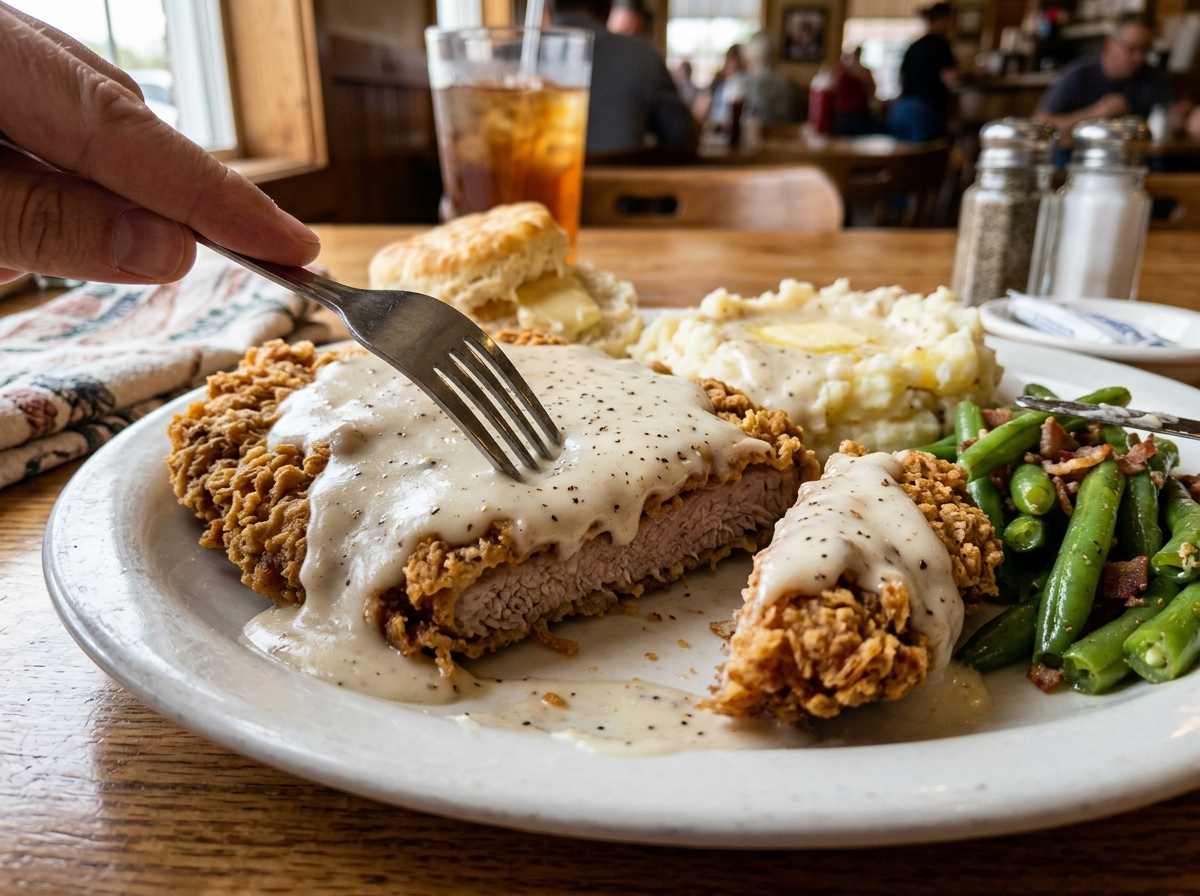
Most people hear “chicken fried steak” for the first time and immediately ask the same question — wait, is it chicken or is it steak? Fair question. The name is genuinely confusing if you didn’t grow up eating it. But here’s the short answer: it’s a beef steak, pounded thin, breaded and fried exactly the way you’d fry a piece of chicken. No poultry involved. Just beef, flour, eggs, and a whole lot of Southern tradition.
Chicken fried steak sits at the heart of comfort food culture across Texas and the American South. It’s the kind of dish that fills your plate, fills your belly, and somehow still makes you want a second helping. Diners, roadside cafés, and family kitchens across the country have been serving it for well over a century. And if you’ve ever had a truly good one — crispy golden crust, tender beef, creamy white gravy poured all over it — you already know why this dish has earned its place at the table.
Let’s break down what chicken fried steak actually is, where it came from, how it’s made, and what makes the difference between an average one and one you’ll remember for years.
The Name Makes No Sense — Until It Does
You’re not alone if the name throws you off. “Chicken fried steak” sounds like something that can’t make up its mind. But once you understand the logic, it clicks.
The name describes a method, not an ingredient. You’re taking a steak — usually a cheap, tough cut of beef — and preparing it the same way you’d prepare fried chicken. That means dredging it in seasoned flour, dipping it in an egg wash, coating it again, and then pan-frying it until it’s golden and crispy. The “chicken fried” part refers to the technique. The “steak” part tells you what’s actually on your plate.
Think of it like “charcoal grilled chicken.” Nobody thinks the chicken is made of charcoal. The words before it just describe how it’s cooked. Same idea here.
This naming style is pretty common in Southern cooking, where dishes get named by their method rather than a fancy French term. There’s actually a close relative called chicken fried chicken, where the exact same breading-and-frying technique gets applied to a chicken breast instead of beef. That one at least makes a bit more sense name-wise, but the original — the steak version — is the one that built the legend.
Where Did Chicken Fried Steak Come From?
The exact origin story is a little murky, which is pretty typical for iconic comfort foods. Nobody sat down and invented it with a press release. It just kind of… evolved.
Most food historians trace chicken fried steak back to the German and Austrian immigrants who settled in Texas during the mid-1800s. These folks brought Wiener Schnitzel with them — a breaded, pan-fried veal cutlet that’s a staple of Central European cooking. When they arrived in Texas, veal wasn’t always easy to come by, but beef was everywhere. So they adapted. Tougher, cheaper cuts of beef got the schnitzel treatment: pounded flat, breaded, fried.
Over time, this dish merged with Southern frying traditions already well-established in the region. The result was something distinctly Texan — heartier than schnitzel, crispier than most European preparations, and almost always served with cream gravy instead of a lemon wedge.
By the early 1900s, chicken fried steak was showing up on diner menus across Texas and Oklahoma. The dish spread throughout the South and eventually found its way onto tables all across America. Lamesa, Texas, even held an annual celebration calling itself the “Chicken Fried Steak Capital of Texas” for years.
Quick fact: The oldest known printed reference to “chicken fried steak” on a menu dates back to a Colorado café in 1914, though Texans will argue (loudly) that their grandmothers were making it long before that.
What makes Texas chicken fried steak different from versions you’ll find elsewhere often comes down to the gravy, the thickness of the crust, and how seriously people take the whole process. In Texas, this isn’t just food. It’s identity.
What Cut of Beef Gets Used?
Here’s where chicken fried steak earns its reputation as a working-class dish. You don’t use a ribeye for this. You don’t use a filet. Those cuts are already tender and expensive — frying them in batter would be a waste.
Chicken fried steak traditionally uses cube steak, which is usually cut from the round (the back leg of the cow). Round steak is lean and tough, which makes it a challenge to cook using most methods. But when you pound it thin with a meat mallet — or run it through a mechanical tenderizer that creates that distinctive textured surface — you break down the muscle fibers enough to make it workable.
Some cooks use top sirloin or even chuck if that’s what they’ve got. The key isn’t the specific cut. It’s the preparation: pound it flat, about a quarter-inch to a half-inch thick, so it cooks quickly and stays tender inside that crispy shell.
This is one of those dishes that was born out of necessity. Ranch hands and farm families needed to turn cheap, tough beef into something delicious. Breading and frying accomplished that beautifully. The crust adds flavor and texture while sealing in moisture, and the pounding process does the tenderizing work that an expensive cut wouldn’t need.
How Chicken Fried Steak Is Made
The process isn’t complicated, but every step matters. Rush it or skip a detail, and you’ll end up with a soggy, sad piece of meat instead of a crispy golden masterpiece.
Preparing the Steak
Start with your cube steak. If it hasn’t been mechanically tenderized already, you’ll want to pound it with a meat mallet. Place it between two sheets of plastic wrap and work it until it’s an even thickness — roughly a quarter-inch works well. Season both sides with salt, black pepper, and garlic powder at minimum. Some cooks add a pinch of cayenne or paprika here.
The Breading Station
You’ll need two shallow dishes. One holds your seasoned flour — all-purpose flour mixed with salt, pepper, garlic powder, onion powder, and sometimes a little paprika. The other holds your egg wash, which is just beaten eggs mixed with a splash of milk or buttermilk.
The classic sequence goes: flour, then egg wash, then flour again. That double dredge is what builds a substantial crust that stays put during frying. Press the flour into the meat firmly each time. Don’t just sprinkle it — really push it in. Let the breaded steak sit on a wire rack for about ten minutes before frying. This rest period helps the coating adhere so it won’t fall off in the pan.
Pro tip: If your breading keeps falling off during frying, you’re probably making one of these common mistakes. Usually it’s either too little flour, not enough resting time, or oil that isn’t hot enough.
Frying
Traditionally, chicken fried steak is pan-fried, not deep-fried. You use about half an inch to three-quarters of an inch of oil in a cast iron skillet — enough to come halfway up the steak. Vegetable oil, peanut oil, or even lard all work. Heat it to about 350°F (175°C). If you don’t have a thermometer, drop a pinch of flour into the oil. If it sizzles immediately, you’re in the right range.
Lay the steak gently into the hot oil, away from you so you don’t get splashed. Fry it for about 3–4 minutes per side until the crust is deep golden brown. Don’t crowd the pan. If you’re cooking multiple steaks, do them one or two at a time.
If you’re not comfortable with a pan full of oil, there are ways to fry at home without traditional deep frying that still give you great results.
Once your steak is done, set it on a wire rack over a sheet pan. Don’t put it on paper towels — the steam trapped underneath will make the bottom crust go soggy.
The Cream Gravy
This is non-negotiable. A chicken fried steak without cream gravy is like fries without ketchup — technically edible, but you’re missing the whole point.
After you’ve fried your steaks, keep about two tablespoons of the drippings in the pan. Those browned bits and leftover flour at the bottom are flavor gold. Sprinkle in about two tablespoons of flour, stir it into the drippings, and cook for a minute until it turns a light golden color. Then slowly pour in about two cups of whole milk, stirring constantly. Season generously with salt and plenty of black pepper.
Keep stirring over medium heat until the gravy thickens — usually about 5 minutes. It should coat the back of a spoon. If it gets too thick, add a little more milk. Taste it and adjust the seasoning. Good cream gravy should have a noticeable pepper kick.
Pour it directly over your fried steak and serve immediately.
What Gets Served Alongside It?
Chicken fried steak is comfort food, and it likes company. The sides you’ll find next to it are just as homestyle as the main dish itself.
Mashed potatoes are the most traditional partner — they’re practically mandatory because they give that cream gravy a second place to pool. Beyond mashed potatoes, you’ll commonly see green beans (often cooked with bacon), fried okra, corn on the cob, coleslaw, or biscuits. Some places serve it with homemade French fries, which is a slightly less traditional choice but absolutely delicious.
A lot of Texas diners serve it as a “plate lunch” — the steak, two sides, a roll, and a glass of sweet tea. That’s a complete meal that could keep you going through a full day of work, which was kind of the whole idea when this dish first became popular.
Why Does It Hit So Different?
There’s a reason chicken fried steak has survived for over a century while plenty of other dishes have faded into obscurity. It works on multiple levels.
The texture contrast is the first thing you notice. You’ve got a shatteringly crispy exterior surrounding tender, savory beef. Your teeth break through that crust, hit the soft meat, and then the warm, peppery cream gravy ties everything together. It’s three distinct textures and flavors working in perfect harmony.
There’s also the satisfaction factor. This is a big, filling, unpretentious plate of food. It doesn’t try to be elegant. It doesn’t need a garnish or a drizzle of reduction. It’s honest cooking that fills you up and makes you feel good. That kind of eating never really goes out of style.
And then there’s nostalgia. For millions of people across the South and Midwest, chicken fried steak is tied to specific memories — Sunday dinners at grandma’s house, a road trip stop at a small-town diner, a college hangover cure at a greasy spoon. Food like this carries emotional weight that a trendy restaurant dish simply can’t replicate.
Chicken Fried Steak vs. Country Fried Steak — Are They the Same?
This is one of the most common questions people ask, and the answer depends on who you’re talking to.
In many parts of the country, “chicken fried steak” and “country fried steak” are used interchangeably. They refer to the same basic dish. But in regions where people draw a distinction, the difference usually comes down to two things: the gravy and the crust.
Chicken fried steak typically has a thicker, crispier crust (similar to fried chicken) and gets topped with white cream gravy — the peppery, milk-based kind described above.
Country fried steak often has a lighter coating, sometimes no egg wash at all, and gets served with brown gravy made from beef broth instead of milk.
Some cooks will also tell you that country fried steak is sometimes braised or smothered in the gravy after frying, which softens the crust. Chicken fried steak, by contrast, almost always keeps its crust intact and gets the gravy poured over it right before serving.
Are these hard rules? Not really. You’ll find restaurants that swap the names, combine elements, or do their own thing entirely. But if you’re ordering in Texas and you see “chicken fried steak” on the menu, you can pretty much guarantee you’re getting a crispy-crusted steak with white gravy.
Can You Chicken-Fry Other Things?
Absolutely. The technique works on way more than just beef steak. The breading-and-frying method is versatile enough to apply to all kinds of proteins — and even some things that aren’t protein at all.
Chicken fried chicken (a boneless chicken breast given the full treatment) is the most obvious variation, and it’s become almost as popular as the original in many restaurants. But people have successfully chicken-fried pork chops, venison, mushrooms, and plenty of other foods. If you’re curious about just how far this technique can stretch, take a look at 7 foods you can chicken fry that aren’t steak.
The basic principle stays the same regardless of what you’re frying: season it, flour it, egg wash it, flour it again, and fry it in hot oil until golden. The only adjustments are cooking time and temperature, which depend on the thickness and type of what you’re frying.
Tips for Making a Better Chicken Fried Steak at Home
You can absolutely make restaurant-quality chicken fried steak in your own kitchen. It’s not complicated, but a few details separate “good enough” from “genuinely great.”
Use buttermilk in your egg wash. Regular milk works fine, but buttermilk adds a slight tang and helps the flour adhere more aggressively to the meat. The acidity also tenderizes the beef a bit during the dredging process.
Season every layer. Don’t just season the meat or just season the flour. Season both. And season your gravy, too. Underseasoned chicken fried steak is the most common home-cooking mistake with this dish.
Get the oil temperature right. Too cool, and the crust absorbs grease and turns soggy. Too hot, and the outside burns before the inside cooks through. Aim for 350°F and use a thermometer if you have one. Getting the right oil temperature for frying makes a bigger difference than almost any other variable.
Don’t flip it more than once. Put it in the oil, leave it alone until the bottom is golden, flip it once, and leave it again. Every time you mess with it, you risk knocking the crust loose.
Make the gravy in the same pan. All those little fried bits stuck to the bottom of the skillet are concentrated flavor. They’re the foundation of great cream gravy. If you dump them out and start fresh, your gravy will taste flat.
FAQ
Is chicken fried steak actually made with chicken?
No. Chicken fried steak is 100% beef. The name refers to the cooking method — the steak is breaded and fried using the same technique you’d use to fry chicken. There’s no chicken involved in the dish at all.
What’s the best cut of meat for chicken fried steak?
Cube steak is the traditional choice. It’s usually cut from the round, a tougher and more affordable section of the cow. The meat gets mechanically tenderized or pounded flat with a mallet before breading and frying. Top sirloin also works well if you pound it thin enough.
What’s the difference between chicken fried steak and Wiener Schnitzel?
They’re closely related. Wiener Schnitzel is an Austrian dish made with a thin, breaded, pan-fried veal cutlet, typically served with a lemon wedge. Chicken fried steak uses beef instead of veal, features a thicker and crunchier crust, and gets served with cream gravy. German and Austrian immigrants in Texas adapted their schnitzel traditions to local ingredients, and chicken fried steak was the result.
How many calories are in chicken fried steak?
A typical serving of chicken fried steak with cream gravy runs between 600 and 900 calories depending on the size of the steak, the amount of breading, and how much gravy you pour on. It’s not diet food — it never pretended to be. It’s comfort food, and it earns every one of those calories.
Can you bake chicken fried steak instead of frying it?
You can try, but the results won’t be the same. Baking gives you a drier, less crispy crust that lacks the richness of a pan-fried version. If you want a slightly lighter approach without a full pan of oil, check out techniques for frying at home without deep frying — they split the difference pretty well.
A Dish That Earned Its Place
Chicken fried steak didn’t become a Southern icon through marketing or trends. It earned its reputation one plate at a time, across generations of family kitchens, small-town diners, and roadside cafés. It started as a practical solution — a way to turn tough, cheap beef into something genuinely delicious — and it became a cultural touchstone that millions of people feel deeply connected to.
If you’ve never made one at home, give it a try this weekend. Get yourself some cube steak, heat up a cast iron skillet, and follow the steps above. Your first attempt might not look like it belongs on a restaurant menu, but it’ll taste like someone who cares about food made something real. And that’s what chicken fried steak has always been about.