
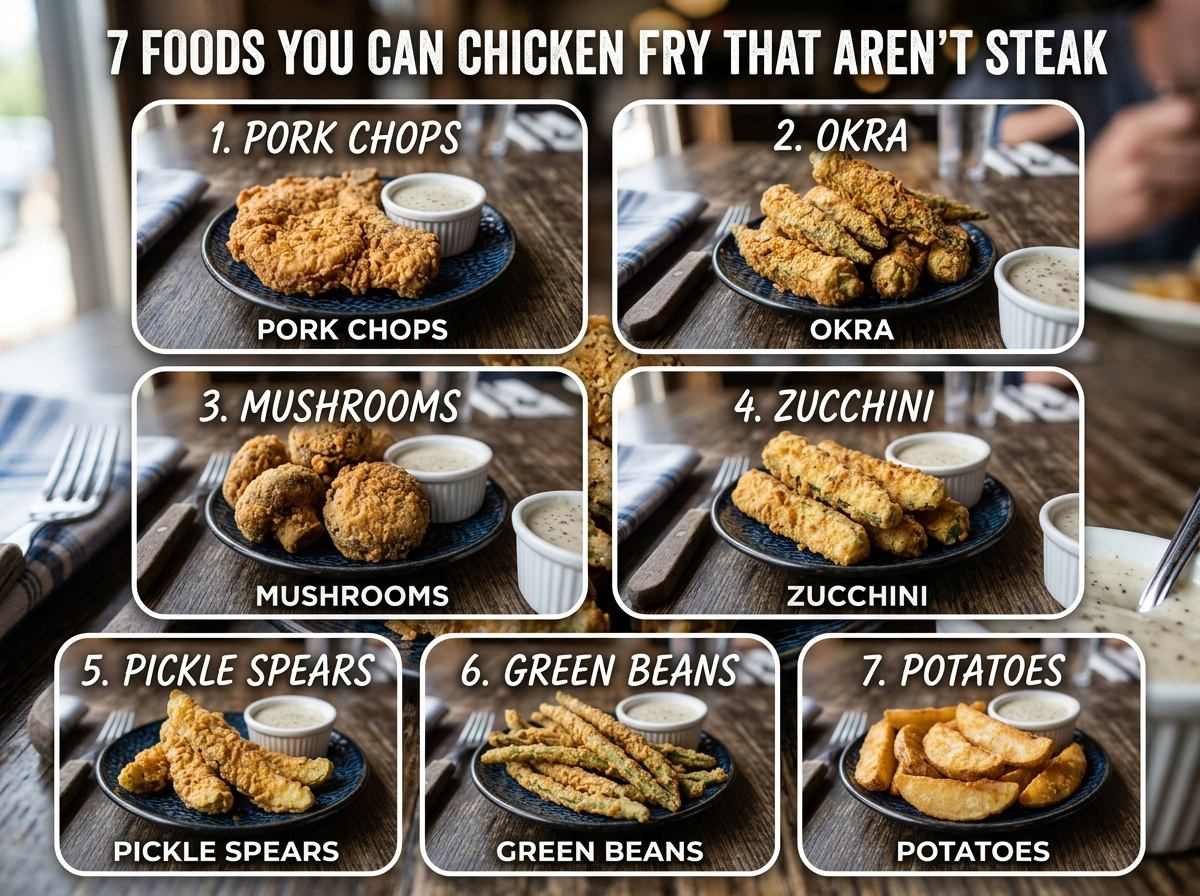
The crunchy, peppery crust people love on chicken-fried steak doesn’t need steak to work. The same method can turn pork, poultry, and even a few vegetables into something crisp, juicy, and very hard to stop eating. If you’re looking for foods you can chicken fry that aren’t steak, you’ve got more options than most people think.
A lot of cooks ask the same things. Which foods actually hold that crust well? Do you need a deep fryer? Why does the breading slide off or turn soggy? We’re going to answer all of that, and we’ll keep it practical so you can use the idea tonight, not “someday.”
Why Chicken-Frying Works on More Than Steak
Chicken-frying is really a method, not one specific dish.
Think of it like putting a crunchy jacket on food that cooks fast. You coat it in seasoned flour, dip it in egg or buttermilk, coat it again, and fry it until the outside turns golden and crisp. That crust locks in moisture and gives you that classic Southern bite.
That’s why steak isn’t the only thing that works.
Thin cuts of meat do great because they cook through before the coating burns. Firm vegetables do well too, especially if you manage their moisture. The trick is picking foods that can handle a hot skillet without turning watery or rubbery.
If you want the classic baseline, this quick explainer on what chicken-fried steak actually is helps frame the whole method. And if you’ve ever compared chicken-fried steak vs. chicken-fried chicken, you already know the idea moves easily from beef to poultry.
Did you know? Many food historians connect chicken-fried steak to breaded cutlet traditions brought by German and Austrian immigrants to Texas. That’s one reason the dish feels both Southern and old-world at the same time.
So what should you fry next if you want the same comfort-food energy without using cube steak? Start here.
The Best Foods You Can Chicken Fry That Aren’t Steak
1. Boneless Pork Chops
If you want the easiest swap, go with boneless pork chops.
They’re probably the closest thing to steak in texture and cooking style, but they usually cost less and feel a little lighter on the plate. Thin-cut chops work best. If your chops are thick, pound them to an even thickness before breading.
Pork loves a seasoned flour crust. Black pepper, garlic powder, paprika, and a little cayenne give it that classic diner feel. Fry it until the coating is deep golden and the pork hits 145°F, then let it rest a few minutes.
The result? Crispy outside, juicy inside, and perfect with mashed potatoes or biscuits.
This one also handles gravy beautifully. If you like that old-school white pepper gravy situation, pork chops might become your new favorite version.
Pro tip: Don’t buy extra-lean pork and expect magic. A little fat helps pork stay tender.
2. Chicken Cutlets
This one feels obvious, but a lot of people still forget it: chicken cutlets are made for chicken-frying.
A whole chicken breast can work, but large breasts often cook unevenly. Cut them in half horizontally or pound them into thin cutlets. That way, the coating crisps up at the same time the chicken finishes cooking.
Buttermilk helps here because chicken benefits from a little soak. Even 20 to 30 minutes can help the flour stick better and give you a softer bite under the crust.
Fry until the chicken reaches 165°F. If you’re guessing by color alone, you’re making life harder than it needs to be. A basic instant-read thermometer saves a lot of ruined dinners.
Chicken cutlets also give you range. Serve them with gravy for full comfort-food mode, slide them onto toast for a quick lunch, or top them with hot honey if you want a sweet-heat twist.
If you already enjoy the idea behind chicken-fried chicken, this is just the same move with smarter sizing.
3. Pork Tenderloin
Pork tenderloin gives you a more tender, cleaner bite than pork chops, and it fries beautifully if you slice it right.
Don’t leave it in thick medallions. Slice it into thinner pieces and pound them gently so they cook fast and evenly. Tenderloin is lean, so the crust does a lot of the heavy lifting here. It protects the meat from drying out.
The flavor is mild, which makes it a great canvas for bold seasoning. A little onion powder and smoked paprika in the flour go a long way. You can keep it classic with gravy, but pork tenderloin also shines on a sandwich bun with pickles and mustard.
If that sounds good, you’ll probably like this take on a fried pork tenderloin sandwich. It’s one of those meals that disappears faster than expected.
Quick fact: Pork tenderloin and pork loin aren’t the same cut. Tenderloin is smaller, more tender, and better for quick frying.
4. Turkey Cutlets
Turkey doesn’t get enough love outside the holidays, which is a shame because turkey cutlets chicken-fry really well.
They’re lean, mild, and quick to cook. That makes them ideal for a crisp flour crust and shallow fry in a skillet. You can buy cutlets ready to go, or slice a turkey breast into thin pieces and pound them flat.
Turkey needs help from seasoning more than pork does. Salt the meat before it ever touches flour. Then season the flour too. If you only season the outside lightly, the whole thing tastes flat.
Once fried, turkey cutlets work with white gravy, but they’re also great with sage, black pepper, or even a little Dijon on the side. If chicken feels familiar and pork feels rich, turkey lands nicely in the middle.
One thing to avoid: don’t try this with already-cooked leftover turkey slices. They’ll dry out fast. Start with raw cutlets.
5. Green Tomatoes
Now we get into the fun stuff.
Green tomatoes are one of the best vegetables to chicken-fry because they’re firm, tart, and sturdy enough to hold a crust. Ripe red tomatoes have too much water and collapse too easily. Green tomatoes keep their shape and give you that sharp, bright contrast against the rich coating.
Slice them about half an inch thick. Salt them lightly, let them sit a few minutes, then pat them dry. Some cooks like to mix a little cornmeal into the flour for extra crunch. That works well here because green tomatoes already have a Southern feel.
The inside turns tender but not mushy. The outside stays crisp if your oil is hot enough. Serve them with ranch, remoulade, or a little hot sauce if gravy feels too heavy.
This is also a smart choice if you want a meat-free option that still feels satisfying.
Warning: Wet tomato slices will throw off your breading fast. Dry them well before dredging.
6. Cauliflower
If you want a modern, meatless pick that still gives you that crunchy payoff, try cauliflower.
It works better than people expect because the florets have lots of little edges for breading to cling to. You can also cut thick cauliflower “steaks,” but smaller florets are easier to fry evenly at home.
Here’s the part many recipes skip: cauliflower usually needs a little head start. A quick steam, blanch, or microwave session softens the inside so the crust doesn’t finish long before the vegetable does. After that, let it cool and dry well before coating.
Once fried, cauliflower gives you a crisp shell and a tender bite that soaks up seasoning nicely. It’s great with spicy mayo, ranch, or pepper gravy if you want to keep the comfort-food vibe.
This is a good option if you’re cooking for a mixed table. Meat eaters still get the crunch they want, and anyone skipping meat doesn’t feel like they got the “boring side item.”
7. Eggplant Slices
Eggplant has that sneaky talent of turning silky inside while the outside gets crisp, so eggplant slices make a strong finish to this list.
Use firm eggplant and slice it into rounds that are thick enough to stay sturdy, but not so thick that they stay spongy in the center. About half an inch is a good target. Salt the slices and let them sit for 15 to 20 minutes, then blot away the moisture.
That step matters. Eggplant holds water like a sponge, and trapped moisture fights your crust.
Once breaded and fried, eggplant gets creamy inside without falling apart. It pairs well with gravy, but it also works with marinara, garlic aioli, or even a drizzle of hot honey if you want a different direction.
If you’ve got someone at the table who says vegetables can’t be comfort food, this is the one that changes their mind.
How to Chicken Fry These Foods and Keep the Crust Crisp
Build a Coating That Actually Sticks
A good crust starts before the oil ever heats up.
Dry the food first. That means patting meat dry with paper towels and giving vegetables time to release extra moisture. Then use the classic order: seasoned flour, egg or buttermilk mixture, then seasoned flour again.
That second flour coating is where the crunch comes from.
Let the breaded pieces rest for 10 minutes before frying. It sounds small, but it helps the coating grab onto the food instead of floating off in the oil. Think of it like letting wet paint set before you touch it.
If you don’t own a deep fryer, don’t worry. You can still fry at home without deep frying by using a heavy skillet, Dutch oven, or cast-iron pan with enough oil for a shallow fry.
Pro tip: Season every layer. Salt the food, season the flour, and finish with a tiny pinch right after frying if needed.
Keep the Oil in the Sweet Spot
For most chicken-fried foods, 350°F to 365°F is the sweet spot.
Below that, the coating absorbs oil and turns heavy. Too hot, and the crust gets dark before the food cooks through. That’s why small-batch frying works better than stuffing the pan full at once. Every cold piece you add pulls the oil temp down.
Use a neutral oil with a decent smoke point, like canola, peanut, or vegetable oil. A cast-iron skillet helps because it holds heat better than a thin pan.
If greasy crust is your usual problem, the same lessons from golden, non-greasy fried chicken apply here too.
Warning: Never leave hot oil unattended, and never add wet food straight from the sink to the pan.
Match the Food to the Fry Time
Chicken-frying works best with foods that cook quickly.
That’s why pounding meat thin helps so much. You want the inside done by the time the crust turns golden. Thick chops or giant chicken breasts make that hard.
Here’s a simple cheat sheet:
- Chicken and turkey: cook to 165°F
- Pork chops and pork tenderloin: cook to 145°F, then rest
- Vegetables: fry until the coating is golden and the center is tender
Food safety note: Those meat temperatures follow current USDA guidance. If you’re cooking for kids, older adults, pregnant guests, or anyone with a weak immune system, don’t guess. Use a thermometer.
Also, move fried food to a wire rack instead of dropping it on a flat plate. A plate traps steam under the crust. A rack lets air circulate, so your hard-earned crunch stays crisp.
Common Mistakes and Quick Fixes
A lot of chicken-frying trouble comes from just a few repeat mistakes.
Using cuts that are too thick.
If the inside needs too much time, the crust takes a beating. Pound meat thinner, or pick smaller cuts to begin with.
Skipping the drying step.
Moisture is the enemy of crisp breading. That goes for meat, tomatoes, cauliflower, and eggplant. Dry food equals better sticking and better browning.
Crowding the pan.
People do this because they want dinner done faster. It usually does the opposite. The oil cools, the crust softens, and then you end up refrying or apologizing to your family.
Under-seasoning the flour.
A plain flour coating tastes like exactly what it is: plain flour. Salt, pepper, garlic powder, onion powder, paprika, and a little cayenne make a huge difference.
Draining on paper towels only.
Paper towels absorb oil, sure, but they also trap steam. A rack set over a sheet pan keeps the crust much crisper.
Common misconception: gravy is what makes something “chicken-fried.”
Not really. The breaded, pan-fried method makes it chicken-fried. Gravy is a classic partner, not a rule.
If your crust still comes out soft or patchy, this breakdown of why chicken-fried steak isn’t crispy is worth a look. The same fixes work on pork, chicken, and vegetables too.
FAQ Section
What does “chicken-fried” mean?
“Chicken-fried” describes a cooking method, not the main ingredient. You coat the food in seasoned flour, dip it in egg or buttermilk, coat it again, and fry it until crisp. The method got its name because the crust is similar to Southern fried chicken.
Can you chicken fry vegetables?
Yes, you can chicken fry vegetables, and some work really well. Green tomatoes, cauliflower, and eggplant are strong choices because they hold their shape and give the crust something firm to cling to. The main trick is controlling moisture before breading.
What oil temperature is best for chicken-frying?
Most chicken-fried foods do best at 350°F to 365°F. That range helps the coating brown evenly without soaking up too much oil. If the oil drops too low, the crust gets greasy. If it runs too hot, the outside darkens before the inside is ready.
Do all chicken-fried foods need gravy?
No. Gravy is traditional, especially with steak, pork, and turkey, but it isn’t required. Green tomatoes are great with remoulade, chicken cutlets work with hot honey, and cauliflower tastes great with ranch or spicy mayo. Pick the sauce that fits the food.
Can I chicken fry food without a deep fryer?
Yes. A deep fryer can help with temperature control, but you don’t need one. A heavy skillet, cast-iron pan, or Dutch oven works well for shallow frying, as long as you keep the oil hot and avoid overcrowding.
Conclusion
If you’ve only been using this method on steak, you’ve been leaving a lot of good dinners on the table.
Start with boneless pork chops or chicken cutlets if you want the easiest win. Once you get the feel for the coating and oil temperature, move on to green tomatoes, cauliflower, or eggplant for something a little more fun.
That’s really the whole secret: pick food that cooks fast, keep it dry, season the coating well, and fry with confidence. Once you learn that, steak stops being the only star of the show.