
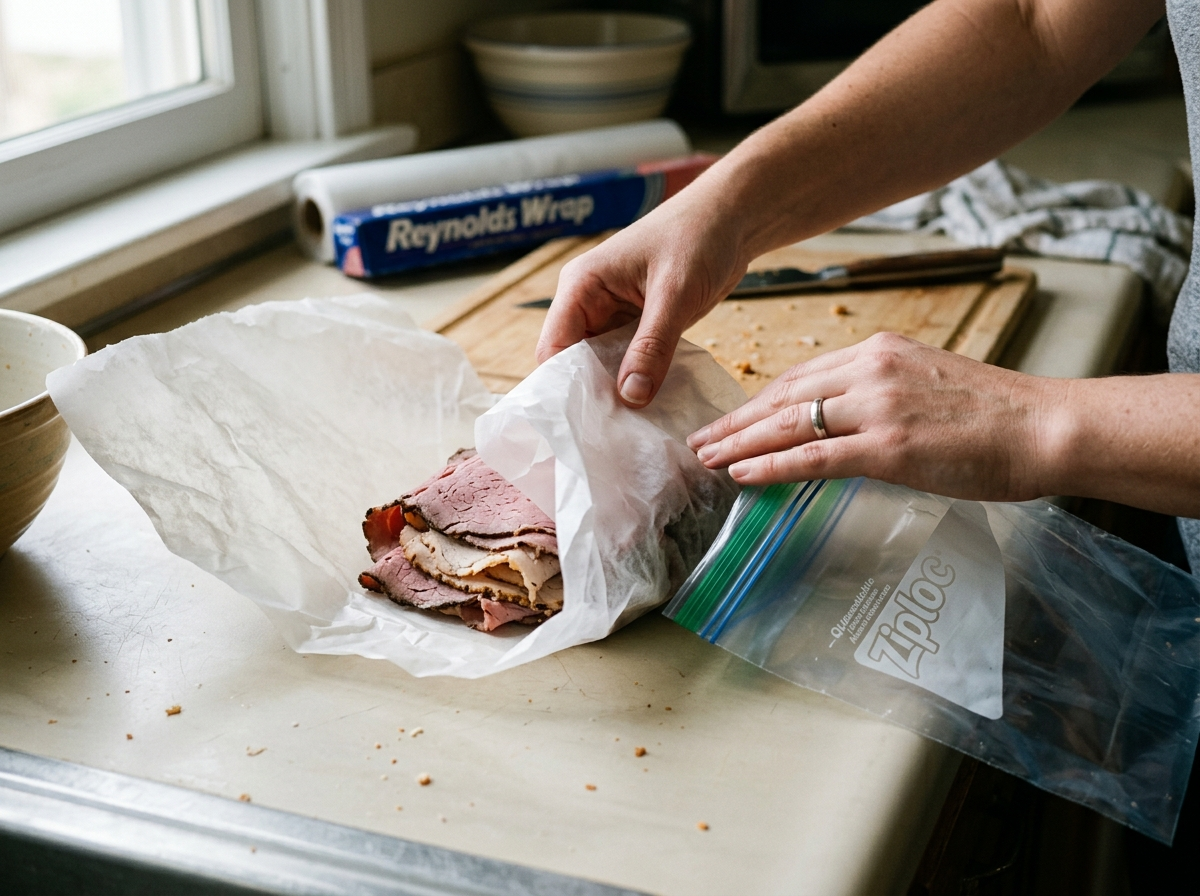
You opened a pack of turkey for lunch, used half, and now the rest is sitting on the counter. What now? Storing leftover sandwich meat the right way keeps it fresh longer and keeps your family safe from foodborne illness. The good news? It takes about two minutes to do it properly. Here’s exactly how to handle those leftover slices so they’re just as good tomorrow — or even next month.
How Long Does Leftover Sandwich Meat Actually Last?
This is the question everyone wants answered first, so let’s get right to it. Once you crack open a package of deli meat, the clock starts ticking a lot faster than most people realize.
The USDA recommends eating opened cold cuts within three to five days. That window applies to most pre-sliced lunch meats you grab from the deli counter or the refrigerated aisle — turkey, ham, roast beef, chicken breast, and similar options.
Unopened, factory-sealed packages are a different story. Those can last up to two weeks in the fridge, sometimes longer if the use-by date gives you more room. But the moment you break that seal, you’ve introduced air and bacteria to the meat, and the countdown begins.
Cured and dried meats like salami, pepperoni, and hard soppressata play by slightly different rules. Their lower moisture content and curing process give them a longer shelf life, often up to two to three weeks after opening if stored well. We’ll break down specific timelines for each type of meat a little later.
One thing worth mentioning: those date labels on packaging can be confusing. A “sell by” date is meant for the store, not you. A “use by” date is a better guideline for peak quality, but it’s not a hard safety deadline for unopened packages. Once opened, though, you should ignore the printed date and stick to that three-to-five-day rule.
Food Safety Note: This article provides general food storage guidance based on USDA recommendations. It is not a substitute for professional food safety advice. When in doubt about whether meat is safe to eat, throw it out.
The Best Way to Store Leftover Sandwich Meat in the Fridge
Proper leftover deli meat storage is less about fancy equipment and more about a few small habits that make a big difference. You don’t need a vacuum sealer (though we’ll talk about those). You just need to control three things: air, moisture, and temperature.
Ditch the Flimsy Original Packaging
Here’s what actually happens when you fold the plastic flap back over a deli tray and shove it in the fridge. Air gets in. Moisture pools at the bottom. The edges of the meat dry out while the middle turns slimy. It’s the worst of both worlds.
Instead, transfer your leftover sliced meat to an airtight container or a heavy-duty zip-top bag. If you use a bag, press out as much air as you can before sealing it. That extra 10 seconds of squeezing air out genuinely adds a day or two of freshness.
If you bought meat from the deli counter wrapped in wax paper and a plastic bag, that packaging is even worse for storage. It was designed to get the meat home safely, not to keep it fresh for days. Move it to something that actually seals.
The Paper Towel Trick That Actually Works
This is one of those small details that separates people who constantly throw away slimy meat from people who don’t. Line the bottom of your airtight container or bag with a dry paper towel, then place the meat on top. If you have a lot of slices, put another paper towel between layers.
Why does this work? Deli meat releases moisture as it sits. That moisture is what creates the slippery, slimy film that makes you question your life choices when you open the container three days later. The paper towel absorbs that excess liquid, keeping the surface of the meat drier and fresher for longer.
Swap the paper towel out if it gets soaked — usually around day two or three if you’re storing a larger amount.
Keep Your Fridge Cold Enough
Your refrigerator should be at or below 40°F (4°C). If it’s warmer than that, bacteria multiply much faster on perishable foods like lunch meat. Most fridge dials aren’t accurate, so if you haven’t checked with an actual thermometer recently, it’s worth doing. A cheap fridge thermometer costs a few dollars and can save you from a lot of wasted food (and worse).
Store your leftover sandwich meat on a shelf in the main body of the fridge, not in the door. The door is the warmest part of the refrigerator because it gets exposed to room-temperature air every time someone opens it. The back of a middle or lower shelf stays the coldest and most consistent.
If you want a deeper look at how long different deli meats last under ideal fridge conditions, this guide on deli meat fridge life breaks it down by type.
Can You Freeze Leftover Deli Meat?
Yes, you absolutely can freeze leftover sandwich meat, and it’s a smart move if you know you won’t finish the pack within a few days. Freezing pauses the spoilage clock almost entirely.
Most deli meats freeze well for one to two months without noticeable changes in taste or texture. Cured meats like salami and pepperoni can stretch to two or three months because their lower moisture content means less ice crystal damage.
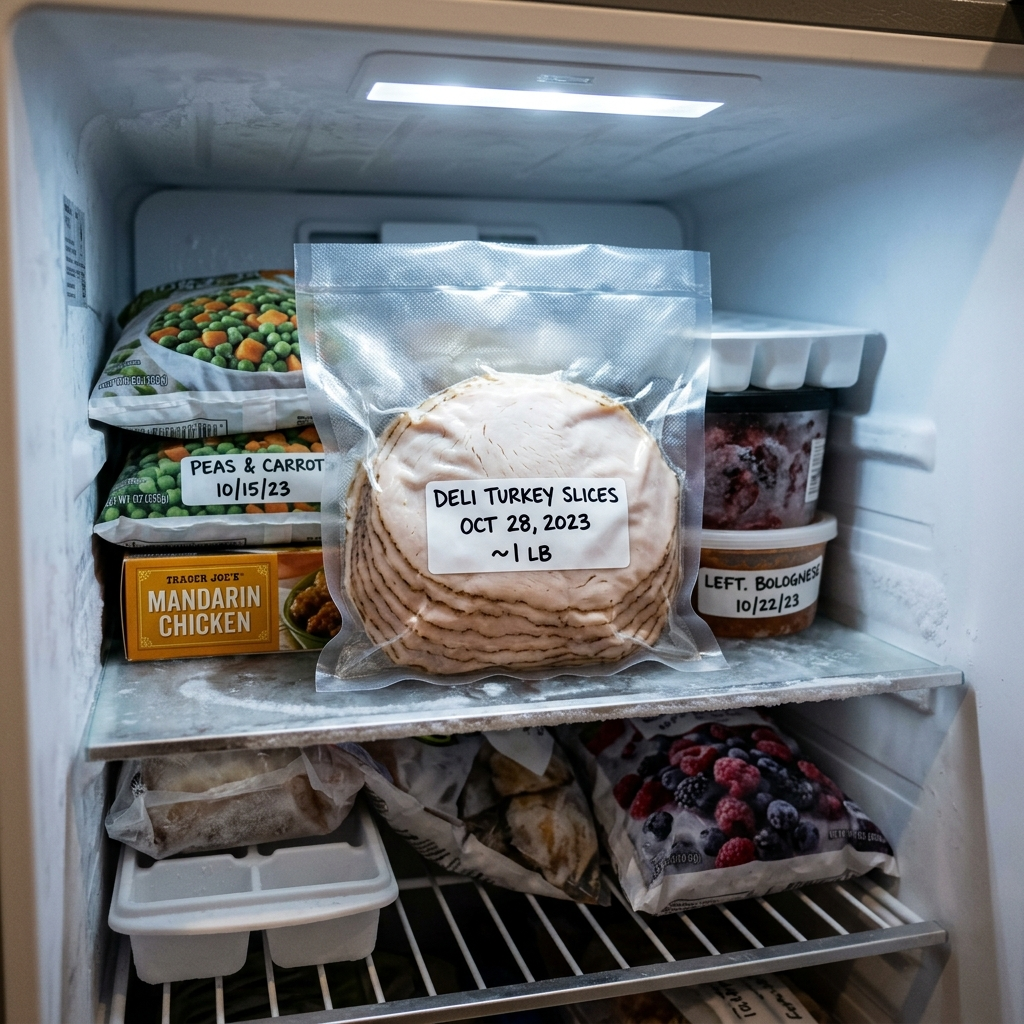
The key to good freezer results is packaging. Air is the enemy here — it causes freezer burn, which dries out the meat and gives it that stale, cardboard-like flavor. Wrap the slices tightly in plastic wrap or aluminum foil first, then place them in a freezer-safe zip-top bag. Squeeze out every bit of air you can. If you have a vacuum sealer, this is the time to use it. Vacuum-sealed deli meat can last up to six months in the freezer with minimal quality loss.
When you’re ready to use the meat, thaw it in the refrigerator overnight. Don’t thaw it on the counter at room temperature — that puts the outer layers of the meat in the bacterial danger zone while the center is still frozen. Once thawed, treat it like freshly opened deli meat and eat it within three to five days.
One honest caveat: freezing does change the texture of some deli meats slightly. Turkey and chicken breast can become a bit more crumbly after thawing because the ice crystals disrupt the muscle fibers. They’ll still taste fine in a sandwich, especially with condiments and toppings, but they might not have that same smooth, deli-fresh mouthfeel. Cured meats like salami and pepperoni handle freezing much better because they’re denser and drier to begin with.
For a full walkthrough on freezing different types of deli meat, check out this detailed guide on how to freeze deli meat properly.
How to Tell If Your Leftover Sandwich Meat Has Gone Bad
Knowing when to toss leftover sandwich meat is just as important as knowing how to store it. Eating spoiled deli meat can cause serious foodborne illness, and deli meats are particularly susceptible to Listeria monocytogenes, a bacteria that can grow even at refrigerator temperatures.
Here are the signs to watch for:
Smell. Fresh deli meat should smell mild and meaty, or slightly smoky if it’s something like ham or pastrami. If you open the container and get a sour, tangy, or ammonia-like odor, it’s done. Don’t try to rinse it off or cook it to make it safe. Toss it.
Texture. A slight sheen of moisture on deli meat is normal. A thick, sticky, or slimy film is not. If the surface feels slippery and the slime doesn’t wipe off easily, bacteria have started colonizing the surface. This is the most common sign people notice, and it’s a reliable one.
Color. Fresh turkey and chicken are pale pink to white. Ham is rosy pink. Roast beef is brownish-red. If you see gray patches, greenish tints, or any iridescent sheen that looks oily and unnatural, the meat is breaking down. A little iridescence on sliced roast beef can actually be a harmless light-refraction effect from the way the muscle fibers are cut, but if it’s accompanied by any off smell or texture, don’t risk it.
Mold. This one’s obvious, but it bears stating. Any visible mold — white, green, blue, or black fuzzy spots — means the entire package is contaminated. Don’t cut around the moldy part and eat the rest. Mold sends invisible root threads (called hyphae) deep into soft, moist foods like deli meat. The whole thing goes in the trash.
When you’re unsure, the safest rule is the simplest one: when in doubt, throw it out. A half-pound of turkey isn’t worth a trip to the emergency room.
If you’re also thinking about how long your assembled sandwiches are safe to eat after being made, this piece on sandwich sit-out time covers the two-hour rule and when it applies.
Storing Different Types of Deli Meat
Not all sandwich meats are created equal when it comes to storage. Moisture content, curing methods, and fat levels all affect how long each type stays fresh after opening. Here’s a quick comparison to help you plan:
| Meat Type | Fridge Life (Opened) | Freezer Life | Notes |
|---|---|---|---|
| Turkey breast | 3–5 days | 1–2 months | High moisture; spoils fastest |
| Chicken breast | 3–5 days | 1–2 months | Similar to turkey; watch for slime |
| Ham | 3–5 days | 1–2 months | Cured but still moist; smell test is key |
| Roast beef | 3–5 days | 1–2 months | Can show harmless iridescence |
| Bologna | 3–5 days | 1–2 months | High fat; can turn greasy in freezer |
| Salami (hard) | 2–3 weeks | 2–3 months | Low moisture; lasts much longer |
| Pepperoni | 2–3 weeks | 2–3 months | Cured and dried; very freezer-friendly |
| Prosciutto | 2–4 days | 1 month | Delicate; dries out fast in fridge |
| Corned beef | 3–5 days | 1–2 months | High moisture; keep well-sealed |
As you can see, the dried and cured meats like salami and pepperoni give you a lot more breathing room. If you’re someone who doesn’t go through deli meat quickly, leaning toward those options can cut down on food waste significantly.
For more on the differences between specific cured meats and how they behave in sandwiches, this breakdown of salami vs. pepperoni is a fun read.
Quick Tips to Keep Sliced Meat Fresh After Opening
Beyond the core storage methods we’ve covered, a few small habits can stretch the life of your leftover sandwich meat by a day or two.
Buy smaller amounts more often. This is the single most effective strategy. If your household only goes through a few slices a day, buy a quarter pound at the deli counter instead of a full pound in a pre-packaged tub. Less leftover meat means less risk of waste.
Use clean hands or utensils every time. Reaching into the container with fingers that just touched your phone, the fridge handle, or a cutting board introduces new bacteria to the meat. Use tongs, a fork, or freshly washed hands.
Don’t leave the container out during sandwich assembly. It’s tempting to set the whole container on the counter while you build three or four sandwiches. But every minute the meat sits at room temperature, it warms up and bacteria start multiplying faster. Take out what you need and put the rest back in the fridge immediately.
Keep raw meat and deli meat separate. Cross-contamination is a real risk in crowded fridges. Store your leftover sandwich meat away from raw chicken, ground beef, or anything that might drip. Keep it on a higher shelf where raw meat juices can’t reach it.
Label your containers with the date you opened them. It sounds basic, but most people forget when they cracked open that pack of ham. A piece of masking tape with the date on it takes five seconds and eliminates the guessing game three days later.
If you’re building sandwiches ahead of time for lunches or a party, this guide on keeping sandwiches fresh for a party has some solid make-ahead strategies that pair well with proper meat storage.
Frequently Asked Questions
How long does leftover deli meat last in the fridge after opening?
Opened deli meat lasts three to five days in the refrigerator when stored in an airtight container at or below 40°F. Cured, dried meats like salami and pepperoni can last two to three weeks after opening because their lower moisture content slows bacterial growth. Always rely on smell, texture, and visual cues in addition to the calendar.
Is it safe to eat deli meat that feels a little slimy?
No. A slimy or sticky film on the surface of deli meat is a strong sign of bacterial growth, even if the meat doesn’t smell bad yet. That slippery texture means microorganisms have multiplied to the point where they’re producing a biofilm on the surface. Rinsing the meat won’t remove the bacteria, and cooking it to a safe temperature is impractical for thin deli slices. The safest choice is to discard it.
Can I refreeze leftover sandwich meat that was previously frozen?
Technically, yes — if the meat was thawed in the refrigerator and never reached room temperature, the USDA says it’s safe to refreeze it. The quality will take a noticeable hit, though. Each freeze-thaw cycle creates more ice crystals inside the meat, which damages the texture and can make it mushy or crumbly. If you know you’ll only use a portion of a frozen pack, separate it into smaller portions before the first freeze so you only thaw what you need.
Your Leftover Meat Deserves Better Than the Trash
Storing leftover sandwich meat doesn’t have to be complicated. Move it out of the flimsy store packaging, into an airtight container with a paper towel, and get it into the coldest part of your fridge within minutes of making your sandwich. If you won’t eat it within a few days, freeze it properly and it’ll be ready whenever you need it.
The real secret isn’t any special gadget or technique — it’s just paying attention. Check the smell, feel the texture, and don’t ignore the calendar. Your nose and your eyes are better food safety tools than any printed date on a package.
Next time you open a fresh pack of deli meat, take 30 seconds to set up proper storage right away. Your future self — the one reaching for lunch ingredients on a busy Wednesday — will thank you.