
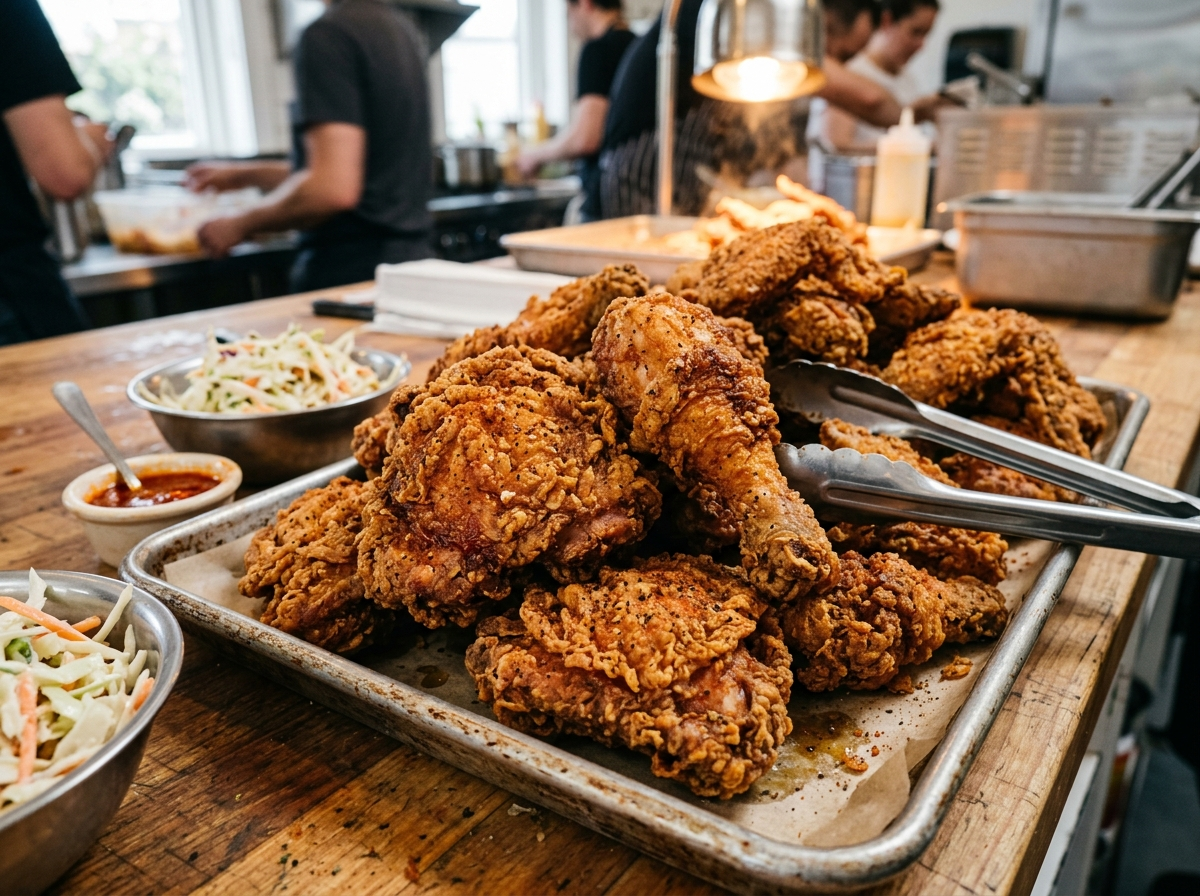
Most party fried chicken fails for one simple reason: the crust and the timing fall apart at the same time. If you want fast and crispy fried chicken for a crowd, you need more than a good recipe. You need a plan that keeps the oil hot, the coating crisp, and the finished chicken ready to serve without turning soggy on the counter.
Why crowd fried chicken usually goes wrong
Cooking fried chicken for four is a recipe problem. Cooking it for fifteen is a workflow problem.
That’s why so many home cooks end up with the same mess. The first batch turns out great. The second batch gets pale because the oil dropped too much. The third batch sits under foil, steams itself soft, and loses all the crunch you worked for.
The good news? You don’t need restaurant equipment to fix that.
What you really need is a method built for volume. Use pieces that cook at a similar speed. Keep your dredge simple. Fry in small batches. Hold the finished chicken on racks, not on paper towels and not under a lid.
If you remember one line from this whole article, make it this one: crispy fried chicken for a crowd is all about heat control and air flow.
Choose the right chicken and the right amount
Which chicken pieces work best for speed and crunch?
If your goal is fast service and steady results, skip giant bone-in breasts.
They take longer to cook, and the crust can get too dark before the center is done. For most parties, drumsticks, thighs, and wings are the sweet spot. They stay juicy, fry faster, and fit a buffet table better.
Bone-in thighs are especially forgiving. Drumsticks are easy for guests to grab. Wings fry quickly, though they can disappear very fast once people start eating.
If you want the easiest version of all, use boneless thighs or tenders for part of the batch. They cook quickly and make service much smoother, especially if kids are part of the crowd. If that sounds like your lane, these homemade chicken tenders are worth keeping in the mix.
A smart move is to sort your chicken before you start frying. Keep thighs together, drumsticks together, and wings together. That way, you aren’t guessing which piece still needs another three minutes.
How much fried chicken do you need per person?
This is one of the biggest questions people ask, and it makes sense. Buy too little, and the platter empties in ten minutes. Buy too much, and you’re reheating chicken for three days.
Here’s the easy rule:
- If you’re serving plenty of sides, plan on 2 pieces per adult
- If fried chicken is the main event and your group eats big, plan on 3 pieces per adult
- For kids, 1 to 2 smaller pieces usually does the job
A few real-life examples help:
For 12 adults with sides, buy about 24 to 30 pieces, or roughly 8 to 10 pounds of chicken.
For 20 adults with sides, aim for 40 to 50 pieces, or about 14 to 16 pounds.
If your menu also includes sliders, dips, fries, or other game-day food, lean toward the lower number. If the chicken is the star, go a little higher.
What’s the best mix for a party?
For a balanced crowd platter, a mix like this works well:
Drumsticks for easy grab-and-go eating.
Thighs for people who want juicy dark meat.
A smaller batch of wings or tenders for variety.
That mix feels generous without making your fry time a nightmare.
How to make fast and crispy fried chicken for a crowd
A crowd-size base recipe that actually makes sense
For 10 to 12 people, start with about 8 pounds of chicken pieces. You’ll also want 4 cups of buttermilk, 2 tablespoons of hot sauce if you like a little kick, 4 cups of all-purpose flour, 1 1/2 cups of cornstarch, 3 tablespoons of kosher salt, 1 tablespoon of paprika, 2 teaspoons each of garlic powder, onion powder, and black pepper, plus oil for frying.
Peanut oil, canola oil, or vegetable oil all work well. They handle frying heat without smoking too fast and they have a clean flavor.
Cornstarch matters here. It helps the crust fry up lighter and crisper than plain flour alone. That’s one of the small changes that makes a big difference in large batches.
The method, step by step
- Season the chicken early.
Pat the pieces dry, then season them with part of your salt and pepper. Soak them in buttermilk and hot sauce for at least 30 minutes. If you have more time, 2 to 4 hours is even better. - Build a seasoned dredge.
Mix the flour, cornstarch, paprika, garlic powder, onion powder, black pepper, and the rest of the salt in a wide pan or bowl. - Make the flour craggy.
Drizzle a few spoonfuls of the buttermilk mixture into the flour and toss it with your fingers. Those tiny clumps turn into the rough, crunchy bits people love on fried chicken. - Dredge and let it rest.
Lift a piece of chicken from the buttermilk, let the extra drip off, then press it into the flour mix. Coat it well. Set it on a rack and let it sit for 10 to 15 minutes before frying. That rest helps the coating stick. - Fry in small batches.
Heat 2 to 3 inches of oil to 350°F in a heavy Dutch oven, cast-iron pot, or countertop fryer. Once the chicken goes in, the oil will dip. Try to keep it between 325°F and 350°F. - Cook to temperature, not color alone.
Wings often take 8 to 10 minutes, tenders 5 to 7 minutes, drumsticks 12 to 14 minutes, and thighs around 13 to 15 minutes. Size changes everything, so check the thickest part with an instant-read thermometer. Chicken is safe at 165°F, which is the USDA benchmark. - Move it to a wire rack, not paper towels.
Let the extra oil drip away while air moves around the crust. Salt lightly while it’s still hot.
Pro tip: Dredged chicken that rests for 10 minutes fries up better than chicken that goes straight from flour to oil. The coating has time to grab on.
What oil temperature gives the best crust?
A common mistake is thinking hotter oil always means crispier chicken.
It doesn’t.
If the oil runs too hot, the outside gets dark before the meat cooks through. If the oil runs too cool, the coating soaks up oil and turns heavy. The best working range for most party-size fried chicken is 325°F to 350°F.
Start at the high end. Expect the temperature to drop once the chicken hits the pot. Bring it back up between batches before you add more pieces.
If greasy crust has been your usual problem, this breakdown on the secret to golden, non-greasy fried chicken goes deeper into what the oil is doing.
Can you make the coating extra crispy?
Yes, and it doesn’t take much.
Use a flour-and-cornstarch blend. Let the coated chicken rest before frying. Don’t overcrowd the pot. And don’t cover the chicken while it’s hot.
That last part matters more than most people think.
Set up your kitchen like a small fry station
The gear that makes the job easier
You don’t need a restaurant line, but you do need a few basics.
A 6- to 8-quart Dutch oven or heavy cast-iron pot helps hold heat better than a thin pan. A clip-on fryer thermometer or an instant-read digital thermometer takes the guesswork out. Two sheet pans with wire racks give you a landing zone for raw coated chicken and finished chicken.
Tongs are helpful. A spider strainer is even better.
That setup keeps your movement simple: dredge, fry, rack, hold, serve.
If you’re using a skillet and home setup instead of a deep fryer, this guide on how to fry at home without deep frying fits really well with this method.
A simple timeline for 12 to 20 people
This is the part a lot of other articles skip, and honestly, it’s the part that saves dinner.
Here’s a workable plan:
- Up to 4 hours ahead: season the chicken and soak it in buttermilk
- 1 hour ahead: mix the dredge, set out racks, and preheat your oven to 200°F
- 45 minutes ahead: heat the oil to 350°F
- 30 minutes ahead: dredge the first batch and let it rest
- Serving time: fry in batches, rack the finished pieces, and hold them in the warm oven
For 20 people, a home cook usually does best with 3 to 5 batches, depending on pot size. Don’t try to rush that by crowding the oil. That shortcut always costs you crispness.
Why similar-sized batches matter
Think of your fryer like a school bus. If you load it with one toddler, three teenagers, and a couch, nobody gets where they’re going on time.
Same thing here.
Thighs and wings don’t cook at the same pace. Large breasts and drumsticks don’t cook at the same pace. Grouping similar pieces keeps your timing steady and your crust more even.
Keep the crust crisp until you serve it
Don’t trap steam
Steam is the enemy of crispy fried chicken.
A lot of people fry a beautiful batch, then put it on a plate lined with paper towels and cover it to “keep it warm.” That move softens the crust fast. The bottom gets damp first. Then the top loses crunch too.
A wire rack over a sheet pan is much better. Air can move under the chicken, and the crust stays dry.
Quick fact: Paper towels help absorb oil, but they also trap heat and moisture against the bottom crust.
Use the oven the right way
Set your oven to 200°F and place the fried chicken on racks in a single layer. Don’t stack it. Don’t tent it with foil.
That low heat keeps the chicken warm while the crust stays in decent shape. For most home parties, you can hold it this way for about 30 to 45 minutes with good results. An hour can still work if your batches were fried well and not overloaded with oil.
If you need to freshen the crust right before serving, raise the oven to 400°F for about 5 to 7 minutes. That brings back some snap without another trip through the fryer.
Can you fry chicken ahead for a party?
Yes, but there’s a right way to do it.
If the party is the same day, fry the chicken fully, rack it, cool it slightly, then hold it warm or re-crisp it in the oven right before serving.
If you fry it too early and store it closed up, the crust suffers. It still tastes good, but it won’t give you that crackly bite people hope for.
Common mistakes and food safety issues
Crowding the pot
This is the biggest texture killer.
Too much chicken in the oil at once makes the temperature crash. That means the coating sits there instead of frying fast. The crust turns greasy, pale, and sometimes patchy.
Give each piece room. You want the oil bubbling around the chicken, not fighting for space.
Skipping the thermometer
Color can fool you.
Dark paprika in the flour, hot spots in the pot, and uneven piece size can all make chicken look done before it actually is. The thickest part of the meat should hit 165°F.
That matters even more if you’re cooking for young kids, older adults, pregnant guests, or anyone with a weaker immune system.
Frying straight from a very cold, wet state
Ice-cold chicken drops the oil temperature hard. Extra-wet coating can also splatter and separate.
You don’t need the chicken warm, but you do want to shake off excess buttermilk before dredging and avoid putting soaking-wet pieces straight into the pot.
Covering hot fried chicken
This one deserves repeating because it ruins so many party trays.
Covering hot fried chicken traps steam. Steam softens crust. That’s the whole story.
Forgetting raw chicken safety
Keep raw chicken chilled until prep time. Don’t reuse marinade that held raw chicken unless you boil it hard first. Keep the raw tray and the cooked tray separate. Wash hands, tongs, and surfaces that touched uncooked chicken.
Also, don’t leave cooked fried chicken sitting out for too long. Standard food safety advice is no more than 2 hours at room temperature, or 1 hour if it’s very hot outside, like at a summer tailgate.
Warning: Never fill your pot more than halfway with oil. Lower the chicken in gently, away from you, and keep water far from the stove.
If you decide to serve wings as part of the spread, it helps to check a dedicated guide on chicken wing fry temperature since smaller pieces brown faster than thighs and drumsticks.
Easy variations and smart serving ideas
Want a spicy version?
Split off one tray and finish it with a hot, seasoned oil after frying. That gives you a Nashville-style effect without making the whole batch too spicy for everyone.
If you like that idea, this take on Nashville hot chicken is a great next step.
A mixed crowd usually loves options. Keep one tray classic. Make one tray spicy. If kids are around, keep a milder tray or add a boneless option.
Need a kid-friendly or faster option?
Boneless strips, tenderloins, or boneless thighs speed things up and make serving easier. They’re also easier to portion if you’re building a buffet.
That’s where homemade chicken tenders can save the day. They fry quickly, hold well for a short window, and disappear fast.
What should you serve with fried chicken for a crowd?
Pick sides that don’t fight for the same stove space.
Cold slaw is perfect. Pickles are easy. Potato salad works. Biscuits can be baked ahead. Fries are great, but they add more fry timing to the day. Chips are simple and people always eat them.
If your event is game day, backyard watching, or a casual party, these best finger foods for football parties pair nicely with fried chicken without making your kitchen too busy.
The best side plan is the one that keeps your focus on the fryer while the chicken is hot.
4. FAQ Section
FAQ Section
How do you keep fried chicken crispy for a party?
Keep it on a wire rack, not flat on paper towels, and hold it in a 200°F oven in a single layer. Don’t cover it with foil or stack it while it’s hot. If needed, re-crisp it for a few minutes in a hotter oven right before serving.
What is the best oil for fast and crispy fried chicken for a crowd?
Peanut oil, canola oil, and vegetable oil are the most practical choices. They have a neutral taste and can handle frying heat well. The bigger factor is not the brand of oil. It’s keeping that oil in the 325°F to 350°F range.
Can I fry chicken ahead of time for a crowd?
Yes. You can fry it earlier the same day, then hold it warm on racks or reheat it in the oven to sharpen the crust again. It won’t be quite as fresh as straight-from-the-fryer chicken, but it can still be very good if you don’t trap steam.
Why isn’t my fried chicken crispy?
The usual reasons are oil that’s too cool, overcrowding the pot, coating that didn’t rest before frying, or covering the chicken while it’s still hot. Any one of those can soften the crust.
Can I use boneless chicken to make it faster?
Yes, and it’s a smart move for big groups. Boneless thighs, tenders, and cutlets cook faster than large bone-in pieces and are easier to batch. They’re especially handy if you want a second tray for kids or for sandwiches.
5. Conclusion
Great fried chicken for a crowd doesn’t come from luck. It comes from a calm setup and a few smart choices: buy pieces that cook at the same pace, use a flour-cornstarch coating, keep the oil steady, and hold finished chicken on racks instead of covering it.
If you’re planning a party soon, do one small test batch before the big day. That single practice run will tell you how your pot holds heat, how long your pieces take, and how much chicken you really need. Once you know that, feeding a crowd gets a whole lot easier.