
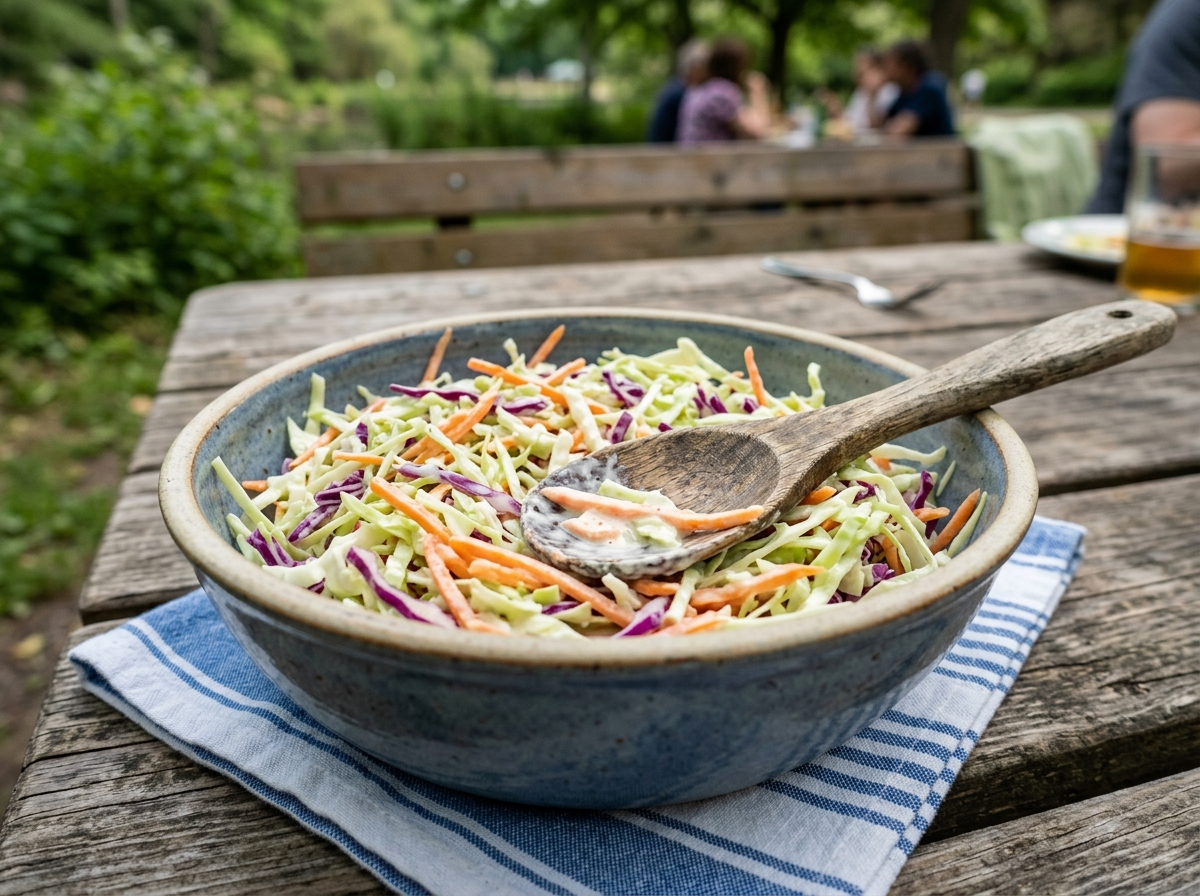
A great sandwich needs crunch, and nothing delivers it better than a pile of cold, creamy coleslaw right on top. But if you’ve ever slapped leftover coleslaw onto bread only to end up with a soggy, dripping mess ten minutes later, you already know the struggle.
The good news? Making a coleslaw for sandwiches takes about ten minutes, and a couple of small tweaks make all the difference between a watery topping and a crisp, flavorful one. Here’s exactly how to do it.
What Makes Sandwich Coleslaw Different From Regular Coleslaw?
Coleslaw is coleslaw, right? Not quite. The coleslaw you scoop onto a plate at a barbecue and the sandwich coleslaw topping you pile onto a hoagie roll have different jobs to do.
A side-dish coleslaw can be loose, heavily dressed, and a little soupy. Nobody minds because it’s sitting on a plate. But the moment you put that same slaw between two slices of bread, all that extra liquid soaks straight into the crumb. You get a wet, heavy sandwich that falls apart in your hands.
Sandwich coleslaw needs to be drier and crunchier than a standard side-dish version. You want just enough dressing to coat the cabbage and give it flavor, not so much that it pools at the bottom of the bowl. The shreds should also be finer so they lay flat on the bread instead of sliding off in clumps.
Think of it this way: side-dish coleslaw is a salad. Sandwich coleslaw is a condiment. That shift in thinking changes how you build it.
The Best Cabbage for Sandwich Coleslaw
The cabbage you pick sets the whole tone for your slaw. You have a few solid options, and each one brings something different to the table.
Green Cabbage
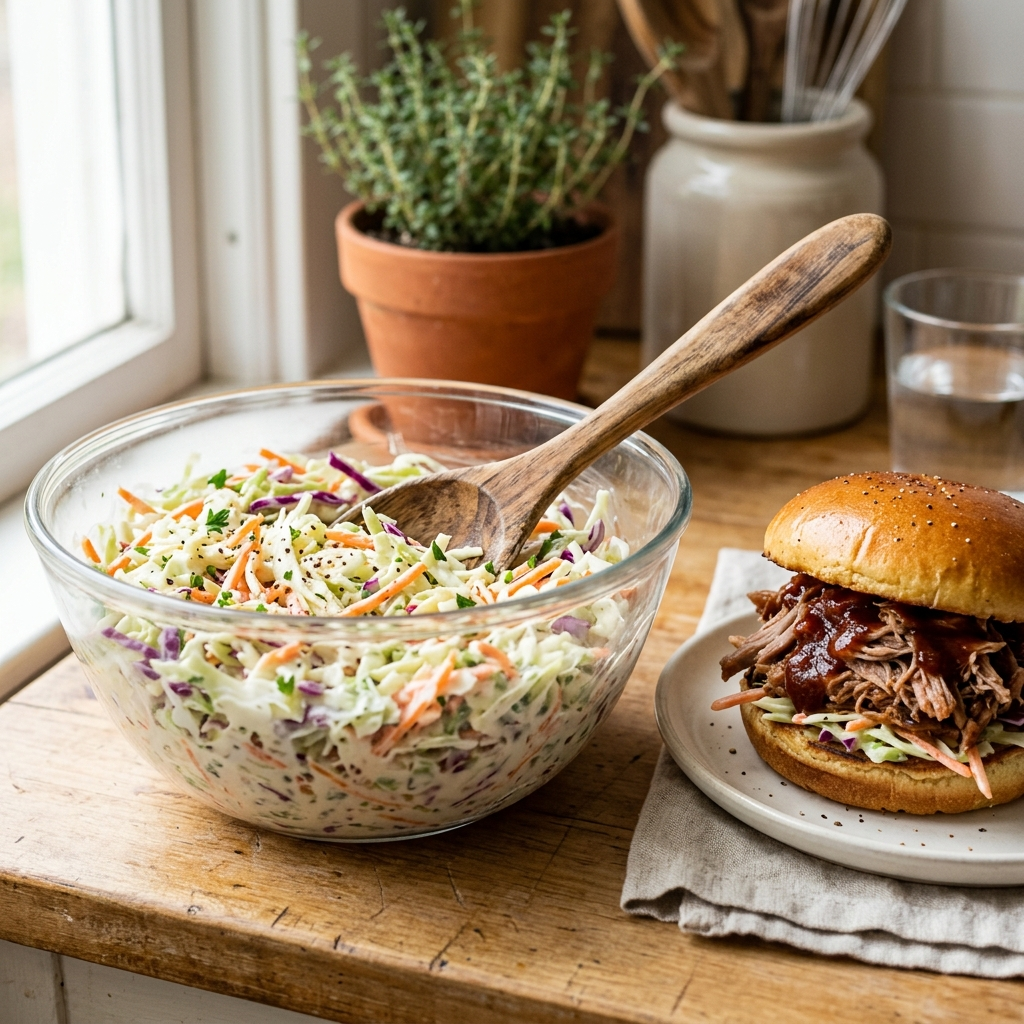
This is the classic choice and the one most delis use. Green cabbage is firm, mildly sweet, and holds its crunch longer than any other variety. It also shreds into thin, uniform strands that fit neatly on a sandwich without tumbling out the sides. If you’re making a coleslaw for sandwiches recipe for the first time, start here.
Red Cabbage
Red cabbage adds a gorgeous purple pop of color and a slightly peppery bite. It’s a little tougher than green cabbage, which means it stays crunchy even longer — a real advantage when you’re building sandwiches ahead of time. The trade-off is that it can bleed color into your dressing and turn everything a faint pink. That’s not a dealbreaker, but it’s worth knowing.
Napa Cabbage
Napa cabbage is softer and more delicate. It works well if you want a lighter, more tender slaw, but it wilts faster once dressed. Use it for sandwiches you plan to eat right away, not ones you’re packing for lunch four hours later.
Pro tip: You don’t have to pick just one. A mix of green and red cabbage gives you the best of both worlds — great crunch, nice color, and a more complex flavor.
How to Make Creamy Coleslaw for Sandwiches (Step-by-Step)
This is the part you came for. The full process takes about ten minutes of active work, plus a short rest in the fridge. Here’s how to make coleslaw that’s creamy, crunchy, and built specifically to sit on a sandwich without ruining the bread.
Step 1: Prep the Cabbage (The Secret Step Most People Skip)
Start with about half a medium head of green cabbage — roughly 4 to 5 cups once shredded. Slice it as thinly as you can. A sharp knife works fine, but a mandoline slicer will give you the most consistent, deli-style shreds.
Now here’s the step that changes everything. Salt the shredded cabbage and let it sit.
Toss your cabbage with about one teaspoon of kosher salt, mix it up, and let it sit in a colander for 15 to 20 minutes. The salt pulls water out of the cabbage through osmosis — a trick food scientist Harold McGee explains in On Food and Cooking as one of the most effective ways to firm up vegetable cell walls before dressing them.
After 15 to 20 minutes, you’ll see a puddle of water in the bottom of the bowl. Squeeze the cabbage dry with your hands or wrap it in a clean kitchen towel and wring it out. This single step is what keeps your creamy coleslaw for sandwiches from turning into soup an hour later.
If you skip the salting step, your cabbage will release all that water into the dressing after you mix it. That’s why so many homemade coleslaws start out great and fall apart by lunchtime.
Step 2: Mix the Dressing
While the cabbage drains, whisk together your dressing in a separate bowl. Here’s a simple, reliable ratio for a sandwich coleslaw topping that coats without drowning:
- 1/3 cup mayonnaise (use a good-quality brand like Duke’s or Hellmann’s)
- 1 tablespoon apple cider vinegar
- 1 tablespoon sugar (or honey if you prefer)
- 1/2 teaspoon celery seed
- 1/4 teaspoon black pepper
- A pinch of salt (go easy since you already salted the cabbage)
The apple cider vinegar does double duty. It adds a bright tang that cuts through the richness of the mayo, and the acid helps preserve the cabbage’s crunch. The celery seed is the secret ingredient that makes your slaw taste like it came from a good deli instead of a grocery store tub.
Step 3: Toss and Rest
Combine the squeezed-dry cabbage with the dressing and toss until everything is evenly coated. You should see a light, glossy sheen on the cabbage — not a pool of dressing at the bottom of the bowl.
If you want to add extras, now’s the time. A small grated carrot adds sweetness and color. A tablespoon of finely diced red onion gives a sharp bite. Some people like a handful of chopped fresh parsley or dill. Keep additions minimal, though. Remember, this is a condiment, not a salad.
Cover the bowl and refrigerate for at least 30 minutes before using. This rest period lets the flavors meld and the dressing cling to the cabbage more tightly. Your coleslaw will taste noticeably better after a short chill than it does right out of the bowl.
Creamy vs. Vinegar Coleslaw: Which Works Better on Sandwiches?
This is one of those “it depends” questions, and I’d rather be honest about that than pretend there’s one right answer.
Creamy coleslaw — the mayo-based version above — is the crowd favorite for most sandwiches. It pairs beautifully with rich, savory meats like pulled pork, fried chicken, and corned beef. The creaminess echoes the richness of the filling and adds a cooling contrast. If you’re building a heavy, meaty sandwich, creamy is usually the way to go.
Vinegar coleslaw skips the mayo entirely and uses a tangy vinaigrette of vinegar, oil, sugar, and mustard. It’s lighter, sharper, and a better match for delicate fillings like fish tacos, turkey clubs, or a simple ham and cheese. It also holds up better in heat, which matters if you’re serving sandwiches at an outdoor cookout.
| Feature | Creamy Coleslaw | Vinegar Coleslaw |
|---|---|---|
| Best for | Pulled pork, fried chicken, burgers | Fish, turkey, lighter deli sandwiches |
| Texture | Rich, coating | Light, tangy |
| Heat tolerance | Lower (mayo can separate) | Higher |
| Make-ahead window | 1–2 days | 2–3 days |
| Sogginess risk | Moderate if not drained well | Lower |
You can also split the difference. Use a small amount of mayo (two tablespoons) with a heavier pour of vinegar for a hybrid dressing that’s creamy but not heavy.
Best Sandwich Pairings for Your Coleslaw
Not every sandwich benefits from coleslaw, but the ones that do really benefit. Here are some of the best matches.
Pulled pork sandwiches are the classic pairing. The sweet, tangy crunch of coleslaw cuts right through the smoky, fatty pork. This is the combination that made coleslaw famous on sandwiches in the first place, especially in the Carolinas.
Fried chicken sandwiches are another natural fit. The cold, creamy slaw contrasts with the hot, crispy chicken in a way that just works. If you’re making a spicy chicken sandwich, a vinegar-based slaw cools things down nicely.
Reubens and corned beef sandwiches get a serious upgrade from a tangy coleslaw. It adds a fresh crunch that balances the salty, cured meat.
Fish sandwiches — think fried cod or shrimp po’ boys — pair best with a lighter, vinegar-forward slaw. The acid brightens up the fried seafood without competing with it.
Even a simple deli sandwich benefits from a spoonful of slaw. If you want more ideas on layering your builds, check out this guide on how to build the perfect deli sandwich.
How to Keep Coleslaw From Making Your Bread Soggy
This is the number one problem people run into, and it’s the main reason a lot of home cooks give up on putting coleslaw on sandwiches altogether.
The first defense is the salting and draining step I mentioned earlier. If you remove the excess water from the cabbage before you dress it, there’s simply less liquid available to soak into your bread. This one step solves about 80% of the sogginess problem.
The second defense is timing. Add the coleslaw to your sandwich as close to eating time as possible. If you’re packing a lunch, keep the slaw in a small separate container and pile it on right before you eat. It takes an extra thirty seconds and makes a huge difference.
The third defense is your bread choice. Sturdier rolls — brioche buns, ciabatta, crusty hoagie rolls — handle moisture much better than soft white sandwich bread. A toasted bun adds another layer of protection because the toasted surface resists soaking. If you want more tips on this, this article on how to prevent a soggy sandwich covers the topic in more detail.
You can also create a moisture barrier by spreading a thin layer of butter or mayo on the inside of the bread before adding the coleslaw. The fat coats the crumb and slows down liquid absorption. It’s a small trick, but it works.
Make-Ahead Tips and Storage
Coleslaw is one of those things that actually improves with a little time in the fridge. The flavors get more rounded, and the cabbage softens just enough to be pleasant without losing its crunch.
For the best results, make your coleslaw 4 to 12 hours before you plan to use it. Anything less than 30 minutes and the flavors won’t have time to come together. Anything more than 24 hours and the cabbage starts to break down and lose its texture.
Store it in an airtight container in the coldest part of your refrigerator. Give it a quick stir before you use it, since the dressing tends to settle at the bottom.
Food safety note: Mayonnaise-based coleslaw is a perishable food. The USDA recommends keeping mayo-based salads refrigerated at 40°F or below and discarding them if they’ve been left out at room temperature for more than two hours (or one hour if the temperature is above 90°F). This is general food safety guidance — if you’re serving a crowd or have specific dietary concerns, consult a food safety professional. For more on how long sandwiches and deli items can safely sit out, take a look at this sandwich sit-out time guide.
If you need to make coleslaw further in advance, the vinegar-based version holds up better. It stays crisp for two to three days in the fridge, while creamy slaw starts to get watery after about 24 hours.
Frequently Asked Questions
Can I use bagged coleslaw mix instead of shredding my own cabbage?
You can, and it’ll save you a few minutes. The trade-off is that pre-shredded bagged mixes tend to be thicker and less uniform than what you get from a mandoline or a sharp knife. If you use a bagged mix, still do the salting and draining step. Bagged cabbage releases just as much water as fresh, and skipping that step will give you a watery slaw no matter what you start with.
How much coleslaw do I need per sandwich?
For a standard sandwich, plan on about 1/4 to 1/3 cup of coleslaw per serving. For a larger sub or hoagie, you might go up to 1/2 cup. It’s better to start with less and add more than to overload the sandwich and watch everything slide out the back. If you’re planning a party spread, this guide to popular sandwich toppings can help you figure out quantities for a crowd.
Why does my coleslaw get watery after a few hours?
Cabbage is about 92% water. When you add salt and acid (from the vinegar and the mayo), they break down the cell walls and release that water into the dressing. The salting-and-squeezing step before you mix the dressing removes a big chunk of that water upfront, which dramatically slows down the problem. If your slaw still gets watery, you probably didn’t squeeze the cabbage dry enough, or you used too much dressing.
Your Turn to Build a Better Sandwich
A good coleslaw takes a sandwich from fine to memorable. It adds crunch, tang, creaminess, and a fresh contrast that cuts through heavy fillings. And now that you know the salting trick, the right dressing ratio, and how to keep your bread from turning to mush, you’ve got everything you need to make it work.
Start with the creamy recipe above, tweak the vinegar and sugar to match your taste, and try it on your next pulled pork or fried chicken sandwich. Once you taste the difference a properly made slaw makes, you won’t want to go back to the tub from the grocery store.
Grab a head of cabbage, a sharp knife, and ten minutes. Your sandwiches will thank you.