
You grab one on your way to work. You order one at the drive-through on a lazy Saturday. The breakfast sandwich is everywhere, but most of us never stop to think about where it actually came from. So what is a breakfast sandwich, really? And how did a simple combo of egg, cheese, and bread turn into a multi-billion-dollar morning staple? The answer goes back further than you’d think — and involves a lot more than just fast food. Here’s the real breakfast sandwich history and why this handheld meal completely won our mornings.
What Is a Breakfast Sandwich?
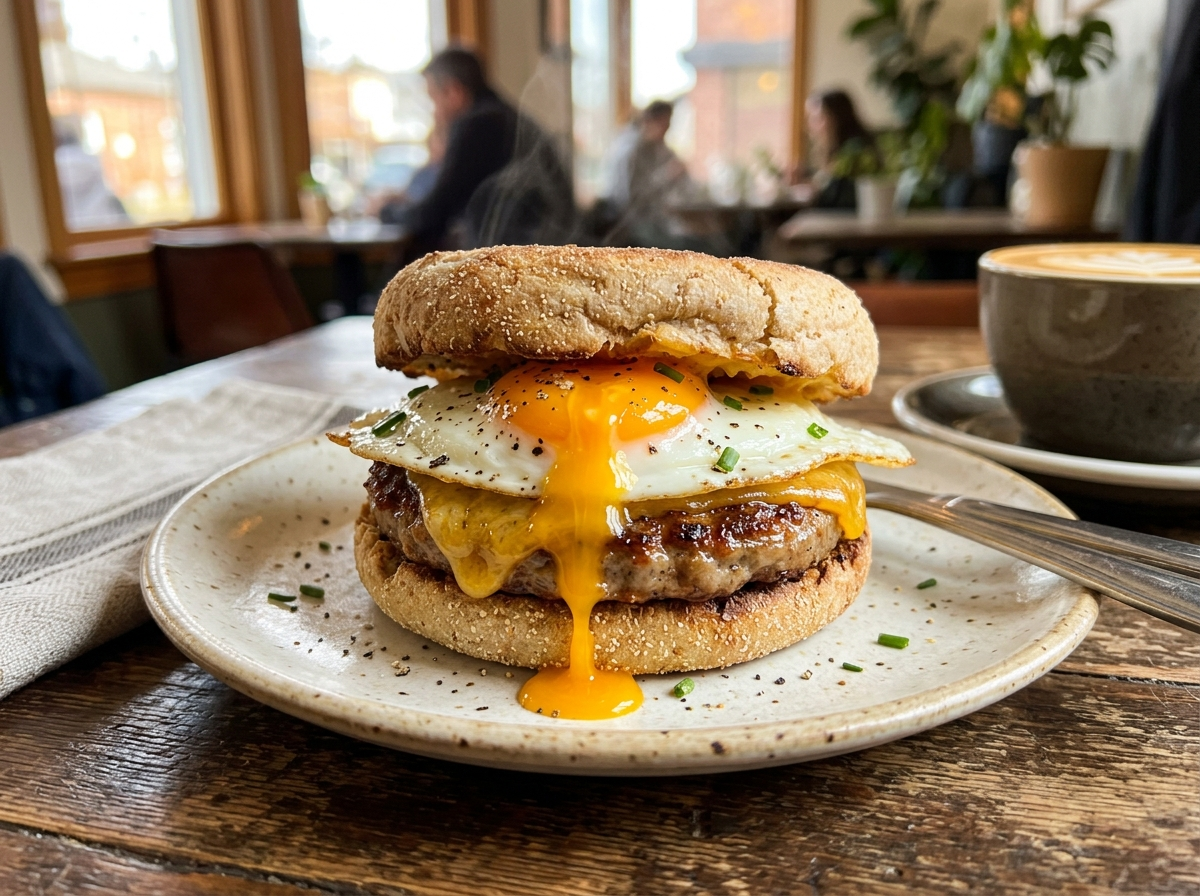
A breakfast sandwich is exactly what it sounds like — a sandwich built around traditional morning ingredients. At its core, you’re looking at some form of egg, a protein like bacon or sausage, cheese, and a bread vehicle. That bread could be an English muffin, a biscuit, a bagel, a croissant, or even a tortilla wrap.
The definition is loose on purpose. Unlike a club sandwich or a Reuben, which have pretty strict rules about what goes inside, a breakfast sandwich is more of a format than a fixed recipe. If it holds breakfast food between two pieces of bread (or inside one folded piece), it counts.
The Core Components
Most breakfast sandwiches share a few building blocks:
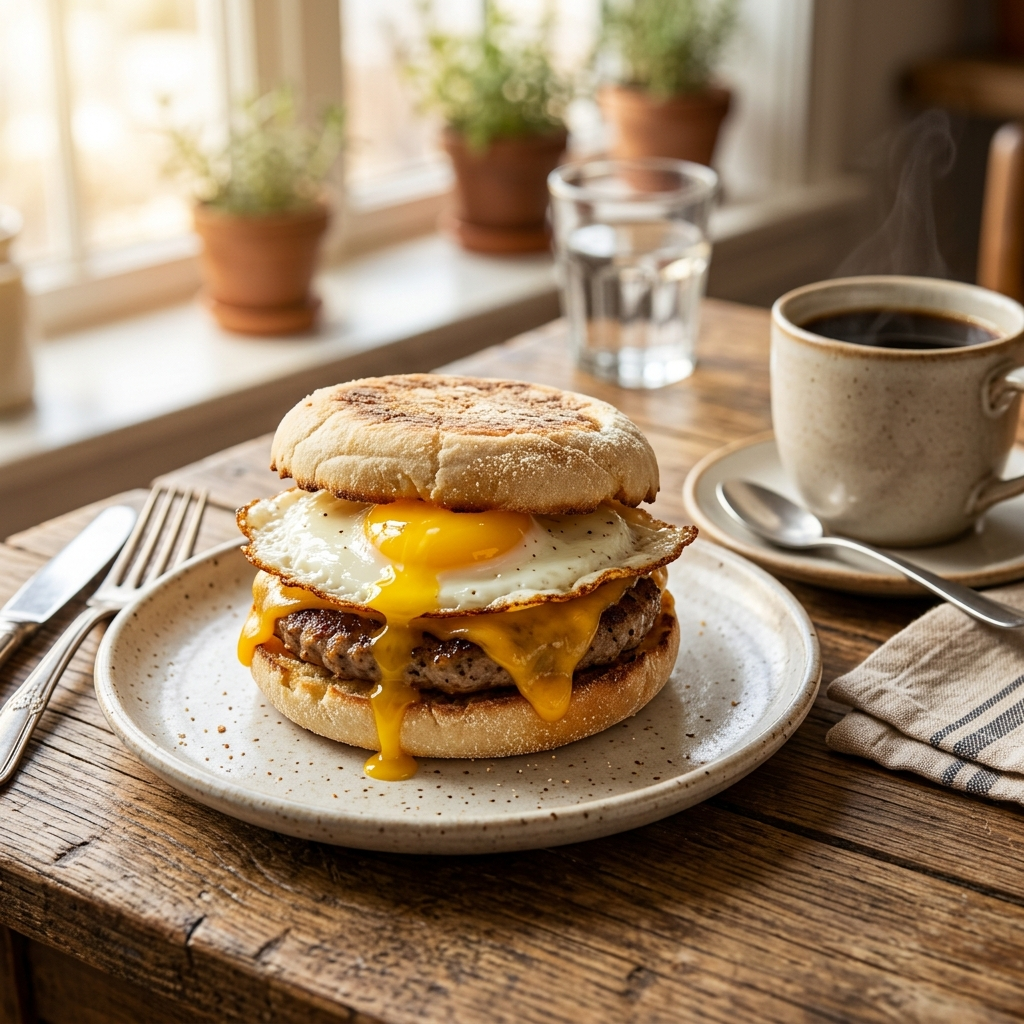
- Egg — fried, scrambled, or folded into a round patty. The egg is the star. It acts as the glue that holds everything together and gives the sandwich its unmistakable morning identity.
- Cheese — usually American or cheddar, melted right onto the egg while it’s still hot. That melt is what keeps the sandwich from falling apart in your hands.
- Meat — bacon, sausage patty, ham, or sometimes steak. This adds salt and fat, which balance the softer flavors of egg and bread.
- Bread — the vessel matters more than people think. An English muffin gives you nooks that catch melted cheese. A biscuit adds buttery flakiness. A bagel brings chew. Each one changes the whole experience.
What Makes It Different From a Regular Sandwich
The line between a breakfast sandwich and a regular sandwich can seem blurry. After all, you can put bacon and cheese on bread at any time of day. The real difference is the egg. Once you add egg as the primary filling, the sandwich shifts into breakfast territory in most people’s minds.
There’s also a texture difference. Breakfast sandwiches tend to be warm, soft, and compact. They’re designed to be eaten with one hand while you’re doing something else — driving, walking, standing at a bus stop. That portability is baked into the format, and it’s a big part of why the breakfast sandwich took off the way it did.
If you want to dig deeper into the full backstory, this piece on breakfast sandwich history covers even more ground.
Breakfast Sandwich History: Where It All Started
People have been putting morning food on bread for a very long time. The exact origin of the breakfast sandwich is hard to pin down because it didn’t come from a single inventor or a single moment. It evolved over decades — and really, over centuries.
Early Morning Meals on Bread
In 19th-century England and Ireland, workers heading to factories or fields would often eat leftover meat and eggs tucked into a bread roll. It was practical, cheap, and easy to carry. Street vendors in London sold egg-and-bread combinations as early as the 1800s, though nobody called them “breakfast sandwiches” yet.
In the American South, the biscuit has been a breakfast staple since the colonial era. Stuffing a split biscuit with country ham or sausage gravy was a natural step, and it gave the South its own version of the breakfast sandwich long before the term existed. These early versions weren’t trendy. They were survival food for people who needed calories before a long day of physical labor.
The Bodega and Diner Era
The real turning point for the breakfast sandwich in America came in the early-to-mid 20th century, especially in cities like New York and Philadelphia. Corner delis and bodegas started serving bacon, egg, and cheese sandwiches on rolls to workers who needed a hot, fast, cheap morning meal.
The classic New York bodega sandwich — bacon, egg, and cheese on a hard roll, wrapped in foil and handed across the counter — became a cultural institution. Diners across the country did the same thing with toast or English muffins. These weren’t fancy. They were fuel. And they were everywhere.
By the 1950s and 1960s, the breakfast sandwich was a standard offering at diners, lunch counters, and delis from coast to coast. It just hadn’t gone national in a branded, standardized way yet. That was about to change in a big way.
The Egg McMuffin and the Fast Food Boom
If you ask most people who invented the breakfast sandwich, they’ll say McDonald’s. That’s not quite right — the sandwich existed long before the Golden Arches got involved. But McDonald’s did something nobody else had done: they turned the breakfast sandwich into a mass-produced, nationally recognized product that changed the entire fast food industry.
How McDonald’s Changed Morning Fast Food
In 1972, a McDonald’s franchisee named Herb Peterson was running a restaurant in Santa Barbara, California. He wanted to find a way to boost morning sales, which were terrible at the time. Most fast food restaurants didn’t even open for breakfast. The morning hours were dead time.
Peterson’s idea was simple but clever. He took an English muffin, added a round egg cooked in a ring mold, layered on a slice of Canadian bacon and American cheese, and called it the Egg McMuffin. The ring mold was the key detail — it gave the egg a uniform shape that fit the muffin perfectly, which made the sandwich easy to assemble at scale and consistent across locations.
McDonald’s tested the item, and it worked. By 1977, the Egg McMuffin was on menus nationwide. According to McDonald’s corporate history, the breakfast menu grew rapidly from there, eventually becoming a major revenue driver for the entire company. The Egg McMuffin didn’t just add a new item to the menu — it created an entirely new daypart for fast food.
The Copycat Wave
Once McDonald’s proved that fast food breakfast could be profitable, every other chain scrambled to catch up. Burger King launched the Croissan’wich in 1983. Wendy’s, Hardee’s, and Carl’s Jr. all rolled out their own biscuit-based breakfast sandwiches. Dunkin’ (then Dunkin’ Donuts) leaned heavily into the format with bagel and croissant sandwiches.
This competition drove the breakfast sandwich into every corner of American life. You could get one at a gas station, a coffee shop, a convenience store, or a drive-through. The format was so simple and so adaptable that it spread faster than almost any other sandwich type in history. By the 1990s, the breakfast sandwich was no longer a novelty. It was the default American morning meal.
Why the Breakfast Sandwich Became So Popular
The breakfast sandwich didn’t become popular by accident. A few specific forces lined up at the right time to make it the dominant morning meal in America.
Convenience Culture
The biggest reason is speed. Americans started commuting longer distances in the 1970s and 1980s, and sit-down breakfasts became a luxury most people couldn’t afford on a weekday. The breakfast sandwich solved a real, practical problem: how do you eat a hot, filling meal with one hand while driving to work?
A bowl of cereal requires a table and a spoon. Pancakes require a plate and a fork. A breakfast sandwich requires nothing but your hand and maybe a napkin. That convenience factor is the single biggest reason the format took over. It fit perfectly into a culture that was getting faster and more mobile every year.
Regional Favorites Across America
The breakfast sandwich also stayed popular because every region made it their own. In the South, you’ll find sausage, egg, and cheese on a buttermilk biscuit — often with a smear of pepper jelly or a drizzle of hot sauce. In the Northeast, the bacon-egg-and-cheese on a bagel or roll is practically a religion. In the Midwest, you might see a breakfast sandwich built on a toasted donut or a hash brown patty used as the “bread.”
This regional variety kept the format fresh. It wasn’t just one thing. It was a template that every local food culture could adapt. And that adaptability is a big part of why the breakfast sandwich never went out of style, even as food trends came and went around it.
The Modern Breakfast Sandwich Scene
The breakfast sandwich has come a long way from the bodega counter, and the current scene is more varied and creative than ever.
Gourmet and Artisan Versions
In the last decade, upscale restaurants and specialty coffee shops have started treating the breakfast sandwich as a serious culinary format. You’ll find versions made with brioche buns, duck egg, gruyère, and house-cured bacon. Some chefs add kimchi, avocado, or hot honey. The basic structure stays the same — egg, cheese, protein, bread — but the ingredients get a major upgrade.
This mirrors what happened with burgers and grilled cheese sandwiches before it. Once a food format becomes culturally established, chefs start pushing its boundaries. The breakfast sandwich is right in the middle of that process now, and it’s producing some genuinely exciting results.
Making One at Home
You don’t need a restaurant to make a great breakfast sandwich. The trick is getting the timing right so everything finishes at the same moment. Here’s what actually works when you’re building one in your own kitchen:
Start your bread first. Toast your English muffin, split your biscuit, or warm your bagel. You want the bread hot and slightly crisp by the time the egg is done, because cold bread makes the whole sandwich feel sad and flat.
Cook your meat next. Bacon or sausage needs a head start because it takes longer than the egg. If you’re using a sausage patty, cook it in the same pan you’ll use for the egg — the residual fat adds flavor and saves you a dish.
The egg is the last thing to hit the pan, and here’s a detail most people miss: put the cheese on the egg while it’s still in the pan, not after you move it to the bread. The residual heat melts the cheese directly onto the egg, which creates a bond that keeps the sandwich from sliding apart when you bite into it. If you’ve ever had a breakfast sandwich where the cheese just falls off in a cold, sad sheet, that’s exactly why.
Assemble quickly, wrap the whole thing in foil for about 30 seconds to let the steam soften everything together, and eat it while it’s hot. That 30-second foil rest is the difference between a good breakfast sandwich and a great one.
If you’re worried about your bread getting soggy from the egg and cheese moisture, these tips on how to prevent a soggy sandwich apply just as well to breakfast versions. And if you want to branch out from the classic egg-and-bacon format, a spicy chicken sandwich can actually work as a fantastic brunch option — just add a fried egg on top.
A Quick Look at Popular Breakfast Sandwich Types
Not sure where to start? Here’s a quick comparison of the most common styles you’ll run into:
| Style | Bread | Typical Fillings | Best For |
|---|---|---|---|
| Classic BEC | Hard roll or bagel | Bacon, egg, cheese | Quick weekday mornings |
| Egg McMuffin style | English muffin | Round egg, Canadian bacon, American cheese | Nostalgic fast-food fans |
| Southern biscuit | Buttermilk biscuit | Sausage patty, egg, cheddar | Hearty, filling breakfasts |
| Croissant sandwich | Butter croissant | Ham or bacon, egg, Swiss or gruyère | A slightly fancier morning |
| Bodega style | Kaiser roll | Bacon, egg, cheese, salt, pepper, ketchup | No-frills city breakfasts |
Each style has its loyal fans, and honestly, the “best” one depends on what you’re craving that particular morning. There’s no wrong answer here.
Frequently Asked Questions
What was the first breakfast sandwich?
There’s no single confirmed “first” breakfast sandwich. Workers in England and Ireland were putting eggs and meat on bread rolls as early as the 1800s. In America, Southern biscuit sandwiches and New York bodega bacon-egg-and-cheese sandwiches were common by the early 1900s. The first nationally branded breakfast sandwich was the McDonald’s Egg McMuffin, introduced in 1972 by franchisee Herb Peterson in Santa Barbara, California.
What makes a breakfast sandwich different from a regular sandwich?
The egg is the main dividing line. A sandwich built around egg as the primary filling — usually paired with breakfast meats like bacon or sausage and melted cheese — is considered a breakfast sandwich. The bread choice also tends to lean toward morning staples like English muffins, biscuits, and bagels rather than sliced sandwich bread. For a deeper look at how different sandwich formats compare, this breakdown of hot vs. cold sandwiches covers some useful ground.
Is a breakfast sandwich healthy?
It depends entirely on the ingredients and portion size. A basic bacon, egg, and cheese on an English muffin typically runs between 300 and 450 calories, which is a reasonable breakfast for most adults. Versions loaded with extra cheese, large sausage patties, and buttery croissants can push well past 600 calories. If you’re watching your intake, focus on leaner proteins like turkey sausage or ham and choose whole-grain bread when possible.
Note: This is general nutritional information and not a substitute for advice from a registered dietitian or healthcare provider, especially if you have specific dietary needs or health conditions.
Can I make a breakfast sandwich ahead of time?
Yes, but with a caveat. Breakfast sandwiches are best eaten fresh because the egg and cheese lose texture when reheated. If you need to prep ahead, cook the components separately, store them in the fridge, and assemble and reheat in the morning. A quick wrap in a damp paper towel and 30 seconds in the microwave will get you close to fresh.
The breakfast sandwich earned its spot in American food culture the old-fashioned way — by solving a real problem. People needed something hot, fast, portable, and filling, and the combination of egg, cheese, meat, and bread delivered on all four counts. From London street vendors to New York bodegas to a McDonald’s kitchen in Santa Barbara, the format kept evolving without ever losing its core appeal.
Next time you unwrap one on your morning commute, you’ll know there’s a lot more history in your hands than just fast food. If you want to try building your own version at home, start with the basics — a good English muffin, a fresh egg, and real cheese — and experiment from there. You might just find your new favorite morning ritual.
For more sandwich inspiration and tips on building the perfect stack, browse the full collection at Antney’s Grub.