
For years, the veggie burger had a reputation problem, and honestly, it earned it. Too many of them were frozen beige discs that tasted like seasoned cardboard and fell apart if you looked at them hard. But spend any time eating your way through the good ones — the ones built by people who actually care — and a pattern emerges. The veggie burgers that work aren’t trying to be beef. They’re doing their own thing, well. Here’s what separates them from the sad discs.
The Patty Has to Bring Its Own Texture
Beef gets texture for free: fat renders, edges crisp, the middle stays tender. A veggie patty has to engineer all of that, and the base ingredient decides most of it.
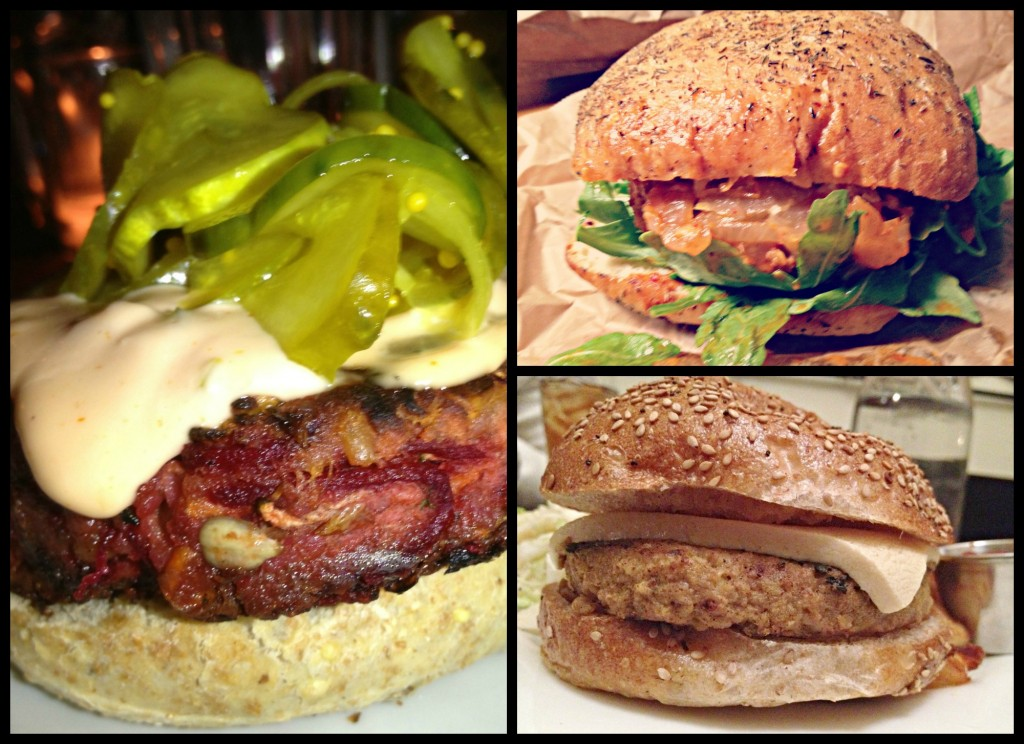
Seitan — the wheat-gluten patty behind two of the most memorable veggie burgers we’ve come across — is the closest thing to a chew. A grilled seitan burger at New York’s Candle Cafe, piled with fried potatoes, lettuce, tomato, onion, coleslaw, and pickles on a seeded bun, held together bite after bite in a way bean patties rarely do. The Cinnamon Snail’s ancho chili seitan burger went further, with a dense, spicy patty that stood up to beer-simmered onions, pepper sauce, and horseradish cream without going soggy. Neither one fooled anyone into thinking it was beef. Both were genuinely satisfying to eat, which is the actual goal.
Bean-and-grain patties play a different game: softer, earthier, more like a really good falafel’s American cousin. They’re at their best with a properly crisped exterior, because the contrast between a crunchy crust and a tender middle is doing the work that fat does in a beef patty. It was a burger in this style — the house veggie burger at New York’s 5 Napkin Burger — that first convinced at least one lifelong beef loyalist that the category deserved a fair hearing. Mushroom and beet-based patties split the difference — juicy and dark, with an umami depth that reminds you of a burger without imitating one.
The failures share one flaw: mush. A patty with no chew, no crust, and no structure is a sandwich filling, not a burger.
Heat Matters More Than You’d Think
Because there’s no fat rendering and no Maillard-friendly beef surface, veggie patties are easy to undercook into gummy blandness or overcook into a dry puck. A hard sear in a hot pan or on a well-oiled grill grate, and real attention to internal temperature, makes the difference between “pretty good, actually” and “never again.” We get into the specifics in our piece on why temperature matters for meatless burgers — the short version is that the same focus you’d give a steak applies here, just with different targets.
The Bun Is Not a Detail
Of everything on that Cinnamon Snail burger, the thing that got talked about most afterward was the grilled herb focaccia it sat on. That tells you something. A veggie patty, especially a saucy one, will destroy a flimsy bun in minutes. It needs bread with structure — a sturdy focaccia, a seeded roll with some chew, a potato bun that can absorb juice without disintegrating. Half the veggie burgers that disappoint are actually decent patties let down by bread that gave up.
Toppings and Sauces Do the Heavy Lifting
Here’s the quiet truth about veggie burgers: the patty is the foundation, but the toppings are the flavor. A beef burger can get away with lettuce and a prayer. A veggie burger needs contrast — something pickled and sharp, something creamy, something with heat.
Look at what made those New York burgers work. Pickles and coleslaw on the Candle Cafe seitan burger brought acid and crunch against the dense patty — and if you’re building slaw for a sandwich, it needs to be crisp and well-drained, which is exactly what our coleslaw for sandwiches guide is about. The Cinnamon Snail burger stacked piri piri pepper sauce and horseradish cream over beer-simmered onions: heat, tang, sweetness, and richness all at once. And never underestimate a sharp pickle — our homemade pickles take twenty minutes of actual work and will save a mediocre patty all by themselves.
The one caution from the Candle Cafe burger: more isn’t always more. It came loaded, and adding a sheet of tapioca cheese on top of everything pushed it into overkill — a reminder that a veggie burger already has a lot going on, and every addition should earn its place.
Building One at Home
If you’re making veggie patties from scratch, two habits save most recipes. First, chill the formed patties for at least half an hour before they touch heat — bean and grain mixtures that go straight from bowl to pan tend to slump and crumble at the flip. Second, cook them in a skillet with a real layer of hot oil rather than on a dry grill grate, at least until they’re firm enough to hold together; you can finish them wherever you like. And season them like you mean it. Beef brings its own savor to the party. A veggie patty depends on salt, spices, and a little char to get there, so don’t be shy.
So, What Makes One Good?
A patty with real texture — chewy seitan or a well-crusted bean patty, never mush. A proper sear and proper heat. A bun with backbone. Toppings chosen for contrast: acid, cream, heat, crunch. And above all, a cook who isn’t trying to apologize for the fact that it isn’t beef.
The best compliment a veggie burger can earn is the one those New York burgers earned from confirmed carnivores: not “it tastes just like meat,” but “I’d order that again.” If you’re putting a veggie burger on your menu — or building one at home — that’s the bar. Clear it, and nobody at the table feels like they’re settling.