
Every summer, right around the Fourth of July, the same thing happens: somebody’s uncle stands over a grill, spatula in hand, absolutely certain he knows what he’s doing — and then presses every patty flat like he’s ironing a shirt. The burgers come off dry, shrunken, and sad.
We grill a lot of burgers, but we also know when to listen to someone who thinks about ground beef for a living. Jamie Schweid comes from the family behind Schweid & Sons, a ground beef purveyor now in its fourth generation, and his advice for home grillers has stuck with us because it’s not fussy. It’s a handful of simple habits that separate a great backyard burger from a hockey puck. Here’s the distilled version, plus a few things we’ve learned on our own line.
It Starts at the Meat Counter
Before the grill even enters the picture, Schweid says there are three things to check when you’re buying ground beef.
First, the freshness date. It sounds obvious, but ground beef has more exposed surface area than any other cut, which means it spoils faster and picks up off flavors sooner. If the date is close, pass.
Second, the fat ratio. Look for 80/20 as your floor — eighty percent lean, twenty percent fat. Fat is where the juice and most of the flavor live, and a burger cooked over high heat loses a good chunk of its moisture no matter what you do. Start leaner than 80/20 and there’s nothing left to lose. We go deeper on blends in our guide to the best fat ratio for burgers, but the short version is that 80/20 ground chuck is the classic for a reason — Schweid’s own company built its name on it.
Third, look at which cuts actually went into the blend. Chuck is the workhorse. Brisket adds richness, short rib adds a deep, beefy savor, and sirloin brings a cleaner steak flavor. A package that names its cuts is generally a better bet than one that just says “ground beef” and leaves you guessing.
The Sear Is Everything
Asked how to get that restaurant-style crust at home, Schweid’s answer was a cast iron skillet and a bit of patience. The method works just as well on a grill grate or flat top, and it goes like this.
Form the meat into thick pucks rather than wide, thin patties. A puck gives you an even thickness, which means even cooking, and plenty of surface for browning. Here’s the part most people skip: once you’ve formed the pucks, put them back in the fridge. Your hands warm the meat up while you’re shaping it, and warm fat smears instead of staying in distinct pockets. Cold meat hitting a ripping-hot surface is how you get a hard, crispy char on the outside while the middle stays juicy.
When it’s time to cook, get the pan or grill genuinely hot — hotter than feels reasonable. Season both sides of the puck with kosher salt, lay it down, and leave it alone for about 30 to 45 seconds before the first flip. Listen for an aggressive sizzle. That’s the sound of a crust forming, and if you move the burger too early, you’ll tear it and leave the best part stuck to the metal.
Telling Doneness Without Cutting It Open
Cutting into a burger to check the middle is a small tragedy. Every slice lets juice pour out, and juice is the whole point. Schweid’s workaround is what he calls the face method, and it’s charmingly low-tech: press the center of the burger gently with your fingertip, then touch your own cheek. If the burger gives the way your cheek does, you’re in medium-rare territory. Firmer — closer to your chin or forehead — means it’s cooked further.
It takes a little practice to calibrate, and we’ll be honest: it works best alongside a decent instant-read thermometer, especially since food safety guidance puts ground beef at 160°F for a fully safe cook. Our burger internal temperature guide breaks down what each temperature actually looks like inside, so you can match the number to the bite.
One more thing Schweid insists on, and he’s right: the burger keeps cooking after it leaves the heat. Carryover cooking is real, so pull the burger a touch earlier than your target and let it rest a minute or two. That rest isn’t dead time. It’s when the juices, which got pushed toward the center by the heat, redistribute through the whole patty instead of running onto the plate at the first bite.
The Two Mistakes That Ruin More Burgers Than Any Others
Ask Schweid what home grillers get wrong and he doesn’t hesitate. The first is pressing the burger down with the spatula. That satisfying sizzle when you squash a patty? That’s juice and fat being squeezed out onto the coals. It doesn’t speed up cooking in any way that matters, and it dries the burger out. If you formed a proper puck, the burger will cook evenly all on its own — no ironing required. We’ve written before about how to keep burgers juicy, and “stop pressing” sits right at the top of that list too.
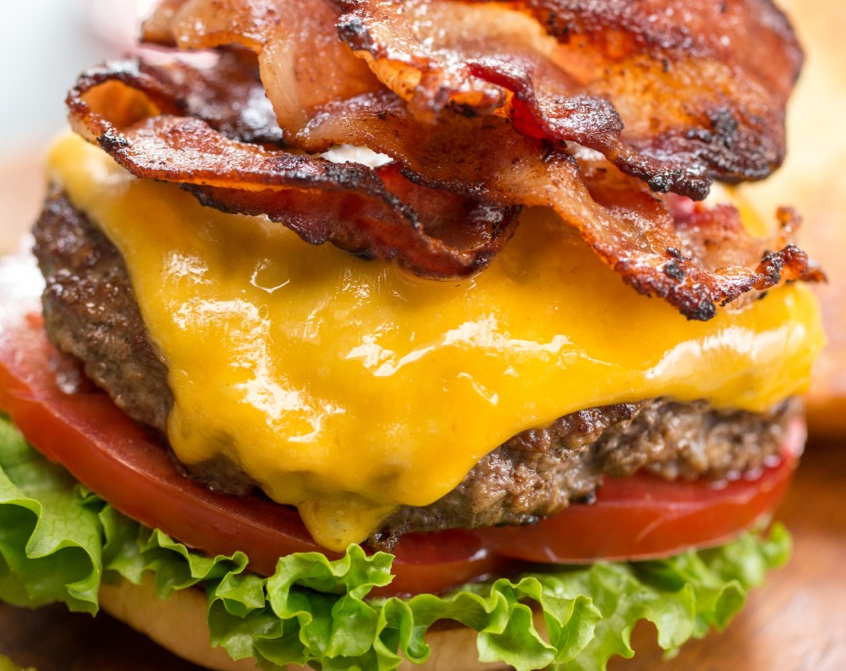
The second mistake is cheese that never melts. Cheese should go on about a minute before the burger comes off — use the face method (or your thermometer) to judge when that minute arrives — so it drapes over the patty in a proper blanket instead of sitting on top like a cold slice of plastic. Schweid’s own favorite is plain yellow American, and on this we agree with him completely: it melts more evenly than cheddar, it doesn’t split or go greasy, and its mild saltiness flatters the beef instead of arguing with it.
The Fridge Staples and the Bun Question
For condiments worth always having around, Schweid named three: barbecue sauce for sweetness, ketchup because, well, it’s ketchup, and avocado relish for those of us who put avocado on everything anyway. It’s a sensible trio — one sweet, one tangy, one fresh — and between them they’ll cover just about any burger you build.
And the bun? Here’s where he goes against most grilling advice: he doesn’t toast his. His reasoning is that a good potato roll — he’s loyal to Martin’s Potato Rolls — already has the ideal soft, slightly springy texture, and toasting messes with it. We’re not going to pretend we follow this at Antney’s, where a light toast keeps the bun from going soggy under a juicy patty. But if your rolls are genuinely fresh and soft, try one untoasted this summer. You might be surprised.
The Whole Thing, in One Breath
Buy fresh 80/20 beef from named cuts. Form thick pucks, chill them, salt them, and sear them hard on a screaming-hot surface without touching them too soon. Judge doneness by feel and temperature, not by cutting. Never press. Melt the cheese properly. Let the burger rest. None of it is complicated — that’s exactly the point. A perfect grilled burger isn’t about tricks. It’s about doing a few simple things in the right order, and then leaving the burger alone to be great.