
A few years back, a burger writer I follow filed a review from a resort restaurant in Nuevo Vallarta literally called The Burger Custom Made. The hook was the name: an entire menu built around a burger made your way. And the burger itself? Fine. Decent. A preset burger eaten on an outdoor deck while the sun went down over the Pacific — which, let’s be honest, was doing most of the heavy lifting that evening. What stuck with me wasn’t the review. It was the gap between the promise of “custom” and the reality: a preset menu burger with your choice of toppings. That’s not custom. That’s a quiz.
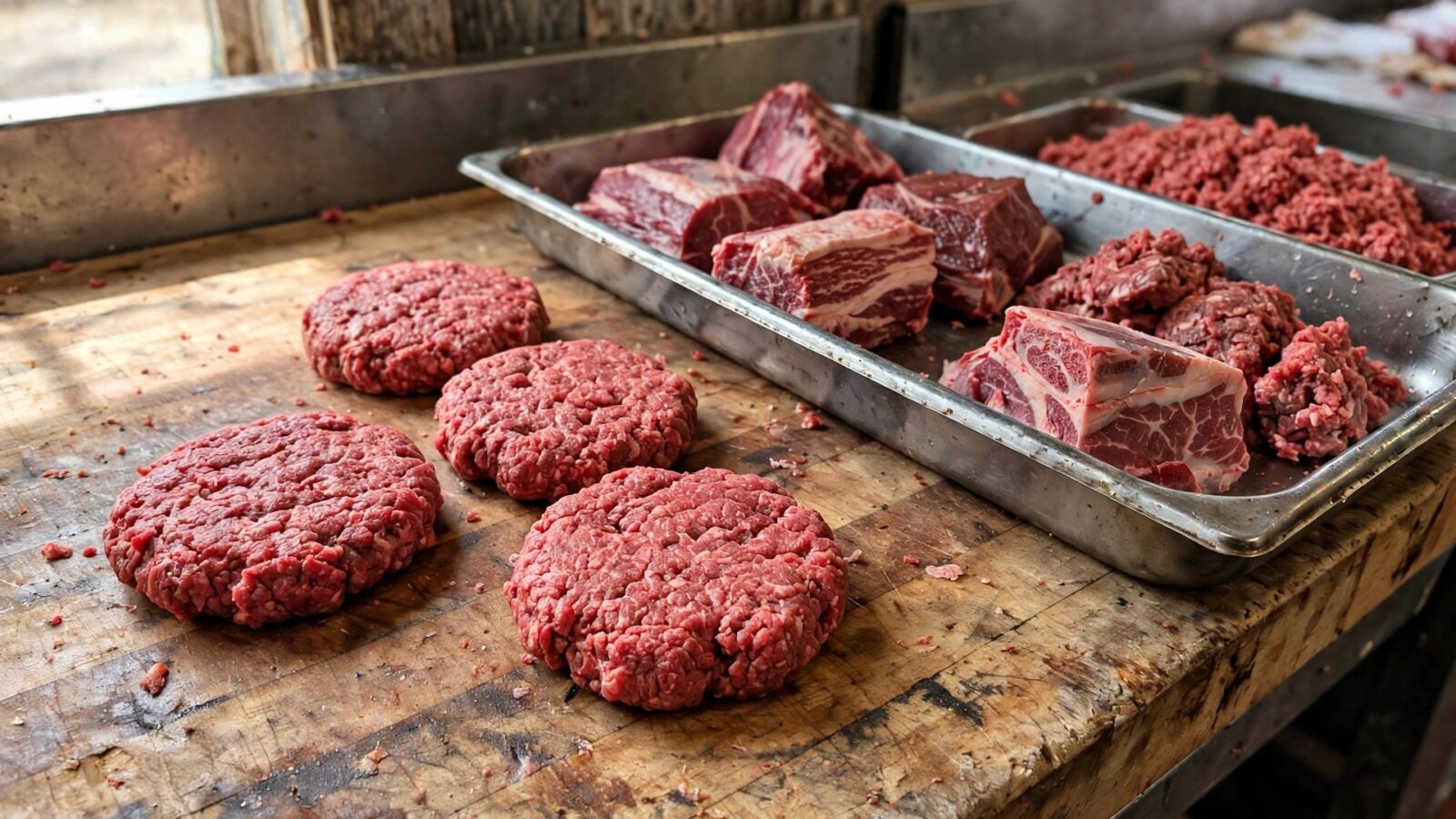
Real custom starts at the meat counter, with a question most people never ask: what actually goes into this grind? A custom blend means choosing the cuts, the fat ratio, and the grind — the three decisions that decide whether your burger eats like a steak or a meatloaf sandwich. Here’s what we’ve learned about getting all three right, mostly the hard way.
Most “custom” burgers are topping theater
Strip the marketing off and most build-your-own concepts are the same trick: a standard patty, then a long list of add-ons. Pick your cheese, pick your sauce, feel creative. Nothing wrong with toppings — some of our favorite burgers are defined by them — but the patty underneath is still the commodity grind the kitchen buys by the case. You’ve customized the accessories, not the burger.
The meat is the burger. A plain 80/20 chuck patty, handled right, beats a fancily topped burger made from a lean, over-ground mystery blend every time. So if you’re putting effort anywhere, put it here first. Toppings are the easy part. This is the part that changes the eating.
The cuts that matter, and what each one brings
Blending isn’t about throwing cuts together. It’s about knowing what each one contributes. Four cuts do almost all the useful work.
Chuck is the backbone and should be the bulk of almost every blend. It’s the shoulder — hardworking, deep, classic. A straight chuck grind lands naturally around 80/20, which is why supermarket “ground chuck” has been the default good burger for decades. Everything else is a supporting player.
Brisket brings depth: long fibers, intense beefy savor, enough fat to keep things interesting. In a blend it adds a darker, almost steak-dripping flavor — but it runs fatty, so keep it to a quarter or a third of the mix.
Short rib is the luxury cut. Boneless short rib ground into a burger is absurdly rich — buttery, tender, almost decadent. A little of it transforms a blend; a lot of it requires a nap afterward. Use it when you want the burger to taste expensive.
Sirloin is the lean one, bringing a cleaner, more steak-like note — think strip steak rather than pot roast. It earns its place in blends for that clean beefiness, but it should never run the show alone.
Skip anything ground from unnamed trim, anything labeled “lean” with no named cut, and round — too lean and too mild to matter. If the package doesn’t name the cut, the cut is whatever was cheapest that week.
The fat ratio rules
This is the simplest part of the whole exercise and the one people get wrong most. Fat is flavor and fat is juiciness. As the patty cooks, the fat renders, basting the meat from the inside and building the crust on the outside.
80/20 is the gold standard — eighty percent lean, twenty percent fat. Juicy over real heat without falling apart or eating greasy. If you take nothing else from this guide, take this: 80/20 chuck is the floor of a good burger, not a compromise.
75/25 is the decadent option. Chef Andrew Zimmern builds his burger at roughly this ratio, and it works best on a flat-top or cast iron where the patty sizzles in its own rendered fat. Richer, juicier, harder to handle on a grill grate where drippings become flare-ups. Try it once so you know what the top end tastes like.
85/15 is workable but unforgiving. Fine if you nail the temperature exactly. Most home cooks miss by sixty seconds, which is why this ratio produces more disappointing burgers than any other.
90/10 and leaner is a dry burger wearing a burger costume. Save it for the meatloaf. No technique rescues a burger with no fat in it.
When blending cuts yourself, the math is rough and that’s fine. Chuck at ~80/20 plus a fatty cut like short rib lands you in the low twenties; chuck plus sirloin lands closer to 80/20 flat. You’re aiming for the neighborhood of twenty percent fat and tasting your way from there.
Four blends worth making
Enough theory. Four blends we’ve actually made, with ratios that work and what each one tastes like. All percentages by weight, before grinding.
The Steakhouse — 50% chuck, 25% brisket, 25% sirloin. Tastes like the menu description at a good steakhouse: chuck holds it together, brisket brings the dark depth, sirloin adds the clean steak note. Make this one when you want to impress someone who thinks they know burgers.
The Rich One — 60% chuck, 40% boneless short rib. My favorite of the four. The short rib turns the whole thing buttery and luxurious without losing chuck’s beefy backbone. Serve it simply — salt, pepper, good bun — because anything elaborate gets in the way.
The Weekend Workhorse — 70% chuck, 30% brisket. The everyday upgrade. Noticeably deeper than plain chuck without costing more or requiring anything special. Best return on effort in burger making — if you try one blend on this list, try this one.
The Butcher’s Bargain — 75% chuck, 25% beef fat trim. Ask your butcher for fat trimmings — most sell them cheap — and grind them in with leaner chuck. The most direct way to control your fat ratio, and it costs almost nothing. Custom-blend results on a commodity budget.
How to talk to your butcher (and grind it right)
You don’t need your own grinder. Walk up to the meat counter and say this: “Two pounds of beef for burgers — one pound chuck, one pound brisket, coarse grind, please.” Any real butcher does this all day. Ask for a single coarse grind, not the fine double-grind of pre-packaged beef — coarse keeps the patty loose and steak-like instead of dense and meatloafy.
If you grind at home, the rule is temperature. Meat, grinder parts, bowl — everything in the freezer for fifteen to twenty minutes first. Warm fat smears instead of grinding cleanly, and smeared fat means a greasy, dense patty instead of distinct little pockets that render as they cook. Cold is the whole secret.
Go easy forming the patties — pack just enough to hold together, then stop. Overworking develops the proteins and turns the texture springy and tough. Press a shallow dimple in the center with your thumb so it doesn’t puff into a meatball on the heat. Season the outside only, with kosher salt and pepper, right before cooking — salting the mix ahead starts curing the meat and changes the texture from tender to sausage-like.
Cook it like you care
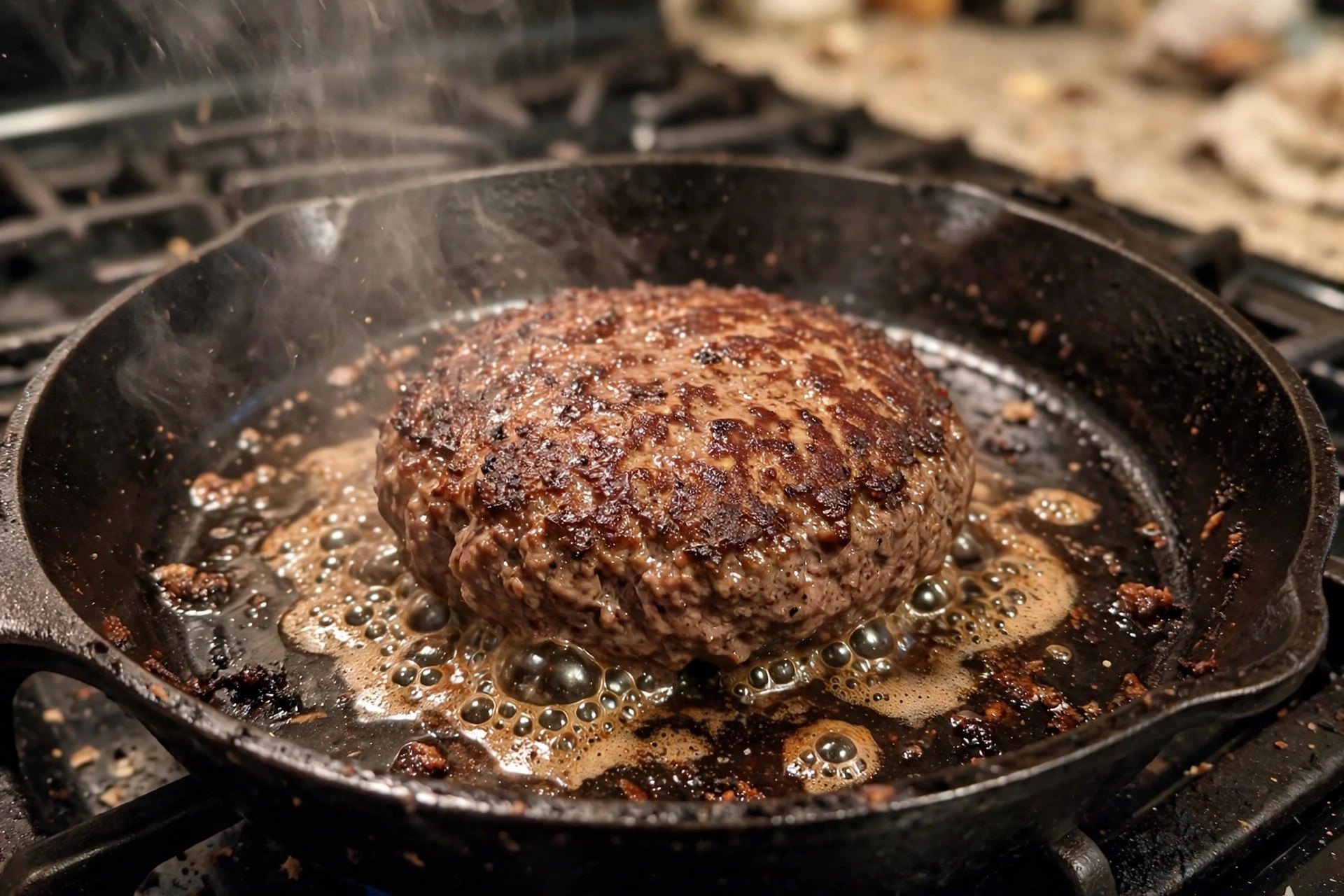
A great blend cooked badly is an expensive disappointment. Get the surface genuinely hot — grill, cast iron, or flat-top — sear hard, flip once, and don’t press the patty. That sizzle when you squash it is juice leaving the burger. It doesn’t cook faster. It just gets drier.
Pull the burger a touch before your target doneness and rest it a couple of minutes. Carryover cooking finishes the job while the juices redistribute instead of running onto the plate. The full method, temperatures and all, is in our guide to grilling the perfect burger — the blend gets you the raw material, that guide gets you the cook.
Finish with a bun that can carry it
One thing nobody tells you: a richer, juicier patty demands a stronger bun. The delicate brioche that worked under plain chuck will surrender halfway through a short-rib blend, and there’s nothing sadder than a great burger you eat with a fork. Match structure to build — potato rolls and sturdy kaisers for the rich blends, soft stuff for simpler stacks. Our burger bun guide ranks every major type, and its pairing logic applies double when the patty is the star.
That’s the whole custom burger. Choose your cuts, watch your fat, keep everything cold, don’t manhandle it, cook it hot, and put it on bread that can take it. More work than grabbing a tube of ground beef — and about ten times the burger. The resort in Nuevo Vallarta can keep its sunset. This is better.