
Somewhere in my eating life there was a burger that haunts me. Not because it was good — because it should have been. A thick, properly charred patty, peppery and pink inside, sharp cheddar melted down the sides, and then… a cold, spongy grocery-store bun that turned to paste by the third bite. The kitchen did everything right except the one thing that touches your hands first. That’s when it clicked for me: the bun is not the wrapper. It’s half the burger.
Most burger talk obsesses over the patty — blend ratios, grind sizes, smash versus thick — and treats the bread as an afterthought, a vehicle, a thing to grab. But spend any time paying attention and the bun starts to look like the part of the build with the least room for error. The patty can be a little overcooked and still be a burger. A bad bun ruins the whole thing before you ever get to the meat. So here is a bun-by-bun walkthrough of the major players, an honest ranking, and the rules for matching a bun to whatever you’re stacking inside it.
What the Bun Actually Has to Do
Before ranking anything, it helps to know the job description, because a bun is doing three jobs at once and failing any of them sinks the burger. First, structure: it has to contain a hot, greasy patty and wet toppings without disintegrating in your hands or going gummy on the bottom. Second, flavor: it should taste like something — soft, buttery, malty, sweet — but never so much of something that it shouts over the beef. Third, contrast: the bun’s crumb should give the patty something to push against. A tender bite needs a little chew. A crisp patty crust wants a soft landing.
Keep those three in mind and the rankings start making sense on their own. A bun that nails structure but tastes like nothing is a failure in one direction; a bun that tastes incredible but collapses halfway through is a failure in the other.
The Contenders
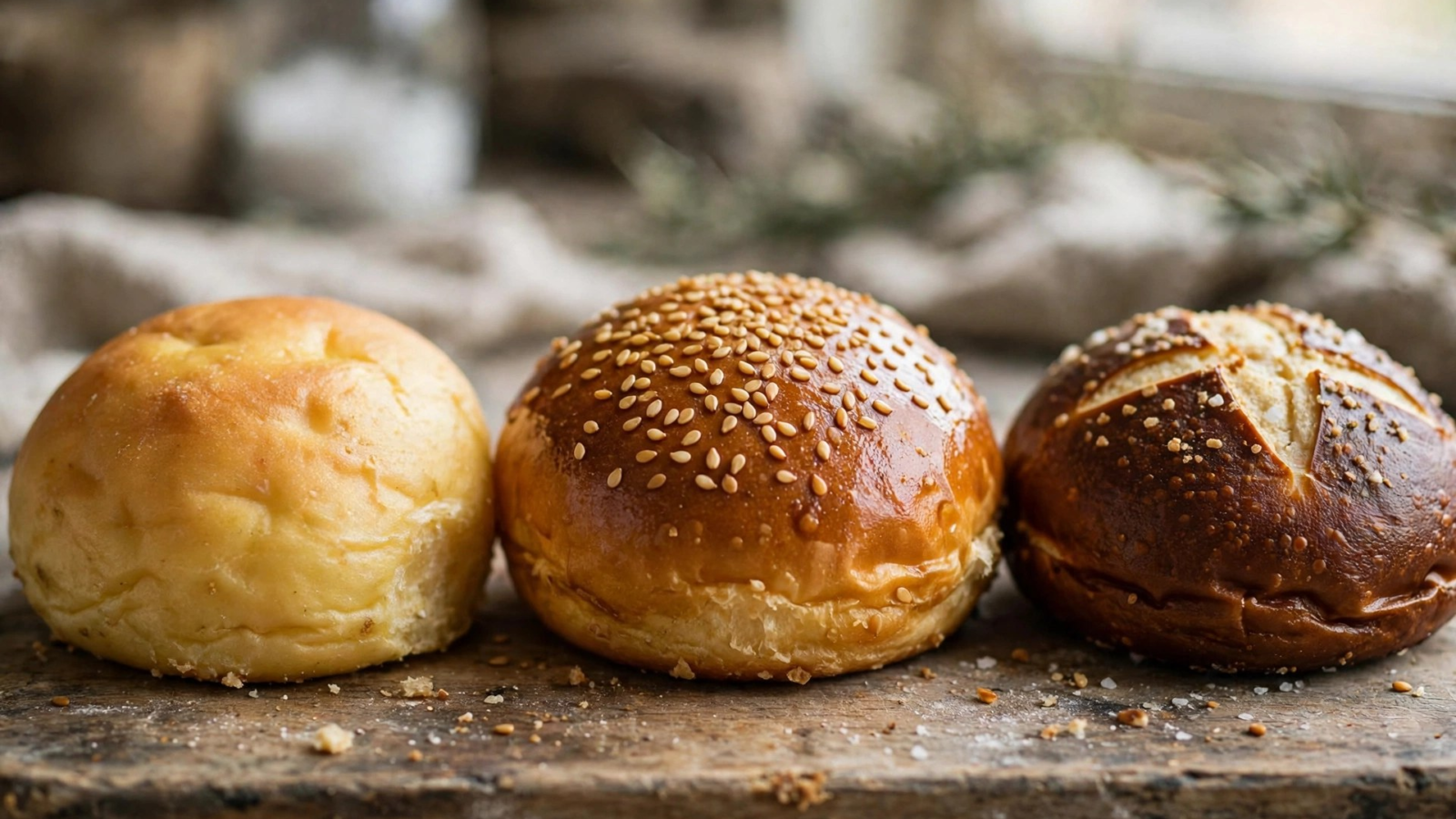
The potato roll. If there is a default answer to “what bun should I use,” this is it. Potato starch in the dough gives the crumb a tender, slightly earthy sweetness and, more importantly, a resilience that plain white rolls don’t have. A good potato roll compresses when you bite instead of tearing, which is exactly what you want when juices start running. It handles doubles and triples, it toasts well, and its mild sweetness plays nicely with everything from cheddar to barbecue sauce. The one knock: a cheap one can read a little one-note, all softness with no personality. But as a platform for a burger, it’s the most forgiving thing on this list.
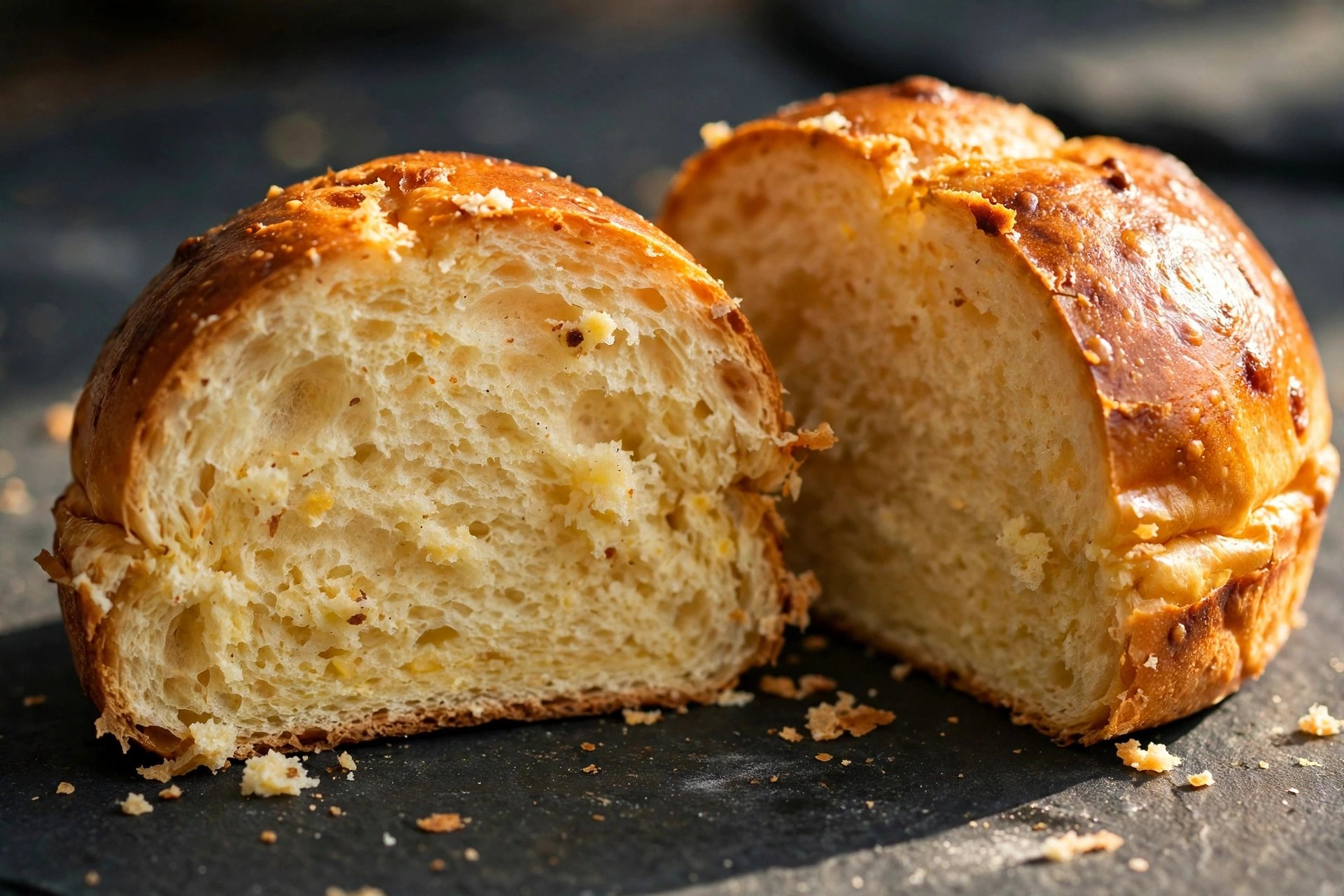
Brioche. The luxury pick, and the most misunderstood. Eggs and butter in the dough make it rich, golden, and faintly sweet, and when it hits the griddle cut-side down it picks up a crispness nothing else quite matches. Brioche is wonderful with a simple smash patty or a dry-aged blend where the bun is allowed to be a supporting flavor, not a structural beam. The problem is that too many places discovered brioche meant “fancy” and started putting it under towering, sauce-heavy builds it was never engineered to carry. A brioche bun under a double with slaw and two sauces is a structural disaster waiting to happen — the buttery crumb soaks through, the bottom goes translucent, and you’re eating with a fork by bite four. Use it for modest builds. Respect its limits and it’s gorgeous.
The pretzel bun. Chewy, dark, salted — the linebacker of the bun world. The lye bath that gives it that mahogany crust also gives it a density and chew that can stand up to the heaviest, wettest burgers without flinching. Brisket patties, chili burgers, anything with real weight: this is your bun. But presence cuts both ways. A pretzel bun has opinions, and with a delicate patty or a clean, simple build, it will dominate the conversation. Don’t put a thin, juicy smash patty on one unless you want the bun to be the first and last thing you taste.
The classic sesame seed bun. The evergreen. Neutral, faintly nutty from the seeds, cheap, and everywhere. There’s a reason it never left: it gets out of the patty’s way. But the standard version is also the least structural bun here. Single patty, restrained toppings, and it’s perfectly fine — nostalgic, even. Load it up and it gives out, shredding at the seam the way they all do. Treat it as what it is: a one-patty bun.
Challah. A curveball that works better than you’d think. The honey-kissed sweetness and pillowy crumb that brunch spots love for breakfast sandwiches translate beautifully to burgers, especially ones with a little heat or salt to play against the sweetness. A spicy bacon cheeseburger on challah is one of those combinations that sounds wrong until the contrast hits your mouth. It won’t carry a double, but it doesn’t need to.
Milk buns and sweet Hawaiian-style rolls. Delicate, dairy-tender, almost dessert-like. They’re lovely with chicken burgers and lighter builds where their gentle sweetness reads as an asset, but they share brioche’s weakness around sauce — keep them away from anything drippy.
My Ranking, Worst to Best
6. Plain white bun. It does the job if nothing else is available. That’s the review.
5. Milk bun. Delicious, but too fragile for serious burgers. A chicken-sandwich bun moonlighting.
4. Sesame seed classic. Reliable and nostalgic, but it caps your ambition at one patty. A great bun for a simple burger and an inadequate one for anything bigger.
3. Pretzel bun. The specialist. When the burger calls for it — heavy, saucy, aggressive — nothing else holds up. Deducted points for steamrolling delicate builds.
2. Brioche. The best-tasting bun on this list, full stop. It only lands second because its range is narrow: keep the build modest, keep it toasted, and it’s unbeatable.
1. Potato roll. Not the tastiest. Not the prettiest. But the bun that lets the most burgers be the best version of themselves, and the hardest one to mess up. When in doubt, this is the answer, and most doubts are resolved by it.
Matching the Bun to the Burger
Ranking is fun, but the real skill is pairing, and the pairing logic is mostly about weight and wetness. Heavy patty plus heavy toppings means you need structure first and flavor second: potato roll, pretzel bun, or a sturdy kaiser. A modest single with a clean topping set is where flavor-first buns like brioche or challah earn their keep — there just isn’t enough load to threaten them. Sauce is the great bun killer, more than patty weight: anything with a wet slaw, a runny sauce, or a very juicy medium-rare patty deserves a bun with structural backbone, because the enemy isn’t the first bite, it’s the fourth.
Also, match the sweetness. Sweet buns (brioche, challah, Hawaiian rolls) want savory, salty, or spicy partners — the contrast is the whole point. Put one under an already-sweet barbecue-sauce build and the whole thing turns cloying. Savory, neutral buns can take whatever you give them.
Handle Them Right
Two habits separate people who care about buns from everyone else. First, toast: butter the cut sides, lay them face-down on the grill or in a hot skillet for thirty to sixty seconds until golden. An untoasted bun next to a hot patty steams itself soggy; a toasted one holds the line. Second, store them at room temperature in an airtight bag, never in the fridge, which dries bread out faster than anything. Freezing works fine — wrap tight, thaw at room temp, and toast before serving.
None of this is complicated. That’s the thing about buns: the bar is low, the payoff is high, and most of the worst burgers I’ve ever had would have been fixed by thirty seconds on the griddle and a roll that could take the weight.