
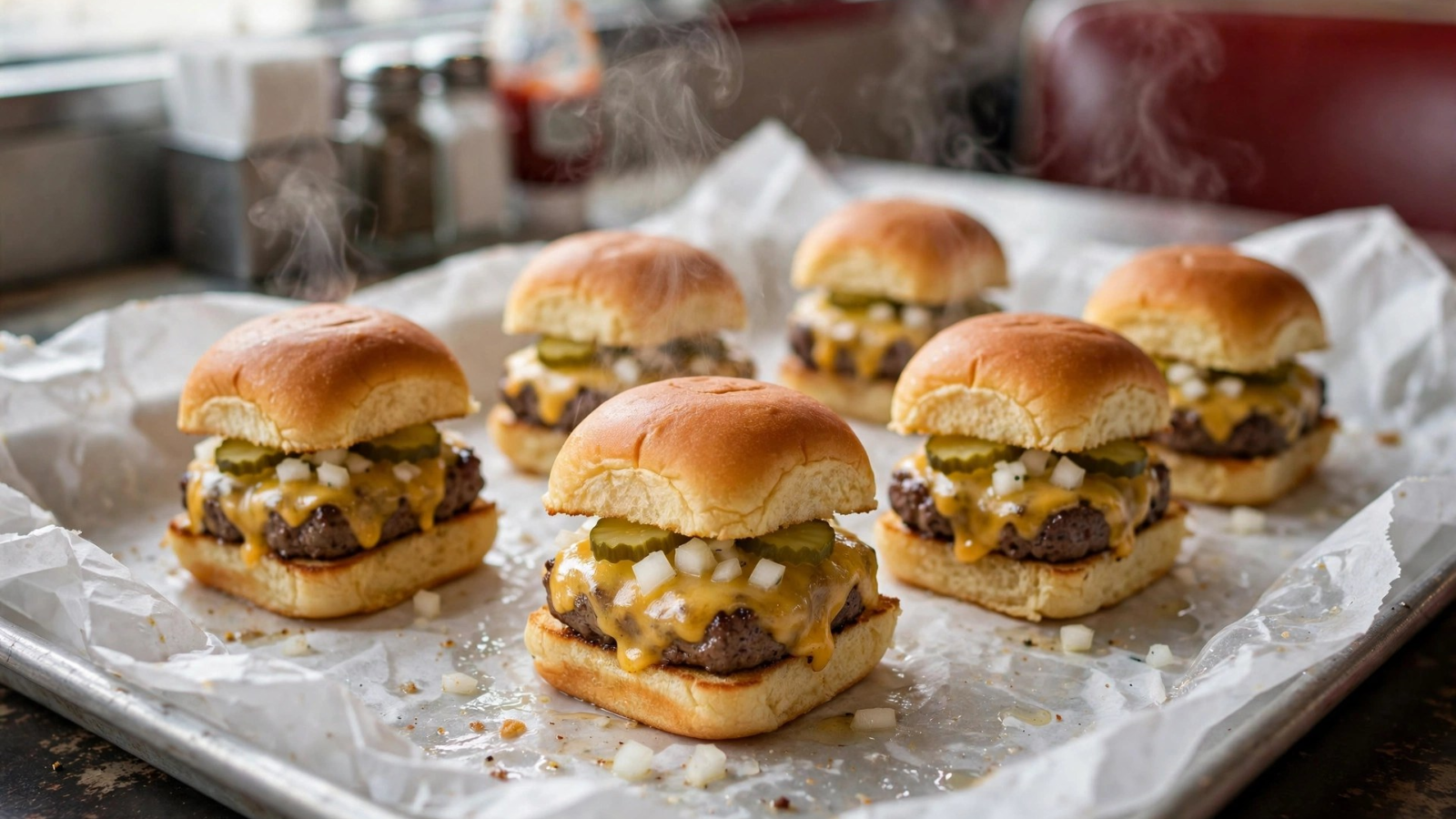
Read enough burger menus and you’ll notice something: everything small is a slider now. Kobe mini-burgers? Sliders. Pulled pork on dinner rolls? Sliders. Three tiny wagyu patties with truffle aioli that cost more than your lunch and dinner combined? Also sliders, somehow. The word has been stretched so far from its origins that it barely means anything anymore — which is a shame, because it used to mean something very specific, and the specific thing was worth protecting.
So let’s settle it. A slider is not just a small burger. It’s a burger made a certain way, born in a certain place, and named for a reason that has nothing to do with size. The real definition is more interesting than the one on your local menu — and it starts with a counter in Wichita.
The Word Has Two Birth Stories
The most-told version goes like this: in the early days of White Castle, the first hamburger chain in America, founded in 1921 in Wichita, Kansas, by Walter Anderson and Billy Ingram, staff would finish a tiny burger, set it on a plate, and slide it down the counter to the waiting customer. The burgers slid; the name stuck. Food historian George Motz, who has spent years chasing down burger lore, cites that as one of two competing stories — the other being that the little grease-laden burgers slid down your throat in a bite or two. White Castle, for the record, claims to like both stories and won’t pick a side, which is exactly the kind of corporate diplomacy you develop when either answer is fine.
The second legend belongs to the U.S. Navy. Sailors in World War II, so the story goes, were served tiny, aggressively greasy burgers on ships and started calling them sliders because that’s exactly what they did — slide down in a bite or two, grease and all. Naval slang apparently even had a word for a cheeseburger: a slider with a “lid.” Whether either story is the true origin is genuinely uncertain, but both agree on the important part: the name came from the experience of eating them, not their dimensions.
Five Cents and a Griddle Full of Onions
Whatever the name’s source, the thing itself starts with White Castle. In the 1920s the chain sold its tiny burgers for five cents each, and the deal was irresistible during the Depression — customers would buy them by the sack, which might be one of the first real examples of takeout culture in America. White Castle’s burgers were small because they were cheap, and they became famous because they were distinctive: thin patties cooked on a griddle over a bed of onions, the steam from the onions cooking the meat from below.
That technique matters more than anything else in this story. A real White Castle patty is perforated with holes — five of them, famously — punched through so the steam can pass up through the meat and cook it without ever flipping it. The bun rides on top of the patty while it cooks, steaming soft. Onions fry into the beef. What lands on your tray is small, square, oniony, and steamed through — and every part of that preparation is the point. Other Midwestern joints took the same idea and ran with it. To this day, the Detroit area is arguably the slider capital of America, home to old-school griddle houses like Bates Hamburgers in Livonia, Hunter House in Birmingham, and Greene’s, where the onions-and-steam method is the house religion.
It’s the Method, Not the Size
Here’s the part that surprises people: sliders come in all sizes. A famous Michigan example is the slider at Bates Hamburgers — roughly the size of a standard fast-food hamburger, unapologetically greasy, served on wax paper — and nobody in Michigan would dream of calling it anything else, because it’s made the slider way. Over in Dearborn, Millers Bar serves a monster that stretches the definition of “mini” past the breaking point, and it still earns the name on technique. The onion-steamed, smashed-onto-the-griddle, steam-cooked method is what makes a slider a slider. A big slider is still a slider. A small burger made any other way is not.
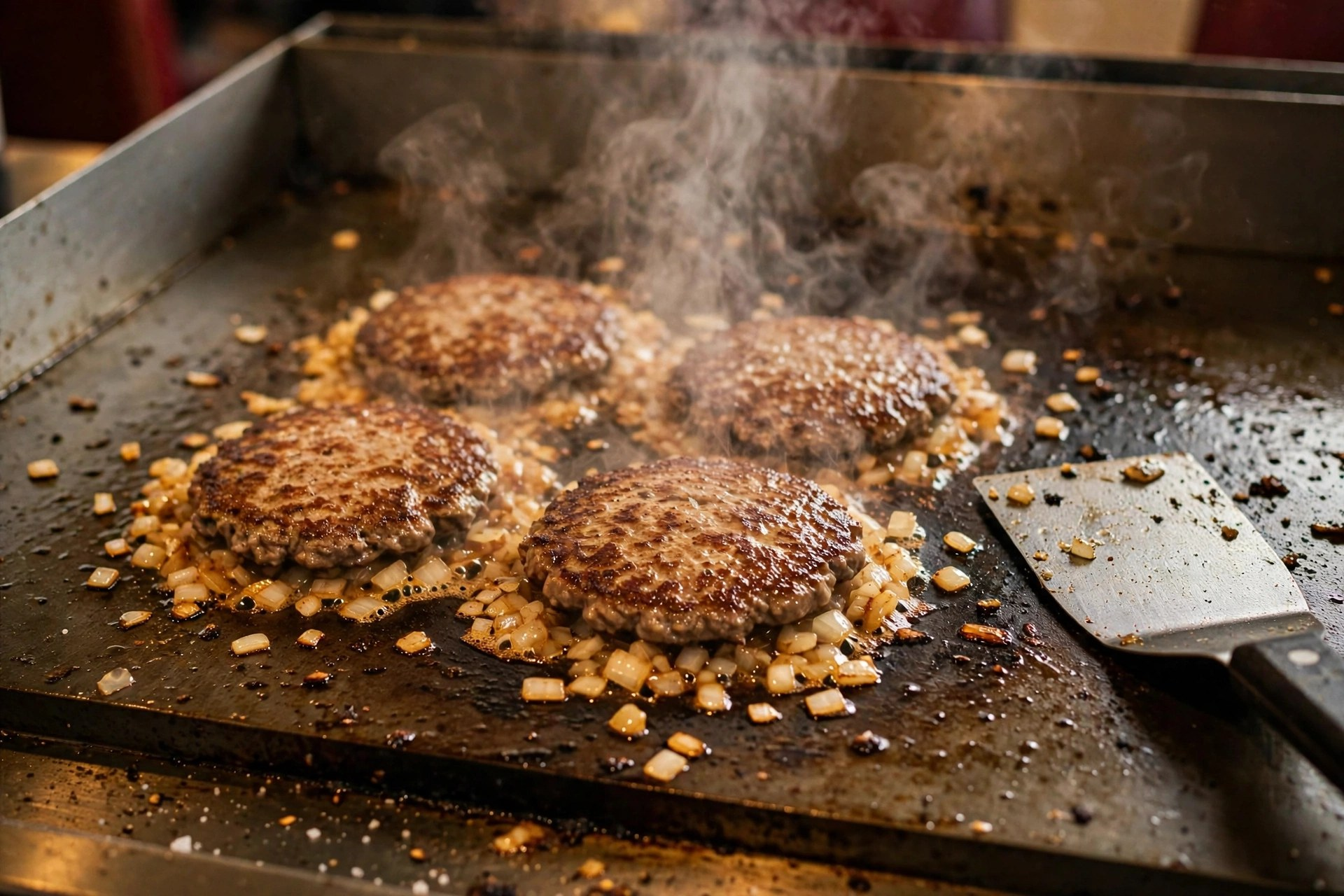
That method is the whole recipe: a well-oiled griddle, a small handful of onions down first, a ball or thin portion of beef smashed right onto the onion bed so the onions fry into the meat, steam doing the cooking, the bun steamed on top, and a pickle on the finished product. No flame grill, no thick pub patty, no artisanal anything. If your goal is a thick, crusty, medium-rare patty, that’s a different (and wonderful) game — our grilling guide covers it — but it isn’t this one.
How Menus Get It Wrong
The great slider inflation happened because “slider” is a more fun word to print on a menu than “mini-burger,” and diners will pay a non-mini price for a fun word. So restaurants started slapping it on anything small: Kobe beef mini burgers with artisanal cheese, pulled-pork sandwiches on dinner rolls, even salmon patties. Some of those are excellent food. None of them are sliders.
To be fair, the language drifted for a reason. White Castle itself trademarked a spelling variant, “Slyder,” and used it from the mid-1980s until 2009, and the word has been genericized far beyond the griddle. Modern usage covers any small sandwich on a slider bun, and dictionaries have mostly given up and defined it as “a small hamburger.” But there’s a difference between how a word is used and what it means, and the burger world is poorer for forgetting the original. When everything is a slider, the word stops pointing at the onion-steamed griddle tradition that made it worth saying — the tradition still alive in those Michigan griddle houses, where the technique hasn’t changed in decades.
The Verdict
So: a slider is a small — usually — burger made the White Castle way, thin patty cooked on a bed of onions with steam, holes in the meat, the bun steamed on top. Size is incidental. A slider the size of a regular burger is still a slider if it was made right; a tiny wagyu patty grilled like a steak is a mini-burger wearing a borrowed name.
Words matter, especially in food, where a word carries the history of everyone who made the thing. Call your mini burgers what they are — there’s nothing wrong with a mini burger — and leave “slider” for the griddle, the onions, and the steam. The sailors and the counter-sliders of the 1920s earned it.